Meaning
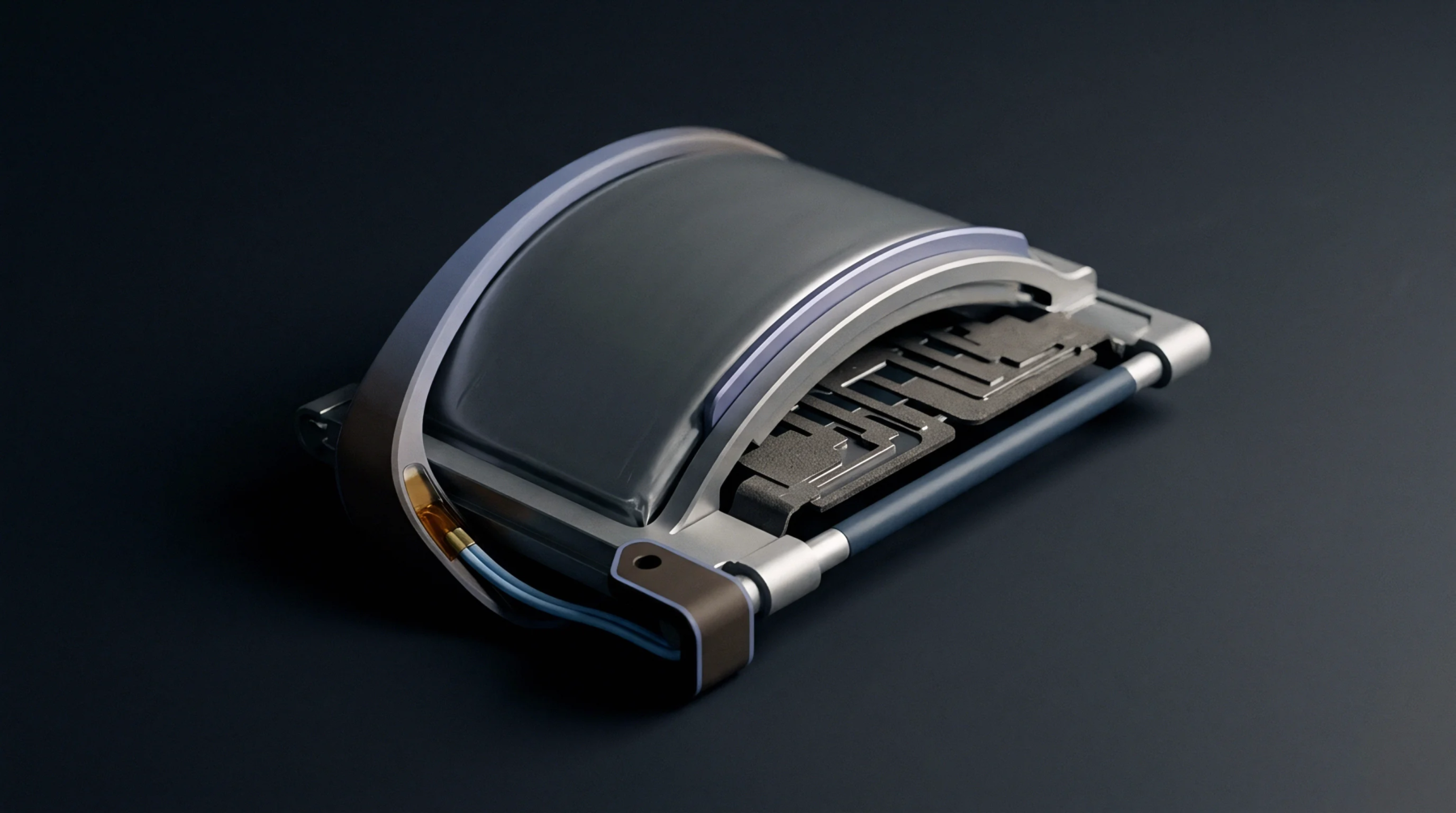
Thermal extraction strategies that target both the positive and negative terminal connections of a lithium-ion cell represent a highly efficient configuration for heat removal in high-power applications. Battery pack designers implement dual tab cooling to draw heat directly from the metallic current collectors where internal resistance is highest. By applying active cooling to both terminals, the heat path from the center of the cell is shortened.
This localized thermal management lowers the temperature of the internal jelly roll.
Thermal Management
Conductive heat transfer along the electrode sheets is highly efficient due to the high thermal conductivity of the current-collecting foils. Utilizing dual tab cooling takes advantage of this physical path by capturing heat before it can accumulate in the active material layers. Compared to surface cooling, this tab-cooling approach achieves a more uniform temperature distribution with less external thermal resistance.
Sourcing engineers specify this method for cells that must withstand sustained high-current operations.
Temperature Distribution
Uniform temperature profiles across the active areas of a cell are necessary to prevent localized aging and impedance imbalance. When dual tab cooling is applied, it minimizes the temperature gradient that usually develops between the center of the cell and the terminals. Without this balanced cooling, the hot sections of the cell degrade faster than the cool sections, which accelerates the mismatch of cell capacities within the pack.
This temperature uniformity ensures that all portions of the electrode age at a similar rate, which extends the overall operational life of the pack. System integration of this thermal design requires specialized busbars with integrated liquid or thermoelectric cooling paths that can interface with both terminals.
Discharge Capacity
Cells utilizing this terminal-cooling design can sustain high discharge and charge rates for longer periods without reaching thermal limits. High continuous current generates heat that can trigger current derating by the battery management system. By keeping the terminal temperatures low, dual tab cooling allows the vehicle or machine to operate at peak performance without interruption.
This sustained performance makes the design attractive for heavy-duty electric vehicle platforms.