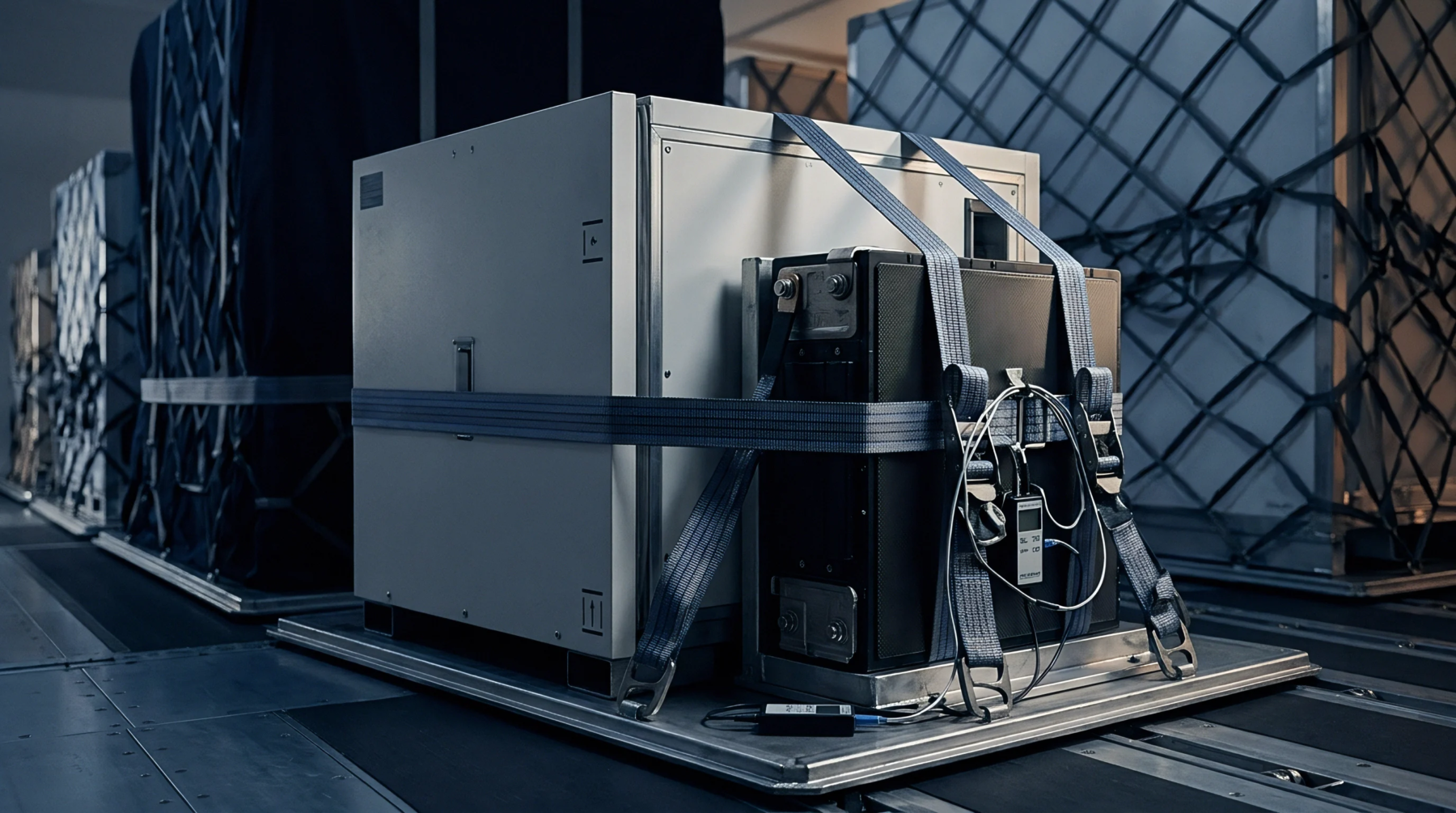
The Transport Rules and Safety Tests Lithium Cells Must Pass
Lithium cell shipments require UN 38.3 bench qualification, 30 percent state-of-charge air caps, Class 9 packaging, and verified 10-field test summaries.
This maritime regulation provides a set of specific conditions under which small lithium batteries are exempt from the full requirements of the International Maritime Dangerous Goods Code. It allows for the simplified transport of batteries that meet strict energy and weight limits, reducing the administrative burden on shippers. The application of imdg special provision 188 is restricted to cells with a watt hour rating of 20 or less and battery packs with a rating of 100 or less.
These shipments do not require a dangerous goods declaration or specialized Class 9 labeling, provided all safety criteria are met. This exemption stops applying if the size or lithium content of the batteries exceeds these defined thresholds.
To qualify for this exemption, every cell and battery must be of a type that has successfully passed the UN 38.3 series of safety tests. This ensures that the exempt products have been verified for resistance to altitude, vibration, shock and thermal abuse. Under the imdg special provision 188, the manufacturer must maintain a test summary that can be produced upon request by any authority in the supply chain.
Shippers must also ensure that the total weight of the package does not exceed 30 kilograms for most types of transport. If the batteries are contained within equipment, they must be protected from damage and prevented from accidental activation during the voyage. These limits are designed to keep the total energy in a single package low enough to minimize the risk of a catastrophic fire.
Packages shipped under this provision must be strong enough to withstand a 1.2 meter drop test in any orientation without damaging the cells inside. The outer packaging must be marked with the lithium battery mark, which includes a specific symbol and the UN number associated with the battery type. While full Class 9 documentation is not needed, imdg special provision 188 still requires that each package be accompanied by a document stating that the shipment contains lithium batteries.
This document must also include instructions on what to do if the package is damaged. The terminals must be protected against short circuits through the use of non conductive sleeves or individual plastic bags. These measures provide a basic level of protection that allows the maritime industry to handle millions of small consumer batteries with a high degree of safety.
The primary objective of this regulation is to balance the need for efficient global trade with the necessity of protecting ships and crews from fire hazards. By limiting the energy density of the exempt packages, imdg special provision 188 ensures that any thermal event remains localized and manageable. It does not waive the requirement for the cargo to be stowed away from heat sources or in a manner that allows for emergency access.
If a package shows signs of leakage or structural failure, it loses its exempt status and must be handled as fully regulated hazardous material. Sourcing managers must verify that their suppliers understand these rules to avoid costly delays at the port or rejection of cargo by the carrier. Compliance with this provision is a standard part of the logistics planning for consumer electronics and portable power products.
Lithium cell shipments require UN 38.3 bench qualification, 30 percent state-of-charge air caps, Class 9 packaging, and verified 10-field test summaries.
Expertise is a utility, not a secret. sentiention™ publishes its working knowledge as open reference: intelligence layer covering the materials it sources, the markets it enters, and the reference that serves both.