Meaning
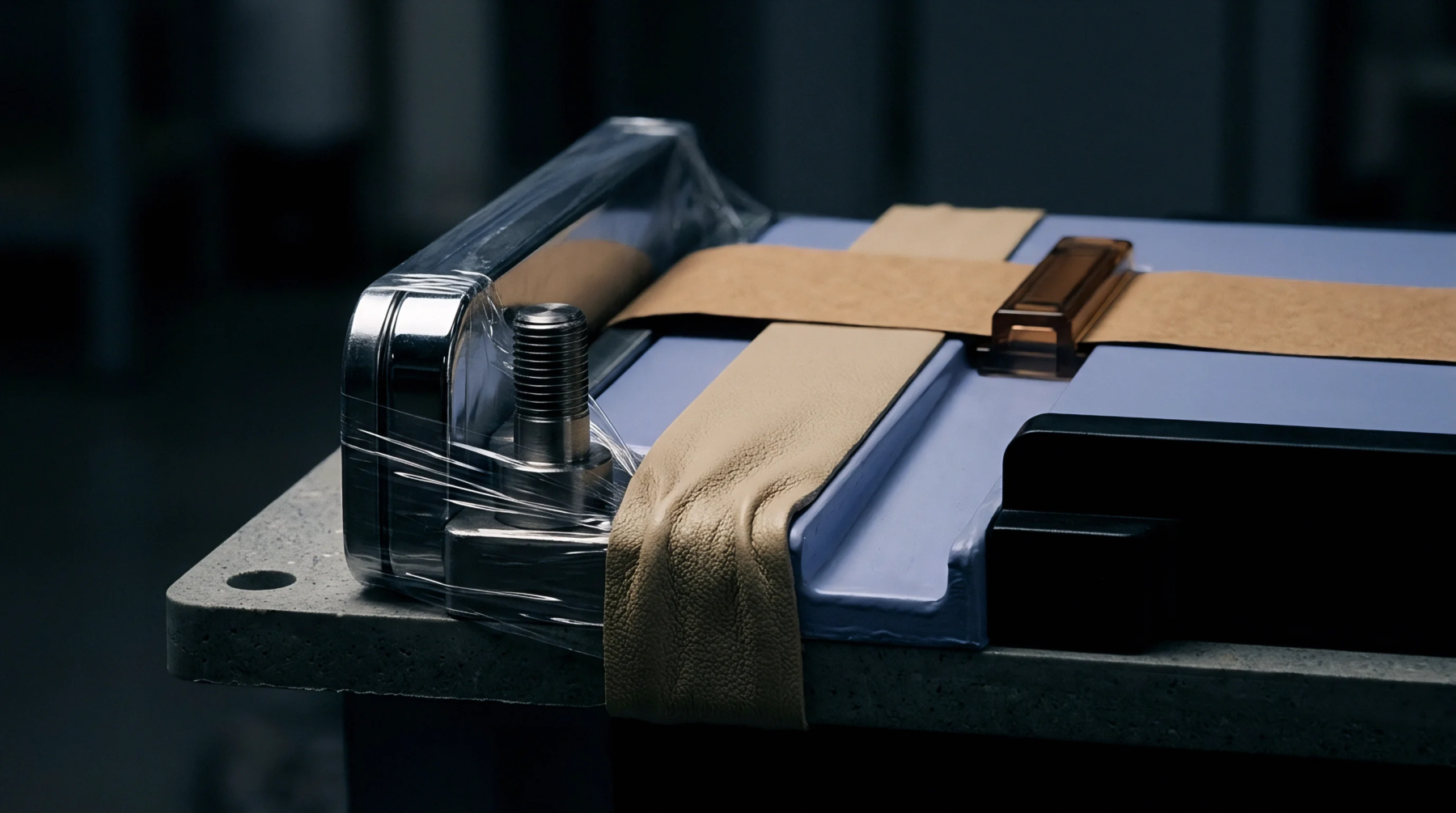
Dimensional stability during thermal testing is achieved by using low-expansion nickel-iron alloy clamping assemblies. These specialized tools, called invar test fixtures, maintain a constant mechanical load on cells across a wide temperature range. They prevent thermal expansion of the clamp from corrupting the force measurements of the cell during cycling.
Structural Performance
Clamping forces must remain stable to accurately measure the pressure generated by electrochemical expansion. Standard aluminum and steel assemblies expand when heated, which decreases the pressure they apply to the test cell and introduces measurement errors. In contrast, invar test fixtures maintain their physical dimensions, ensuring that the applied force remains a function of the cell breathing mechanics rather than fixture expansion.
This structural stability allows developers to obtain clean data during long-term cycling.
Thermal Stability
The alloy used in these clamps contains approximately thirty-six percent nickel, which exhibits a minimal coefficient of thermal expansion up to its Curie point. By utilizing invar test fixtures, laboratories can run high-temperature aging tests without having to apply mathematical correction factors for bracket expansion. This precision reduces the noise in the force-displacement curves and allows for the early detection of cell bulging.
Testing Utility
Sourcing teams procure these precision fixtures to standardize results across different testing laboratories. Because the fixtures are durable and do not warp under cyclic heating, they ensure that cell validation data remain consistent over years of testing. This repeatability is essential when qualifying new cell suppliers or comparing different cell cushion materials.