Resolving Cross Border Legal Liability When Secondary Subcontracted Test Laboratories Forge Accreditation Schedules
Importers mitigate cross-border forged lab schedules by enforcing primary ISO 17025 direct testing, independent ILAC verification, and escrow gates.

Forgery
Primary test facilities frequently experience capacity bottlenecks during peak product qualification cycles. High demand for UN 38.3 transport qualification and IEC 62133 certification leads tier-one laboratories to quietly direct excess testing volume to unaccredited secondary facilities. These external workshops operate without valid ISO/IEC 17025 accreditation for specific lithium-ion battery testing profiles.
To present a valid safety dossier, secondary operators forge accreditation schedules by modifying official annexes issued by international accreditation bodies such as CNAS, DAkkS, or A2LA. Data leaks show gaps. Unaccredited facilities alter physical measurement data.
Forged documentation invalidates the regulatory foundation of international battery shipments. Under the UN Manual of Tests and Criteria, dangerous goods transport requires a verified UN 38.3 test summary containing direct references to accredited laboratory scopes. When a secondary subcontractor falsifies scope expansion documents or splices accreditation schedules from unrelated facilities, every downstream transport declaration becomes an illegal filing.
Marine freight carriers, airlines, and customs authorities treat shipments backed by fraudulent testing as uncertified dangerous goods, subjecting importers to immediate cargo impoundment and severe legal exposure.
Secondary Testing Subcontracts and Scope Fabrication
Offshoring complex thermal and mechanical evaluation profiles introduces administrative handoffs that opaque tier-one suppliers routinely exploit. Primary contractors sign testing agreements with cell buyers while delegating physical execution to low-cost regional workshops. These secondary entities lack the specialized environmental chambers required for high-altitude depression simulation, heavy impact testing, and forced internal short-circuit triggers.
To cover this technical deficit, secondary operators fabricate scope schedules by copying registration numbers and official seals from legitimate partner institutions.
Digital manipulation of PDF certificates allows unauthorized facilities to append valid accreditation schedule pages onto invalid test reports. A common vector involves taking a legitimate ISO/IEC 17025 schedule covering basic lead-acid or nickel-cadmium batteries and editing the standard codes to reflect IEC 62133-2 or UL 1642. The resulting report displays a valid accreditation body registration number, yet the underlying laboratory never underwent technical peer review for lithium-ion electrochemistry testing.
Test summaries require primary lab signatures.
UN 38.3 T.1 altitude simulation reports executed at pressure differentials above 11.6 kilopascals become legally void when performed by unlisted secondary facilities.
Subcontracting Fraud Vectors in Battery Safety Testing
Document manipulation manifests across three primary structural vulnerabilities within international compliance frameworks. Buyers must recognize how laboratory subcontracts break the official chain of custody between tested cell samples and commercial shipment batches.
- Schedule annex splicing PDF scope documents are modified by inserting standard scope extension pages from unrelated ISO/IEC 17025 accredited facilities.
- ILAC MRA mark misapplication International laboratory accreditation cooperation logos reserved for specific electrochemistry standard methods appear on unapproved thermal runaway reports.
- Subcontractor substitution Test samples travel to uncertified secondary workshops while retaining primary laboratory letterheads on final documentation.
- Expired scope projection Historical accreditation validity periods extend through altered PDF metadata fields to cover current production dates.
The structural vulnerability worsens when testing laboratories operate across multiple international jurisdictions. Cross-border enforcement of laboratory standards relies on mutual recognition agreements that lose legal standing when fraud occurs inside subcontracted facilities. Customs officers impound uncertified cell lots.
Importers bear primary safety compliance obligations.
| Standard Clause | Genuine Laboratory Execution | Subcontracted Manipulation Vector | Freight Carrier Exposure |
|---|---|---|---|
| UN 38.3 T.1 to T.5 | In-house altitude, thermal, vibration, shock, and external short circuit testing | Secondary lab executes mechanical shock without calibrated accelerometer logging | Immediate invalidation of Shipper’s Declaration for Dangerous Goods |
| IEC 62133-2 Clause 7.3.7 | Forced internal short circuit executed inside environmental chamber at 55°C | Temperature logs edited to match standard thresholds without physical chamber heating | Customs seizure notice for non-compliant energy storage imports |
| UL 1642 Section 13 | Projected projectile impact test using 9.5 mm bar across 20 sample units | Sample size reduced to 5 units while cloning statistical data across remaining fields | Voiding of commercial product liability insurance coverage |
Main tier vendors maintain that external testing partners possess equivalent bench competency despite missing formal scope additions.

Bench
Electrochemistry validation requires precise physical data matching recorded environmental chamber curves. Falsified laboratory schedules routinely collapse under granular technical analysis of raw sensor outputs. Secondary facilities lacking specialized equipment generate synthetic temperature, voltage, and mass data that betray mathematical uniformity impossible in physical cell testing.
Thermal runaway destroys structural battery packs.
Physical discrepancies emerge when comparing thermal shock data against open-circuit voltage degradation profiles. Under legitimate UN 38.3 T.2 thermal testing, lithium-ion cells cycle between minus 40 degrees Celsius and plus 72 degrees Celsius over ten days. Authentic test series exhibit measurable variance in mass loss delta and voltage relaxation due to micro-structural changes in the solid electrolyte interphase layer.
Synthetic reports produced by unauthorized secondary labs display zero-variance voltage logs and identical mass values down to four decimal places across all tested cells.
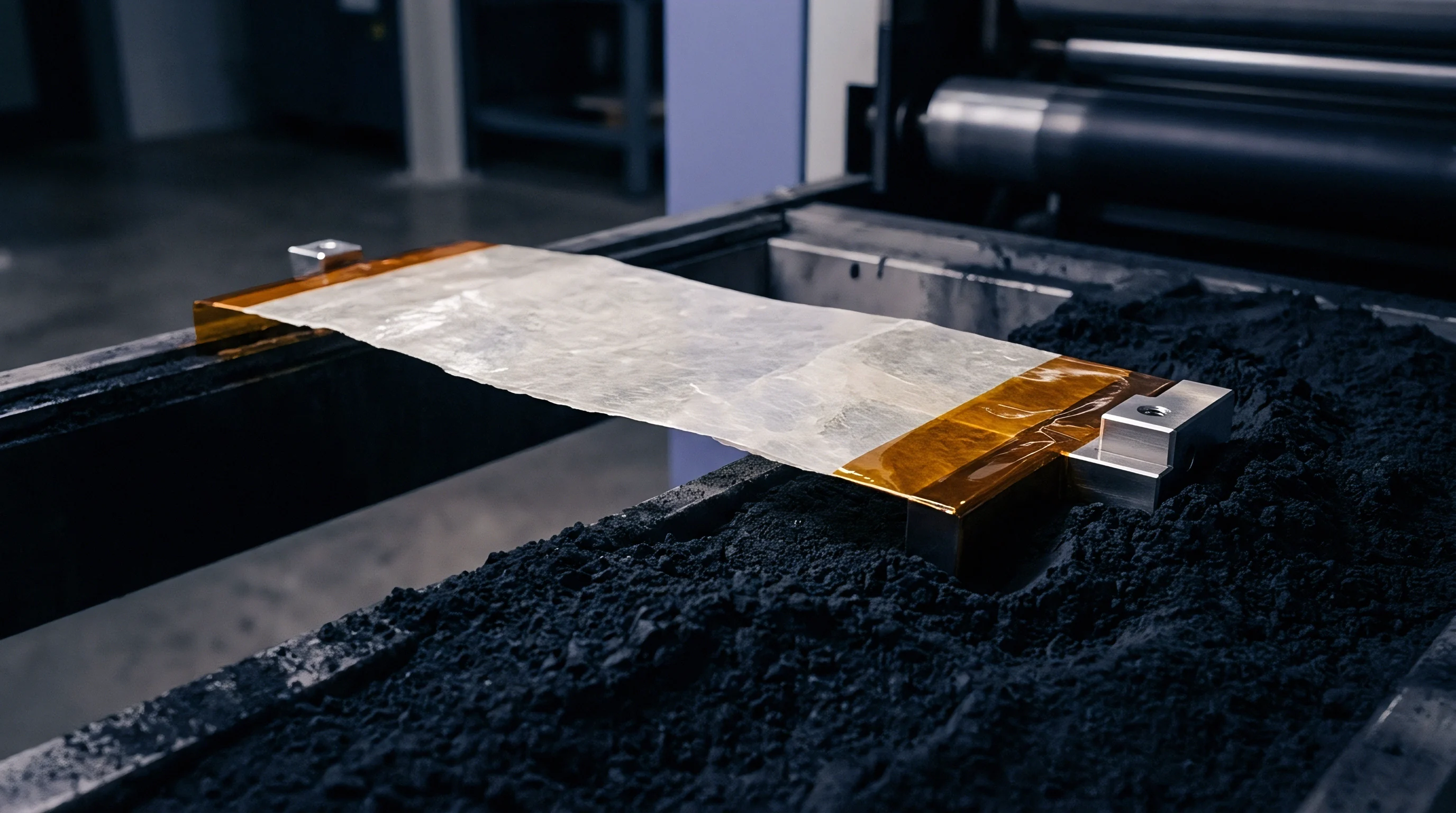
Physical Discrepancies in Thermal and Mechanical Testing
Anomalies between raw sensor logs and summary sheets indicate fabricated compliance records. In mechanical shock testing under UN 38.3 T.4, half-sine acceleration pulses deliver 150 Gn peak force over 6 milliseconds. Accredited facilities utilize calibrated piezoelectric accelerometers to capture real-time time-series wave curves.
Subcontracted laboratories forging test scopes often omit raw accelerometer wave files, providing only static tables containing identical peak figures for every axis. Mass loss deltas indicate cell venting. Voltage drops reveal internal short circuits.
Accreditation schedules define allowed test standards. Mechanical joint defects manifest under vibration testing when uncalibrated shaker tables fail to deliver the broad-band random frequency profile dictated by UN 38.3 T.3. When fraudulent labs copy test curves from historic reports, subtle harmonic frequency deviations disappear, leaving unrealistic smooth lines on logarithmic spectral density plots.

Discrepancy Indicators in Secondary Cell Qualification
Calculated mass loss values offer an immediate empirical baseline for detecting paper-based falsification. Take a typical shipment scenario involving a 40-tonne consignment of 21700 nickel-manganese-cobalt lithium-ion cells shipped under UN 3480 packaging regulations. Assume a standard baseline mass loss threshold of 0.1 percent following thermal exposure at 72 degrees Celsius under UN 38.3 T.2 protocols.
A legitimate test sequence records a mean mass loss delta of 0.03 grams across a ten-sample cohort. In a forged dataset generated by an unaccredited secondary laboratory, all ten sample entries list identical mass deltas of 0.00 grams alongside uniform open circuit voltage readings of 4.18 volts. A zero-variance dataset across ten distinct physical cells subjected to thermal shock between minus 40 degrees Celsius and plus 72 degrees Celsius indicates mathematical fabrication.
| Test Specification | Physical Sensor Parameter | Expected Physical Variance | Falsification Red Flag |
|---|---|---|---|
| UN 38.3 T.1 Altitude | Pressure transducer log at 11.6 kPa | ±0.2 kPa barometric drift over 6 hours | Flat horizontal pressure line with zero sensor noise |
| UN 38.3 T.2 Thermal | Thermocouple temperature tracking | Thermal lag during ramp rates at 1.5°C/min | Instantaneous step-change temperature graphs |
| IEC 62133 Forced Short | Press displacement sensor (N) | Force reduction upon internal separator yield | Constant linear force increase without deformation dip |
Detecting physical discrepancy patterns requires auditing raw binary files generated directly by environmental chamber software. Unauthorized secondary labs modify export tables in commercial spreadsheet tools, breaking time-stamp formatting and removing embedded device serial numbers. False records void insurance claims.
Non-compliance with UN 38.3 Revision 7 clause 38.3.4 shifts all hazardous materials transport liability onto the commercial entity listed as shipper of record.
Undetected laboratory fraud transforms simple transit damage into non-indemnifiable marine cargo destruction.

Audit
Direct cross-referencing of national accreditation databases uncovers document tampering before customs clearance. Importers must bypass primary laboratory summaries and independently verify the exact scope schedules attached to every test certificate. National accreditation bodies publish searchable portals that detail active standard codes, site addresses, and authorized signatory personnel.
Unaccredited facilities alter physical measurement data.
Cross-border verification requires reviewing the International Laboratory Accreditation Cooperation Mutual Recognition Arrangement network. Accreditation bodies like CNAS in China, DAkkS in Germany, and A2LA in the United States maintain public query engines. Entering the laboratory registration number reveals whether the facility holds authorization for specific test methods, such as IEC 62133-2 clause 7.3.7 for forced internal short circuits or UL 1642 section 13 for projectile tests.
Direct Verification Protocols for Accreditation Annexes
National accreditation bodies maintain online public ledgers listing every active ISO/IEC 17025 standard code assigned to an evaluated site. Scope documents specify exact standard versions, test methods, and physical site locations. A primary laboratory may possess ISO/IEC 17025 accreditation for general electrical safety at its headquarters while outsourcing high-voltage lithium battery testing to an unaccredited branch office.
Verification protocols must confirm that the physical address where testing occurred matches the certified address on the accreditation schedule annex.
- Query the issuing laboratory registration number against the national accreditation body database such as CNAS, DAkkS, or A2LA.
- Download the complete scope schedule annex to verify the exact standard version and specific test method codes.
- Match the physical laboratory address on the UN 38.3 test summary against the certified physical site listed in the official schedule.
- Confirm that subcontracted test procedures receive explicit written authorization from the primary accreditation body before shipment.
Could Digital Certificate Registries Prevent Subcontracted Fraud?
Cryptographic signatures embedded in PDF documents establish an immutable link between primary testing laboratories and issued reports. Public key infrastructure implementations enable customs agencies and buyers to verify document integrity without relying on paper schedule annexes. When secondary labs alter text or splice pages, the cryptographic hash breaks, instantly flagging the certificate as tampered.
Vibration tests identify mechanical joint defects.
| Accreditation Body | Geographic Jurisdiction | Verification Portal Type | Scope Schedule Search Key |
|---|---|---|---|
| CNAS | China | Online Public Certificate System | Registration Certificate Number & Annex Code |
| DAkkS | Germany | Central Register of Accredited Bodies | D-PL Registration ID & DIN EN ISO/IEC 17025 Scope |
| A2LA | United States | Search Accredited Organizations Portal | Certificate Number & Field of Testing Code |
Verifying scope schedules across international borders requires evaluating language variations and technical standard translations. Forged documents frequently translate national standard identifiers incorrectly, listing withdrawn standards alongside current international regulations. Third party validation secures payment escrows.
Primary laboratory stamps carry zero weight when the attached testing annex omits the specific chemistry specification.
Inserting standard commercial inspection clause ISO 17020 section 7.1 forces primary contractors to disclose all secondary testing vendors prior to batch release.

Jurisdiction
Crossing international borders transfers regulatory accountability directly onto the commercial entity acting as importer of record. When secondary subcontracted test laboratories forge accreditation schedules, overseas suppliers often evade foreign legal process. Product liability laws in destination jurisdictions hold local importers strictly liable for damages caused by non-compliant or defective lithium-ion cells.
Importers bear primary safety compliance obligations.
Dangerous goods transport regulations treat the entity named on the Shipper’s Declaration as strictly responsible for paperwork accuracy. If a thermal runaway incident occurs during ocean transport or air freight, maritime authorities and aviation safety boards initiate enforcement actions against the local importer. Penalties include civil fines, customs seizure of non-compliant inventory, and criminal liability if fraudulent documentation was submitted to border officials.
Importer Responsibility under European Battery Regulations
Statutory duties under European Union Regulation 2023/1542 enforce strict economic operator liability across member state territories. Importers placing batteries on the EU market must verify that conformity assessment procedures were executed by accredited bodies in accordance with Article 6. If a test report relies on a forged schedule, the conformity assessment becomes invalid, rendering the product illegal for sale or distribution within the European Economic Area.
The regulatory framework mandates that importers maintain complete technical documentation files for ten years after placing the battery on the market. Upon request by national market surveillance authorities, the importer must present verified proof of laboratory accreditation scopes. Failure to provide legitimate accreditation schedule annexes triggers compulsory product recalls, administrative sanctions, and commercial sales bans.
Cross-Border Tort and Contract Law Dynamics
Litigation spanning multi-national supply chains faces conflicting choice-of-law rules and jurisdictional barriers. Obtaining damages from an offshore secondary laboratory that forged test schedules requires navigating international commercial law frameworks. The United Nations Convention on Contracts for the International Sale of Goods governs international sale contracts unless expressly excluded, but CISG mechanisms focus primarily on seller non-conformity rather than secondary vendor tort liability.
Offshore vendors evade local court judgments.
Buyers must establish structured risk mitigation checklists to insulate their legal posture against foreign supply chain fraud. Decision protocols align commercial contractual terms with cross-border legal realities.
- Importer status validation Customs filings reflect the exact legal entity liable for product safety compliance.
- Regulatory document retention Complete technical files remain accessible for ten years following commercial distribution.
- Upstream indemnity enforcement Purchase contracts contain enforceable arbitration clauses binding foreign manufacturing partners.
- Insurance coverage alignment Marine cargo policies explicitly account for secondary vendor misrepresentation risks.
Contractual choice-of-law clauses determining jurisdiction should specify legal forums known for recognizing and enforcing foreign arbitration awards under the New York Convention. Choosing an unenforceable forum leaves buyers stranded without legal recourse when secondary lab fraud surface overseas. Foreign arbitration judgments require local enforcement.
Customs authorities impound non-compliant cell shipments without regard to private commercial disputes over lab falsification.
Uncertainty remains regarding whether international arbitration tribunals will enforce foreign liability claims against state-backed secondary test facilities.
Indemnity
Financial recovery mechanisms protect cell buyers against catastrophic losses stemming from secondary vendor falsifications. When unaccredited laboratories forge safety documentation, commercial contracts must contain explicit risk allocation language that shifts financial exposure back to primary suppliers. Standard liability caps fail to cover recall costs, cargo destruction expenses, and third-party property damage resulting from battery fires.
False records void insurance claims.
Insurance coverage for battery shipments depends entirely on maintaining valid safety documentation. Marine insurance policies contain strict warranty covenants requiring compliance with international dangerous goods transport rules. If an insurer discovers that a thermal runaway event involved cells backed by forged UN 38.3 schedule annexes, the underwriter will deny coverage based on breach of policy warranties.
Buyers must establish contractual indemnities that operate independently of third-party insurance payouts.
Structure of Subrogation and Defect Allocation Clauses
Risk allocation terms in supply agreements dictate how insurance entities recover funds following a battery safety incident. Subrogation waiver clauses prevent insurers from suing upstream tier-one suppliers unless explicit fraud or intentional misrepresentation exceptions are included. Contracts should incorporate unconditional indemnity clauses covering direct, indirect, and consequential damages arising from invalid test certificates.
Indemnity provisions must explicitly address secondary subcontractor fraud. Language should stipulate that any document falsification committed by a primary supplier’s sub-tier vendors constitutes a material breach of contract, waiving all monetary liability limits. The clause should grant the buyer direct subrogation rights against primary vendors for all legal defense costs, regulatory fines, and inventory destruction fees incurred due to forged schedule annexes.
Contractual Escrows Linked to Independent Verification
Withholding final commercial payment until third-party verification completes protects purchasing capital. Payment escrow agreements create a financial mechanism that deters tier-one suppliers from relying on unaccredited secondary labs. Escrow release gates tie contract payments directly to successful verification of ISO/IEC 17025 scope schedules through independent technical audits.
A structured escrow gate retains twenty to thirty percent of the total consignment value until an independent testing entity validates the UN 38.3 test summary and IEC 62133 certificates. If the audit reveals forged accreditation schedules or unauthorized secondary subcontracts, the escrow funds automatically revert to the buyer to offset re-testing expenses and shipment delays. Third party validation secures payment escrows.
Commercial contracts tied to independent batch testing prevent regulatory delays from destroying shipment profitability.