Verifying UN 38 3 Test Summaries for Air Freight
Air freight acceptance demands verifying all ten UN 38.3.5 fields against physical cargo labels to prevent cargo holds, civil fines, and insurance voidance.

Mandate
Subsection 38.3.5 of the United Nations Manual of Tests and Criteria defines ten explicit data points that every test summary contains before lithium cells or batteries enter air transport networks. Regulatory authorities established this standardized document format to replace inconsistent manufacturer certificates that previously obscured testing gaps. The document serves as a standardized proof of qualification that accompanies dangerous goods declarations, air waybills, and customs filings across international borders.
Cargo handlers at air transit hubs check this specific paper trail before permitting cell packages onto freighter decks.
Every commercial entity in the air freight supply chain holds legal responsibility for confirming that summary documents meet the exact UN layout. The requirement applies equally to standalone lithium ion cells shipped under Packing Instruction 965, cells packed with equipment under Packing Instruction 966, and cells contained within equipment under Packing Instruction 967. Ground acceptance staff inspect the summary to verify that the physical consignment matches the tested cell architecture without deviation.
| Packing Instruction | Shipment Configuration | State of Charge Limit | Summary Verification Level | Shippers Declaration Needed |
|---|---|---|---|---|
| PI 965 Section IA | Standalone Cells >20 Wh / Packs >100 Wh | 30 Percent Maximum | Mandatory Document Audit | Yes |
| PI 965 Section IB | Standalone Cells ≤20 Wh / Packs ≤100 Wh | 30 Percent Maximum | Mandatory Document Audit | Yes |
| PI 966 Section I | Cells Packed With Equipment >20 Wh | No Mandatory Limit | Mandatory Document Audit | Yes |
| PI 967 Section I | Cells Contained In Equipment >20 Wh | No Mandatory Limit | Mandatory Document Audit | Yes |
Discrepancies in mandatory fields trigger immediate freight holds at airline reception gates. Standardized summaries eliminate informal compliance notes, factory quality letters, and self-issued laboratory passes that lack verification data. The presence of all ten items remains a baseline condition for carrier acceptance.
- Manufacturer Identification details the legal entity name, corporate address, telephone contact, email address, and official website of the cell or battery producer.
- Testing Facility Identity provides the complete corporate name, address, telephone number, email, and website of the laboratory conducting T.1 through T.8 procedures.
- Report Reference Number records the unique alphanumeric identifier assigned by the test facility to trace the underlying laboratory execution log.
- Date of Certification specifies the precise calendar day, month, and year when the laboratory finalized and signed the qualification file.
- Product Description states the cell or battery format, physical envelope, total mass, nominal energy in watt-hours, nominal voltage, and model designation.
- Test List and Results itemizes each sub-test from T.1 to T.8 alongside an explicit indication of pass or fail status.
- Assembled Battery Testing clarifies compliance under subsection 38.3.3 (f) or (g) when evaluating multi-cell pack configurations.
- Edition of the UN Manual records the specific revision number and amendment status under which the bench evaluations occurred.
- Quality Management System references compliance with ISO 9001 or equivalent manufacturing quality standards enforced during cell fabrication.
- Authorized Signature supplies the printed name, corporate title, and physical or validated digital mark of the responsible regulatory compliance officer.
International Civil Aviation Organization technical instructions enforce compliance checking at every transfer point. Shippers retain these records for the full operational life of the cell design plus additional retention windows dictated by local transport authorities. Air carriers reserve the right to audit underlying raw laboratory test files whenever a summary presents ambiguous technical claims.
Customs officials examine test summaries during export clearance procedures to verify hazardous material classifications. Incomplete summaries invite physical cargo holds and customs seizure. Freight agents cross-reference the report date against manufacturing dates on crate labels to ensure production aligns with qualified design revisions.
The standard agreement governing hazardous air freight incorporates section 38.3.5 requirements directly into the contract of carriage, making any document defect a material breach of freight conditions.

Bench
Environmental stress cycles and mechanical shocks applied during qualification reveal structural flaws before cargo loading. The T.1 through T.8 test suite models the thermal variations, low-pressure environments, vibration profiles, and electrical faults that occur inside aircraft cargo holds. Every cell design must survive this full sequence without leaking, venting, disassembling, rupturing, or catching fire.
Environmental and Mechanical Test Protocols
Low pressure simulation under test T.1 subjects fully charged cells to an ambient pressure of 11.6 kilopascals for six hours at room temperature. This low-pressure environment reproduces the unpressurized air freight hold conditions found at high flight altitudes. Passing cells show no mass loss exceeding 0.1 percent, zero voltage decay beyond calibrated limits, and no mechanical rupture of outer enclosures.
Thermal cycling under test T.2 forces cells through extreme temperature fluctuations to stress seal crimps, internal joints, and outer cases. Test samples sit at 72 degrees Celsius for six hours, then drop to minus 40 degrees Celsius for six hours, repeating this cycle ten times. The transition time between thermal extremes remains under thirty minutes.
The sudden temperature swing induces rapid thermal expansion and contraction across dissimilar internal metals.
| Test Identifier | Physical Test Condition | Sample State | Duration / Cycles | Pass / Fail Criteria |
|---|---|---|---|---|
| T.1 Altitude | 11.6 kPa Ambient Pressure | 100% State of Charge | 6 Hours Minimum | No Leakage, No Venting, Mass Loss <0.1% |
| T.2 Thermal | -40°C to +72°C Extremes | 100% State of Charge | 10 Full Cycles | No Disassembly, No Fire, Voltage Drop <10% |
| T.3 Vibration | 7 Hz to 200 Hz Sine Sweep | 100% State of Charge | 3 Hours Per Axis | No Rupture, Open Circuit Voltage Retained |
| T.4 Shock | 150 gn Half-Sine Pulse | 100% State of Charge | 6 Pulses Per Axis | No Mass Loss, Integrity Preserved |
| T.5 External Short | External Resistance <0.1 Ω at 55°C | 100% State of Charge | Until 55°C Returned | External Temp <170°C, No Fire Within 6 Hours |
| T.6 Impact / Crush | 13 kN Crush or 9.1 kg Drop Impact | 50% State of Charge | Single Application | External Temp <170°C, No Disassembly |
| T.7 Overcharge | 2x Max Charge Current at Max Voltage | 100% State of Charge | 24 Hours Continuous | No Fire, No Disassembly Within 7 Days |
| T.8 Forced Discharge | 12 V DC Reverse Charge Current | 0% State of Charge | Current Set By Max Rating | No Fire, No Disassembly Within 7 Days |
Vibration exposure under T.3 applies a sinusoidal sweep from 7 Hertz to 200 Hertz over fifteen minutes, repeated twelve times across three orthogonal axes. The peak acceleration reaches 8 gn for large cells and 2 gn for small cells. This continuous shaking models mechanical resonance generated by aircraft propulsion engines and airborne turbulence.
Shock testing under T.4 subjects cells to half-sine impact pulses with a peak acceleration of 150 gn and a pulse duration of 6 milliseconds. Large cells receive 50 gn pulses over 11 milliseconds. Each cell faces six shocks per direction across three perpendicular planes, testing internal electrode anchor points, tab welding integrity, and internal insulation placement.
Cells subjected to T.2 thermal cycling lose up to 0.15 percent total mass through venting when seal crimps deform under peak thermal expansion.

Electrical Abuse and Safety Limits
External short-circuit conditions under test T.5 force fully charged samples to discharge across a conductor resistance under 0.1 ohms at an ambient temperature of 55 degrees Celsius. The short circuit remains applied for one full hour after the cell casing drops back down to 55 degrees. Internal temperatures rise rapidly as high discharge currents heat internal resistance paths.
The cell passes provided internal components absorb the heat without thermal runaway and casing temperatures stay below 170 degrees Celsius.
- Sample Preparation requires conditioning cells through pre-test charge-discharge cycles to establish baseline capacity and terminal voltage levels before mechanical exposure.
- Sequential Execution dictates running environmental and mechanical stress procedures in strict chronological order on identical physical test groups.
- Mass Measurements enforce weighing samples on micro-gram scales before and immediately after thermal or pressure exposure to catch invisible vapor leaks.
- Voltage Recovery evaluates open-circuit voltage retention after shock and vibration cycles to verify internal separator sheet insulation remains intact.
- Post-Test Monitoring maintains active video surveillance over tested units for seven complete days to record delayed ignition or off-gassing events.
Impact and crush evaluations under test T.6 apply concentrated mechanical forces to primary and secondary cells at half capacity. The crush protocol presses a flat steel plate into the cell casing until applied force reaches 13 kilonewtons. An internal short circuit occurs at the deformation point.
Compliance demands that internal thermal activity remains contained without shell explosion or active burning.
Overcharge protection under T.7 tests secondary battery assemblies by supplying twice the maximum continuous charge current at maximum charge voltage for twenty-four hours. Forced discharge under T.8 subjects depleted cells to reverse charging currents using a twelve-volt power supply. Both electrical abuse tests verify that internal current-interrupt devices, positive temperature coefficient resistors, and separator shutdown features prevent catastrophic runaway.
A supplier often claims that identical cell chemistries inside different shell sizes share the same safety file, but regulatory bodies reject extended approvals that lack direct physical test records for each distinct enclosure geometry.

Traceability
Matching physical shipments to official qualification documents demands checking serial ranges, chemical variations, and factory locations against test reports. Procurement teams routinely receive test summaries that carry correct model names but represent entirely different chemical builds or factory origins. Unambiguous connection between cargo crates and test summaries prevents counterfeit entries, unsafe cell substitutions, and illegal documentation sharing.

Where Does Test Report Ownership Diverge from Assembly Origin?
Contract manufacturing arrangements create documentation gaps when cell producers white-label original products for third-party integrators. A test summary issued to an original cell design firm remains invalid for a third-party brand unless the document explicitly cross-references both trade names. Transport enforcement agencies cross-reference label trademarks against laboratory registration databases to uncover unlinked re-brands.
Pack assembly operations introduce additional verification steps when integrating certified individual cells into larger energy storage blocks. Modifying cell connections, adding management electronics, or altering protective casing material invalidates original cell-level UN 38.3 certifications. Subsection 38.3.3 mandates complete re-testing of assembled battery packs whenever structural changes alter gross mass by more than 20 percent, increase nominal voltage, or reduce active safety circuits.
Subclause 38.3.2.1 mandates full re-testing whenever an assembly design alters total mass by more than 20 percent or increases nominal energy.
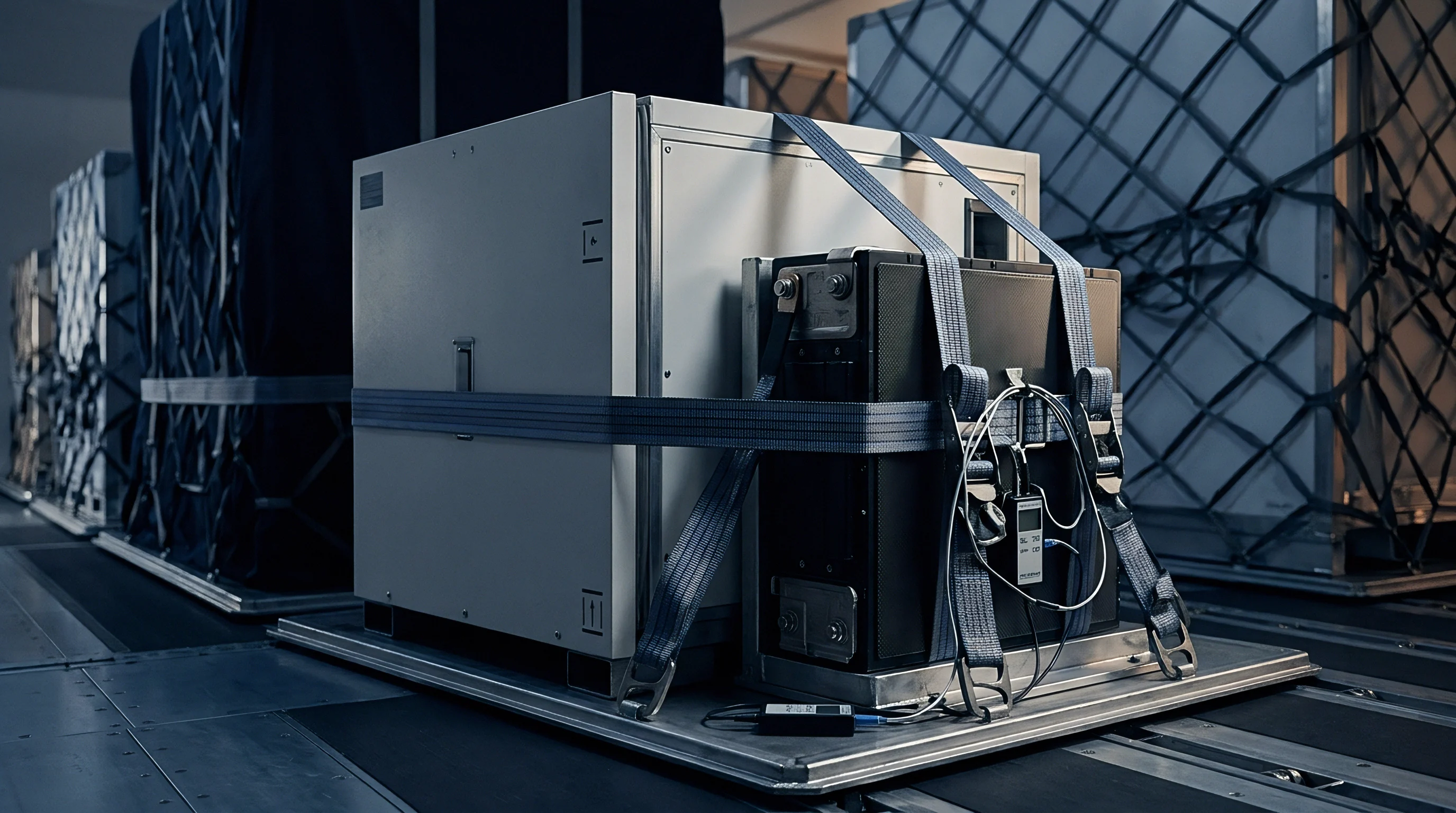
Chemical Identity and Model Number Discrepancies
Cathode chemistry modifications change thermal stability boundaries during thermal cycling and external short circuit events. A cell summary issued for a Lithium Iron Phosphate cell cannot cover a Lithium Nickel Manganese Cobalt Oxide cell, even when both share identical outer cylinder dimensions. Verification workflows verify chemical codes listed on cell datasheets against specific test report descriptions.
Factory location shifts represent another major failure point in supply chain documentation audit chains. Cell designs produced at a certified automated plant in one country must undergo full qualification testing if manufacturing moves to a different facility. Atmospheric conditions, machine tolerances, and raw material supplier changes impact cell structural consistency.
Audit protocols demand separate test summaries for each manufacturing site listed on transport labels.
- Model Name Mismatches occur when commercial marketing teams rename cell designs without updating corresponding laboratory qualification summaries.
- Mass Tolerance Excursions happen when high-density cathode formulations increase finished cell mass beyond the weight range documented in original test records.
- Unlisted Assembly Sites emerge when contractors split production across multiple uncertified regional factories without separate bench testing.
- Obsolete Manual Revisions surface when historical cell summaries cite retired editions of the UN Manual of Tests and Criteria.
- Unaccredited Testing Facilities appear when suppliers submit internal quality control check sheets lacking accredited laboratory credentials.
Discrepancies in serial number sequences indicate batch substitution or mixed-grade shipment assembly. Air freight inspectors log serial ranges printed on carton barcodes and compare them directly against factory batch lists attached to summary files. Gaps in serial continuity suggest mixed-quality lots containing uncertified cells.
Cell sizing updates create dimensional conflicts between technical drawings and test summary descriptions. A mechanical alteration of two millimeters in cell length alters structural strength, thermal dissipation paths, and crush resistance. The technical summary must detail exact physical measurements, allowing receiving inspectors to verify casing dimensions using precision calipers.
What remains unresolved in current supply chain enforcement is how freight forwarders can reliably verify whether an internal cathode supplier change alters thermal stability without demanding a costly, destructive laboratory audit of every incoming lot.


Acceptance
Airlines and ground handling agents run mandatory document audits at cargo reception counters prior to aircraft loading. Screening agents treat battery summaries as primary dangerous goods declarations, inspecting each line item for accuracy before accepting crates into terminal staging areas. Flaws in document structure trigger instant cargo rejections, leaving shipments stranded on warehouse aprons.
Carrier Screening Protocols and Acceptance Checklists
Dangerous goods clerks compare test summary entries against physical dangerous goods declarations using automated screening software and physical inspection sheets. Acceptance screeners confirm that the watt-hour rating printed on crate faces matches the energy level certified in the test report. A mismatch between declared cargo capacity and tested document capacity results in cargo lock-outs and hazardous material violation reporting.
State of charge restrictions enforce an absolute ceiling of 30 percent nominal capacity for standalone lithium ion cells carried on passenger or cargo freighters. Ground reception agents log incoming open-circuit voltage readings on sample cells drawn from selected pallets. Voltage profiles exceeding 30 percent state of charge trigger summary invalidation, shipment rejection, and mandatory reporting to local aviation authorities.
| Verification Parameter | Acceptance Threshold | Audit Method | Action On Non-Compliance |
|---|---|---|---|
| Watt-Hour Verification | Exact Match To Package Marking | Physical Label Comparison | Immediate Cargo Refusal |
| State Of Charge (PI 965) | 30% Maximum Nominal Capacity | Multimeter Sample Check | Shipment Hold & Regulatory Filing |
| Signature Authenticity | Named Person & Title Required | Visual & Database Cross-Check | Rejection Pending Resubmission |
| Manual Revision Standard | Current Or Prior Valid Edition | Version Text Inspection | Document Update Required |
Operator variations add carrier-specific operational limits on top of standard IATA Dangerous Goods Regulations. Major global air freight operators enforce complete bans on standalone lithium cell shipments under PI 965 across specific international trade routes. Shippers must confirm that the carrier designated on the waybill permits the specific battery packing instruction and accepts the test summary format provided.

State Variations and Local Airline Variations
National aviation agencies issue state variations that override baseline international dangerous goods standards. The United States Department of Transportation, Civil Aviation Administration of China, and European Union Aviation Safety Agency enforce independent documentation rules for aircraft entering their airspace. Shippers verify destination state requirements to ensure test summary formats meet regional mandates.
Handling agents cross-reference test summary issue dates against cell production schedules to detect back-dated filings. Regulatory amendments update safety standards over time, making older test editions obsolete for newly manufactured inventory. A summary issued under an outdated UN Manual revision cannot support shipments of recently fabricated cells.
A summary that omits the wet signature or validated digital stamp prompts instant cargo holds at primary hubs.
- Compare the exact cell model designation printed on physical carton labels against line item six of the UN 38.3 test summary.
- Verify that the testing laboratory named in line three holds current ISO/IEC 17025 accreditation for dangerous goods testing.
- Cross-check the nominal watt-hour rating against Section IA or IB thresholds defined in Packing Instruction 965.
- Examine line eight to confirm the exact revision of the UN Manual of Tests and Criteria applied during bench testing.
- Confirm the presence of an authorized corporate signature, printed signatory title, and valid issue date on the summary block.
Customs brokerage teams review dangerous goods documentation before filing electronic export manifests. Inconsistencies between test summary data and customs tariff codes flag shipments for physical container inspections. Demurrage charges stack up rapidly while containers wait for secondary document verification at air cargo freight gates.
When screening checks uncover falsified test summaries or altered watt-hour ratings, carriers place the shipping company on global cargo blacklists, revoking dangerous goods transport privileges across their global network.


Exposure
Uncertified battery shipments trigger civil penalties, cargo abandonment, and immediate cancellation of transit insurance policies. Regulatory agencies prosecute deliberate and negligent documentation errors under strict liability frameworks. Companies that tender uncertified lithium cells for air transport face significant financial loss, corporate reputation damage, and potential criminal prosecution.

Enforcement Mechanisms and Civil Liability
Aviation safety agencies enforce heavy fines for dangerous goods violations discovered during routine ramp checks or post-incident audits. Civil penalties assess tens of thousands of dollars per violation day for improper documentation, uncertified cell designs, or incorrect packaging markings. Repeated infractions result in systemic shipping bans and regulatory oversight proceedings.
Submitting false or invalid test summaries instantly voids commercial cargo insurance policies covering air shipments. Insurance underwriters include strict regulatory compliance clauses that disclaim liability for hull damage, cargo destruction, or third-party loss stemming from illegal dangerous goods consignments. Companies absorb the full cost of aircraft damage or cargo bay thermal incidents out of pocket.
Thermal runaways inside cargo holds generate gas volumes exceeding standard plane cargo pit ventilation capacities.

Contractual Protection and Risk Allocation
Procurement agreements shift regulatory exposure by inserting rigorous compliance indemnification terms into cell purchase contracts. Buyers mandate that cell manufacturers assume full legal and financial responsibility for losses caused by invalid test summaries, laboratory fraud, or hidden design changes. Clear contract terms provide grounds for recovering landed cost losses, customs fines, and alternative transport expenses.
Supply agreements establish clear guidelines for sample testing and document verification before issuing purchase orders. Importers hold legal status as the shipper of record when tendering cargo to air carriers, making them directly liable for carrier fines regardless of whether the cell factory generated the underlying documentation errors. Verification procedures protect importers from supplier misrepresentations.
A sound risk management strategy treats test summary verification as an absolute prerequisite for invoice payment, holding cell funds in escrow until dangerous goods auditors clear the safety file.