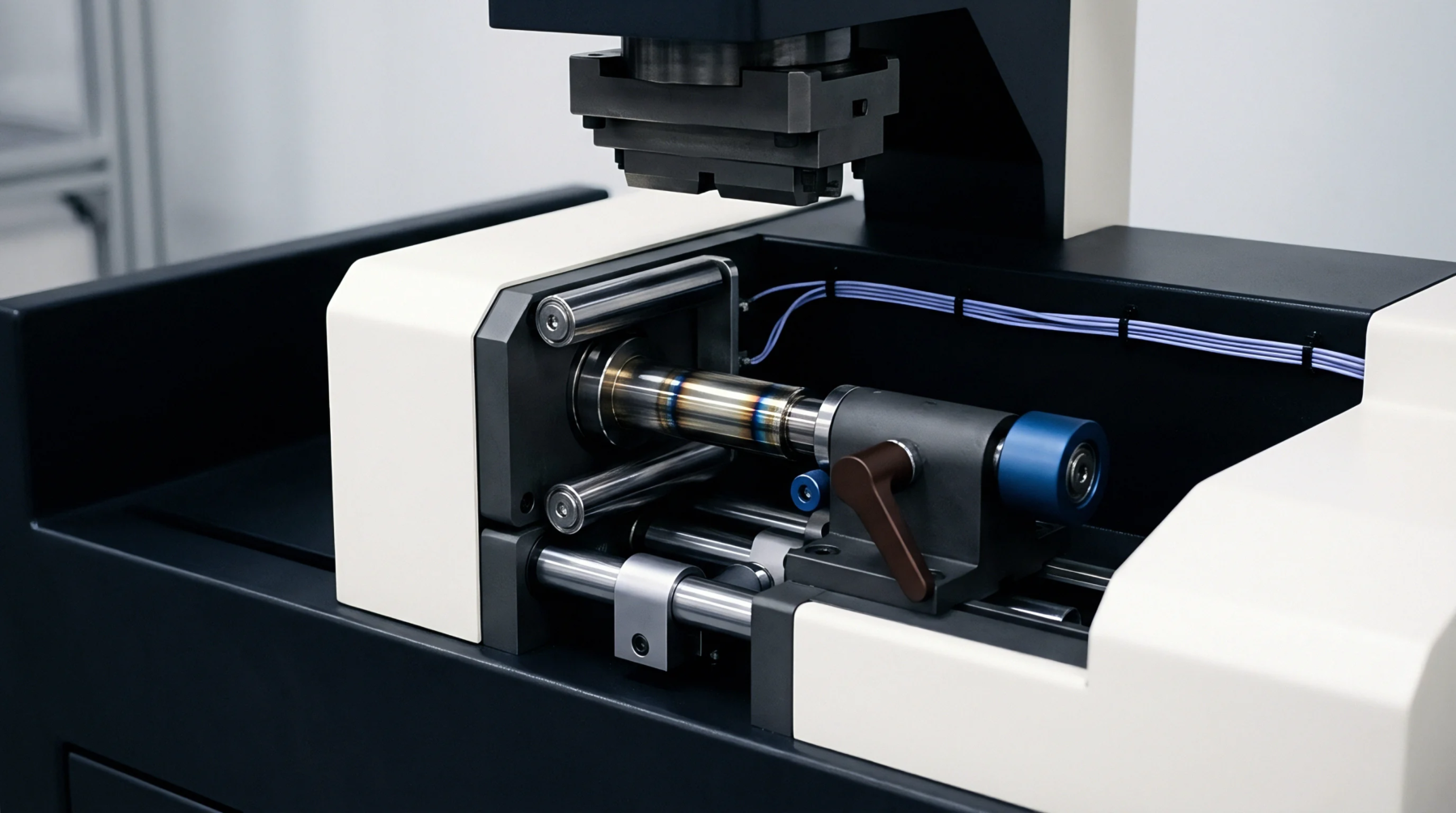
Prismatic Cell Swelling Kinetics and Mechanical Module Clamping Limits
Prismatic cell swelling kinetics require module clamping designs that balance initial foam pre-load against end-of-life separator compression limits.
Module pre load optimization is the deliberate sequence of secondary software asset initialization within a hardware controller that prioritizes urgent functional execution paths over non-essential interface updates. It governs the binary entry points that a processor pulls into random access memory during the startup phase. Developers implement module pre load optimization to shorten the duration between power application and the readiness of a primary control loop.
This practice applies strictly to the boot routine of embedded systems or high-performance industrial controllers. The technique stops where operating system kernels begin their own scheduling routines because the target here remains the pre-kernel hardware readiness stage. It defines how a system organizes the sequence of code packages to minimize latency during the initial power cycle.
Performance gains from module pre load optimization appear when manufacturers map the memory addresses of subroutines according to their priority level. Sequential reading of binary blocks avoids the mechanical overhead of re-seeking on flash storage media. A controller that loads critical diagnostic routines before graphic drivers avoids stall states during initialization.
Processors move faster when the underlying architecture permits parallel streaming of non-conflicting asset blocks. This arrangement ensures that the hardware remains responsive to external signals even while auxiliary processes wait for their turn in the buffer. Data blocks benefit from this reordering as the throughput of the local bus stabilizes.
Addressing space constraints requires the careful placement of executable code to ensure that module pre load optimization remains effective throughout the lifetime of the hardware. Software engineers define fixed offsets for each package to prevent memory fragmentation that slows down the loading speed. A well-ordered memory map prevents the controller from performing redundant lookups across disparate storage banks.
These adjustments fix the exact location where each subroutine resides in the non-volatile memory chips. Engineers monitor the integrity of the checksums that verify the accuracy of the loaded data before the code enters the execution pipeline. Reliability depends on this static organization because dynamic allocation creates unpredictable timing drifts in the boot sequence.
Every byte position inside the read-only memory contributes to the total time required for system stabilization.
Throughput measurement quantifies the efficacy of module pre load optimization by comparing the total duration of the cold boot against a baseline system without pre-arranged assets. Oscilloscopes and logic analyzers record the voltage shifts that mark the completion of individual initialization events. Technicians use these traces to identify bottlenecks where the processor waits for input from slow secondary buses.
A successful implementation reduces the time between activation and the first valid output signal by a factor proportional to the reduction in unnecessary file access. This hardware-level tuning allows complex machinery to resume operations after a power failure without triggering safety timeouts. The stability of the startup sequence remains the primary metric for verifying that the configuration functions correctly under varying thermal conditions.
Optimization of this nature provides a predictable recovery path for critical industrial infrastructure.
Prismatic cell swelling kinetics require module clamping designs that balance initial foam pre-load against end-of-life separator compression limits.
Expertise is a utility, not a secret. sentiention™ publishes its working knowledge as open reference: intelligence layer covering the materials it sources, the markets it enters, and the reference that serves both.