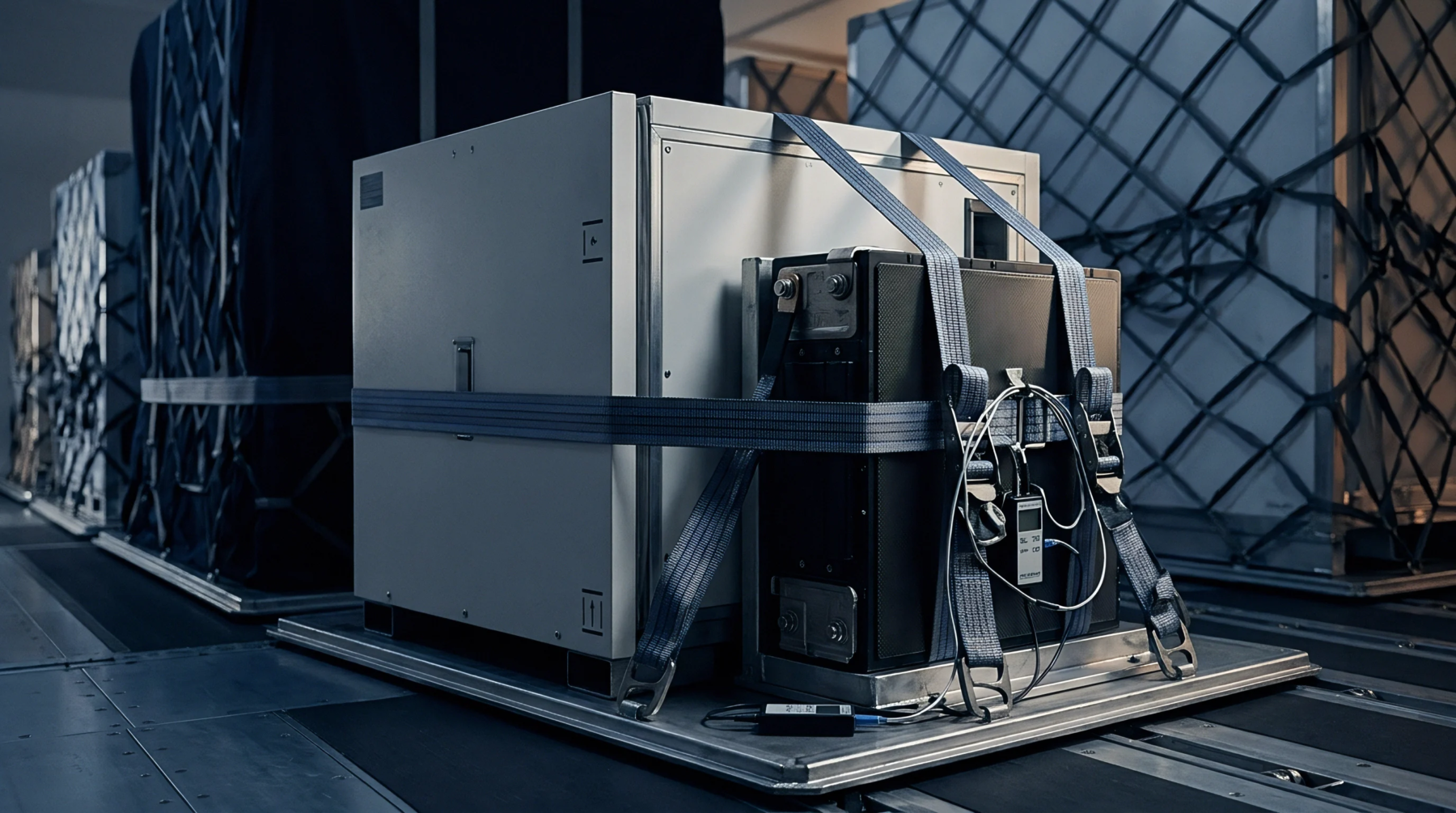
The Transport Rules and Safety Tests Lithium Cells Must Pass
Lithium cell shipments require UN 38.3 bench qualification, 30 percent state-of-charge air caps, Class 9 packaging, and verified 10-field test summaries.
This destructive safety evaluation is part of the Underwriters Laboratories standard for lithium batteries and is designed to assess the risk of flying fragments during a catastrophic failure. The procedure involves heating a fully charged cell on a laboratory burner until it undergoes thermal runaway and eventually explodes or vents. The projectile test ul 1642 uses a specific wire mesh screen to capture any debris expelled by the cell and measures the distance these fragments travel.
It stops applying once the cell is integrated into a larger battery pack, which is then subject to different system level safety standards. This test is a requirement for any cell manufacturer seeking to sell their products into the North American market for use in consumer electronics.
The test is conducted inside a specialized explosion proof chamber equipped with a high temperature Bunsen burner and an octagonal wire mesh screen. A single cell is placed on a metal support and centered within the screen, which consists of aluminum wire of a defined gauge and spacing. The burner is ignited and the cell is heated until it reaches a state of total failure, often characterized by the ignition of the electrolyte or the rupture of the casing.
During the projectile test ul 1642, the temperature of the cell is monitored to ensure the heat is applied consistently across different test samples. This setup is intended to simulate a worst case scenario where a cell is exposed to an external fire or extreme internal overheating. The geometry of the screen is designed to catch fragments that are large enough to cause injury to nearby persons or damage to surrounding equipment.
A passing result is achieved if no part of the exploding cell penetrates the wire mesh screen or travels more than a short defined distance from the test stand. This means that even if the cell is completely destroyed, the resulting debris must be small and low energy enough to be contained by the simple barrier. The projectile test ul 1642 specifically looks for the expulsion of the internal electrode assembly or large pieces of the metal casing.
If the cell vents gas or liquid without throwing solid objects, it is generally considered to have passed this specific safety check. However, if the entire cell is launched like a rocket or if heavy pieces of the top cap are thrown out, the design will fail the certification. This focus on physical containment is why many high capacity cells are designed with scored vent paths that allow for the controlled release of pressure.
For a purchasing manager, verifying that a cell has passed this test is a fundamental step in the supplier qualification process. It provides a level of assurance that even in the event of a fire, the batteries will not turn into dangerous shrapnel that could puncture other cells or harm users. The results of the projectile test ul 1642 are documented in a formal UL report that includes photographs of the cell before and after the event.
This documentation is often required by insurance companies and retailers before they will accept a product for sale. While this test only covers one specific aspect of battery safety, it is a critical gatekeeper for the commercialization of new cell designs. The continuous development of safer casing materials and better venting mechanisms is largely driven by the need to pass these rigorous safety protocols.
Lithium cell shipments require UN 38.3 bench qualification, 30 percent state-of-charge air caps, Class 9 packaging, and verified 10-field test summaries.
Expertise is a utility, not a secret. sentiention™ publishes its working knowledge as open reference: intelligence layer covering the materials it sources, the markets it enters, and the reference that serves both.