Verifying UN 38 3 Test Summaries and Import Compliance Dossiers
Importing lithium batteries demands verifying UN 38.3.5 test summaries, ISO 17025 lab scope, state of charge limits, and importer dossier records.
Crate
Moving lithium batteries across international borders requires strict compliance with dangerous goods packaging rules. Freight forwarders and airline acceptance desks review incoming pallets by comparing outer carton specification markings against transport paperwork. At ports and air terminals, ground handlers inspect physical packages before checking the dangerous goods declaration.
Any discrepancy among package markings, state of charge, or documentation leads to immediate rejection at the tender desk.
Cargo agents reject incomplete paperwork on arrival. Air shipments of standalone lithium ion cells fall under Packing Instruction 965 of the IATA Dangerous Goods Regulations, divided into Section IA and Section IB based on watt-hour capacity and package weight. Cells above 20 watt-hours fall under Section IA, requiring UN specification packaging, dangerous goods shipper declarations, and standard handling fees.
Packs up to 100 watt-hours shipped under Section IB also require UN specification packaging and declarations, though they allow higher net quantities per package than passenger flights permit. Maritime transport under the International Maritime Dangerous Goods Code relies on Packing Instruction P903 alongside Special Provision 188 for small cells, mandating outer packaging strong enough to pass a 1.2-meter drop test without cell displacement, short-circuiting, or spillage.
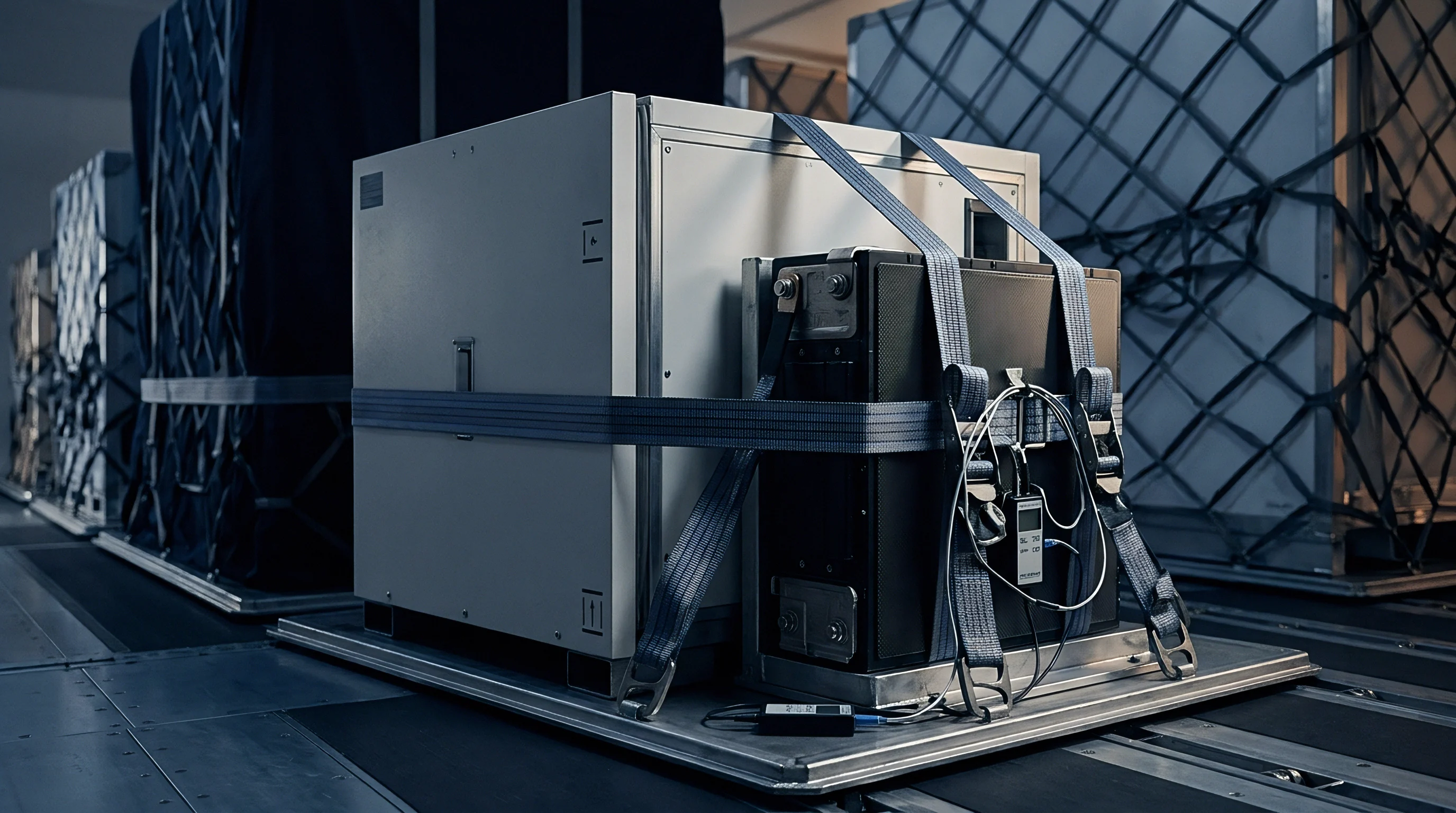
Dangerous Goods Packaging Specification Marks
Outer boxes for lithium batteries must show durable, embossed, or printed UN specification codes approved by competent national authorities. A standard UN code on a fiberboard box reads UN 4G/Y145/S/24/D/BAM 1234. This string marks the operational limits validated during drop, stacking, and moisture testing.
The 4G prefix designates a fiberboard box, while the letter Y confirms Packing Group II performance ~ matching the classification for lithium batteries under UN 3480 and UN 3481. The number 145 specifies the maximum gross mass in kilograms. The letter S indicates that the outer box contains inner packaging or solid materials.
The digits 24 denote the manufacturing year, 2024. The letter D identifies the issuing country, and BAM specifies the institute that certified the packaging design.
Importers trace cell shipments back to the original manufacturer test dossier before issuing purchase orders. Standard dangerous goods packaging undergoes drop testing from 1.2 meters onto a rigid, non-yielding surface in five orientations: flat on the bottom, top, long side, short side, and on the weakest corner. Passing requires no tearing, no exposed inner cell sleeves, and no internal short circuits.
Stacking tests require a fully packed box to withstand a load equal to a 3-meter stack of identical packages for 24 hours at 23°C without collapsing or deforming in ways that compromise transit stability.
Air freight forwarders reject pallets when the test summary model designation fails to match the outer shipping carton label.
Carriage Constraints and State of Charge Limits
Air transport regulations strictly enforce a maximum state of charge limit for standalone lithium ion cells shipped under UN 3480. Commercial lithium cells tendered for air freight cannot exceed a 30 percent state of charge. This limit reduces stored electrochemical energy within each cell casing, mitigating thermal runaway severity should a fault occur.
Cells packed with equipment under Packing Instruction 966 or installed inside equipment under UN 3481 Packing Instruction 967 are exempt from this 30 percent ceiling, provided the device prevents accidental activation during transit.
Carriers verify state of charge compliance through intake sampling and factory declaration audits. If a shipment arrives at an air terminal with cells sitting at 40 or 50 percent state of charge, safety inspectors reject the cargo under dangerous goods guidelines. Resolving the issue requires shipping the lot back to an off-site dangerous goods facility, unpacking the crates, and discharging each cell individually on test channels down to the 30 percent limit.
Terminal storage fees accumulate daily, and retesting adds thousands to overall logistics costs. Ground handling agents also require the state of charge verification certificate to match the exact production lot numbers on the UN 38.3 test summary.
| Transport Class | Packaging Instruction | Max State of Charge | UN Packaging Mark Required | Shipper Declaration Required |
|---|---|---|---|---|
| UN 3480 Standalone Cells (>20 Wh) | IATA PI 965 Section IA | 30 percent | Yes (UN 4G Packing Group II) | Yes (Dangerous Goods Declaration) |
| UN 3480 Standalone Cells (≤20 Wh) | IATA PI 965 Section IB | 30 percent | Yes (UN 4G Packing Group II) | Yes (Dangerous Goods Declaration) |
| UN 3481 Packed with Equipment | IATA PI 966 Section I / II | Unrestricted | Yes (Section I) / No (Section II) | Yes (Section I) / No (Section II) |
| UN 3481 Contained in Equipment | IATA PI 967 Section I / II | Unrestricted | No (Equipment casing serves as shell) | Yes (Section I) / No (Section II) |
| UN 3480 Sea Transport (IMDG Code) | IMDG P903 / SP 188 | Unrestricted | Yes (P903) / No (SP 188) | Yes (P903) / Bill of Lading Note (SP 188) |
Packaging designs in battery import files require physical verification of internal insulation. Inner packaging must completely enclose each cell to prevent contact with conductive objects or adjacent cells. Dividers made of corrugated cardboard, molded fiber, or flame-retardant plastic isolate cell terminals, while blister trays prevent lateral movement during high-vibration ocean transport.
Forwarders cross-check manifest declarations to confirm that declared net battery weights match actual weight. If declared net cell weight strays by more than 3 percent from physical gross weight minus box tare, customs holds the container for physical inspection.

Anatomy
Documenting lithium cell compliance centers on Section 38.3.5 of the UN Manual of Tests and Criteria. This standard outlines the ten-point structure required for every UN 38.3 Test Summary issued by cell manufacturers and pack integrators. Rather than serving as a full lab report, a test summary acts as a legally binding compliance statement that distills raw laboratory data into a standardized format.
Importers of record, dangerous goods advisors, and forwarders rely on it to confirm that a given cell or pack model passed the environmental, mechanical, and electrical stress tests in Sub-section 38.3.
The ten mandatory fields in a Section 38.3.5 test summary allow no omissions. Field one lists the cell, battery, or product manufacturer, including address, phone number, email, and website. Field two requires contact details for the testing laboratory, whether independent or factory-owned.
Field three calls for a unique test report ID number, while field four records the date of the underlying lab report. Field five covers the cell or battery description, specifying chemistry (lithium ion or lithium metal), mass, watt-hour rating or total lithium content, physical shape, and exact model number. Field six lists the individual tests conducted and their pass/fail results from T.1 through T.8.
Field seven mandates a reference to assembled battery test rules where applicable. Field eight cites the edition of the UN Manual used during testing. Field nine requires the signature, printed name, and title of an authorized representative, and field ten confirms the document’s validity.
Structural Requirements of Section 38 3 5
Discrepancies among these ten fields remain a frequent cause of customs holds at border crossings. Mismatched model numbers trigger immediate impoundment. If a factory changes a model designation from INR21700-M50 to INR21700-M50T following an internal tab modification, the old test summary becomes legally invalid for the new batch.
Importers must hold a test summary with a description field matching the exact part number laser-etched on the cell sleeve and listed on the commercial invoice.
The edition level in field eight determines whether a summary satisfies current regulatory standards. The UN Manual undergoes regular revisions, with Revision 6, Amendment 1, and Revision 7 forming the current baseline for global transport. Summaries citing Revision 5 or older rely on outdated parameters that major international air carriers routinely reject.
Compliance reviewers look for current revision levels or clear documentation of technical equivalence under dangerous goods transport regulations.
| Field Number | Mandatory Field Name | Regulatory Content Specification | Common Dossier Defect |
|---|---|---|---|
| 1 | Manufacturer Details | Name, address, phone, email, website of producer | Missing website or non-functional contact email |
| 2 | Testing Lab Details | Name, address, phone, email, website of laboratory | Listing unaccredited sub-contractor details |
| 3 | Test Report ID | Unique tracking number matching lab master file | Truncated or generic internal part numbers |
| 4 | Report Date | Exact completion date of original laboratory testing | Date post-dates physical shipment departure date |
| 5 | Cell/Pack Description | Mass, Wh rating, chemistry, shape, exact model | Wh rating rounding error vs datasheet nominal capacity |
| 6 | Test Results List | Explicit T.1 through T.8 pass/fail confirmation | Omitting T.6 for cells or T.7 for single-cell batteries |
| 7 | Assembled Testing Note | Reference to 38.3.3(f) or 38.3.3(g) if applicable | Blank field on multi-cell battery pack summaries |
| 8 | UN Manual Edition | Revision level and amendment number (e.g. Rev. 7) | Citing obsolete Revision 4 or Revision 5 rules |
| 9 | Signatory Details | Signature, printed name, and corporate title | Digital signature image without verification metadata |
| 10 | Validity Confirmation | Statement asserting legal accuracy of document | Missing standard statutory compliance declaration |

Environmental and Mechanical Test Protocols
Sub-section 38.3 of the UN Manual details eight stress test sequences designed to simulate severe transport conditions. Tests T.1 through T.5 apply to all cells and packs, subjecting components to thermal and mechanical forces capable of causing internal short circuits or structural failure.
Test T.1 Altitude Simulation evaluates seal integrity and internal structural stability under reduced pressure. Ten fresh cells and ten fully cycled cells are placed at 11.6 kilopascals or less for at least six hours at 20°C, simulating an unpressurized cargo hold at 15,000 meters. To pass, samples must show no weight loss, leakage, venting, puffing, disassembly, rupture, or fire, while maintaining at least 90 percent of their pre-test open-circuit voltage.
Test T.2 Thermal Test subjects units to extreme temperature cycling to reveal component expansion discrepancies, separator degradation, or seal failure. Cells undergo ten continuous cycles, spending at least six hours at 72°C followed by six hours at -40°C, with transition times under 30 minutes. Larger cells and heavy battery packs use extended dwell times to reach full thermal equilibrium throughout the casing.
Post-test criteria demand intact structural integrity and voltage stability matching T.1 thresholds.
A voltage drop exceeding 10 percent of pre-test open-circuit potential during the T.2 thermal cycling sequence constitutes immediate test failure under UN Manual criteria.
Test T.3 Vibration reproduces the sustained agitation of sea, rail, and road transport. Units undergo a logarithmic sinusoidal vibration sweep from 7 Hz to 200 Hz and back over 15 minutes, repeated 12 times for a total of three hours across three perpendicular axes. Small cells face a peak acceleration of 8 gn, sweeping from 7 Hz to 18 Hz at a constant 0.8 mm amplitude before accelerating up to 200 Hz. Larger batteries run under a reduced profile peaking at 2 gn to account for heavy transport mounting.
Test T.4 Shock evaluates mechanical resistance to sudden impacts. Units undergo three positive and three negative shocks along three orthogonal axes ~ 18 impacts in total. Small cells take half-sine shock pulses peaking at 150 gn for 6 milliseconds, while larger batteries take 50 gn pulses over 11 milliseconds.
Technicians examine samples afterward for structural deformation, seal leaks, or internal short circuits.
Test T.5 External Short Circuit measures thermal and electrical responses during a direct external fault. Units are heated until the outer case reaches 55°C, at which point technicians apply a hard short circuit of less than 0.1 ohm total resistance across the terminals. The short remains connected for at least an hour after casing temperature stabilizes back at 55°C. To pass, outer case temperatures must stay below 170°C, with no fire, disassembly, or rupture during the test or within the six-hour observation window.
- Verify Model Designation match between physical cell casing laser etching, package labels, shipping manifests, and field five of the UN 38.3.5 test summary.
- Cross-check Test Dates against cell batch production codes to confirm test completion occurred prior to manufacturing the shipped lot.
- Validate Laboratory Accreditation by checking field two lab credentials against national accreditation body search portals for active ISO 17025 scope covering lithium battery testing.
- Review Sample Size Integrity within the raw lab report to verify that the required count of uncycled and fully cycled cells underwent tests T.1 through T.8.
- Confirm Revision Currency by ensuring field eight references Revision 6 Amendment 1 or Revision 7 of the UN Manual of Tests and Criteria.

Electrical and Overcharge Boundary Verification
Tests T.6 through T.8 evaluate targeted electrical stresses, isolating internal cell construction and protective circuitry in battery packs. Test T.6 assesses internal short-circuit resistance under direct mechanical impact or crushing forces for primary and secondary cells. Laboratories select impact or crush protocols based on cell format.
Cylindrical cells larger than 18 mm in diameter undergo the impact test: a 15.8 mm steel bar is placed across the center of the cell, and a 9.1 kg weight is dropped from 61 cm onto it. Prismatic and pouch cells undergo the crush test, compressed between two flat parallel plates by a hydraulic ram applying 13 kilonewtons. Passing requires no internal fire or thermal disassembly during testing or within six hours afterward.
Test T.7 Overcharge determines whether a rechargeable battery pack can handle sustained overcharging without catching fire or rupturing. This test applies only to battery packs or single-cell batteries equipped with built-in protection circuits. The pack connects to a power supply delivering twice the manufacturer’s maximum continuous charge current, with voltage set to twice the maximum rated charge voltage or 22 volts ~ whichever is lower.
Current flows continuously for 24 hours. The pack passes if no fire or disassembly occurs during testing or throughout the seven-day monitoring period.
Test T.8 Forced Discharge measures how well a primary or secondary cell withstands forced inversion within a series-connected pack. A fully discharged cell is connected in series to a DC power supply driving current equal to the manufacturer’s maximum continuous discharge rating. This forced current flows for a duration equal to the cell’s rated capacity divided by the applied current.
The sample must show no fire and no disassembly during the test or over the subsequent seven days.
Section 38.3.2.1 of the UN Manual mandates full retesting whenever a design change alters cathode mass, active foil thickness, or separator structure by more than 20 percent.
Stamp
Auditing compliance dossiers involves examining the credentials of the laboratory that issued the underlying UN 38.3 test report. Laboratories producing compliance documentation must hold formal ISO/IEC 17025 accreditation, the global standard for testing competence. That accreditation must originate from a recognized national body affiliated with the International Laboratory Accreditation Cooperation Mutual Recognition Arrangement ~ such as the China National Accreditation Service for Conformity Assessment, the American Association for Laboratory Accreditation, the National Voluntary Laboratory Accreditation Program, or Deutsche Akkreditierungsstelle.
A test summary from an unaccredited lab, or one whose scope excludes UN 38.3 test methods, holds no standing during customs audits.
Confirming lab authorization requires checking the institute’s official ISO/IEC 17025 scope schedule in the issuing accreditation body’s database. Compliance auditors match the report certificate number against the scope document to verify that UN 38.3 methods T.1 through T.8 are explicitly listed. Unaccredited regional labs frequently issue certificates copied directly from accredited templates.
These documents appear genuine on the surface but fail verification when cross-referenced against official accreditation registries.
Accreditation Chain and Laboratory Authorization
Documentation fraud across international battery supply chains extends beyond unaccredited facilities to include altered PDFs, fabricated signatory names, and modified test dates. Vendors sometimes take valid test reports from established manufacturers like LG Energy Solution, Panasonic, Samsung SDI, or CATL and insert the name of an unbranded supplier. Compliance teams identify these changes through forensic document review, PDF metadata checks, and direct verification with the testing laboratory.
Unaccredited test reports render an entire import dossier invalid. PDF metadata analyses frequently uncover edits made with desktop publishing tools. Legitimate reports rely on secure digital signatures or verifiable QR codes pointing directly to the testing institute’s official domain.
Scanning the code should load the lab’s actual website rather than a generic file-hosting service or redirected page. If a report ID yields no matching record in the lab database, the dossier is flagged immediately.
- Altered Cell Model Numbers where high-grade manufacturer part designations are pasted over obscure tier-three cell factory names on original lab PDFs.
- Date Sequence Inversions where the test report completion date post-dates the shipment bill of lading or precedes the cell model factory release date.
- Missing Laboratory Scope Inclusion where an ISO 17025 accredited laboratory holds authorization for general electronic safety but lacks dangerous goods transport testing scope.
- Discrepant Sample Mass Values where the cell weight recorded in the lab raw data table strays by more than 5 percent from the physical cell mass.
- Falsified Signatory Metadata where signature fields contain static bitmap images without embedded cryptographic validation certificates or verifiable employee keys.
- Truncated Sub-test Records where raw data annexes omit voltage and temperature logs for the seven-day post-test observation windows required under T.7 and T.8.
Lineage Mapping from Cell to Assembled Pack
Establishing compliance lineage requires connecting the cell-level UN 38.3 test summary to the final pack documentation. A battery pack built using certified cells does not automatically inherit their UN 38.3 status. Sub-section 38.3.3 outlines explicit retesting rules for assembled packs based on watt-hour capacity, series cell count, parallel module configuration, and protective circuit design.
Even when individual cells hold valid summaries, assembled battery packs must still undergo tests T.1 through T.5 as well as T.7. If a finished pack exceeds 6200 watt-hours, or if its voltage configuration alters how protective circuitry behaves, complete pack retesting is legally required. Expanding parallel cell count to increase amp-hour capacity alters fault current dynamics enough to invalidate existing assembly-level certifications.
| Design Change Parameter | Modification Threshold | Retesting Obligation Required | Applicable Sub-section Clause |
|---|---|---|---|
| System Watt-Hour Increase | Greater than 20 percent increase | Full Pack Retesting (T.1 – T.5, T.7) | Section 38.3.3(f) |
| System Voltage Increase | Increase via added series cells | Full Pack Retesting (T.1 – T.5, T.7) | Section 38.3.3(f) |
| Cell Model Swap | Different cell chemistry or cathode supplier | Complete Re-qualification (T.1 – T.8) | Section 38.3.2.1 |
| Enclosure Material Swap | Metallic housing to plastic housing | Mechanical Retesting (T.3 – T.5) | Section 38.3.3(g) |
| BMS Board Redesign | Change in short-circuit cut-off electronics | Electrical Retesting (T.5, T.7) | Section 38.3.3(g) |
Validating lineage means maintaining a complete paper trail within the compliance file. This includes the cell manufacturer’s UN 38.3 summary, the cell lab report, the pack manufacturer’s summary, the pack-level lab report, and a bill of materials linking cell lot numbers to final assembly batches. A missing link breaks the chain of custody, rendering the dossier non-compliant during a customs audit.
Sub-clause 38.3.3(f) of the UN Manual mandates complete retesting of battery assemblies if the cumulative capacity increases by more than 20 percent over the baseline certified unit.
Importers can face forty-two thousand dollars in air freight demurrage fees when an unaccredited regional lab signs off on a test summary without holding ISO 17025 scope for lithium battery mechanical shock testing.

Customs
A compliance dossier serves as the primary legal protection for an importer of record when hazardous cargo passes through border checkpoints. Authorities such as the U.S. Pipeline and Hazardous Materials Safety Administration, European customs agencies, and the UK Health and Safety Executive hold broad statutory powers to detain, audit, fine, or impound shipments lacking verified documentation. Importers cannot transfer regulatory liability back to overseas factories; national laws assign sole responsibility to the importer of record to prove that goods satisfy safety, environmental, and dangerous goods rules.
Clearing customs requires an aligned document package: the UN 38.3.5 test summary, a GHS-compliant Safety Data Sheet, and mode-specific transport declarations. Section 3 of the SDS must list the exact chemistry, such as Lithium Nickel Manganese Cobalt Oxide or Lithium Iron Phosphate, alongside valid CAS registry numbers. Section 14 must mirror transport details ~ UN 3480 or UN 3481 designations, proper shipping names, hazard classes, and packing groups ~ matching the UN 38.3 test summary precisely.
Regulatory Integration under EU Battery Rules
Entering the European market requires compliance with EU Regulation 2023/1542, which replaced Directive 2006/66/EC. This framework covers all battery types placed on the EU market, establishing mandatory economic operator obligations, CE marking rules, EU Declarations of Conformity, carbon footprint declarations, recycled content minimums, and digital battery passports.
Digital battery passports change how European compliance filings operate. Beginning in 2027, every industrial and electric vehicle battery over 2 kilowatt-hours placed on the EU market will require an accessible digital passport linked via a QR code on the casing. This passport must contain verified compliance data, including cell chemistry, manufacturing origin, carbon footprint class, recycled content percentages, state-of-health metrics, and the complete UN 38.3 test summary.
Importers must keep this technical file attached to their EU Declaration of Conformity for 10 years after product launch.
| Dossier Component | Primary Regulatory Basis | Retention Timeline Mandate | Enforcement Authority |
|---|---|---|---|
| UN 38.3 Test Summary | UN Manual of Tests and Criteria 38.3.5 | Indefinite (Duration of active commercial supply) | IATA, IMO, DOT PHMSA, National Port Authorities |
| Safety Data Sheet (SDS) | UN GHS Revision 8 / REACH Regulation | 10 years past last manufacturing date | ECHA, OSHA, National Chemical Agencies |
| EU Declaration of Conformity | EU Regulation 2023/1542 (CE Marking) | 10 years following market placement | EU Member State Market Surveillance Authorities |
| Battery Passport File | EU Regulation 2023/1542 Article 77 | Active operational lifespan of battery unit | European Commission, National Customs Agencies |
| DG Shipper’s Declaration | ICAO Technical Instructions / IMDG Code | Minimum 3 months (Air) / 2 years (Sea) | Civil Aviation Authorities, Coast Guard Inspectorates |
Importer Liability and Customs Clearance Records
Compliance teams audit freight compliance files against secondary distribution records to catch altered test certificates before filing with customs. Holds at the port accrue immediate storage charges. When authorities flag a container carrying lithium cells for physical inspection, officials cross-check cell labels, serial numbers, carton markings, and state of charge levels against the import dossier.
Finding an unlisted cell model or an unaccredited lab report triggers an immediate seizure notice.
Penalties for dangerous goods violations escalate based on intent and severity. Under U.S. 49 CFR rules, civil fines for knowingly tendering non-compliant shipments reach up to $99,756 per violation per day, rising to $232,762 if an incident results in severe injury, death, or major property destruction. In Europe, non-compliance with Regulation 2023/1542 surveillance rules leads to product recalls, sales bans, and fines calculated as a percentage of global annual turnover.
Insurance policies also routinely exclude coverage for transit thermal events if the shipment lacked valid UN 38.3 test records.
Standard test reports expire as soon as a design changes, making carrier acceptance dependent on an unbroken paper trail. Retesting adds thousands to overall logistics costs, while shipper declarations demand exact accuracy across every line item. Shipping with uncertified cells can void freight insurance policies entirely.
How national port authorities will audit battery passport QR code metadata against physical UN 38.3 summaries during fast-track customs scans remains unstandardized across European terminals.
Sieve
Physical inspection upon arrival is the final defense against degraded or non-compliant battery shipments. Receiving teams require lot acceptance sampling routines that test incoming hardware against the raw data logged in the original UN 38.3 report. Relying exclusively on paperwork without physical checks leaves pack integrators vulnerable to degraded cells, sub-grade swaps, and field failures.
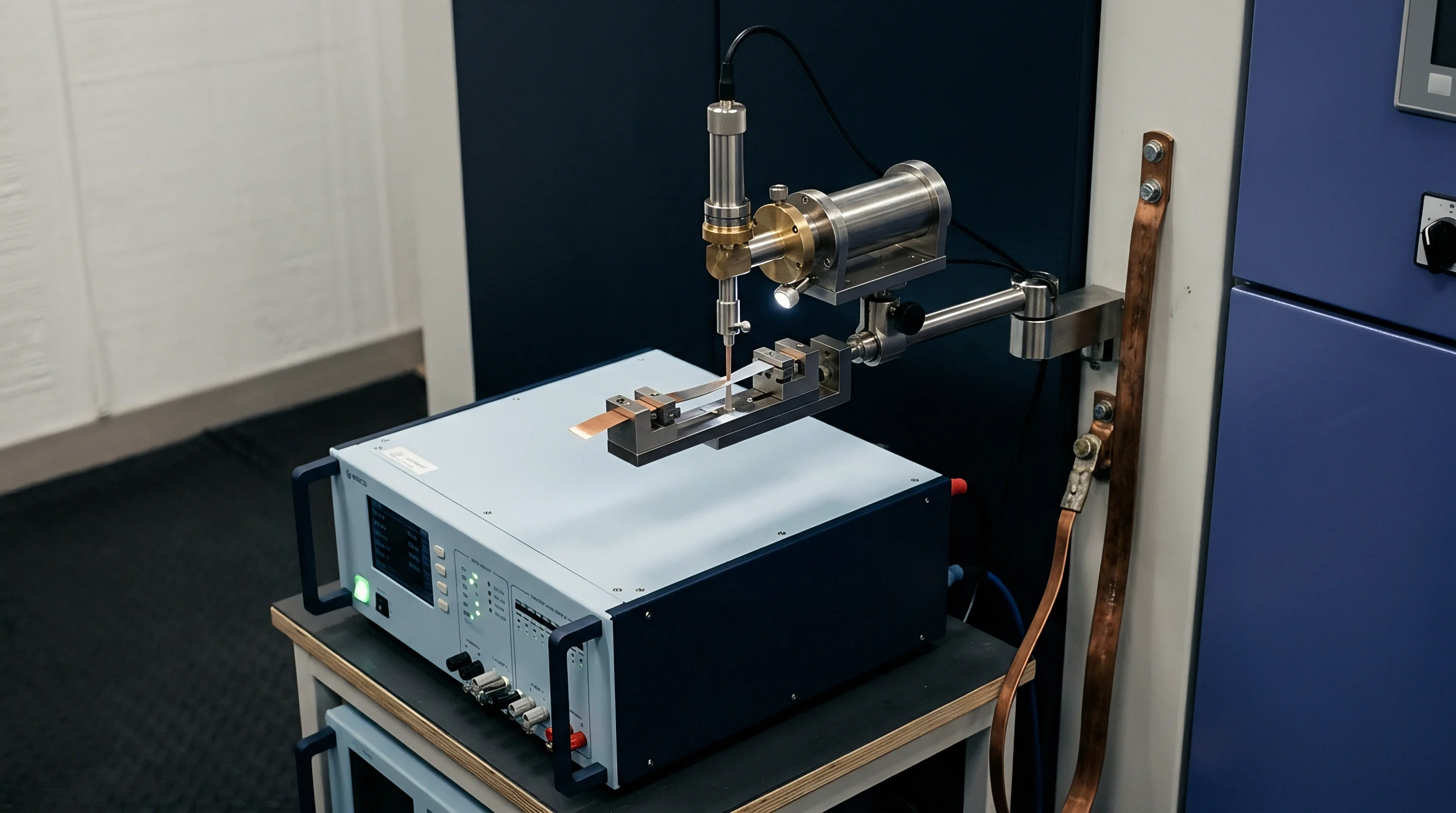
Receiving facilities enforce strict quarantine procedures whenever cell model suffixes deviate from the test summary paperwork. Shipments move straight to a segregated quarantine area upon arrival at the dock. Quality inspectors pull samples using ANSI/ASQ Z1.4 (ISO 2859-1) Normal Single Sampling Level II standards, running individual cells through checks for open-circuit voltage, 1 kHz AC internal resistance, DC internal resistance, physical dimensions with calibrated micrometers, mass with analytical scales, and laser-etched matrix code legibility.
Incoming Batch Physical and Electrical Auditing
Open-circuit voltage and internal resistance measurements quickly indicate batch uniformity and chemical stability. Fresh factory cells show tight open-circuit voltage distributions, typically within a 5-millivolt range across a lot. Checking AC internal resistance at 1 kilohertz verifies electrode tab weld quality and electrolyte wetting.
If sample ACIR varies by more than 10 percent from nominal datasheet specifications, the batch signals manufacturing inconsistency or thermal stress during ocean transport.
Tracking self-discharge over time ~ known as K-value testing ~ catches internal micro-shorts before cells reach assembly lines. The K-value measures open-circuit voltage drop over time in millivolts per day: K = (V1 – V2) / (t2 – t1). Technicians record initial voltage V1 at intake, hold samples at 25°C for 14 days, and measure final voltage V2.
Healthy cells show a K-value under 0.5 mV/day. Rates above 1.5 mV/day point to metallic contamination or separator defects that bypassed factory screening, presenting severe thermal runaway risks in the field.
- Isolate Pallet Lots in secure physical receiving quarantine prior to technical sign-off by dangerous goods compliance teams.
- Extract Random Cell Samples according to ISO 2859-1 sampling tables based on total pallet unit quantities.
- Measure Dimension and Mass using calibrated digital tools, comparing values against UN 38.3.5 test summary field five parameters.
- Log Electrical Parameters including open-circuit voltage and 1 kHz AC internal resistance across all extracted sample units.
- Calculate Batch K-Value by re-testing sample voltage after a 14-day ambient temperature dwell period.
- Cross-Check Laser Matrix Codes against the manufacturer master lot database to confirm genuine origin and production date.
- Issue Dossier Clearance Sign-Off releasing the batch to production inventory or triggering vendor quarantine procedures.
Discrepancy Resolution and Containment Procedures
If incoming testing reveals non-compliant cells, mismatched summaries, or elevated self-discharge rates, quality managers must act immediately. Non-compliant pallets are locked in dangerous goods storage vaults equipped with off-gas extraction and automated fire suppression. The compliance team issues a formal Quality Notification and Material Review Board hold in the ERP system to prevent inventory from moving to production lines.
Resolving vendor issues requires presenting physical test logs alongside the rejected UN 38.3 dossier. Procurement contracts should include clear terms requiring suppliers to provide verified ISO 17025 test files matching delivered lot numbers. If a vendor delivers cells backed by outdated test summaries or failing electrical specifications, the contract must require them to cover all return freight, storage fees, retesting costs, and customs charges.
Rigid incoming audits ensure that every cell entering the facility carries verified documentation alongside physical integrity.
Incoming cell shipments lacking traceable batch test records belong in containment until laboratory checks confirm chemical identity and voltage stability.