Meaning
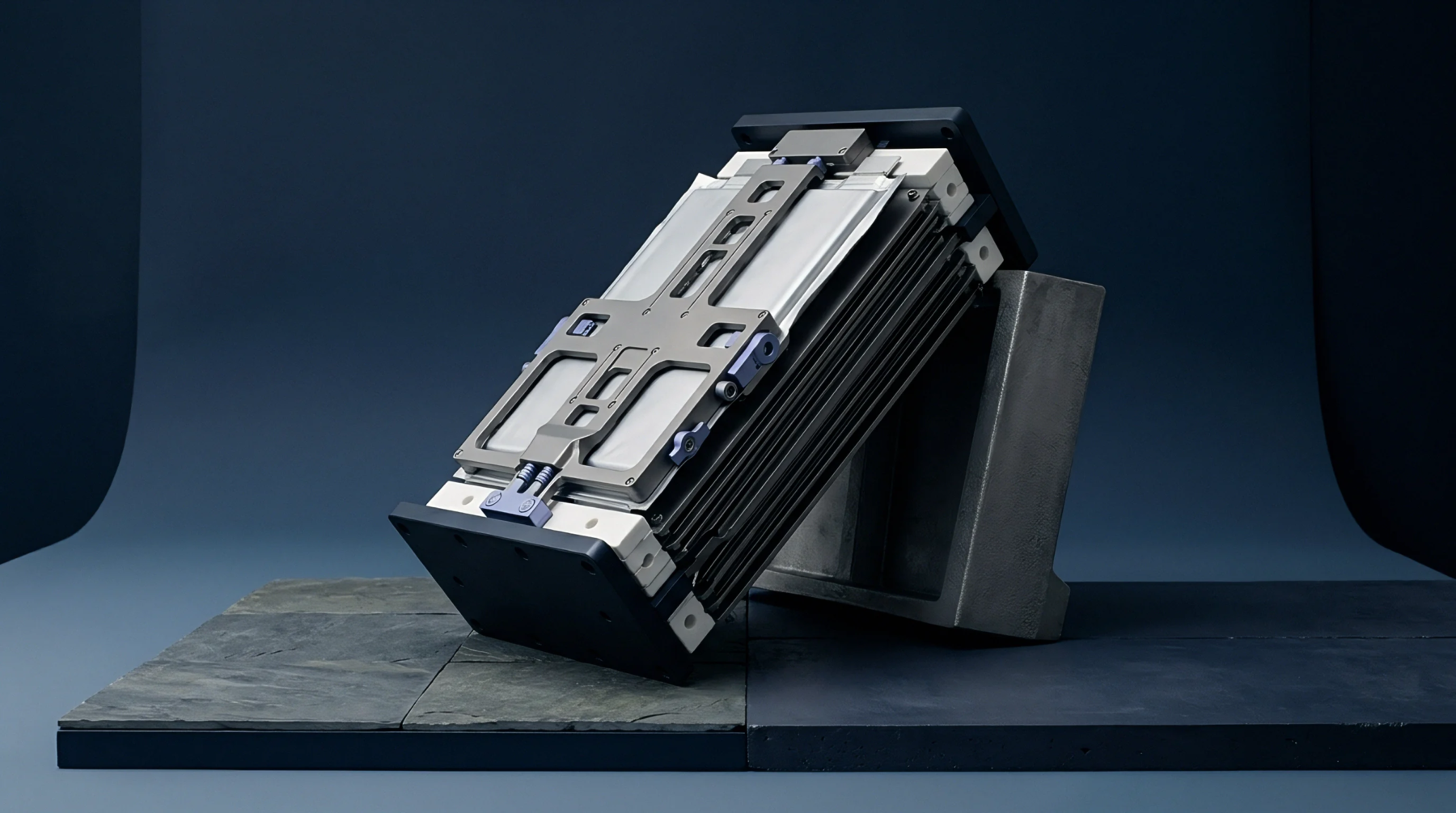
Mechanical force applied to the electrolyte and electrode interfaces of a battery during cycling maintains contact integrity by counteracting the internal expansion of active materials. Solid state cell thermal compression prevents the formation of voids or delamination at the junction points where solid electrolytes lose physical connection with lithium metal or composite cathodes. This boundary condition ensures that ion pathways remain continuous throughout the volumetric shifts typical of high energy density chemistries.
Internal Pressure
Force control modules exert constant load on the cell stack to mitigate the consequences of anisotropic swelling. Engineers implement these fixtures to manage the stress generated by the lithium host lattice during intercalation and deintercalation cycles. Stable contact resistance results from the sustained clamping action which prevents the loss of conductivity as the materials shift under operational heat.
Stack Architecture
Multilayer designs require precise load distribution to prevent localized deformation in thin solid electrolyte separators. High pressure concentrations cause brittle ceramic membranes to fracture, creating electrical shorts between the anode and cathode plates. Manufacturers determine the optimal compression range through empirical mapping of electrochemical performance against mechanical load levels to avoid irreversible damage to the cell internal components.
Process Stability
Consistent force application preserves the capacity of the system over extended usage periods by locking the lattice structure in a tight geometric arrangement. Variation in the clamping load leads to unstable impedance measurements because the contact area changes as the internal components expand and contract against their housing. Effective management of this parameter provides a reliable method for extending the cycle life of solid state architectures.