Regulatory Evidentiary Standards for Solid-State Anode Cell Import Safety Verification Frameworks
Solid-state cell import verification requires modified UN 38.3 testing under active stack pressure and UN 3090 dangerous goods compliance.


Foil
Solid-state anode cell architectures using silicon-dominant composites or metallic lithium deposits introduce failure physics distinct from liquid electrolyte cells. Solid electrolyte separators made of inorganic sulfide or oxide matrices lack the viscous fluid dampening that traditional polyolefin separators possess, concentrating internal stresses directly at interface contact points. Electrodeposition during rapid charging forms needle-like metallic protrusions through micro-cracks in rigid ceramic plates.
Packaging pressure changes the threshold where interfacial voids form, while temperature fluctuations shift the modulus of elasticity across the solid-state assembly. Understanding these electro-mechanical dynamics determines how evidentiary safety filings are constructed for customs clearance and regulatory authorities.
Solid Anode Failure Physics during Mechanical Compression
Metallic lithium electrodeposition produces non-uniform mossy structures at high current densities. Mechanical compression applied to pouch or prismatic solid-state formats suppresses vertical dendritic growth by forcing lateral creep across the lithium surface, and maintaining precise external clamp pressures between 0.5 MPa and 5.0 MPa prevents void nucleation during high-rate stripping steps. Standard liquid cells undergo volumetric changes up to 10 percent during full state-of-charge swings, whereas silicon-dominant solid-state anodes experience localized volume expansion exceeding 280 percent.
Uncontrolled expansion fractures brittle inorganic solid electrolyte plates, creating direct low-resistance pathways between opposing electrodes.
Mechanical stress relaxation within cell stack assemblies decreases internal contact area over extended cycling. The resulting loss of physical contact elevates interfacial resistance, driving localized current hot spots that accelerate lithium plating. When solid electrolyte interfaces experience continuous compression variation, micro-fractures propagate along grain boundaries.
External pressure fixtures used in test trials often differ from final commercial enclosure designs, and testing data generated without continuous stack tension monitoring masks this internal structural degradation.
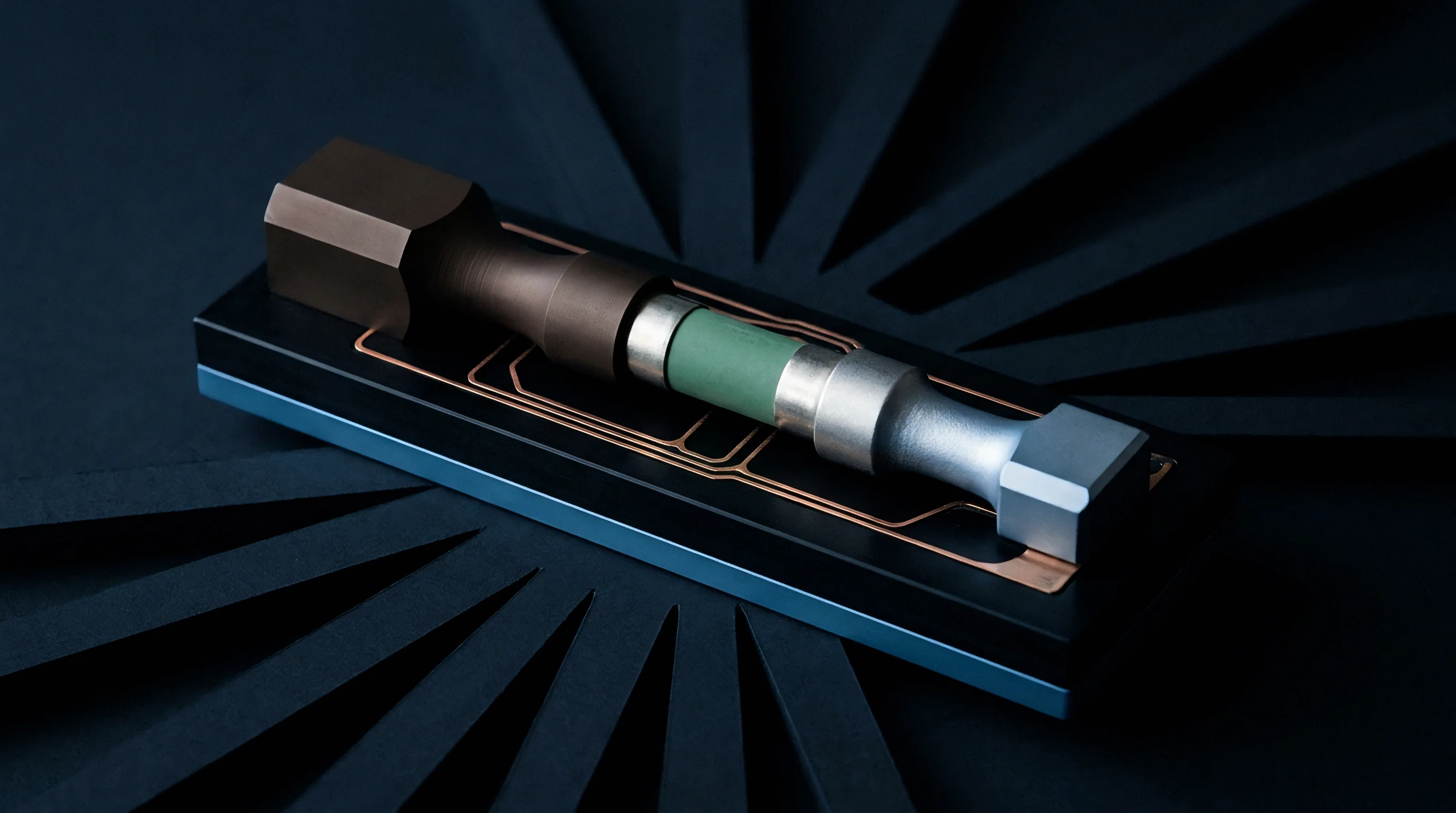
Solid Electrolyte Interfacial Void Ingress and Dendrite Growth
Rigid inorganic separator plates experience extreme stress localized at grain boundaries. Lithium ion fluxes concentrate at boundary junctions, driving high localized current densities that exceed the mechanical yield strength of solid lithium metal and allowing filaments to breach ceramic separators along intergranular channels without separator thermal melting. Thermal runaway in solid-state systems occurs via rapid localized micro-shorting that ignites residual organic binders or polymer gel interlayers.
The thermal runaway onset temperature for solid-state cells with sulfide electrolytes typically ranges between 160°C and 220°C, slightly higher than liquid systems, yet total gas generation rates during chemical decomposition remain substantial.
Sulfur-based solid electrolyte cells subject to 85 percent relative humidity at 25°C generate hazardous hydrogen sulfide gas exceeding 10 ppm within 180 seconds of casing rupture.
Safety documentation must capture gas evolution profiles during mechanical crushing and high-temperature exposure. Sulfide solid electrolytes like lithium phosphorothioate produce toxic hydrogen sulfide when exposed to moisture. Importers filing regulatory declarations must supply environmental reaction assessments alongside standard thermal abuse test results, as cell packaging integrity directly dictates chemical safety during transit and storage.
Immersion tests and humidity exposure evaluations form necessary evidentiary layers for cross-border trade approval.
Solid electrolyte structural integrity degrades under exterior pouch expansion and ambient swelling during extended cycling, contradicting assumptions that ceramic layers remain mechanically immune.

Assay
Standardized testing procedures developed under UN 38.3 and IEC 62133 were constructed around organic liquid electrolyte behavior. Evaluating solid-state cells against these historical standard baselines creates evidentiary gaps that mask field failure modes. Mechanical vibration and shock testing often leave ceramic solid electrolytes structurally compromised without triggering immediate electrical shorts, while thermal exposure protocols fail to evaluate stack pressure retention, allowing compromised cells to pass laboratory trials while posing severe risks inside operational battery packs.

Why Do Standard UN 38.3 Thermal Cycles Fail Solid-State Cells?
Temperature excursions between minus 40°C and 72°C alter the mechanical contact pressure across internal ceramic interfaces. Thermal expansion coefficient mismatches between metallic lithium, solid electrolyte, and metallic foil collectors create microscopic interfacial shear stress. UN 38.3 Test T.2 subjects cells to six hours at 72°C followed by six hours at minus 40°C over ten continuous cycles.
Solid-state pouch cells tested without external clamping fixtures expand during the elevated temperature phase, causing irreversible void formation at electrode interfaces.
When cells return to 20°C after thermal cycling, internal resistance rises by 40 to 120 percent due to interfacial contact loss. Subsequent electrical testing under Test T.5 external short circuit conditions yields misleadingly low peak discharge currents because internal impedance has artificially escalated. The cell passes the short circuit trial without exploding, yet the underlying structural degradation renders the unit susceptible to internal micro-shorting upon first commercial charge cycle.
Standardized test protocols require external pressure logging throughout thermal cycling to establish valid safety evidence.

Modified Test Bench Conditions for Solid Electrolyte Verification
Accredited laboratories evaluate internal resistance shifts under continuous stack pressure monitoring. Testing solid-state cells under UN 38.3 T.4 shock and T.5 short circuit requires specialized test bench fixtures capable of maintaining static mechanical loads during environmental exposure. Importers must demand test reports that explicitly state applied mechanical pressure values, sensor locations, and continuous impedance measurements taken before, during, and after physical stress exposure.
| Testing Standard | Stress Parameter | Standard Pass Criteria | Solid-State Specific Deficit |
|---|---|---|---|
| UN 38.3 T.2 | Thermal profile -40°C to 72°C | No mass loss, no fire, OCV > 90% | Ignores stack pressure decay and interfacial voiding |
| UN 38.3 T.5 | External short circuit at 55°C | Case temp < 170°C, no fire within 6 hrs | Artificially dampened peak current due to interface loss |
| IEC 62133-2 | Thermal abuse at 130°C for 10 min | No fire, no explosion | Fails to measure H2S toxic gas venting in sulfide cells |
| UL 2580 | Mechanical crush test 100 kN | No fire, no explosion, no explosion burst | Does not account for delayed dendrite growth post-crush |
Quantifying test performance demands evaluating mechanical load changes alongside electrical outputs. Take a 50 Ah solid-state cell undergoing UN 38.3 T.5 short circuit testing under a constant 1.0 MPa spring-loaded clamp fixture. Assume an initial ambient temperature of 55°C, an internal cell impedance of 0.8 milliohms under compression, and an unconstrained impedance of 3.2 milliohms.
Under a true 1.0 MPa load, peak short-circuit current reaches 1,250 amperes, generating an instantaneous power dissipation of 1,250 watts inside the cell structure. Unconstrained testing yields a peak current of only 312 amperes, reducing heat generation by 93.7 percent. The unconstrained test completely fails to stress the ceramic electrolyte interface, creating a false compliance report.
- Interfacial Void Nucleation Loss of contact area between solid electrolyte and metallic anode increases local current density beyond critical safety thresholds.
- Ceramic Plate Delamination Shearing forces from differential thermal expansion separate solid state separator layers from current collector foils.
- Sub-surface Filament Penetration Lithium metal migrates through microscopic structural voids during high rate charge cycles, causing low resistance interior paths.
- Toxic Volatile Outgassing Chemical decomposition of sulfur compounds upon seal breach creates toxic gas hazards before thermal runaway manifests.
Adoption of UN 38.3 Revision 7 Amendment 1 forces laboratory technicians to measure internal short circuit currents under active mechanical clamp pressures rather than unconstrained ambient environments.

Transit
Cross-border logistics for energy storage cells operate under international dangerous goods regulations. Chemistries containing pure lithium metal, lithium alloys, or silicon-composite anodes paired with solid electrolytes fall under distinct United Nations transport classifications. Shippers, freight forwarders, and importers face strict documentation mandates prior to placing cargo on maritime vessels or commercial cargo aircraft.

Dangerous Goods Classification for Solid Anode Chemistries
Shipping authorities mandate distinct Class 9 dangerous goods entries based on metallic lithium content. Solid-state cells utilizing electrodeposited lithium metal or pre-lithiated foil anodes are classified under UN 3090, Lithium Metal Batteries. Silicon-dominant solid-state cells that store lithium strictly within host lattice matrices without free metallic lithium fall under UN 3480, Lithium Ion Batteries.
Shippers must determine precise metallic lithium content per cell, measured in grams.
UN 3090 shipments face severe air transport restrictions under IATA Dangerous Goods Regulations Packing Instruction 968. Commercial passenger aircraft prohibit UN 3090 cargo entirely. Dedicated cargo aircraft limit standalone cell shipments to state-of-charge levels not exceeding 30 percent of nominal capacity.
Marine transport governed by the International Maritime Dangerous Goods code requires UN 3090 cell packages to maintain outer packaging certified to Packing Group II performance standards. Failure to classify solid-state chemistries correctly based on actual metallic lithium content constitutes a federal dangerous goods violation.
| Verification Level | Document Deliverable | Sample Size | Key Failure Metric |
|---|---|---|---|
| Type Approval | UN 38.3 Test Summary (TS) | 16 cells / 4 packs | Thermal runaway, mass loss > 0.1% |
| Factory Lot Exit | Certificate of Analysis (CoA) | 100% EOL line test | OCV deviation > 15 mV, internal resistance spike |
| Port Entry Clearance | Safety Data Sheet (SDS) | 1 per shipment file | Incorrect UN number or missing exposure hazards |
| Customs Inspection | Destructive Verification Test | 8 cells per 10,000 unit lot | Separator cracking, moisture exposure outgassing |
Test Summary Documentation and Port Acceptance Verification
Border customs officials examine the ten mandatory data points listed under UN Model Regulations Clause 2.9.4. The UN 38.3 Test Summary must originate from an accredited ISO/IEC 17025 laboratory. Document validation requires verifying laboratory accreditation scope codes specifically covering battery safety testing.
Freight forwarders perform physical visual checks against package markings, ensuring UN specification codes match shipping paper descriptions exactly.
- Verify laboratory ISO 17025 accreditation credentials against international laboratory accreditation cooperation multilateral agreements to confirm testing validity.
- Match cell model nomenclature and physical dimensional drawings on the UN 38.3 Test Summary directly to commercial invoice manifest lines.
- Cross-check safety data sheet section 14 transport classification numbers against declared dangerous goods shipping papers for UN 3090 versus UN 3480 consistency.
- Confirm state of charge certification documents explicitly verify that shipped units remain at or below 30 percent capacity at time of handover to air carrier.
- Inspect outer packaging UN certification codes to ensure compliance with packing group II drop, stacking, and moisture resistance requirements.
Logistics management demands complete paper chain alignment before cargo arrives at airport terminals or ocean container berths. Mismatched model numbers between test summaries and shipping invoices trigger immediate customs holds, physical cargo holds, and mandatory laboratory re-testing at the port of entry.
Incomplete test summary sheets cause freight forwarders to refuse cargo loading, resulting in daily port demurrage fees exceeding two thousand dollars per container alongside immediate carrier blacklisting.

Lot
Commercial cell importations require strict statistical sampling to validate production uniformity. Laboratory type testing on small pre-production batches fails to guarantee safety across large-scale commercial manufacturing runs. Manufacturing variations in solid electrolyte thickness, pinhole density, and edge coating balance create lot-level safety risks.
Importers must establish incoming quality verification procedures that combine non-destructive electrical screening with destructive physical teardowns.
Acceptance Sampling for High Density Solid Cell Batches
Statistical quality control using ISO 2859-1 attribute plans dictates sample counts based on shipment volume. Acceptance quality limit values for critical safety defects must set at zero allowable failures. General inspection level II sampling across a shipment lot of 50,000 solid-state cells demands a sample size of 500 units for non-destructive open circuit voltage, AC impedance, and dimensional tolerance checks.
Any single cell demonstrating anomalous open circuit voltage decay exceeding 1.5 mV per day triggers immediate rejection of the full production lot.
When solid state anode stack pressure drops below critical interfacial thresholds, cell internal resistance rises long before external physical swelling becomes visible.
Consider a commercial import batch consisting of 20,000 solid-state pouch cells valued at $45 per unit, total shipment value $900,000. Assume a destructive acceptance sampling plan requires testing 32 cells pulled at random across eight distinct pallets. Assume destructive testing costs $350 per cell including laboratory teardown, scanning electron microscopy of ceramic electrolyte interfaces, and moisture extraction analysis.
Total verification testing outlay equals $11,200, representing 1.24 percent of batch value. Identifying two cells with internal micro-fractures in the sample prevents the release of a shipment carrying an estimated 6.2 percent field failure risk, avoiding potential recall liabilities exceeding $4,000,000.

Destructive Lot Verification and Moisture Sensitivity Testing
Sulfide-based inorganic separators decompose into toxic gases when exposed to ambient moisture. Destructive lot verification requires opening selected sample cells inside dry atmosphere glove boxes with dew points below minus 50°C. Chemical assay of solid electrolyte layers verifies stoichiometry and checks for contamination from ambient moisture during factory assembly. Moisture content within cell internal structures must remain strictly below 20 parts per million.
- Mechanical Stack Tension Check Calibrated load sensors measure residual clamp pressure inside module structures to confirm compression stability over transit duration.
- Scanning Electron Microscopy Analysis High resolution cross sectional imaging identifies sub-micron pinholes, micro-cracks, and delamination flaws across ceramic solid electrolyte layers.
- Karl Fischer Titration Assay Coulometric extraction quantifies total internal water content to prevent localized sulfide electrolyte hydrolysis and gas generation.
- Accelerated Aging Thermal Hold Incubating sample units at 60°C for 72 hours exposes latent internal micro-shorts through elevated self-discharge rates.
Quality verification protocols must validate physical interior structures before approving warehouse integration. Microscopic structural defects in brittle electrolyte plates expand under operating current stress, rendering standard visual inspection inadequate for safety assurance.
When incoming inspection reveals micro-cracks in solid ceramic separator discs, the entire production batch carries elevated thermal abuse risks regardless of average electrical capacity test passes.

Ledger
Regulatory compliance under European Union Directive 2023/1542 places administrative burdens directly on the importer of record. Importers bear civil and criminal liability for releasing non-compliant or unsafe battery products onto commercial markets. The law mandates complete supply chain traceability, environmental footprint verification, and technical documentation storage for ten years following product placement.
Regulatory compliance extends far beyond standard customs entry declarations.

European Union Battery Regulation Importer Due Diligence
Article 39 mandates supply chain verification covering raw material origins, chemical composition, and carbon accounting. Importers must establish documented due diligence policies covering primary cobalt, natural graphite, lithium, and nickel content. Solid-state cell importers face explicit requirements to disclose solid electrolyte compositions, particularly halogen dopants, rare earth elements, and hazardous chemical additives.
Compliance filings require CE marking declarations backed by complete technical construction files.
| Article Reference | Compliance Requirement | Mandatory Filing Deliverable | Legal Burden Holder |
|---|---|---|---|
| Article 7 | Carbon footprint declaration | Third-party verified carbon footprint performance class | Importer of Record |
| Article 38 | CE conformity assessment | EU Declaration of Conformity and technical file | Manufacturer / Importer |
| Article 39 | Supply chain due diligence policy | Independent audit report of raw material supply chains | Commercial Importer |
| Article 77 | Battery Passport integration | Accessible digital record linking test files and sourcing | Economic Operator |
Technical files must contain original test reports for UN 38.3, IEC 62133-2, and hazardous material disclosures under EU REACH and RoHS regulations. Importers must verify that manufacturing partners maintain continuous ISO 14001 environmental management and ISO 45001 occupational safety certifications. Missing documentation during regulatory audits empowers enforcement bodies to issue mandatory market recalls, impound warehouse stocks, and levy fines calculated as percentages of global corporate turnover.
Contractual Allocation of Defect Exposure and Warranty Risk
Purchase agreements for high-density power storage cells require explicit indemnification covenants. Cell purchase agreements must incorporate provisions binding offshore cell manufacturers to reimburse all direct and consequential costs resulting from safety recalls caused by manufacturing defects. Standard limitation of liability clauses capping supplier exposure at unit purchase value fail to protect importers against catastrophic field fire losses.
UN Model Regulations Section 2.9.4(g) mandates that distributors and importers provide the UN 38.3 test summary upon request or face immediate consignment detention at port customs borders.
Contractual agreements must incorporate explicit definitions of regulatory non-compliance as material breach. Contracts must mandate that cell suppliers provide updated UN 38.3 test summaries whenever manufacturing location, solid electrolyte formulation, or cell structural geometry changes occur. Warranties must extend coverage to hidden latent defects, such as slow dendrite propagation caused by sub-micron ceramic separator cracks existing prior to customs release.
Enforcing offshore supplier indemnification clauses remains legally contentious when latent solid electrolyte dendritic shorting triggers secondary system fires years after border customs release.