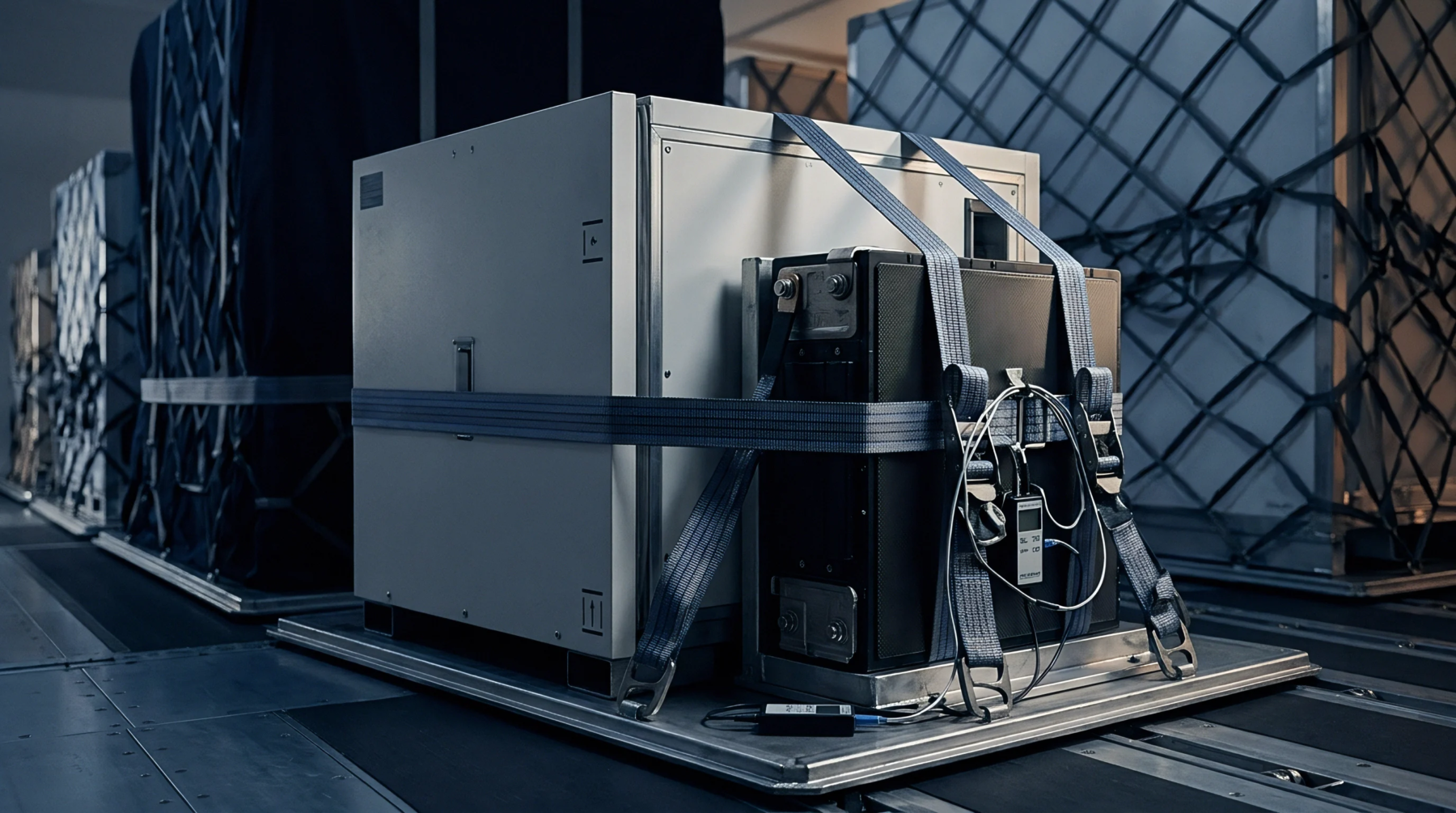
The Transport Rules and Safety Tests Lithium Cells Must Pass
Lithium cell shipments require UN 38.3 bench qualification, 30 percent state-of-charge air caps, Class 9 packaging, and verified 10-field test summaries.
A specific technical designation identifies a regulated safety protocol regarding internal electrochemical leakage or ion migration failure during transit. This sp 376 defective cell transport condition defines the precise threshold at which a lithium battery unit fails to meet the containment standards required for global maritime and ground freight movement. The classification governs whether an individual battery cell remains eligible for standard shipping containers or requires hazardous materials specialized containment.
It applies strictly to units where physical integrity or electrical isolation becomes compromised to a point that risks thermal runaway during transit. The protocol ceases to apply once a unit is safely integrated into a stable system or arrives at a verified disposal facility where the risk profile changes.
The specific status of sp 376 defective cell transport dictates the documentation requirements for cargo manifests across international borders. Logistics providers verify this classification to determine if the units pose a danger to ship crews or aircraft personnel. Operators assign specific hazard codes to these units because the compromised structure leads to unpredictable short circuits if vibration or heat occurs in the hold.
Insurance underwriters examine this classification before issuing cover for high-value battery shipments. If a shipment contains even one unit flagged under this protocol, the entire pallet requires reinforced non-flammable casing. Specialized cooling systems often accompany these shipments to prevent the electrochemical degradation from accelerating throughout the transit time.
The classification ensures that freight carriers manage the physical stability of every compromised unit according to established danger mitigation rules.
This regulatory threshold provides a binary distinction between standard components and hazardous waste materials. The sp 376 defective cell transport status separates operational battery packs from damaged assets that require environmental mitigation. Engineering teams define the boundary based on observed leakage or resistance measurements that fall outside the manufacturing tolerance.
Cells that fail the electrical isolation test move into this category regardless of their aesthetic condition or previous performance record. Operators define the boundary by the presence of electrolytes outside the cell casing, as this physical presence indicates a failure in the protective barrier. The definition prevents manufacturers from shipping unstable chemical energy under standard commercial labels.
Verification occurs through standardized testing cycles where inspectors apply pressure or temperature variations to observe the stability of the cell housing under simulated travel conditions.
The determination of sp 376 defective cell transport informs the procurement and recycling lifecycle of energy storage assets. Commercial buyers rely on this assessment to avoid the liability of transporting damaged hazardous waste through their supply chains. Auditors inspect the electrical logs of a battery inventory to identify units that meet the criteria for this classification before they enter the logistics chain.
High resistance values or voltage drops over time act as the triggers for this categorization during routine maintenance. Once a cell receives this label, the economic cost of disposal increases to include specialized containment and transport protection. The process ensures that only stable energy storage products enter general freight, while damaged items move only through controlled and monitored pathways.
Proper implementation of this standard prevents accidental thermal incidents within storage warehouses and shipping vessels.
Lithium cell shipments require UN 38.3 bench qualification, 30 percent state-of-charge air caps, Class 9 packaging, and verified 10-field test summaries.
Expertise is a utility, not a secret. sentiention™ publishes its working knowledge as open reference: intelligence layer covering the materials it sources, the markets it enters, and the reference that serves both.