Meaning
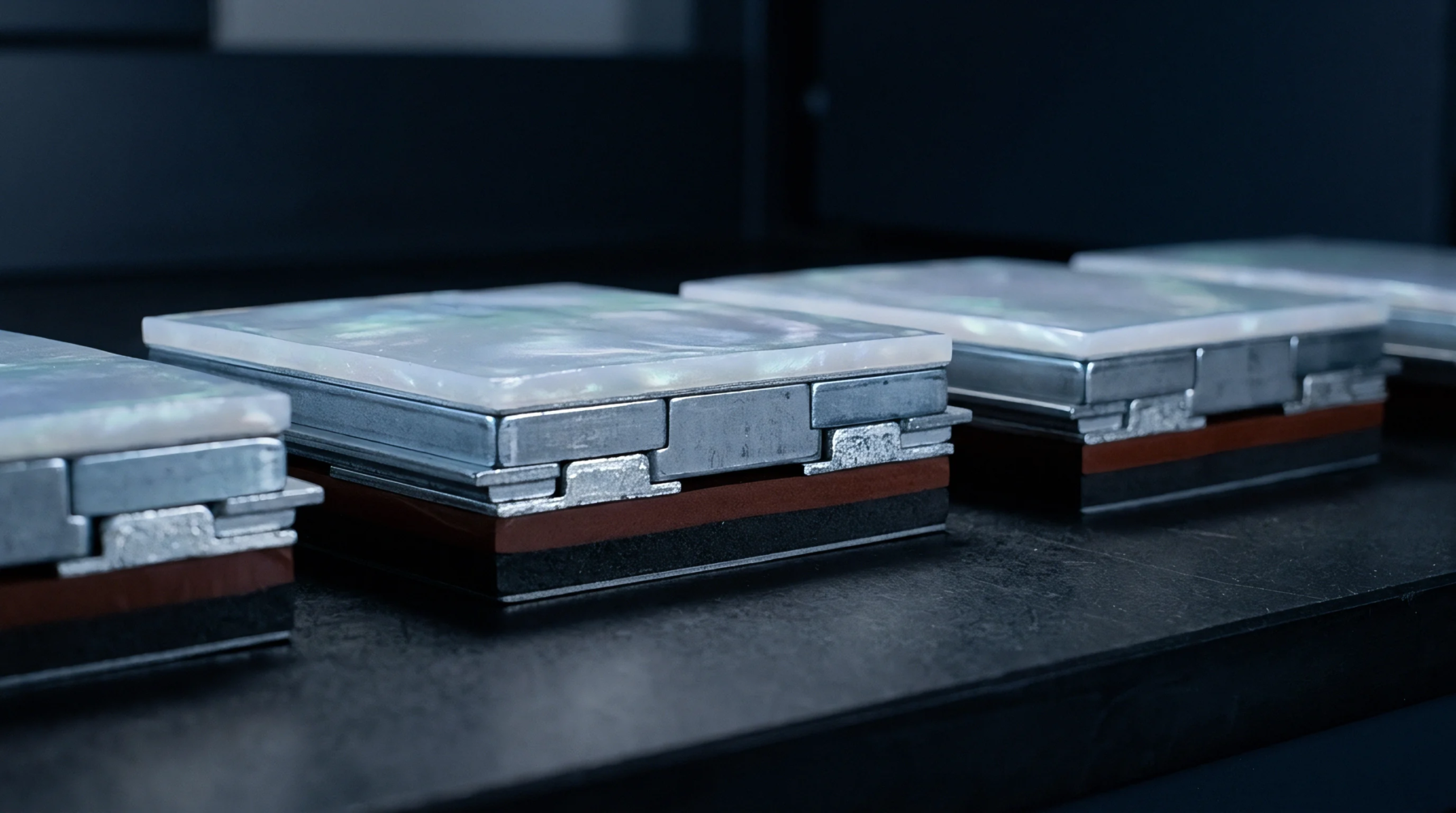
Geometrical analysis calculation combines the cumulative dimensional variations of every component within a module to predict the total variability in the force applied to the compressed cell stack. The stack pressure tolerance stack-up determines if the manufacturing deviations of cells, separators and foam pads will lead to final pressures that exceed the designed upper limit or drop below the lower safety threshold.
Variance Combination
Assessment begins by identifying the manufacturing range for each part including the thickness of the individual pouch cells and the expansion distance of the internal metal module frames. Calculations for stack pressure tolerance stack-up must account for the spring rates of foam inserts because a small increase in the combined component length results in a significantly higher pressure once the assembly is bolted shut. Using statistical methods like the root sum square helps engineers predict the frequency at which multiple large parts end up in the same module by sheer chance.
This prediction is vital because if the stack grows too tight the cells may be crushed during charge cycles or if it sits too loose they may vibrate freely inside the container.
Operational Consistency
Pressure variations directly alter the electrical pathway as high compression lowers contact resistance but may also decrease the space for the electrolyte to flow through the porous electrode layers. Managing the stack pressure tolerance stack-up ensures that every module produced on the line provides the same power delivery and heating profile during intense vehicle operation cycles in various climates. If the calculations show a potential for excessive pressure, the engineering team must either move to higher precision manufacturing or select a softer foam that can accommodate a wider range of thicknesses.
Monitoring the force during the actual assembly stage provides a feedback loop that verifies if the real world stack heights match the original mathematical predictions from the cad modeling team.
Design Consequence
Structural failure of the end plates occurs if the total expansion force pushes beyond the material strength of the aluminum or plastic housing because of a poor calculation. Accurate stack pressure tolerance stack-up enables the creation of lighter and cheaper housing because the safety margins do not need to be over engineered to cover unknown variance in the thickness of individual sheets. The resulting data informs the maintenance schedule for the robotic grippers and cutting machines to ensure they stay within the specific numeric microns required for a high quality assembly.
Final documentation of these limits ensures that repair centers have the specifications needed to confirm if a pack has been correctly refurbished with parts that fit within the mechanical safety envelope.