Meaning
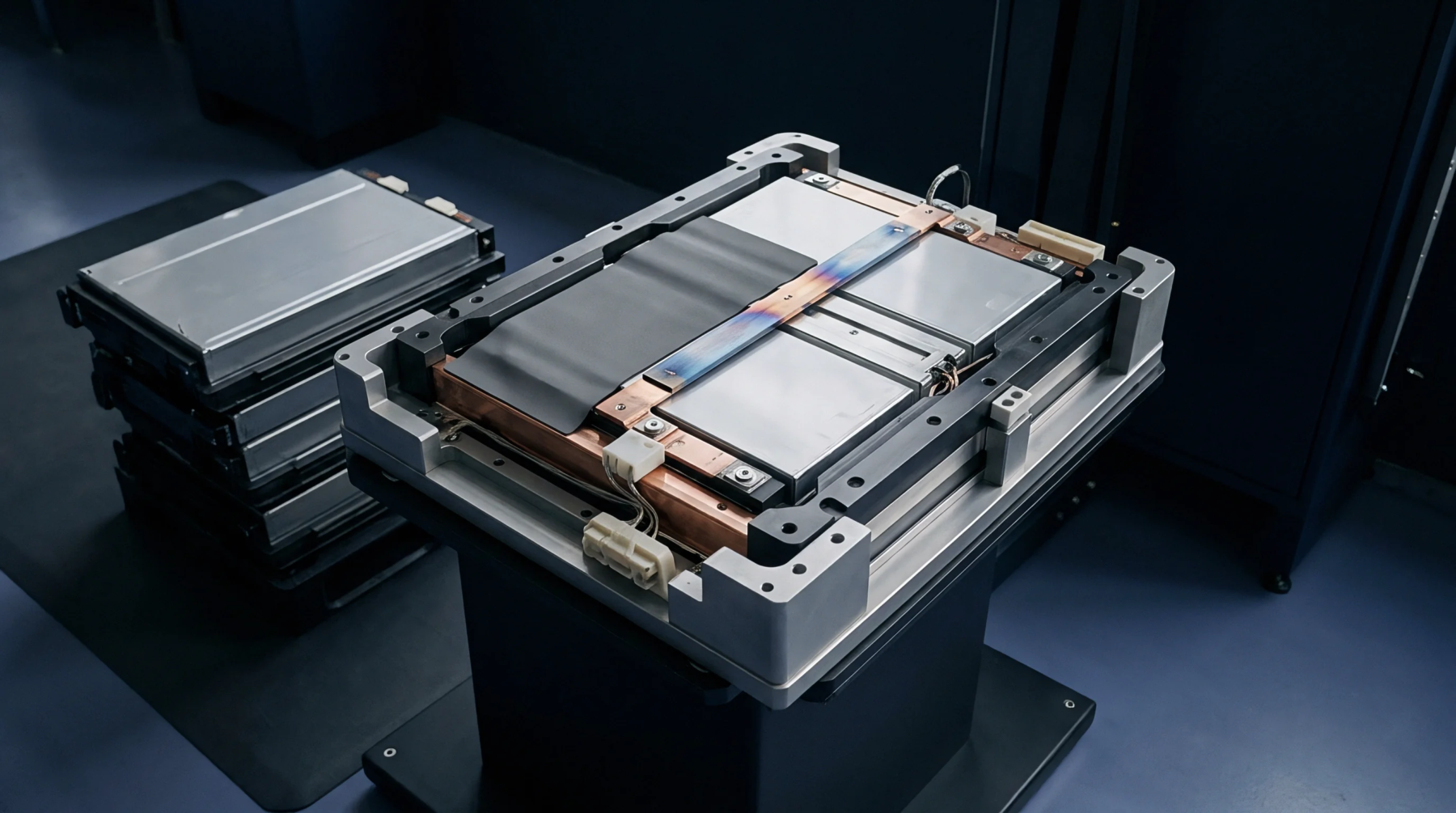
Mechanical architectures that use the battery cells as load bearing elements allow for the removal of heavy internal frames. This structural module design integrates the cooling system and electrical interconnects into a rigid box that supports the weight of the battery. It maximizes the energy density by reducing the amount of non active material in the pack.
Load Bearing
Traditional batteries rely on external steel or aluminum beams to protect the cells from impact. In a structural module design the cells themselves are bonded to the outer skin, which transfers forces across the entire surface. This approach requires high strength adhesives that can withstand constant vibration and thermal expansion.
Integration Efficiency
Reducing the number of parts simplifies the assembly process and lowers the total cost of the system. A structural module design allows for larger cells to be used since less space is wasted on internal dividers. This configuration is increasingly common in high performance electric vehicles where weight is a primary concern.
Assembly Rigidity
Stiff modules improve the overall handling of a vehicle by contributing to the chassis strength. When structural module design is executed correctly, the battery becomes a part of the safety cage rather than just a heavy component being carried. This integration requires precise engineering to ensure the cells are not crushed during a collision.