Meaning
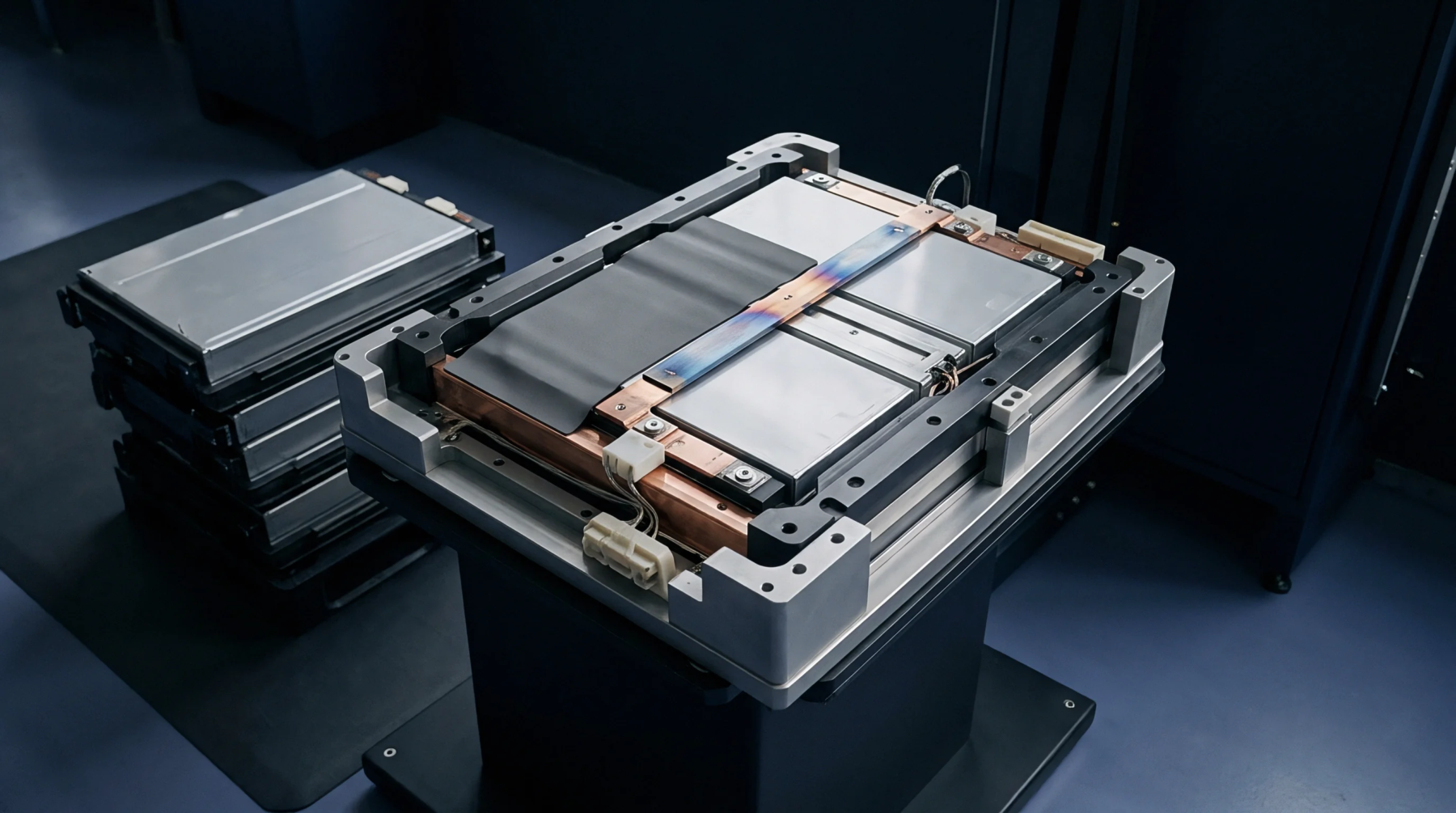
Mechanical force applied to the external surfaces of a battery cell or pack defines the controlled compressive load required to maintain internal contact and prevent structural deformation during operation. This mechanical constraint is particularly critical for cells that undergo significant volume changes during the charging and discharging cycles. Optimal clamping pressure prevents the delamination of electrode layers and reduces the risk of lithium plating or active material detachment.
The magnitude of this force must be carefully balanced to avoid damaging the internal components of the cell.
Pressure Distribution
Even distribution of the mechanical load across the surface of the cell is essential for maintaining uniform electrochemical reaction rates. Localized high pressure zones can compress the separator, reducing its porosity and restricting the flow of lithium ions through the electrolyte. This restriction increases the local resistance, which can lead to uneven current density and accelerated aging of the active materials.
Mechanical fixtures must be designed to distribute the force evenly, especially in pouch and prismatic cell formats.
Volume Expansion
Electrode materials experience significant volume changes as lithium ions are inserted and extracted. In silicon dominant anodes, this expansion can exceed three hundred percent, generating high internal stresses that must be managed by the external housing. The clamping mechanism must be designed to accommodate these changes without exceeding the maximum allowable stress limits of the cell.
Springs or compressible foam inserts are often used to maintain a relatively stable pressure over the entire state of charge range.
Pack Design
Battery pack designers must incorporate the mechanical pressure requirements into the overall structural housing of the system. The choice of materials for the compression plates and the tension straps directly affects the mass and the thermal management of the pack. Insufficient pressure allows the electrode layers to flex and separate, leading to rapid capacity loss and increased internal resistance.
Proper mechanical constraint of the cells ensures the long term reliability and safety of the energy storage system in demanding mobile applications.