Meaning
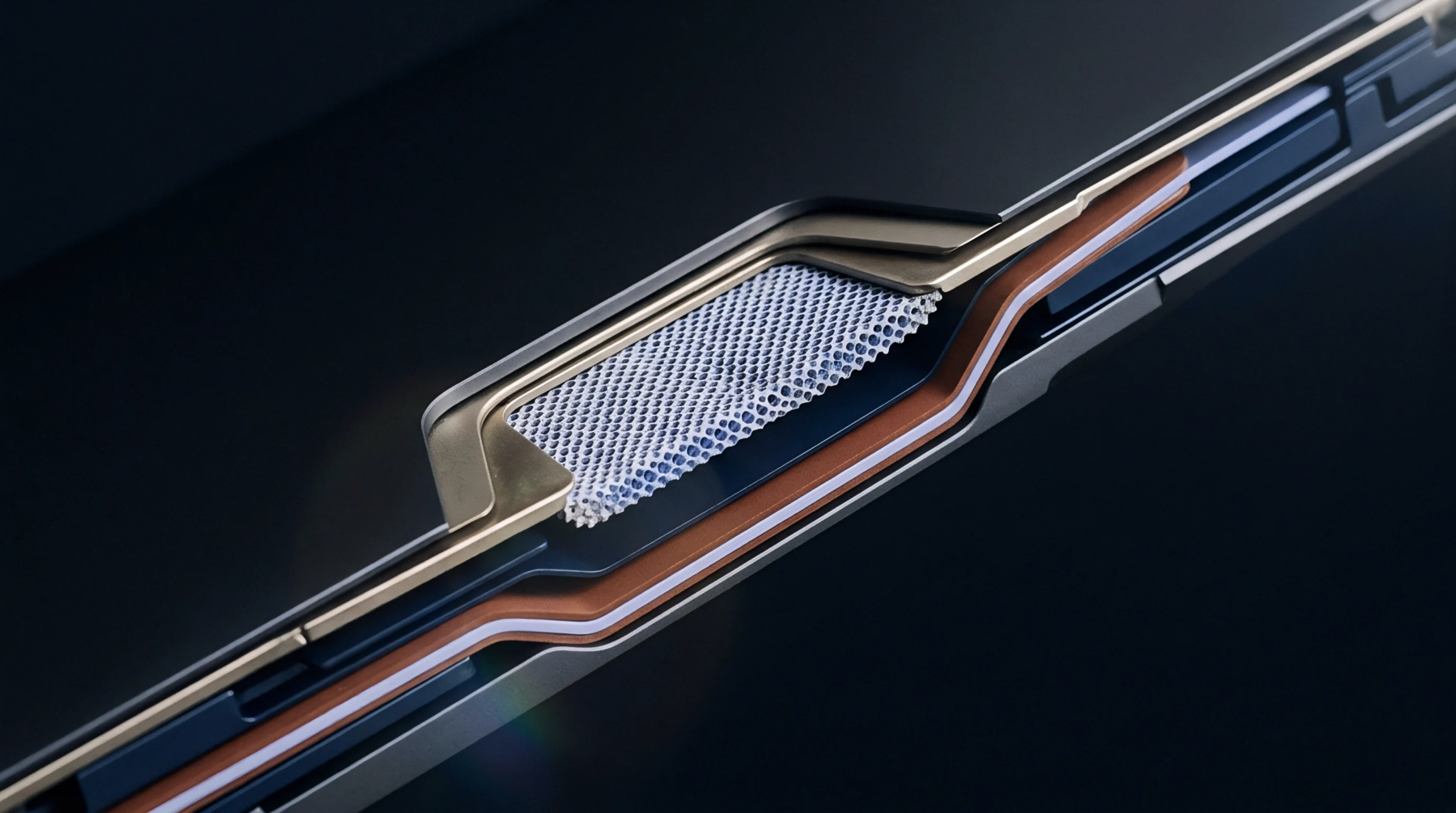
Rigid load-bearing plates within a battery module maintain the required compression and spacing between individual pouch or prismatic cells. These structural platens prevent mechanical deformation due to electrode swelling while shielding cells from external shock and vibration. They are integrated directly into the module frame to distribute clamping forces evenly across the entire surface of the cell stack.
Mechanical Support
Uniform clamping force prevents the internal layers of an electrode stack from shifting or separating during operation. By utilizing structural platens, designers can apply continuous physical pressure that suppresses cell expansion and minimizes delamination. These heavy-duty plates must withstand forces generated by cells as they age and swell over thousands of charge cycles.
This mechanical constraint is essential for preventing rapid impedance growth in high-capacity formats.
Thermal Management
Integrating fluid channels within the compression plates allows for simultaneous mechanical containment and active temperature regulation. When structural platens are fabricated from aluminum or high-conductivity composites, they serve a dual purpose as cooling blocks. This arrangement removes heat from the face of each cell, maintaining a uniform temperature profile across the module.
Uniform cooling prevents localized thermal runaway.
Component Integration
Material selection for internal module structures must balance physical strength against weight limitations. Using lightweight structural platens made from carbon fiber reinforced polymers can reduce total pack weight while maintaining excellent stiffness. Engineering teams evaluate the electrical isolation of these plates to prevent short circuits between high-voltage cells and the vehicle chassis.
This structural role influences both the cost of assembly, the weight distribution, and the safety rating of the final energy storage system.