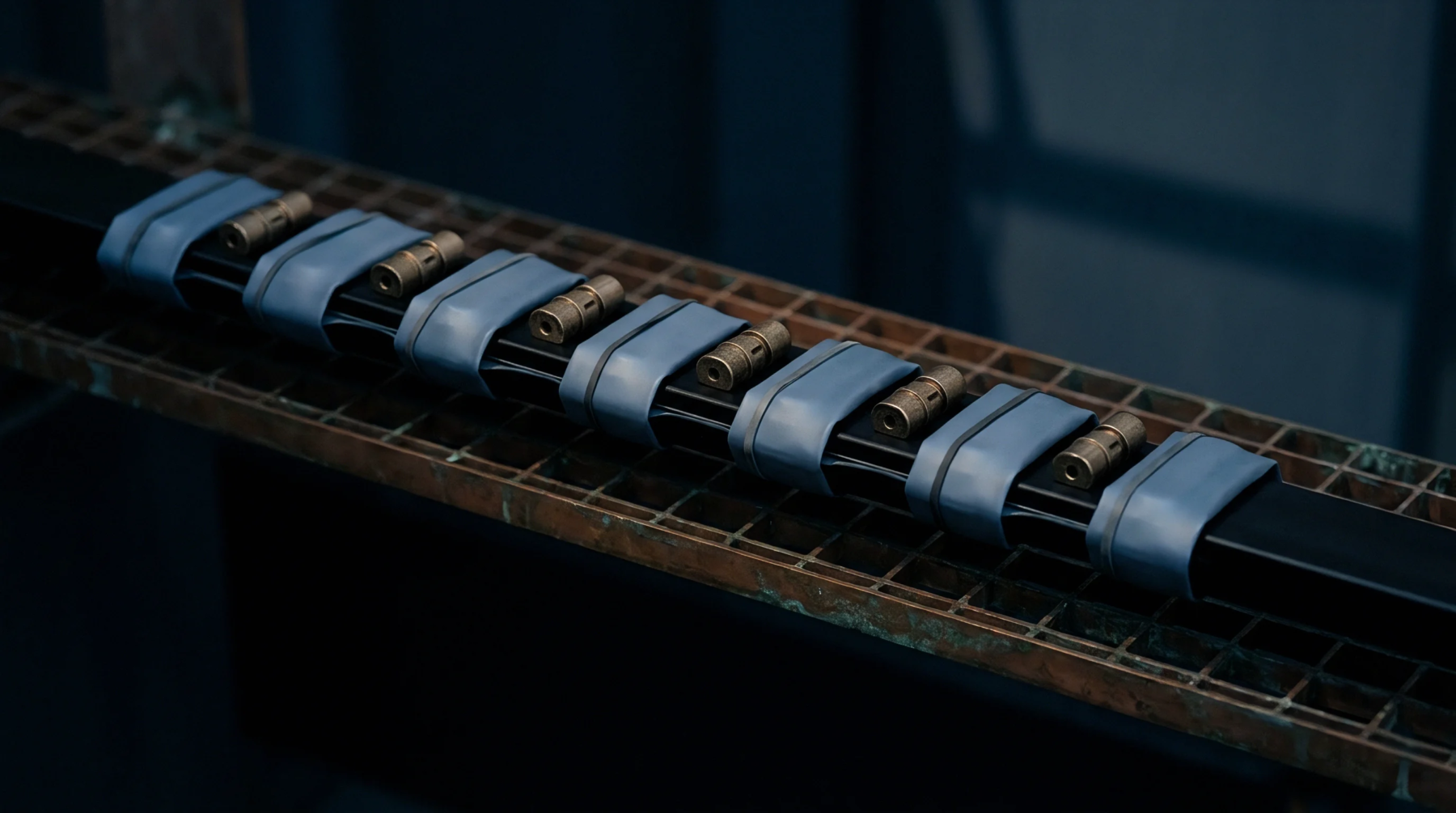
Meaning
Modular assembly steps combine multiple battery cells into intermediate structural and electrical units before final pack completion. This hierarchical approach allows for easier testing and repair of large energy storage systems. Engineers use sub-pack integration to manage the complexity of thousands of individual cells.
Each module contains its own sensing wires and often its own structural reinforcement.
Thermal Management
Cooling plates or fins are usually installed at this stage to ensure even temperature distribution. Heat must be removed from the center of the module to prevent the internal cells from degrading faster than those on the edges. During sub-pack integration, the thermal interface material is applied to create a solid path for heat flow.
This ensures the cooling system can keep the cells within their safe operating range.
Interconnect Reliability
Electrical paths between the cells are created using busbars or wire bonds. These connections must be able to withstand the vibration and shock of a moving vehicle. Because sub-pack integration involves many joints, automated welding is used to ensure consistency.
A single poor connection can lead to localized heating and a loss of module capacity.
Assembly Flow
Dividing the pack into smaller units makes the production line more flexible. Defective modules can be swapped out before the final enclosure is sealed. Successful sub-pack integration reduces the risk of scrapping an entire battery pack due to a single cell failure.