Tooling Amortization inside a Custom Pack Quotation
Audit tool steel specs upfront and enforce explicit bailment terms to prevent amortized tooling fees from inflating custom pack unit costs.

Die
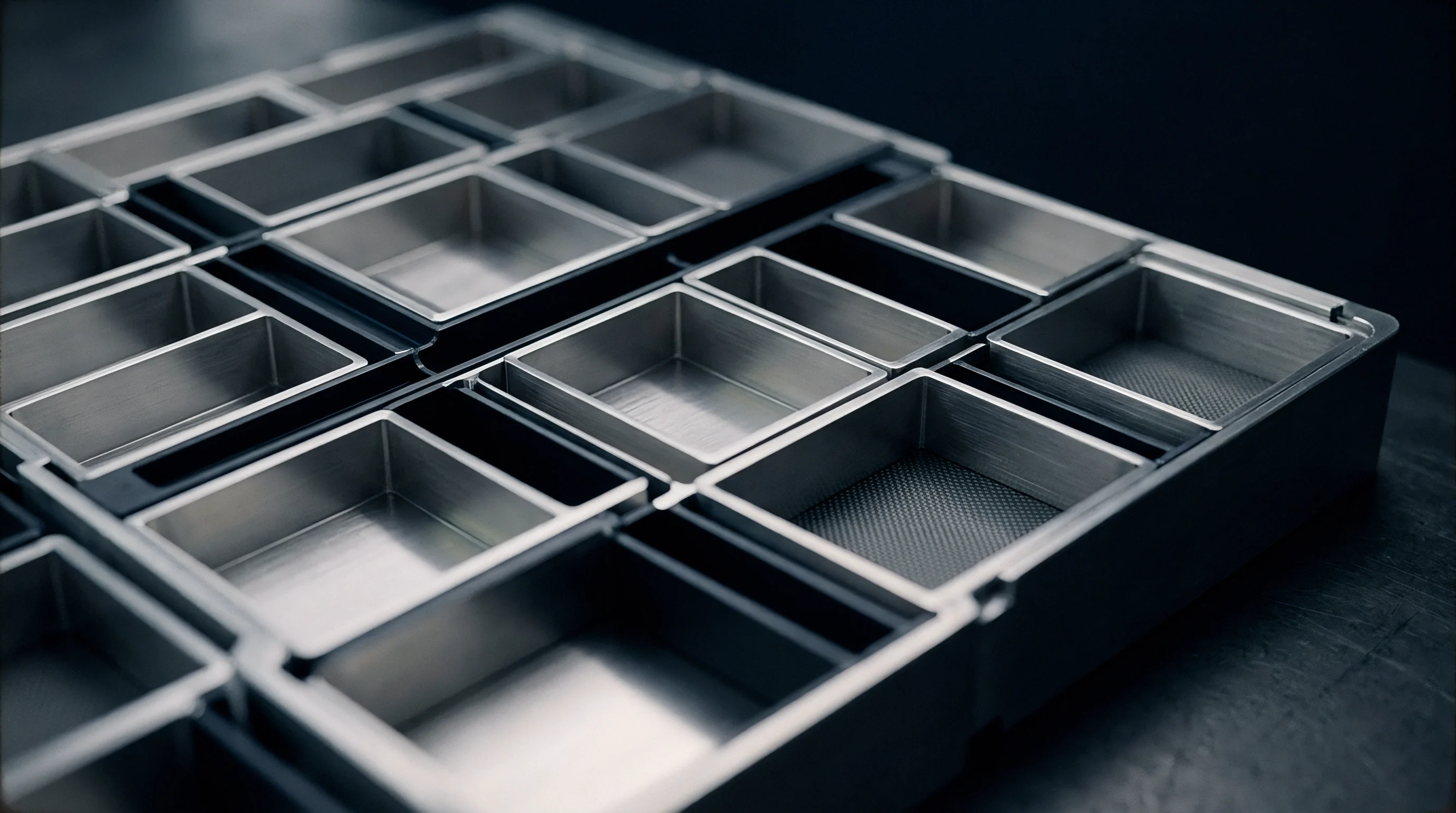
Custom lithium-ion battery pack quotations often mask structural risks inside non-recurring engineering line items. When a supplier quotes a custom system, physical tooling charges dictate both initial cash outlay and long-term piece-price amortization. That tooling generally spans four areas: plastic injection molds for carriers and endplates, stamping dies for busbars and tabs, aluminum extrusion dies for housing channels, and CNC or ultrasonic welding fixtures.
Each carries distinct steel specifications, cycle limits, thermal expansion profiles, and maintenance requirements. Deciding whether to absorb NRE charges upfront or fold tool costs into unit prices fundamentally shapes product price velocity over the program’s life. Moreover, the initial tooling layout establishes mechanical interface tolerances, creepage and clearance limits, and ingress protection boundaries.
Signing an RFQ without a physical audit of tooling specifications usually means funding a supplier’s capital equipment without gaining any rights to the assets.
Plastic injection tooling for cell retention grids sets the core geometry of cylindrical and prismatic modules. Integrators routinely specify glass-filled polyamides such as PA66-GF30 or polybutylene terephthalate to satisfy UL 94 V-0 flame ratings and resist 15G random vibration profiles. Steel selection directly governs cavity wear life and dimensional stability under repeated thermal cycles.
Pre-hardened P20 steel mold costs run about thirty percent lower than hardened H13 tool steel, yet P20 cavities suffer measurable runner erosion past thirty thousand shots with abrasive glass-filled polymers. Hardened to 48 through 52 Rockwell C, H13 steel retains key dimensions within plus or minus 0.05 millimeters over five hundred thousand injection cycles. By contrast, a shift of merely 0.15 millimeters across a twenty-cell matrix alters total stack height by three full millimeters ~ crushing thermal interface material, distorting silicone cell pads, and applying shear stress to wire-bonded interconnects.
A dimensional expansion of 0.15 millimeters across a cell matrix alters cumulative pack stack height by three full millimeters, compromising cell interconnect joint integrity under thermal cycling.
Stamping dies for busbars face distinct wear limits during high-volume production. Custom high-current packs rely on C1100 ETP copper or 6061-T6 aluminum interconnects, typically nickel- or silver-plated to prevent galvanic corrosion at terminal interfaces. To keep hole pitch tolerances within plus or minus 0.02 millimeters, progressive stamping dies require carbide punch inserts and hardened D2 tool steel stripper plates.
Softer steel dies exhibit edge roll and burrs after fifteen thousand strokes on 1.5-millimeter thick hard copper. Burrs on stamped busbars create sharp points that puncture thin PET insulation sleeves, creating chassis short risks during frame twisting or pressure drops at altitude. When progressive dies prove too expensive for low volumes, suppliers frequently push single-stage compound dies.
While compound tooling reduces initial NRE by sixty percent, it increases assembly labor and yields wider variation in tab coplanarity.
Ultrasonic and laser welding nests are easy to overlook on quote sheets. Cylindrical formats like 21700 or 4680 cells require positioning nests machined from anodized 7075 aluminum or POM-C acetal resin to align nickel tabs over cell caps within a 0.03-millimeter window. Sonotrode horn wear on ultrasonic bonders gradually alters energy transfer into the weld joint; titanium tips degrade after one hundred thousand operations and require resurfacing or replacement.
Vacuum hold-down plates, pneumatic clamping fingers, and custom heat sinks belong under dedicated tooling line items. Suppliers frequently lump these fixtures into general shop equipment overhead, obscuring which tooling assets actually belong to the project.
Aluminum enclosure extrusion dies represent another capital expense buried in engineering quotes. Extruding 6063-T6 aluminum profiles for module walls or housings requires die plates rated for five hundred bar pressures at five hundred degrees Celsius. While die costs are lower than injection molds, wear widens internal dimensions over extended runs.
A 0.20-millimeter tolerance drift on an internal slide channel destroys the clamping pressure required for cold-plate contact. If surface contact falls below ninety percent of the target area, thermal resistance rises by 0.35 Kelvin per Watt. The resulting thermal gradients across parallel cell strings accelerate uneven capacity degradation and trigger early BMS thermal throttling.
Tooling amortization functions much like a hidden interest charge added to every pack invoice. To derive the per-unit fee, suppliers take the full tooling quote, apply an annual financing rate of eight to fourteen percent, divide by the agreed Minimum Order Quantity, and factor in a scrap margin. If a contract includes an eighteen-dollar amortized surcharge per pack against a ten-thousand-unit commitment, the supplier recovers the entire tooling expense once eight thousand three hundred units ship.
The final one thousand seven hundred packs continue to carry that same eighteen-dollar charge, generating unearned gross margin unless an explicit amortization cliff clause shuts it off.
Tool modifications during New Product Introduction represent major financial exposure. Design changes triggered by thermal test failures or shifting cell dimensions require physical adjustments to hardened steel cavities. Modifying an injection mold using wire EDM or laser cladding costs anywhere from fifteen hundred to twelve thousand dollars per cavity, based on geometry and steel hardness.
Adding metal via laser welding is relatively straightforward, but removing material for a larger cell casing requires recutting the mold core on a CNC mill. RFQs must specify whether the baseline tooling quote includes up to two rounds of engineering change orders prior to First Article Inspection signoff. Without clear ECO language, suppliers readily use modification fees to recover eroded margins.
Sub-tier tool ownership often leads to operational gridlock when changing pack integrators. Integrators seldom cut molds or stamping dies in-house, preferring specialized tool shops in hubs like Dongguan, Shenzhen, or Taichung. They mark up the sub-tier toolmaker’s invoice by twenty to thirty-five percent before passing it to the buyer.
Unless the supply agreement explicitly transfers title upon initial payment, the sub-tier toolmaker retains physical possession while the integrator claims legal ownership. Recovering custom tooling from overseas shops during a transition becomes nearly impossible without clear asset tags and enforceable local bailment agreements.
Physical validation relies on strict First Article Inspection protocols. A first article report needs to track sixty-four critical-to-quality dimensions across thirty or more consecutive parts pulled from a fully automated trial run. Prototypes machined from billet stock or SLA-printed fail to replicate the residual stresses, shrinkage anisotropy, or fiber orientation seen in molded production parts.
Subjecting prototype enclosures to thermal runaway testing produces unreliable structural data, as machined plastics handle localized flame exposure differently than skin-surfaced molded parts. Consequently, production tooling should be qualified before initiating UL 1973 or UN 38.3 testing; otherwise, certifications must be rerun when hard tools go live.
Managing tool wear demands clear preventive maintenance protocols inside the plant. Mold cavities accumulate fluorinated gas residues and outgassing deposits that block vents, causing micro-voids and short shots along thin structural ribs. Stamping dies build up microscopic debris that scratches nickel plating on busbars, initiating corrosion in humid settings.
Quotations must state explicitly whether routine maintenance, repolishing, die sharpening, and pin replacements are built into piece prices or billed separately. Ignoring tool maintenance funding in high-volume quotes virtually guarantees quality defects near the end of the tool’s lifespan.
Tooling lead times establish the master schedule for product launch. Steel procurement, rough machining, heat treatment, EDM, micro-polishing, and initial T1 samples require eight to sixteen weeks for complex injection molds. Stamping dies take six to ten weeks following strip layout approval.
While rapid tooling options like aluminum cavity inserts compress lead times, tool life drops from five hundred thousand cycles to under fifteen thousand. Early material selection dictates total capacity before re-tooling becomes necessary. An itemized quote detailing steel grades, rated shot life, and ECO terms distinguishes sound proposals from speculative bids.
Shop-floor manual fan units are sometimes proposed as providing thermal stability equivalent to integrated mold cooling lines during extended production runs.

Ledger
Custom pack quotes split into direct cell costs, non-cell BOM items, assembly labor, overhead, margin, and tooling capitalization. Handling of tooling determines whether a program runs as an upfront capital expenditure or an amortized operational expense. Every component requires evaluation against volume break-even curves and ownership terms.
Hiding upfront NRE inside unit prices inflates landed costs, distorts inventory valuation, and creates customs compliance issues at international borders. Comprehensive cost models help sourcing teams uncover hidden margin layers and determine actual conversion expenses.
Amortization calculations rely on volume projections that seldom match actual market demand. Suppliers typically structure financial models around a Target Volume Horizon of three to five years. For example, if a project requires one hundred and twenty thousand dollars in tooling and projects twenty thousand packs annually over three years, straight linear amortization calculates to two dollars per pack.
However, suppliers apply a capital cost multiplier to cushion against financing risk and volume shortfalls, driving that quote figure up to three dollars and forty cents. The additional dollar and forty cents covers capital costs, volume default risk, and tool management overhead.
Compounded scrap rates during multi-stage assembly frequently distort amortization accounting. Overall pack yields vary with cell grading, wire bonding defects, BMS test failures, and housing seal rejections. If an assembly line operates at a cumulative yield of ninety-two percent, processing one hundred and eight sets of molded parts and busbars produces only one hundred shippable packs.
Amortization charges on raw piece parts must be grossed up to account for scrap ~ turning a two-dollar fee per component set into two dollars and twenty-two cents per finished pack. Neglecting yield losses leads to under-recovered tooling costs or surprise adjustments during annual financial reconciliations.
| Tooling Asset Category | Upfront NRE Cost (USD) | 1,000 Units Amortized ($/Pack) | 10,000 Units Amortized ($/Pack) | 50,000 Units Amortized ($/Pack) |
|---|---|---|---|---|
| Cell Holder Plastic Molds (H13 Steel) | $48,000 | $55.20 | $5.52 | $1.10 |
| Busbar Progressive Stamping Dies | $22,000 | $25.30 | $2.53 | $0.51 |
| Enclosure Extrusion & Die-Cast Tooling | $35,000 | $40.25 | $4.03 | $0.81 |
| Ultrasonic Weld Nests & Assembly Jigs | $15,000 | $17.25 | $1.73 | $0.35 |
| EOL Automated Test Fixtures | $12,000 | $13.80 | $1.38 | $0.28 |
| Total Capital Outlay & Unit Burden | $132,000 | $151.80 | $15.19 | $3.05 |
Amortization math illustrates why upfront payment delivers superior unit economics at higher volumes. An initial capital investment of one hundred and thirty-two thousand dollars incurs a fifteen percent financing fee when amortized. At one thousand units, that amortized tooling adds a heavy one hundred and fifty-one dollars and eighty cents per pack.
The burden falls to fifteen dollars and nineteen cents at ten thousand units, and three dollars and five cents at fifty thousand units. Should production reach one hundred thousand units, however, maintaining that amortized fee totals three hundred and three thousand eight hundred dollars for a one hundred and thirty-two thousand dollar asset ~ handing the supplier an extra one hundred and seventy-one thousand eight hundred dollars simply due to contract design.
Consider a custom 48-Volt, 100 Amp-hour industrial lithium iron phosphate pack quotation. Molds and stamping dies require ninety-five thousand dollars, while custom End-of-Line test harnesses and leak chambers require twenty-five thousand dollars ~ setting total upfront NRE at one hundred and twenty thousand dollars. If the buyer amortizes this expense over a minimum volume of fifteen thousand packs across twenty-four months, the supplier adds a twelve percent annual capital fee alongside a five percent scrap adjustment.
Determining the actual per-pack charge involves compounding asset value with financing fees and yield assumptions. Multiplying the base one hundred and twenty thousand dollars by 1.24 to cover two years of the twelve percent financing fee produces one hundred and forty-eight thousand eight hundred dollars. Dividing that sum by 0.95 to incorporate the five percent scrap allowance raises the full recovery target to one hundred and fifty-six thousand six hundred and thirty-one dollars and fifty-eight cents.
Distributed over fifteen thousand contracted units, the resulting charge is ten dollars and forty-four cents per shippable pack.
If market demand softens and the buyer accepts only eight thousand units, cumulative tooling payments at ten dollars and forty-four cents per pack total eighty-three thousand five hundred and twenty dollars. This leaves an unamortized balance of seventy-three thousand one hundred and eleven dollars and fifty-eight cents on the supplier’s balance sheet. Under standard master supply agreements, the supplier invoices that unpaid remainder as a single lump sum.
The buyer must settle that balance or forfeit ownership rights to the tooling while remaining exposed to minimum volume penalties.
Engineering Change Orders introduce further exposure to program financials. Modifying a design after steel cutting incurs three distinct costs: scrapped inventory, tooling rework, and production downtime. A late adjustment to a busbar hole pattern for a revised torque specification can render thirty thousand dollars of pre-stamped copper stock useless.
Modifying the hardened progressive die adds eight thousand five hundred dollars in toolroom labor and freezes the line for three weeks. Even when primary tooling is amortized, suppliers virtually always demand immediate cash settlement for ECOs rather than rolling them into piece prices.
Import duties and cross-border logistics complicate amortized tooling structures. Regulatory bodies such as United States Customs and Border Protection and EU customs authorities treat buyer-funded tooling as an assist. Value regulations dictate that engineering, design, and tooling expenses form part of the dutiable basis of imported items.
If a pack imported from Vietnam costs four hundred dollars with an embedded twenty-dollar tooling charge, tariff duties apply to the full four hundred and twenty dollar valuation. Even when a customer pays a one hundred and twenty thousand dollar tooling invoice upfront to a mold maker, that assist value must be declared pro-rata on entry paperwork. Omission of amortized tooling from import entries exposes companies to severe financial penalties under customs laws.
Tax depreciation rules create contrasting accounting incentives for buyers and suppliers. Paying NRE upfront allows buyers to capitalize tooling assets on the balance sheet, depreciating them under MACRS three-year or five-year schedules. Conversely, embedding tooling into unit prices routes expenses through Cost of Goods Sold, depressing gross margins and reducing reported EBITDA.
Growth-stage firms prioritizing EBITDA usually pay NRE upfront to protect gross margins, whereas early-stage companies may accept higher COGS via amortization to preserve liquid cash reserves.
Tooling impairment rules necessitate continuous monitoring throughout the product life cycle. Should a pack design become obsolete before hitting projected volumes, any unamortized balance remaining on the balance sheet must be written off as an impairment loss. Suppliers carrying amortized tooling liabilities will aggressively resist premature design revisions, as write-offs can trigger default clauses in bank credit covenants.
Sourcing teams ought to mandate quarterly statements tracking cumulative build counts, remaining balances, and tool condition reports to prevent unexpected write-downs when phasing out a product.
Discounted cash flow modeling reveals the net present value trade-offs between capitalization strategies. At a ten percent hurdle rate, paying one hundred and fifty thousand dollars upfront carries a higher present-value cost than paying sixteen dollars per pack across three years on a steady ten thousand unit forecast. However, if volumes surge during year two, staying locked in an amortized structure beyond break-even severely erodes margins.
Ultimately, volume confidence dictates the approach: high forecast certainty justifies upfront NRE, whereas uncertain trajectories call for amortized models featuring clear buyout mechanics.
Canceling an industrial vehicle pack program six thousand units into a twelve-thousand-unit contract produced a forty-two thousand dollar invoice for unamortized injection mold balances.

Pilot
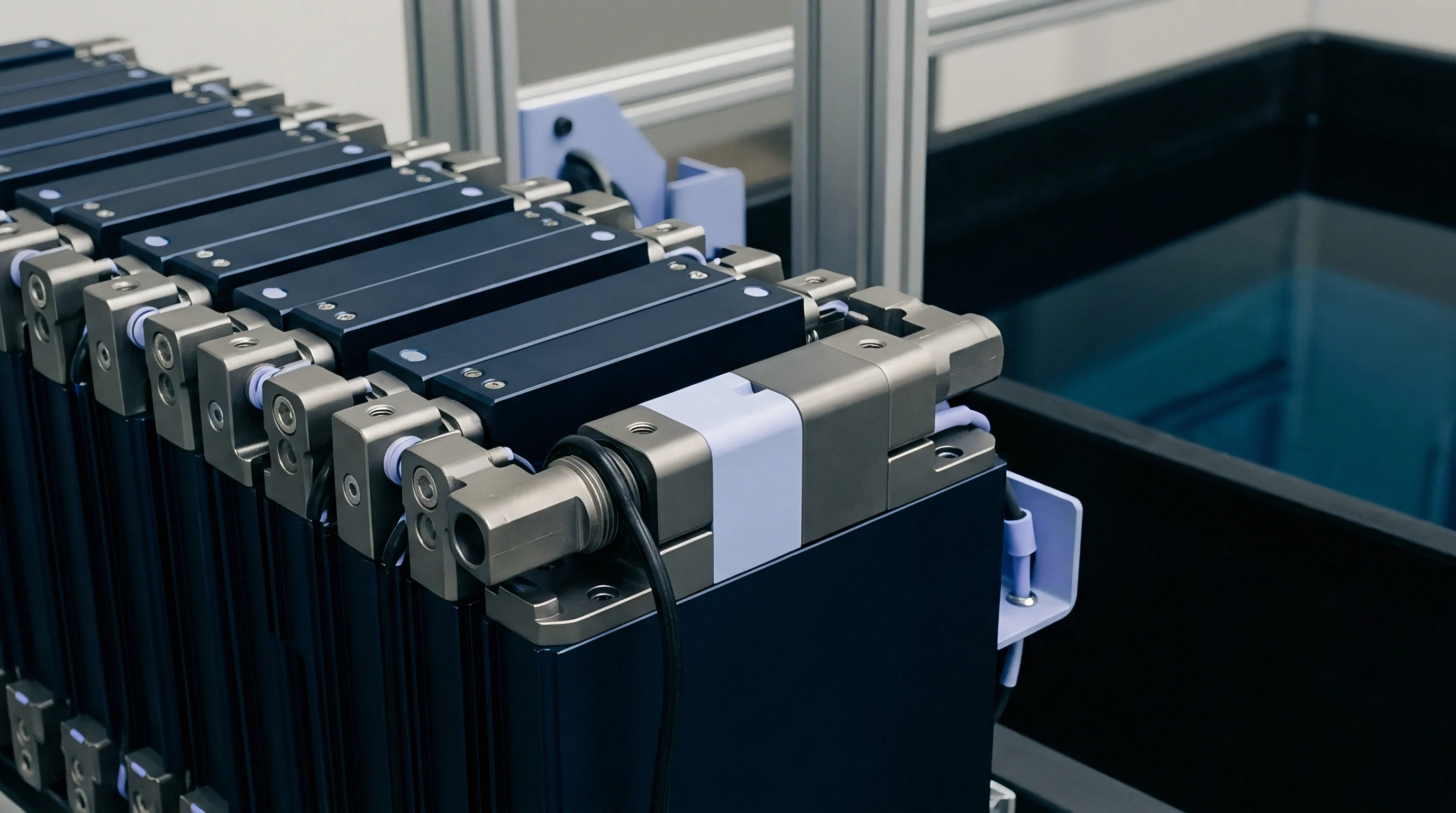
Pilot production runs test whether pack designs translate effectively into volume manufacturing. This phase confirms that custom molds, stamping dies, and welding fixtures sustain process capability at full line rates. Process capability targets ~ specifically Cp and Cpk indices ~ must exceed 1.33 for general dimensions and 1.67 for safety-critical attributes like cell isolation gaps and busbar clearances.
Rigorous yield analysis during pilot runs uncovers tooling defects before mass production releases suspect subassemblies downstream. Skipping formal pilot qualification allows minor tooling discrepancies to surface later as costly field failures.
Tooling qualification begins with First Article Inspections on pilot components. Quality inspectors utilize coordinate measuring machines, optical comparators, and CT scanners to verify 3D geometries against CAD files. Plastic carriers are evaluated for sink marks, structural warpage, and weld line integrity along load-bearing ribs.
Shrinkage in flame-retardant polymers varies significantly between mold flow and cross-flow directions. A carrier exhibiting a mere 0.25 millimeters of diagonal bow will bind during automated robotic cell insertion, causing frequent line stoppages and damaged cell insulation sleeves.
Busbar validation emphasizes electrical resistance consistency and mechanical coplanarity. Four-wire Kelvin micro-ohmmeters screen stamped busbars for micro-cracks, cross-sectional variance, and plating defects. A three percent drop in busbar cross-section due to punch die wear raises internal resistance, generating localized hotspots during 2C continuous discharge pulses.
Coplanarity across multi-terminal busbars must remain within 0.08 millimeters; larger deviations force laser welding optics to dynamically adjust focal length, risking blow-throughs, spatters, and compromised weld joints at cell terminals.
Vibration and shock testing validate the structural resilience of pilot builds. Standard international regulations mandate physical stress testing prior to approving a custom pack for transport or stationary installation. UN 38.3 section 38.3.4.3 specifies random vibration exposure from 7 Hertz to 200 Hertz for three hours per axis, while UN 38.3.4.4 calls for shock testing at fifty-G peak half-sine pulses lasting eleven milliseconds.
Plastic retainers produced in soft or inadequately vented pilot tooling frequently contain micro-porosity that fractures under shock loads. When a retainer fails, adjacent cells shift, wearing through thin insulation sleeves and triggering severe internal short circuits.
Thermal cycling and humidity testing evaluate component behavior under extreme operational conditions. Compliance standards like IEC 62133-2 and UL 1973 cycle fully assembled packs from minus forty degrees Celsius to plus eighty-five degrees Celsius. Differential expansion across glass-filled plastics, copper busbars, aluminum enclosures, and steel cell cans induces shear stress at joint interfaces.
Parts molded without adequate thermal stability exhibit stress relaxation over time, relieving clamping pressure on thermal pads and cold plates. A twenty percent reduction in thermal pad compression doubles thermal contact resistance, elevating cell temperatures during fast charging.
What Happens When Production Volume Falls Short?
When end-market demand drops significantly below the volume pledged in an amortization agreement, standard pricing models quickly turn into commercial disputes. Suppliers are left holding unrecovered capital expenditures for tooling produced exclusively for the client’s design. Master Supply Agreements routinely incorporate shortfall reconciliation clauses that execute at fixed intervals, typically twelve or twenty-four months post-launch.
If a buyer commits to twenty thousand units but draws down only seven thousand, the supplier gains the contractual right to invoice the entire remaining unamortized balance.
A shortfall invoice instantly converts unamortized tooling into a lump-sum liability. For example, embedding ten dollars per pack across a twenty-thousand-unit commitment fixes total asset recovery at two hundred thousand dollars. Delivering seven thousand units recoups seventy thousand dollars, leaving an unrecovered balance of one hundred and thirty thousand dollars.
Sourcing teams presented with a shortfall invoice should audit both the underlying financial calculations and the physical tooling assets. The buyer ought to confirm that tools are fully constructed, capable of producing compliant First Article components, and stored at the agreed site with permanent ownership tags attached.
Restructuring the amortization timeline provides an alternative to an immediate cash payout when volume lags. Buyers might negotiate an extended horizon or accept a higher per-unit surcharge on future production runs to defer short-term cash penalties. However, raising piece prices weakens product competitiveness.
If the program is permanently halted, paying the shortfall balance and exercising asset recovery clauses enables the buyer to seize physical possession of the tools ~ preventing the supplier from repurposing proprietary housing, busbar, or carrier designs for competing clients.
| Tooling Asset Type | Critical Dimensional Tolerance | Wear Inspection Interval | Failure Mode Under Wear | Governing Standard Reference |
|---|---|---|---|---|
| Plastic Cell Grid Injection Mold | +/- 0.05 mm Cell Pitch | 25,000 Molding Shots | Grid Bowing, Cell Bind | UL 94 V-0, ISO 2768-m |
| Busbar Progressive Stamping Die | +/- 0.02 mm Hole Distance | 15,000 Stamping Strokes | Terminal Burr, Short Circuit | DIN 40500, IEC 61238 |
| Enclosure Extrusion & Die-Cast Tooling | +/- 0.15 mm Channel Width | 50 Metric Tons Extruded | Cooling Plate Gap, Thermal Spikes | EN 755-9, UL 2580 |
| Ultrasonic Weld Alignment Nest | +/- 0.03 mm Optical Alignment | 10,000 Weld Operations | Weld Blow-Through, High Resistance | USCAR-38, IEC 62133 |
| IP67 Silicone Gasket Injection Die | +/- 0.08 mm Seal Profile Height | 20,000 Injection Cycles | Water Ingress, Moisture Corrosion | IEC 60529, ISO 20653 |
Pilot line qualification demands strict execution of the formal engineering verification protocol outlined in the audit sequence.
- Tool Drawing Signoff locks CAD geometry, draft angles, gate locations, ejector pin placement, and material shrinkage specifications prior to steel cutting.
- Steel Certification Review verifies mill test reports confirming tool steel grade, chemistry composition, and ultrasonic void-free structural purity.
- Heat Treatment Audit verifies vacuum hardening and tempering chart records to confirm tool steel achieves specified Rockwell C hardness.
- T1 Sample Inspection measures ninety critical dimensions on thirty components produced during initial dry-run molding or stamping trials.
- Tooling Modification Approval documents micro-machining alterations required to correct dimensional non-conformances identified during T1 component evaluations.
- Process Capability Demonstration runs three hundred continuous cycles at production speed to prove Cp and Cpk values exceed 1.33.
- Environmental Test Signoff subjects assembled pilot packs to UN 38.3 vibration and thermal shock sequences to prove structural durability.
- Final Asset Tagging affixes metal buyer-ownership plates directly to physical tools prior to mass production commercial release.
Tooling wear accumulated during extended pilot runs directly degrades assembly yields and compromises pack safety.
- Gate Erosion in Molds occurs when glass-reinforced polymers abrade injection mold gate openings, causing cosmetic flash and irregular cavity filling pressures.
- Punch Die Edge Dullness creates microscopic metal burrs along stamped busbar edges, concentrating dielectric stress and puncturing thin insulation films.
- Ejector Pin Impression Wear creates localized structural depressions in plastic cell holders, reducing mechanical creepage distances between high-voltage busbars.
- Alignment Dowel Pin Deformation introduces positional drift in welding nests, misaligning laser weld paths relative to cell terminal centers.
- Gasket Die Vent Clogging traps air bubbles within molded silicone seals, creating localized porosity paths that permit water ingress under IP67 submersion testing.
Establishing preventive maintenance protocols during the pilot phase establishes baseline expectations for tool life. Molds and dies require complete teardowns, ultrasonic cleaning, surface inspection, and re-lubrication every twenty-five thousand cycles. Neglecting maintenance accelerates wear, inducing dimensional drift that can force emergency tooling replacements mid-run.
Contracts should specify whether routine maintenance is bundled into unit conversion costs or billed as an itemized overhead fee.
Section 8.2 of standard supply contract ISO 17025 mandates that all master inspection fixtures and custom end-of-line test harnesses carry traceable calibration certificates updated annually, transferring full financial liability for non-conforming product batches back to the manufacturer if uncalibrated tooling produces false-pass test results.

Paperwork
Contracts governing custom pack tooling define asset ownership, intellectual property, bailment terms, and vendor transfer rights. Outsourcing battery pack manufacturing requires transferring proprietary mechanical, electrical, and thermal designs to third-party integrators. Without robust commercial agreements, paying hundreds of thousands of dollars for tooling does not guarantee legal ownership or physical access to molds and dies.
Master Supply Agreements, NRE contracts, and Bailment Agreements must be executed before capital changes hands.
Asset ownership clauses establish the foundational legal boundary in an NRE contract. Agreements ought to state clearly that legal title to all dedicated custom molds, dies, fixtures, jigs, and test equipment transfers unconditionally to the buyer upon payment or final amortization payout. Amortization obscures ownership because title remains ambiguous while an unrecovered balance resides on the supplier’s books.
Contracts should grant the buyer a perfected security interest in the assets, alongside the right to settle any outstanding balance at will to gain immediate title and physical possession.
Bailment agreements govern the physical custody and usage of buyer-owned tooling stationed at supplier or sub-tier facilities. A well-drafted agreement defines the supplier strictly as a bailee possessing zero ownership rights, no authority to encumber assets with liens, and no right to utilize tooling for third parties. Contracts must mandate permanent metallic asset plates on every mold base and die shoe stating: Property of Buyer Name, Asset Serial Number, and Notice of Ownership.
Overseas toolmakers frequently pledge client-funded molds as loan collateral unless formal bailment notices are registered with local commercial authorities.
Intellectual property rights require explicit division within the contract structure. Tooling encompasses two distinct IP categories: Background IP and Foreground IP. Background IP covers the supplier’s pre-existing manufacturing methods, mold venting techniques, and standard extrusion libraries.
Foreground IP includes custom cell geometries, busbar configurations, BMS housing layouts, and thermal management designs created specifically for the project. Contracts must specify that all Foreground IP incorporated into the tooling belongs exclusively to the buyer as work-made-for-hire, preventing suppliers from replicating designs for competitors or filing derivative patent claims.
Contractual risk management requires careful review of every commercial clause governing tooling acquisition and operation.
- Explicit Asset Title Transfer establishes that full legal title to custom tooling transfers instantly to the buyer upon payment of initial upfront NRE fees or final amortization buyout balance.
- Unrestricted Removal Rights grants the buyer absolute legal authority to enter supplier premises and physically repossess tooling assets without requiring court injunctions during contract disputes.
- Tool Life Expectancy Guarantees obligates the supplier to repair, refurbish, or rebuild worn molds and stamping dies at their own expense if tools fail before reaching contracted shot life limits.
- Prohibition of Sub-Bailment forbids the primary pack integrator from moving tools to sub-tier toolmakers or secondary molding shops without prior written approval from the buyer.
- Dedicated Custom Usage Restraint strictly prohibits the supplier from utilizing custom molds, busbar dies, or testing fixtures to manufacture parts for any third-party entity.
- Tool Insurance and Loss Indemnity requires the supplier to maintain full replacement value property insurance on all bailed tooling assets against fire, theft, flood, or factory accidents.
Transferring tools across international borders during a supplier transition introduces substantial regulatory friction. If a commercial dispute obliges a buyer to extract tooling from facilities in China, Vietnam, or Mexico, export clearance demands rigorous documentation. Customs authorities scrutinize high-value tooling shipments for potential tax evasion or unauthorized capital flight unless backed by original import filings, corresponding commercial invoices, and clear proof of title.
Sourcing teams should maintain digital archives of original tooling invoices, customs tax receipts, and ownership records throughout the product life cycle.
Engineering Change Order protocols must be strictly formalized in the contract. Lax ECO controls enable suppliers to inflate costs and extend launch schedules without accountability. A robust ECO clause requires a written impact analysis for any proposed revision, detailing tool modification expenses, schedule delays, and scrapped inventory costs.
No design change should proceed without formal written sign-off from both the lead engineer and sourcing director. Informal floor-level agreements or messaging app communications must be explicitly rendered void under the contract terms.
Storage, retention, and end-of-life terms round out the tooling contract lifecycle. Following mass production, suppliers typically charge storage and maintenance fees to retain molds for service parts. Contracts ought to specify a mandatory retention period ~ typically three to seven years, depending on warranty obligations ~ during which tools must be maintained in operational condition.
The agreement should prohibit the supplier from scrapping, melting, or repurposing tools post-retention without written disposal instructions and a signed certificate of destruction from the buyer.
Ambiguous tool refurbishment terms in high-volume programs present another frequent hazard. If an injection mold reaches its five-hundred-thousand-shot life guarantee while the program requires an additional three hundred thousand units, responsibility for re-tooling or refurbishing must be established upfront. Supplier-oriented contracts classify replacement tooling after nominal life expiration as a fresh NRE expense charged to the buyer.
Conversely, buyer-favorable contracts state that if a program was committed at one million units, the supplier must maintain, overhaul, or replace tooling at their own expense to fulfill the total contracted volume.
Navigating the balance between upfront CapEx and amortized piece costs requires contractual precision and operational rigor. Teams that audit tool steel specifications, enforce pilot Cpk benchmarks, comply with customs assist rules, and secure legal title via bailment agreements protect their organizations from inflated costs and vendor lock-in. When a quote provides an itemized breakdown separating capital tooling from assembly conversion fees, the buyer retains control over commercial terms, intellectual property, and long-term supply resilience.
What specific legal mechanisms and asset discovery protocols can an international buyer enforce to recover custom tooling assets if an overseas pack integrator enters corporate insolvency and local bankruptcy courts seal the physical factory facility?