Meaning
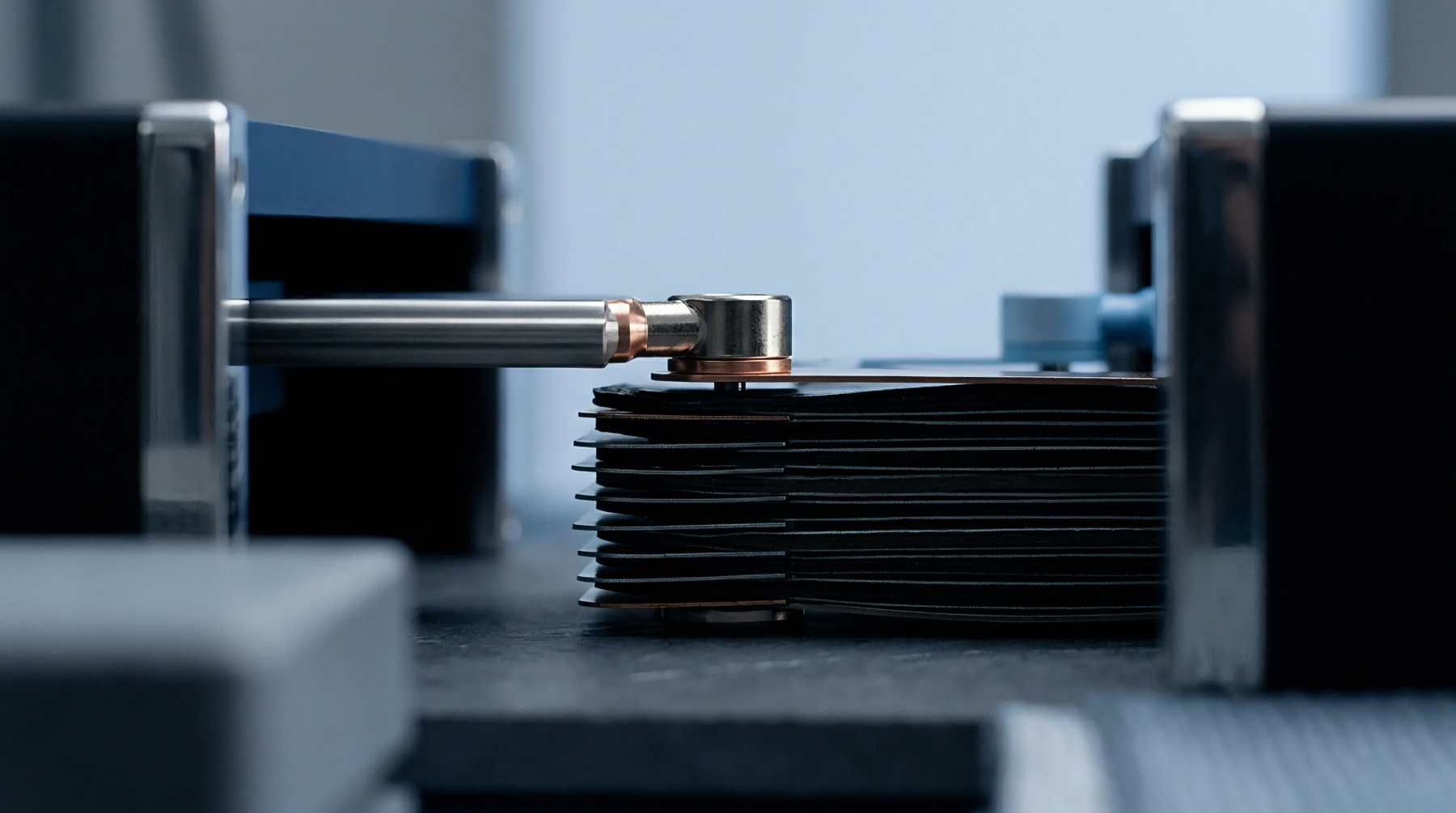
Lateral forces acting perpendicular to the primary longitudinal axis of a structural assembly quantify lateral sliding loads experienced by battery components under external acceleration. In pack design and mechanical evaluation, transverse shear force measures the sliding load applied across cell stacks, module tie rods, or structural adhesive bonds during vehicle cornering, side impacts, or vibration testing. Mechanical testing applies perpendicular shearing loads while measuring deflection and joint slip.
The metric applies to perpendicular lateral forces and excludes axial compression or tension loads along the main structural axis.
Structural Loading
Vehicle motion subjects structural battery enclosures to multi-axis mechanical loads during sharp maneuvers and road impacts. Within module assemblies, transverse shear force creates lateral stress across adhesive bonds holding pouch or prismatic cells together. Excess shear stress causes adhesive bond line delamination, leading to internal component displacement.
Engineering designs incorporate alignment dowels and structural framing to distribute lateral shear evenly.
Module Deformation
Excessive lateral loads distort internal module busbars and tear flexible tab interconnects when structural adhesives or mechanical fasteners fail under shear stress. High transverse shear force creates structural displacement across cell interfaces, inducing electrical disconnects or localized short circuits. Finite element analysis models shear distribution across pack structural members to optimize wall thickness and stiffener placement.
Preventing physical shear displacement preserves internal electrical connection integrity.
Mechanical Standard
Automotive crashworthiness standards require battery packs to maintain structural integrity under severe side impact collisions. Testing protocols specify maximum allowable transverse shear force limits that module structures must withstand without exposing internal high-voltage circuits. Commercial supply contracts mandate physical drop and shear impact testing for pack certification.
Compliance validates that structural assemblies protect internal cells during crash events.