Meaning
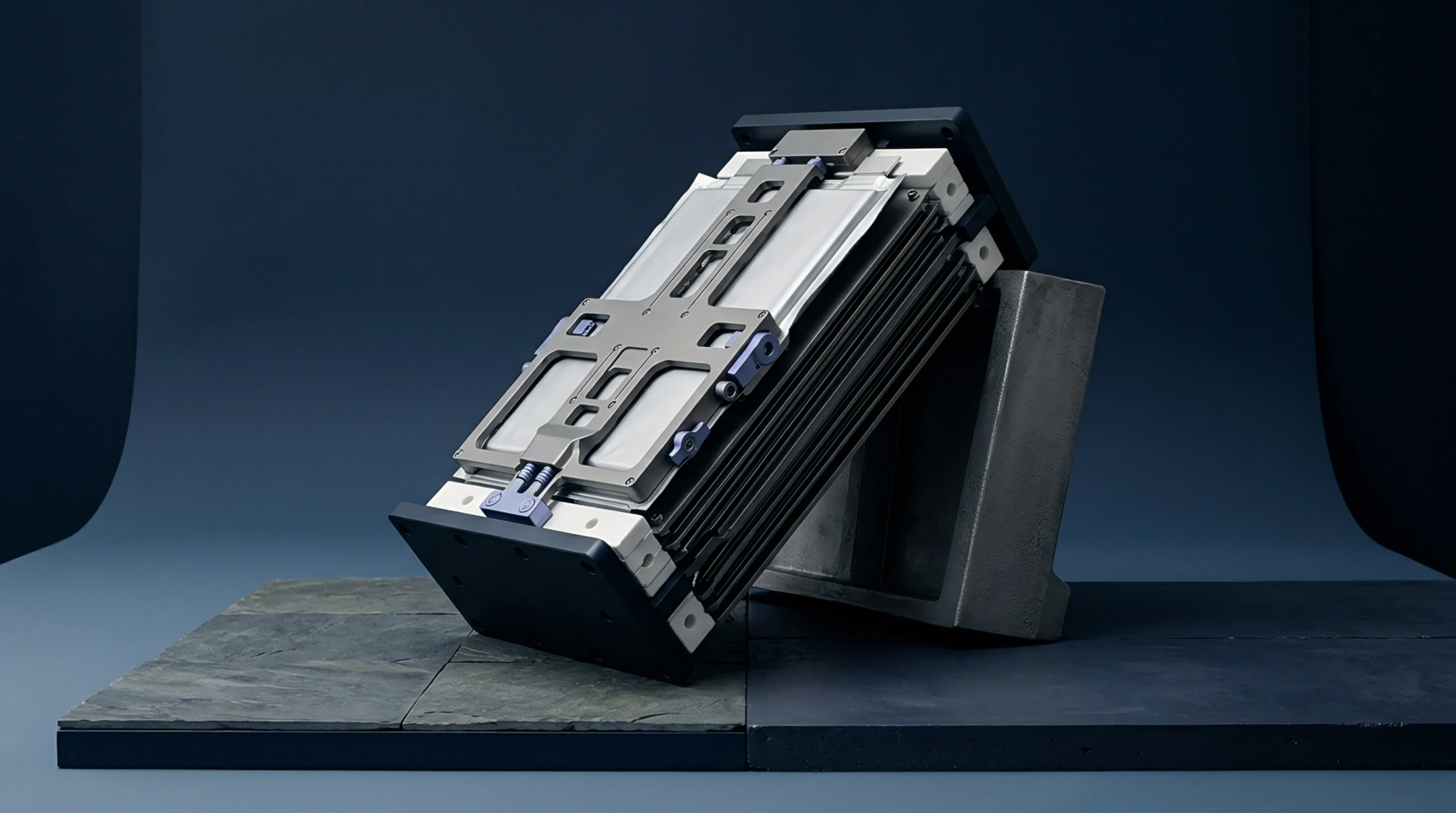
Design margins for physical growth in electrochemical cells provide the necessary space for electrodes to swell during the lithiation process. Because materials like silicon and even graphite increase in size when they absorb lithium, a volume expansion allowance is built into the cell and module housing. Failure to provide this space results in excessive pressure on the cell internal components.
Mechanical Constraint
Electrodes exert substantial force on the separator and current collectors as they expand. If the volume expansion allowance is too small, the pressure can cause internal short circuits or the deformation of the casing. High energy density cells require precise calculations to balance energy storage with structural safety.
Housing Design
Pouch cells often use compliant spacers or foam layers to accommodate the change in thickness over a charge cycle. Prismatic and cylindrical cells rely on the rigidity of the outer shell but must still include a volume expansion allowance inside the jelly roll or stack. This prevents the active material from crushing the central core.
Safety Integrity
Pressure buildup from restricted expansion can lead to the rupture of seals and the leakage of electrolyte. Engineers specify the volume expansion allowance based on the maximum state of charge and the expected aging of the cell. Long term swelling from solid electrolyte interphase growth is also considered in the final design.