Low Temperature Fast Charge Polarization Limits in Graphite Anodes
Graphite anode potential drops below zero volts versus lithium when subzero charge rates exceed solid-state diffusion kinetics, triggering irreversible plating.

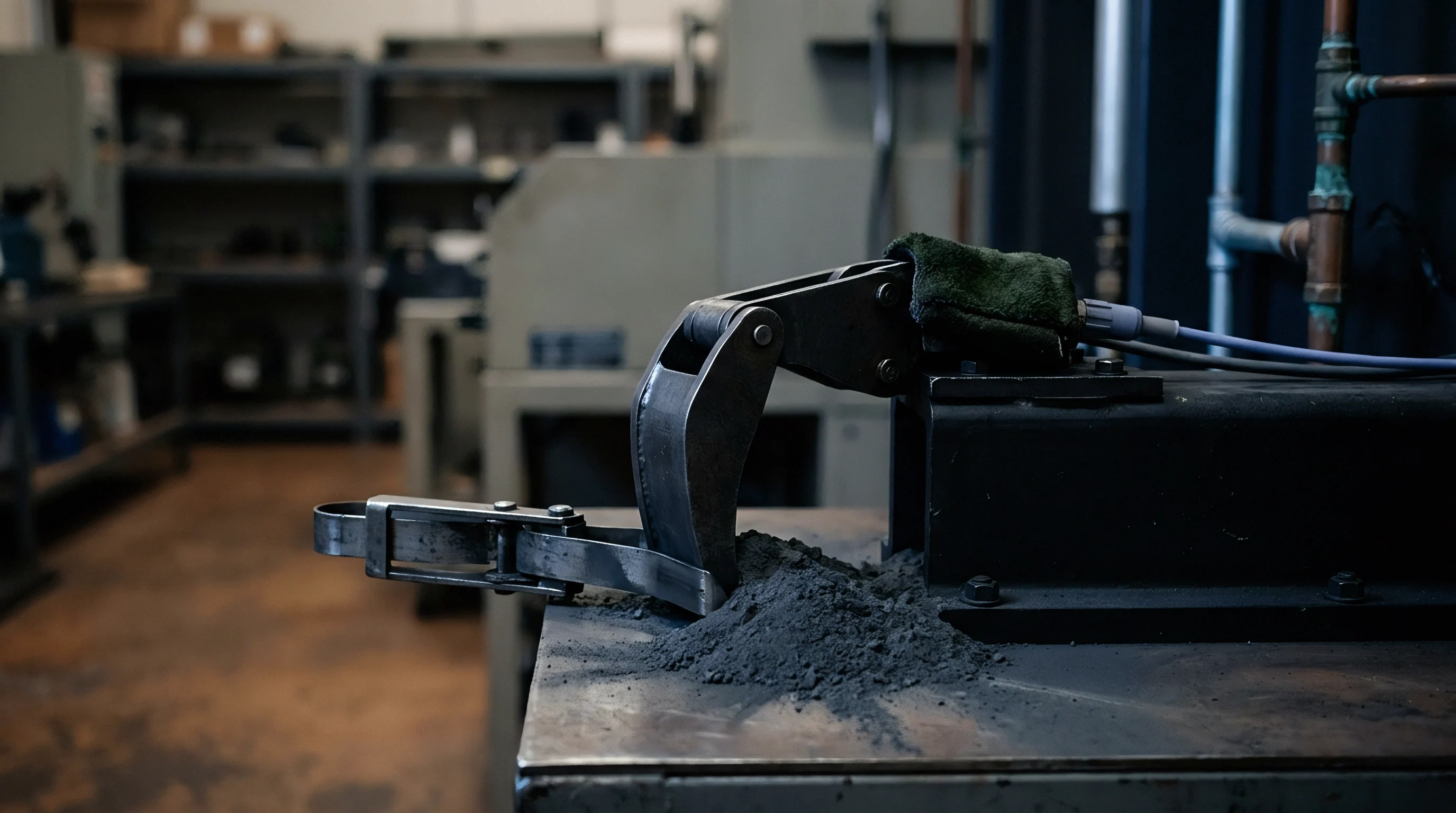
Kinetics
Charging a lithium-ion cell below room temperature pushes the negative electrode past key thermodynamic and transport limits. When charging current flows through a graphite anode, the potential of the graphite matrix drops below its open-circuit equilibrium. This shift reflects the total polarization across the electrode: ohmic resistance, charge-transfer overpotential at the interface, and concentration overpotentials in the electrolyte and graphite particles.
At twenty-five degrees Celsius, standard synthetic and natural graphite anodes operate well above zero volts relative to the lithium reference potential (Li/Li+). Graphite’s equilibrium intercalation plateaus rest near two hundred millivolts, one hundred millivolts, and eighty millivolts versus Li/Li+ for stage three, stage two, and stage one compounds. Cold conditions pull these operating margins down sharply.
Ion mobility drops directly with temperature.
As cell temperature falls to zero degrees Celsius, minus ten degrees Celsius, or lower, total negative electrode polarization rises sharply. If combined polarization exceeds the equilibrium potential of the active intercalation stage, local potential at the graphite surface drops below zero volts versus Li/Li+. At that point, reducing lithium ions into metallic lithium becomes thermodynamically favored over intercalating them into the lattice, and metallic lithium begins plating onto particle surfaces.
Graphite anode potential falls below zero volts versus lithium when charge rates at minus ten degrees Celsius exceed zero point two C.
Total overpotential at the negative electrode divides into three components, each governed by different time constants and kinetics:
- Ohmic Potential Drop occurs instantly when current is applied, caused by ionic resistance in the bulk electrolyte, electronic resistance through the graphite matrix, and contact resistance at the copper collector interface.
- Charge Transfer Polarization develops within milliseconds across the solid electrolyte interphase (SEI) film, set by the activation energy required for lithium ions to desolvate and pass through the passivation layer.
- Concentration Polarization builds over seconds to minutes as concentration gradients develop in the liquid pores of the electrode and inside the graphite grains.
Solid-state diffusion constrains overall current flow.
The balance between these overpotential terms changes as temperatures drop. At room temperature, solid-state diffusion inside the graphite particles typically limits high C-rate charging. Below freezing, high activation energies for desolvation and SEI transport introduce a strong charge-transfer barrier, while liquid diffusion through tortuous pores slows dramatically.
The resulting overpotential pushes surface regions near the separator below zero volts.
Keeping working potential above metallic deposition limits is essential to preserving graphite anode life in cold conditions.
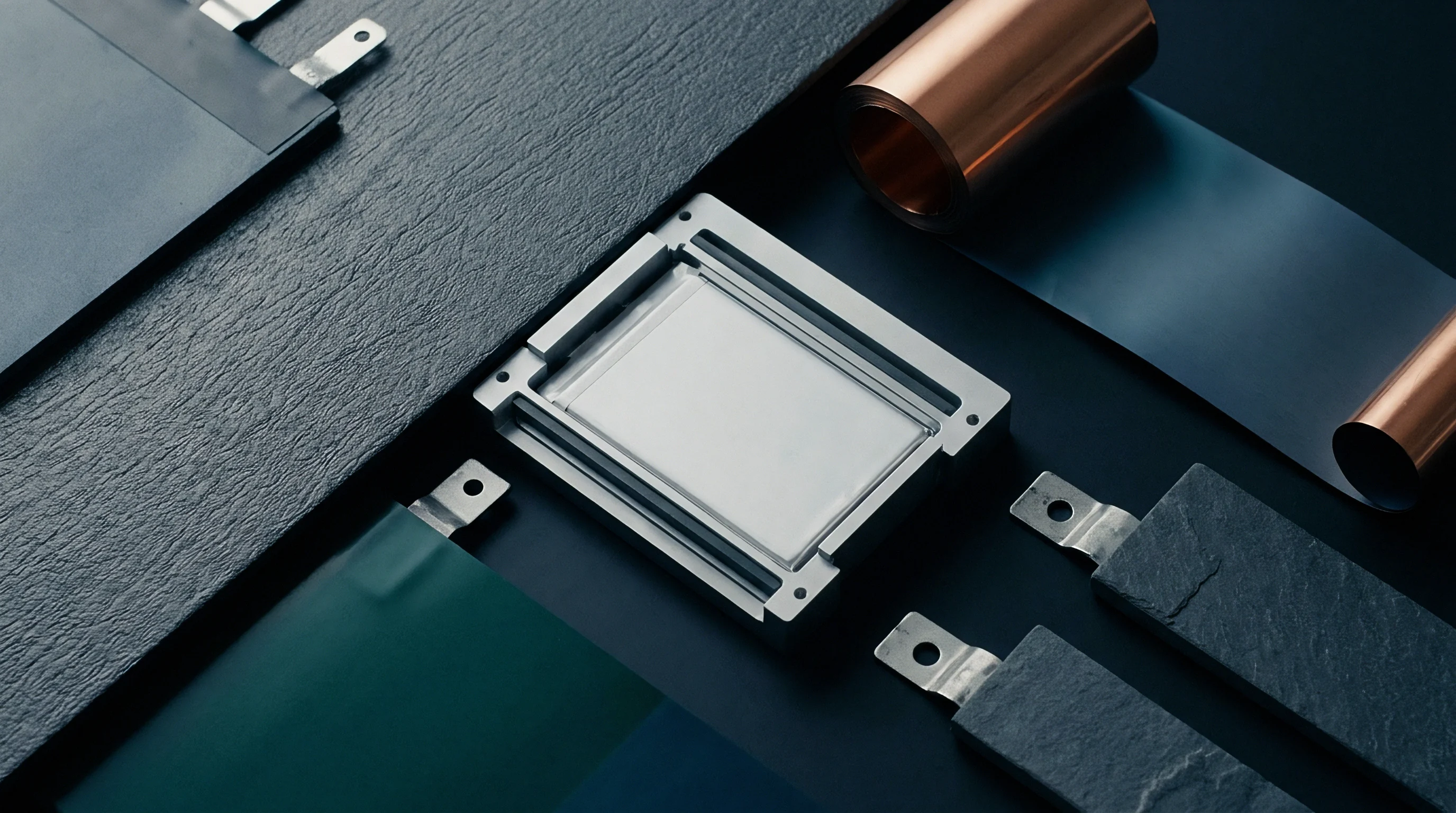
Frost
Sub-zero temperatures alter the physical behavior of organic liquid electrolytes and solid interphases. Standard lithium-ion formulations mix cyclic carbonates like ethylene carbonate with linear carbonates such as dimethyl carbonate or ethyl methyl carbonate, holding lithium hexafluorophosphate salt. Cooling toward minus twenty degrees Celsius increases solvent viscosity by over an order of magnitude, while ionic conductivity drops sharply as ion pairing increases and solvent dielectric constants shift.
Ohmic resistance grows as temperature falls.
Lower bulk conductivity increases ohmic overpotential throughout the porous graphite matrix, while liquid-phase diffusion of lithium ions through pore channels slows markedly. Because the effective diffusion coefficient scales inversely with viscosity via the Stokes-Einstein relation, fast charging causes severe salt depletion deep in the anode near the copper collector and heavy salt accumulation near the separator interface.
| Temperature (°C) | Electrolyte Conductivity (mS/cm) | Desolvation Resistance (Ω·cm²) | Solid Diffusion Coefficient (cm²/s) | Polarization Growth Factor vs 25°C |
|---|---|---|---|---|
| 25 | 10.5 | 12.5 | 1.2 × 10⁻¹⁰ | 1.0 |
| 0 | 5.2 | 48.0 | 2.8 × 10⁻¹¹ | 3.8 |
| -10 | 2.8 | 145.0 | 6.5 × 10⁻¹² | 11.2 |
| -20 | 1.1 | 480.0 | 8.0 × 10⁻¹³ | 38.5 |
Solid-state diffusion through the graphite lattice carries an even higher activation energy, generally between thirty-five and fifty kilojoules per mole depending on crystallite orientation and defect density. At minus ten degrees Celsius, the diffusion coefficient of lithium in graphite falls about two orders of magnitude below room-temperature levels. Lithium ions arriving at the outer surface of a particle cannot migrate into the core fast enough to sustain high charge currents.
This surface accumulation creates localized saturation in the graphite. The exterior reaches stage-one intercalation (LiC6) while the core remains mostly un-intercalated. Under continued current, once surface sites fill completely, incoming lithium ions have nowhere to intercalate at the particle boundary.
Local surface potential drops below zero, triggering metallic lithium nucleation.
Lithium plating on graphite surfaces forms dendritic structures that permanently deplete active lithium inventory and increase internal cell impedance.
Plated lithium reacts readily with liquid carbonate solvents. Fresh deposits consume active lithium ions and solvent molecules, building high-impedance secondary SEI layers. With repeated cold charging, metallic deposits degrade into dead, isolated lithium and sharp dendrites.
If dendrites pierce the polymer separator, they create an internal short circuit to the cathode, risking thermal runaway.
Uncontrolled overpotentials shorten cycle life dramatically.
Cells subjected to aggressive sub-zero fast charging without preheating suffer rapid capacity loss, permanent impedance growth, and early failure.


Impedance
Separating internal voltage losses requires precise time- or frequency-domain measurements. Electrochemical Impedance Spectroscopy (EIS) isolates specific polarization modes in full cells or three-electrode setups. A typical Nyquist plot of a graphite anode shows a high-frequency intercept for ohmic resistance, two mid-frequency semicircles for SEI film and charge-transfer resistance, and a low-frequency Warburg tail for solid-state mass transport.
When Does Mass Transport Limit Cold Fast Charge Acceptance?
Mass transport becomes the main constraint when Warburg diffusion impedance grows larger than charge-transfer resistance. Below minus ten degrees Celsius, the time constant for solid-state diffusion lengthens markedly. Deciding whether activation energy or mass transport limits current acceptance requires tracking anode potential against a reference electrode in real time.
Reference electrodes measure local anode potentials directly.
Three-electrode setups with metallic lithium, lithium titanate, or gold wire micro-reference electrodes isolate the working potential of the negative electrode during charge. Full-cell measurements obscure this polarization because cathode overpotential and bulk ohmic drops mask the actual anode potential. For instance, a full cell might read a terminal voltage of 3.8 volts ~ well under its 4.2-volt cutoff ~ even while severe polarization pulls the graphite anode twenty millivolts below Li/Li+.
Detecting plating onset non-destructively in standard two-electrode cells relies on post-charge voltage relaxation and differential voltage analysis (dV/dQ). The analytical workflow proceeds as follows:
- Apply the cold fast-charge profile in an environmental chamber until reaching the target state of charge.
- Open the circuit immediately and log high-frequency terminal voltage relaxation at millisecond resolution for at least two hours.
- Filter the voltage time series with a low-pass Digital Butterworth filter to remove sampling noise while preserving phase structure.
- Calculate the first derivative of terminal voltage over time (dV/dt) during the open-circuit rest.
- Identify voltage relaxation plateaus matching the thermodynamic oxidation potential of metallic lithium stripping and re-intercalation into graphite.
- Integrate the inflection area under the dV/dt curve to estimate the capacity of plated lithium undergoing spontaneous chemical re-intercalation.
Sub-zero charging reduces long-term capacity retention.
When metallic lithium plates on graphite, a local cell forms between the deposit and the host matrix, driving spontaneous re-intercalation during rest. This process creates a distinct voltage plateau in the relaxation curve between fifteen and fifty millivolts above open-circuit equilibrium voltage. The presence and duration of this feature confirm that anode overpotential dropped below zero volts during the prior charge pulse.
Temporary voltage relaxations after low-temperature fast charging often reflect re-intercalation of surface lithium rather than a permanent loss of active inventory.

Structure
Electrode micro-architecture sets the local flux of lithium ions during fast intercalation. Porous graphite electrodes are composite structures made of discrete graphite grains, polymeric binder, conductive carbon additive, and electrolyte-filled pores. Their spatial arrangement dictates thickness, porosity, and tortuosity.
High tortuosity forces ions through long, winding liquid paths, increasing concentration polarization at high charge rates.
High tortuosity extends liquid diffusion paths.
Thick electrode coatings built for high energy density struggle with ionic transport deep in the layer. During cold charging, lithium ions entering from the separator face are consumed quickly by graphite near the front surface. Because liquid diffusion through tortuous channels is slow, salt concentration spikes near the separator while dropping close to zero near the copper collector.
This salt depletion restricts active charging to the front of the electrode, spiking local current density and pulling local anode potential negative.
| Graphite Morphology | Coating Density (g/cm³) | Electrode Porosity (%) | Particle Tortuosity Factor | Max Charge Rate at -10°C (No Plating) |
|---|---|---|---|---|
| Flake Natural Graphite | 1.65 | 24 | 4.8 | 0.12 C |
| Spherical Synthetic Graphite | 1.55 | 30 | 3.1 | 0.35 C |
| Isotropic Surface-Modified Graphite | 1.45 | 38 | 2.1 | 0.70 C |
| 3D Micro-Grooved Graphite | 1.50 | 34 | 1.4 | 1.20 C |
Particle shape also influences charge-transfer overpotentials. Flake natural graphite shows strong structural anisotropy, restricting intercalation mainly to edge and basal planes. Synthetic spherical graphite, rounded mechanically and coated with surface carbon, provides more uniform ion access around its exterior.
The surface coating lowers activation energy by forming a stable artificial interface that reduces direct electrolyte breakdown.
Thinner electrode coatings reduce tortuosity paths and raise the acceptable fast charge current threshold in cold conditions.
Engineered architectures use laser patterning or magnetic field alignment during coating to form low-tortuosity vertical channels. These pathways allow electrolyte to penetrate deep into the anode, distributing current evenly across the layer thickness. Spreading the current uniformly reduces local current density and keeps local anode potential above zero volts versus Li/Li+.
Cell swelling signals active gas evolution pathways.
Whether synthetic graphite blends or surface fluorination offers better protection against sub-zero concentration polarization remains an open question in cell development.

Control
Managing battery operation at sub-zero temperatures requires multi-stage charging algorithms in the battery management firmware. Standard Constant Current Constant Voltage (CCCV) profiles designed for room temperature fail in the cold; applying a constant charge current drives rapid polarization growth, pushing anode potential below zero volts within seconds.
Pulse charging temporarily lowers concentration polarization.
Modern fast-charging protocols use model-based closed-loop control or adaptive step-charging maps based on real-time temperature, state of charge, and internal impedance. Consider a calculation for a fifty-ampere-hour pouch cell operating at minus ten degrees Celsius, where the anode overpotential envelope requires surface potential to remain above five millivolts versus Li/Li+.
Assuming total low-temperature anode resistance (ohmic, charge transfer, and liquid diffusion combined) is fifteen milliohms at twenty percent state of charge, and graphite equilibrium potential is one hundred twenty millivolts, the allowable overpotential drop cannot exceed one hundred fifteen millivolts to stay above five millivolts. Dividing one hundred fifteen millivolts by fifteen milliohms yields a maximum charge current of seven point six seven amperes, or zero point one five C.
| Strategy Type | Target Temp (°C) | Preheating Power (W) | Charge Time (10-80% SOC) | Plating Risk Profile |
|---|---|---|---|---|
| Standard CCCV Profile | -10 | 0 | 420 min | Severe / Critical Plating |
| Multi-Step Adaptive Current Map | -10 | 0 | 210 min | Managed / Low Margin |
| Variable Frequency Pulse Charge | -10 | 0 | 165 min | Moderate / Localized Plating |
| AC Self-Heating + Fast Charge | 25 (from -10) | 120 | 28 min | Negligible / Safe Envelope |
Applying an internal AC self-heating pulse prior to charging raises cell temperature rapidly. Alternating current at twenty kilohertz generates uniform ohmic heating throughout the cell without causing side reactions at the electrode surfaces. Warming the core from minus ten degrees Celsius to fifteen degrees Celsius in five minutes drops total anode resistance from fifteen milliohms to one point two milliohms.
The recalculated overpotential envelope permits charge currents above eighty amperes, cutting charge times from hours to minutes while preventing lithium deposition.
Preheating removes lithium plating risks almost entirely.
Adaptive control software runs online electrochemical models ~ such as Single Particle Models with electrolyte dynamics or reduced-order Doyle-Fuller-Newman models ~ on automotive microcontrollers. These algorithms continuously estimate surface concentrations and local anode potentials. As surface potential approaches zero volts, the controller throttles charging current to match real-time intercalation limits.
IEC 62660 testing guidelines require complete prohibition of low-temperature charging when anode equilibrium potential measurements cross negative thresholds.
BMS algorithms enforce explicit polarization thresholds to maintain battery health and meet international standards, relying on clear operational boundaries:
- Minimum Cell Preheating Threshold specifies that DC charging above zero point one C cannot begin until internal cell temperature reaches at least five degrees Celsius.
- Closed-Loop Overpotential Limit requires charging current to throttle whenever estimated anode surface potential comes within ten millivolts of the lithium deposition boundary.
- Rest Relaxation Monitoring Window directs the control module to track open-circuit voltage decay slopes after charging to detect plateau signatures of metallic plating.
- Temperature Gradient Derating scales current limits according to the delta between internal core temperature and surface sensor readings, preventing plating in localized cold spots.
Procurement contracts for cold-climate battery packs commonly require charging derating profiles tied to internal temperature sensors under ISO 12405 test standards.

Dossier
Qualifying cells for sub-zero fast charging requires thorough lab testing. Published datasheets often reflect fast-charge specs measured only at room temperature. Sourcing engineers need cell dossiers with cold-temperature polarization curves, chemical stripping data, and long-term cycle validation before freezing pack designs or issuing purchase orders.
Non-destructive inspection helps safeguard warranty budgets.
Testing protocols require three-electrode reference cell qualification across the operating range, from minus thirty degrees Celsius to forty-five degrees Celsius. Cells are cycled across matrices of temperature, C-rate, and state of charge inside chambers holding temperature within zero point two degrees Celsius. Post-test teardown audits in argon gloveboxes confirm anode surface conditions using scanning electron microscopy and energy-dispersive X-ray spectroscopy.
Evaluating financial risk from cold-charge degradation depends on analyzing capacity loss curves during accelerated sub-zero cycling. A single unmitigated fast-charge event that triggers lithium plating can destroy active lithium equivalent to fifty room-temperature cycles. Over a five-year service life in cold climates, uncalibrated charging controls degrade cell health, leading to early warranty claims, field recalls, and significant liability for pack integrators.
Verification protocols require post-test teardowns, differential scanning calorimetry on harvested anodes to evaluate thermal stability of plated lithium, and high-precision coulombic efficiency tracking. Efficiency measurements during sub-zero cycling demand five-digit precision; a drop from ninety-nine point nine nine percent to ninety-nine point five percent signals severe parasitic reactions from ongoing lithium plating and SEI growth. The resulting data forms the technical foundation for warranty agreements between cell vendors and pack integrators.