
Anode Overpotential Monitoring in Commercial Lithium Ion Fast Charging Applications
Active anode potential tracking prevents metallic lithium plating, extending cell life and enabling safe 15-minute fast charging in high-power battery packs.
Active anode potential tracking prevents metallic lithium plating, extending cell life and enabling safe 15-minute fast charging in high-power battery packs.
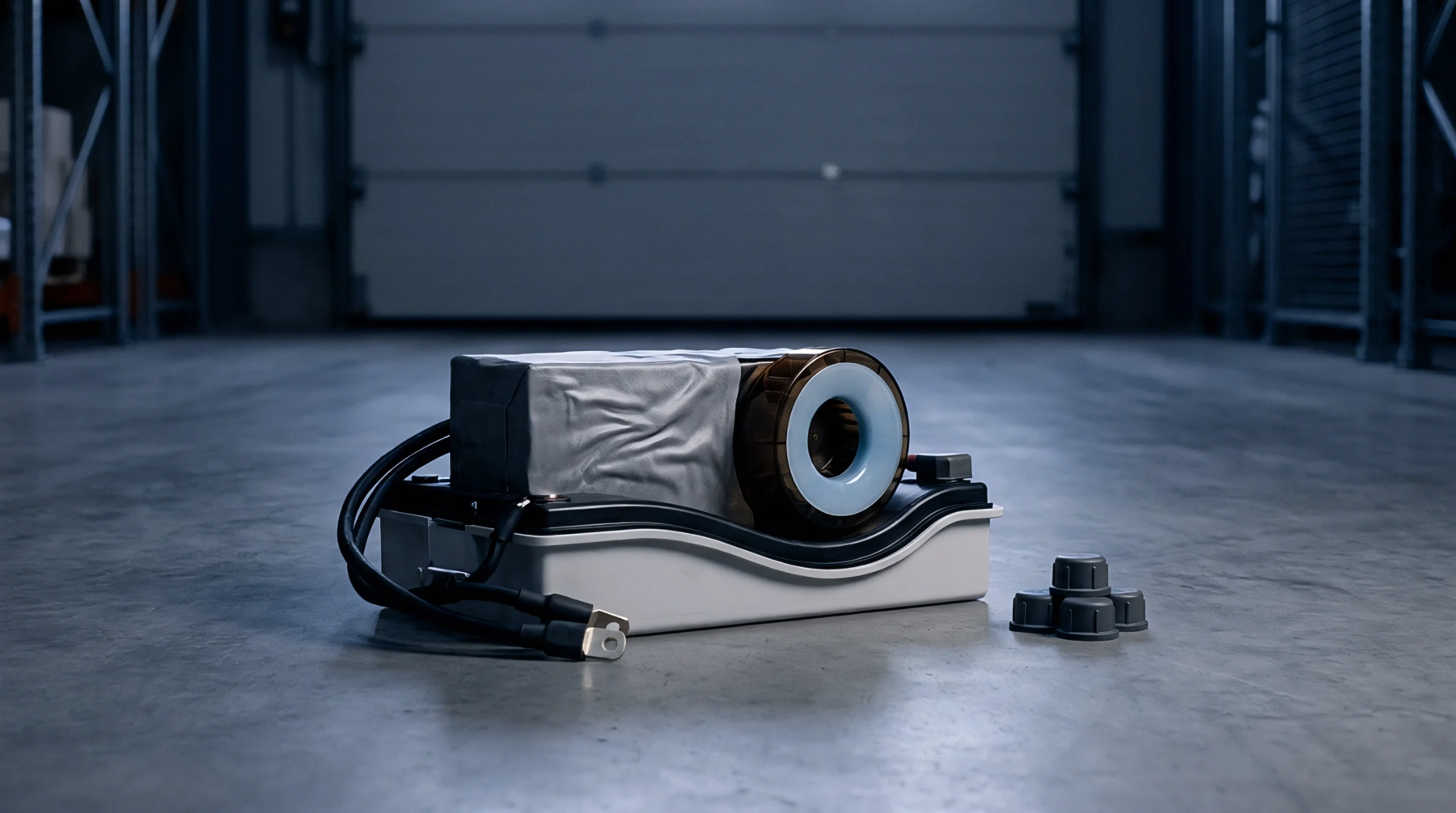
High current density ultrasonic sonotrodes degrade through coupled thermomigration and intermetallic embrittlement, requiring strict wear-limit replacement protocols.

Ultrasonic tab welding balances acoustic softening and static clamp force to break interfacial oxides, yielding sub-5-micro-ohm joints without foil cutting.

Differentiating diffusion relaxation from chemical self-discharge requires multi-point voltage decay modeling to isolate transient overpotentials from constant Faradaic leakage.

Micro reference electrodes reveal sub-zero lithium plating by detecting negative graphite anode potentials relative to metallic lithium equilibrium in real time.

Reversible lithium stripping under cold operation requires voltage relaxation or dQ/dV diagnostic tracking to adjust BMS derating and protect cycle life.

Subzero charging forces graphite anode potential below zero volts against lithium, driving metallic plating over intercalation and causing rapid battery capacity loss.

LFP open circuit voltage settling requires at least 14 days post-charge to distinguish structural phase equilibrium from latent micro-short decay.

Dynamic tracking of graphite anode potential prevents sub-zero metallic lithium plating by throttling charging current before interfacial overpotentials breach 0V.

Sub-zero charging forces graphite anode potential below zero volts relative to lithium, initiating metallic plating driven by desolvation and diffusion barriers.
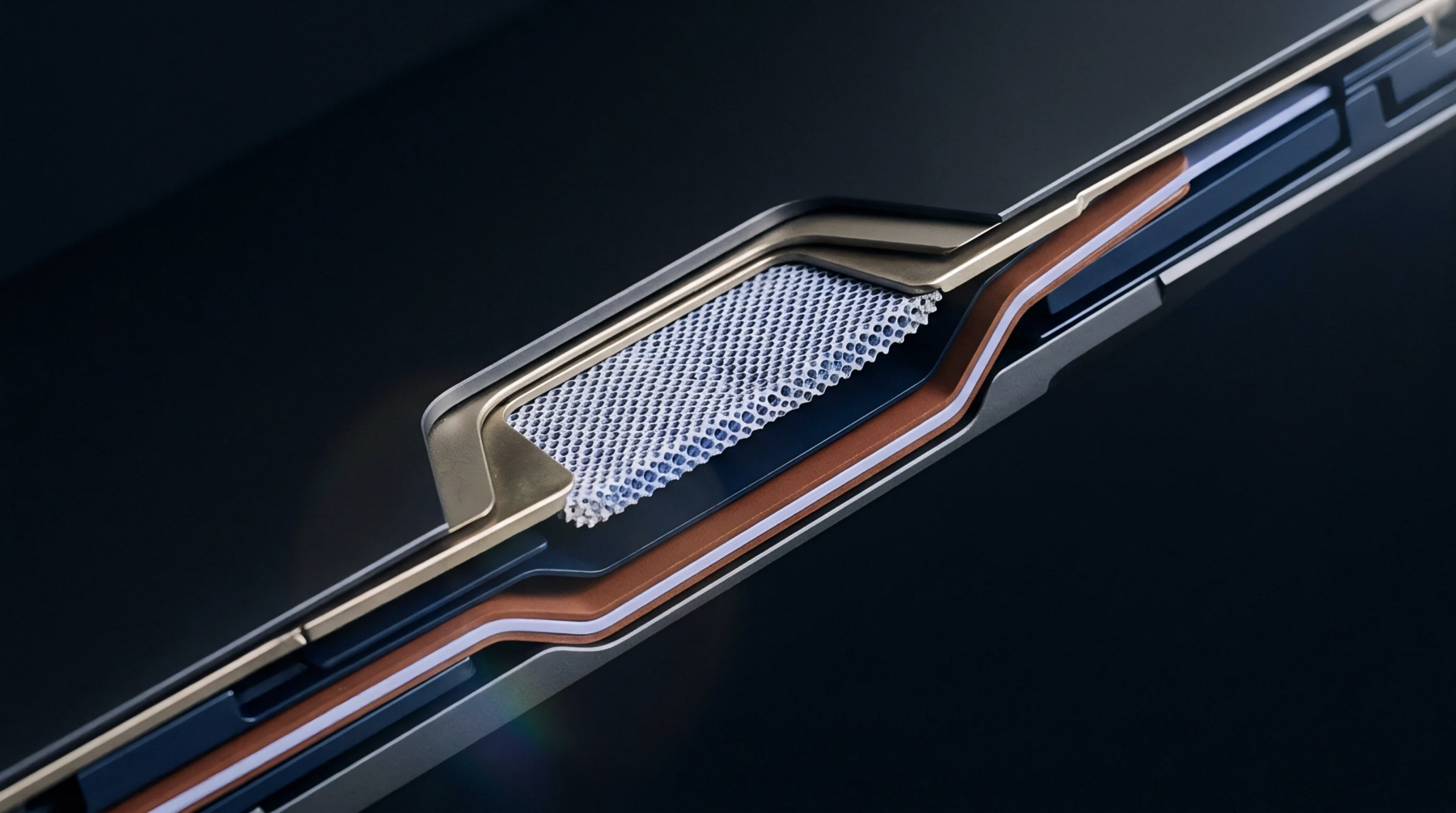
Deconvolution isolates activation, ohmic, and diffusion overpotentials, enabling exact boundary setting for fast charging without lithium plating risks.

Extended electrochemical relaxation time constants induce residual overpotential that corrupts zero-point Coulomb counting calibration in battery packs.

Charge transfer overpotential crossover marks the transition from kinetic to diffusion control, quantifiable via transient voltage relaxation fitting.

Sub-zero graphite charging is constrained by desolvation and pore diffusion limits that induce lithium plating when anode potential drops below zero volts.

Subzero charge drives graphite surface potential below 0V vs Li/Li+, causing metallic lithium plating that demands temperature-compensated derating.

Differential capacity voltage relaxation analysis detects sub-zero lithium plating by identifying chemical re-intercalation peaks during post-charge rest.

Sub-zero fast charging accelerates graphite anode overpotential past 0 V vs Li/Li+, triggering metallic lithium plating that demands active pre-heating.

Sub-zero battery charging induces severe kinetic overpotentials, forcing metallic lithium plating over intercalation and demanding strict thermal step-down controls.

LFP cell voltage relaxation spans milliseconds to weeks, requiring structured rest periods to separate kinetic polarization from factory K-value self-discharge.

Sub-zero charging forces graphite overpotential past zero volts, causing lithium plating that demands dynamic BMS C-rate derating to prevent rapid battery fade.

Sub-zero fast charging shifts anode overpotential negative, forming non-reversible plated lithium that degrades cell capacity and demands strict BMS thermal thresholds.

Voltage relaxation transients distort open circuit measurements causing state of charge errors exceeding twelve percent without persistent diffusion modeling.

Sub-zero graphite lithiation causes anode potential drops below 0V vs Li/Li+, triggering metallic lithium plating that demands temperature-dependent BMS current limits.

LFP phase transitions and voltage relaxation kinetics create severe OCV hysteresis and multi-hour voltage drift requiring dynamic BMS filtering to prevent SOC errors.

Local intercalation overpotentials in large format cells force anode potentials below 0V vs Li/Li+, causing lithium plating long before terminal voltage limits.

Intra-cell thermal gradients skew differential capacity signals, masking true health states and invalidating supply contract warranty baselines.
Sub-zero lithium plating occurs when kinetic polarization drives anode surface potential below zero volts against reference lithium, demanding dynamic current derating profiles in cell procurement contracts.

Immediate AC-IR screening and differential capacity testing reveal hidden transit degradation and cell capacity variance in sodium ion shipments.
Expertise is a utility, not a secret. sentiention™ publishes its working knowledge as open reference: intelligence layer covering the materials it sources, the markets it enters, and the reference that serves both.