
Anode Overpotential Monitoring in Commercial Lithium Ion Fast Charging Applications
Active anode potential tracking prevents metallic lithium plating, extending cell life and enabling safe 15-minute fast charging in high-power battery packs.
Active anode potential tracking prevents metallic lithium plating, extending cell life and enabling safe 15-minute fast charging in high-power battery packs.

Dynamic current derating derived from localized salt diffusion kinetics prevents sub-zero lithium plating and costly field warranty failures.

Combined high voltage and thermal stress drives exponential electrolyte salt consumption, causing localized concentration starvation and sudden capacity cliff drops.
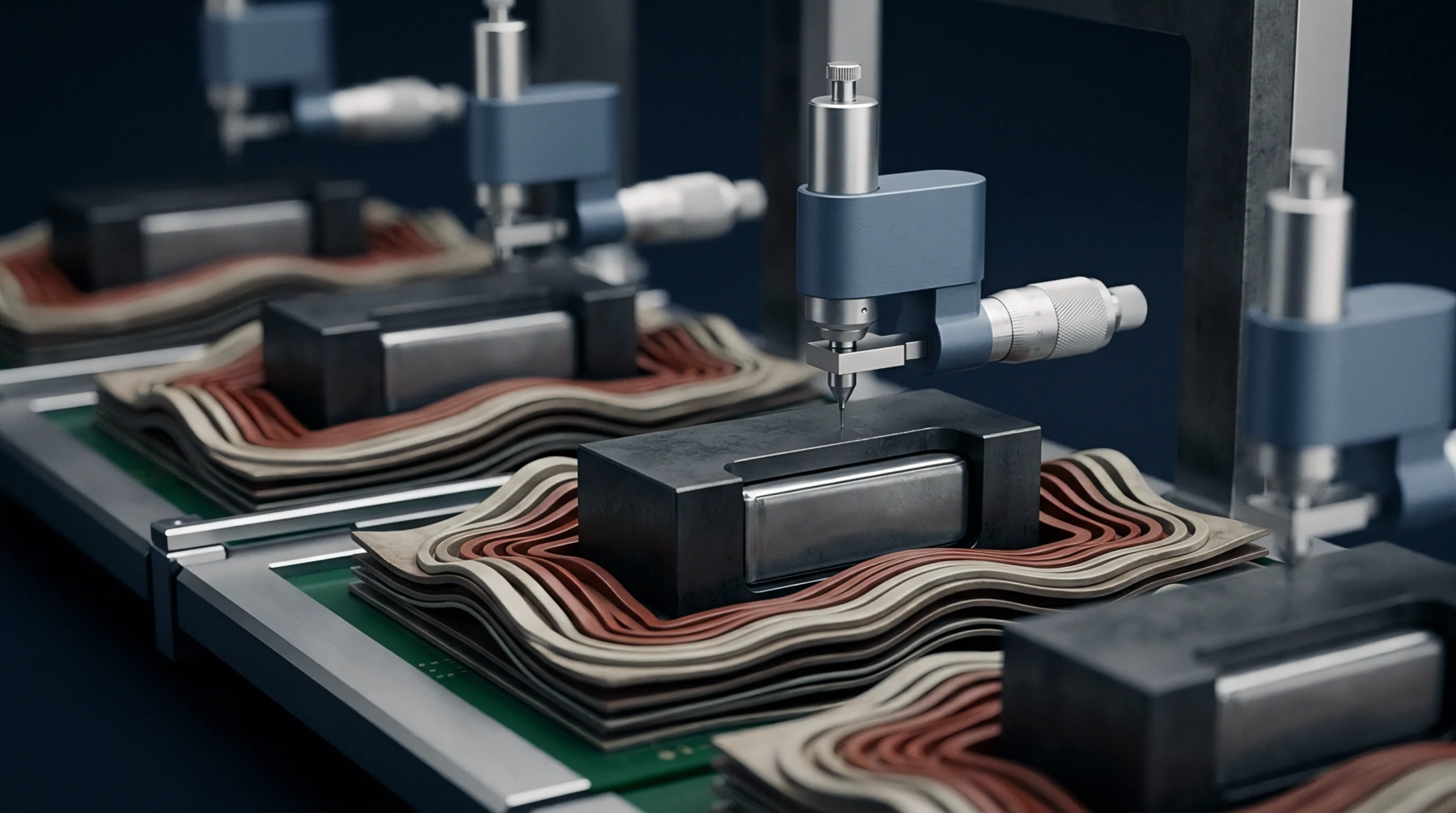
Differentiating diffusion relaxation from chemical self-discharge requires multi-point voltage decay modeling to isolate transient overpotentials from constant Faradaic leakage.

Operando deconvolution isolates ion desolvation from interfacial charge transfer, enabling electrolyte formulations that eliminate low-temperature power loss.

Low temperature charging shifts graphite potential below zero volts against lithium, initiating destructive metallic plating when polarization exceeds kinetic intercalation limits.

Verify air cargo cell charge limits below 30 percent using rested open-circuit voltage lookups or bench discharges backed by signed UN 38.3 test records.

Cathode particle fracture increases specific surface area while fragmented debris clogs electrode void pathways, causing sharp non-linear impedance rise.

Uncorrected Soret diffusion in post-fast-charge diagnostics inflates measured SEI resistance by up to 40 percent, skewing life and safety dossiers.

Unrelaxed solid-phase diffusion gradients create particle surface overpotentials that distort battery open-circuit voltage lookups by up to twenty percent.
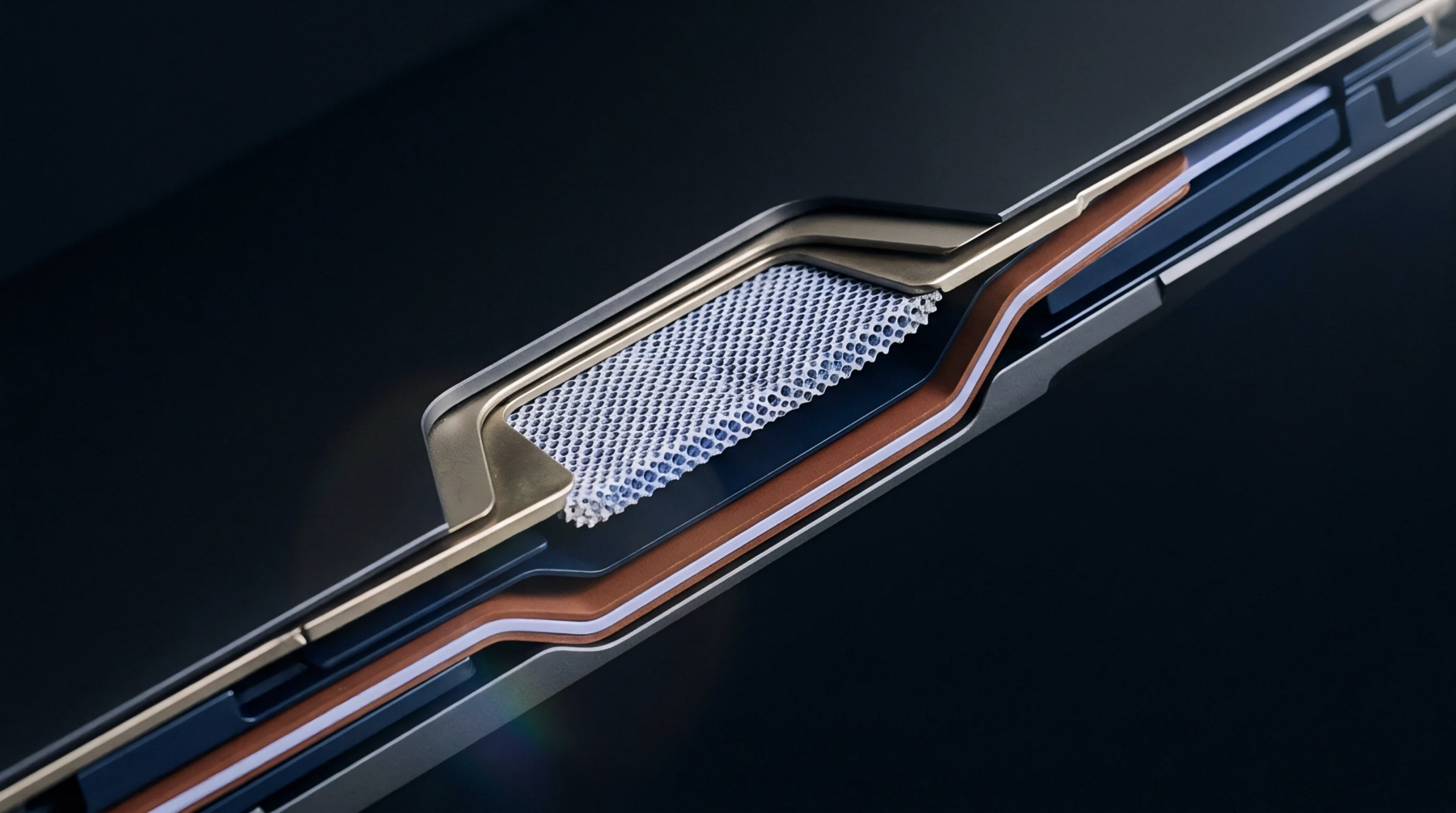
Deconvolution isolates activation, ohmic, and diffusion overpotentials, enabling exact boundary setting for fast charging without lithium plating risks.

Electrochemical impedance transmission line modeling isolates micro-structural electrolyte salt depletion under continuous high-C discharge before voltage collapse.

Fast charging requires negative electrode potential monitoring above zero volts against lithium reference to prevent cell degradation and thermal risks.

Sub-zero fast charging accelerates graphite anode overpotential past 0 V vs Li/Li+, triggering metallic lithium plating that demands active pre-heating.
Sub-zero fast charging of high-loading anodes causes localized salt precipitation and concentration polarization, requiring low-viscosity solvents and graded porosity.

LFP cell voltage relaxation spans milliseconds to weeks, requiring structured rest periods to separate kinetic polarization from factory K-value self-discharge.

Decoupling Seebeck voltage offsets requires bipolar pulse excitation or spatial thermal modeling to isolate thermo-galvanic artifacts from true electrochemical overpotentials.

Voltage relaxation transients distort open circuit measurements causing state of charge errors exceeding twelve percent without persistent diffusion modeling.
Expertise is a utility, not a secret. sentiention™ publishes its working knowledge as open reference: intelligence layer covering the materials it sources, the markets it enters, and the reference that serves both.