Operando Acoustic Inspection for Low Temperature Cell Validation
Operando acoustic inspection detects low-temperature lithium plating and electrolyte freezing in real time, preventing latent field failures and warranty claims.
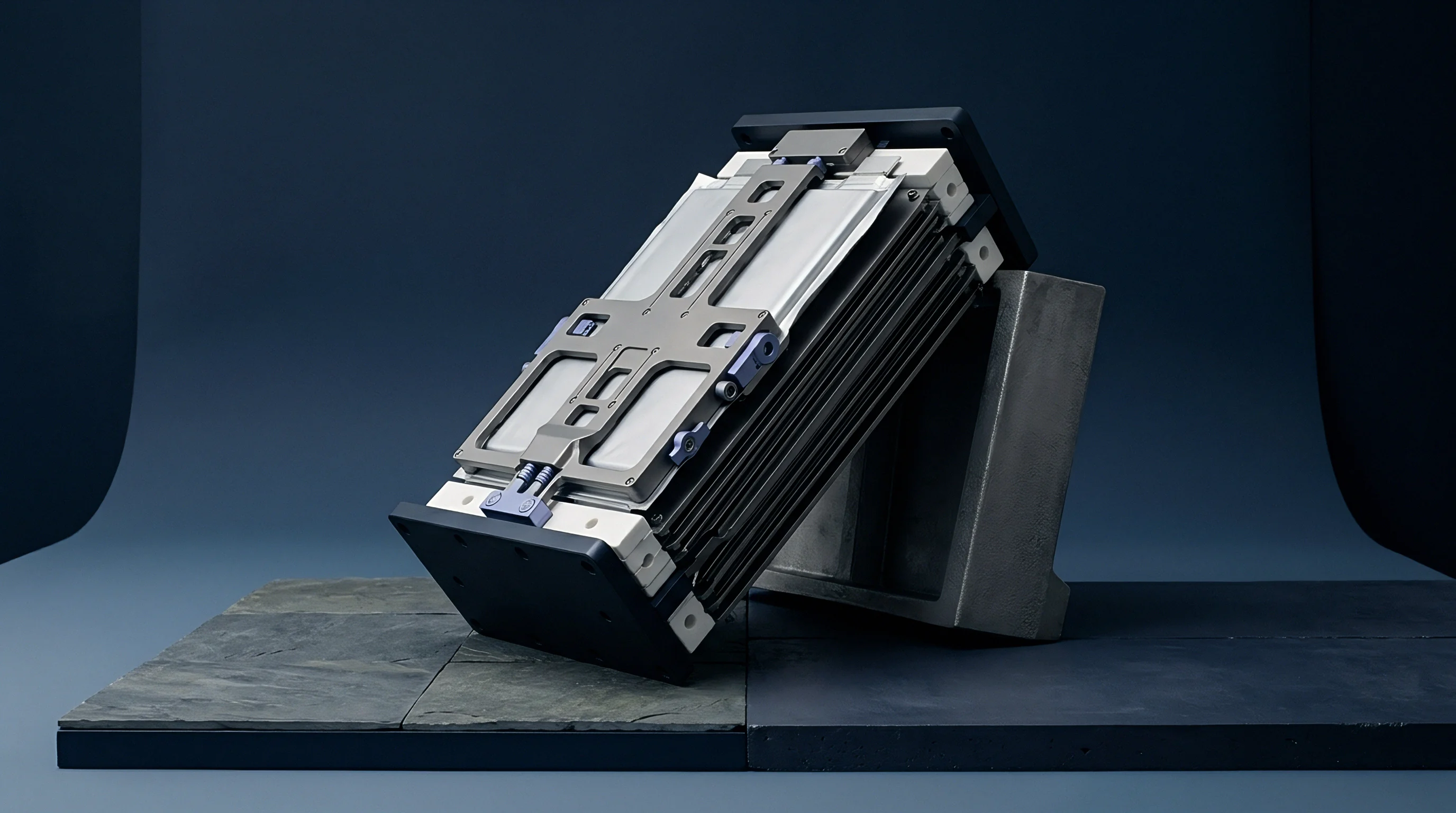
Frost
Sub-zero environments alter the mechanical stiffness and density of lithium-ion cell components. When temperatures drop below zero degrees Celsius, liquid electrolyte undergoes steep viscosity increases, moving toward partial crystallization or glass transition depending on solvent composition. Standard electrical measurements like Electrochemical Impedance Spectroscopy reflect total internal resistance growth, yet fail to isolate physical phase changes within the electrolyte matrix from charge-transfer kinetics at the electrode interface.
Operando ultrasonic testing measures high-frequency mechanical waves traversing the cell stack, capturing physical shifts directly.
Longitudinal ultrasonic sound velocity depends on the bulk modulus and density of the medium through which the acoustic wave travels. As ambient temperature decreases to minus thirty degrees Celsius, the bulk modulus of standard ethylene carbonate and dimethyl carbonate solvent blends rises significantly. This structural stiffening causes acoustic wave velocity to increase, even while ionic conductivity collapses.
Acoustic waves pass through the physical layers of current collectors, porous graphite anodes, separators, and nickel-manganese-cobalt cathodes, sensitive to localized elasticity variations.
Cold shifts acoustic velocity. Viscosity dominates sound attenuation. Monitoring acoustic propagation across sub-zero temperature sweeps provides an physical profile of cell state.
Signal attenuation increases dramatically at lower temperatures due to viscous dissipation in the liquid pore space. The table below outlines acoustic propagation metrics measured across cell formats under varying sub-zero thermal states.
| Thermal Condition | Electrolyte Physical State | Longitudinal Velocity (m/s) | Attenuation Rate (dB/mm) | Primary Acoustic Signature |
|---|---|---|---|---|
| 25°C Baseline | Fully Liquid Phase | 1420 to 1480 | 0.2 to 0.4 | Stable transmission baseline |
| 0°C Standard | High Viscosity Liquid | 1510 to 1560 | 0.8 to 1.1 | Moderate amplitude loss |
| -20°C Extended Cold | Partial Solidification Phase | 1640 to 1720 | 2.4 to 3.1 | Significant high-frequency damping |
| -40°C Arctic Extreme | Vitreous Glass State | 1810 to 1950 | 5.2 to 6.8 | Severe attenuation, wave speed peak |
Pouch cells offer low acoustic reflection interfaces due to flat polymer-laminated aluminum walls. Prismatic cells present thicker aluminum housings that introduce geometric acoustic dispersion, requiring acoustic impedance matching to isolate internal layer signals from enclosure reflections. Cylindrical formats create complex radial wave paths, making acoustic time-of-flight extraction mathematically intensive.
Liquid electrolyte consolidation at negative temperatures elevates acoustic velocity while masking ion transport sluggishness.
Operando validation relies on separating structural physical changes from electrochemical reactions. While voltage monitoring at negative temperatures reflects concentration polarization, acoustic wave mechanics track physical phase transitions and structural freezing inside the porous electrodes. When wave speed plateaus before voltage stabilizes, mechanical freezing of the liquid phase has preceded chemical equilibrium.

Transit

Acoustic Time of Flight Dynamics
Ultrasonic pulses traversing a pouch cell experience microsecond delays during sub-zero charging cycles. The duration required for an acoustic pulse to pass through the cell thickness is termed acoustic time-of-flight. As lithium ions move into the graphite lattice during charge, the anode lattice expands, increasing electrode thickness while altering its elastic stiffness.
Under room-temperature conditions, acoustic time-of-flight decreases predictably as state of charge rises because graphite stiffens during lithiation.
At sub-zero temperatures, lithium intercalation kinetics drop by orders of magnitude. Forced charging under sub-zero conditions induces localized metallic lithium deposition on the graphite surface. Metallic lithium exhibits a significantly lower bulk modulus than fully lithiated graphite.
Consequently, lithium plating causes an unexpected increase in acoustic time-of-flight during charging, reversing the path observed during healthy intercalation.
Sub-zero charging risks plating. Acoustic waves track internal density. Signal phase shifts immediately.
Operando acoustic monitoring captures this trajectory divergence in real time, serving as an early indicator of metallic lithium formation hours before voltage relaxation curves register secondary plateaus.
- Mount high-frequency acoustic transducers onto opposing flat surfaces of the dry cell using silicone coupling pads.
- Place the instrumented fixture inside an environmental chamber stabilized at minus twenty degrees Celsius for six hours.
- Connect acoustic hardware to a high-speed digitizer recording at a minimum sampling rate of one hundred megasamples per second.
- Transmit a three-cycle sinusoidal burst centered at two-point-two-five megahertz through the cell thickness at five-minute intervals.
- Apply a constant-current charge at zero-point-two C-rate while continuously capturing waveform arrival times and peak-to-peak amplitude.
- Cross-correlate acquired ultrasonic waveforms against the thermal equilibrium baseline to extract transit delay variations down to sub-nanosecond resolution.
An acoustic time of flight shift exceeding twelve nanoseconds per percent state of charge at minus twenty degrees Celsius signals non intercalative surface layer growth.
Does Wave Attenuation Precede Voltage Tail Detection?
Sub-zero charge current forces acoustic signal amplitude changes tens of minutes before cell terminal voltage shows non-linear polarization. Voltage metrics represent an average electrochemical potential across the entire parallel plate area. Localized lithium plating begins at stress points, edge regions, and areas of uneven thermal dissipation long before average terminal voltage breaches safe upper thresholds.
Ultrasonic attenuation measures spatial acoustic scattering caused by soft metallic deposits and localized gas evolution. As metallic lithium forms porous, non-uniform dendritic structures on the anode surface, incoming acoustic waves scatter at these micro-interfaces. The resulting amplitude loss registers instantly on signal processing channels.
Ignoring time-of-flight divergence during sub-zero validation leads to passing lithium-plated cells that fail catastrophically during subsequent room-temperature thermal relaxation.
Damage
Sub-zero cycling subjects battery electrodes to severe mechanical stresses through anisotropic expansion. While active acoustic techniques transmit external pulses through the cell, passive acoustic emission monitoring listens to stress waves generated internally by mechanical fracture, gas evolution, or material delamination. Cold conditions make active material particles brittle, increasing the frequency of particle microcracking during forced lithiation.
Acoustic emission sensors capture transient elastic waves released when structural failures occur inside the cell envelope. Acoustic emission activity spikes during rapid low-temperature charging due to severe concentration gradients inside cathode transition-metal oxide particles. Microcracking exposes fresh active material to electrolyte, accelerating secondary solid-electrolyte interphase growth once the cell returns to room temperature.
Metallic lithium forms soft dendrites. Anode thickness expands during charge. Acoustic emission signals categorize these degradation mechanisms based on frequency and amplitude distributions.
The list below identifies low-temperature failure modes and their distinct acoustic emission parameters.
- Anode Particle Delamination High-amplitude, low-frequency acoustic bursts ranging between fifty and one hundred kilohertz, caused by severe volumetric contraction during low-temperature discharge cycles.
- Cathode Particle Cracking Sharp, high-frequency signals spanning two hundred to five hundred kilohertz, triggered by steep lithium concentration gradients within nickel-rich cathode architectures under sub-zero charging.
- Gas Evolution Events Continuous low-amplitude acoustic emissions below seventy-five kilohertz resulting from electrolyte decomposition at metallic lithium interfaces.
- Separator Mechanical Compression Low-frequency continuous amplitude shifts produced as lithium dendrites compress porous polyolefin separator structures under high mechanical confinement pressure.
UN 38.3 thermal cycling qualification fails to capture sub-zero operational acoustic emission events that indicate internal structural cracking.
Disentangling mechanical degradation from benign thermal contraction requires precise multi-sensor spatial triangulation. Placing multiple acoustic emission sensors on large-format prismatic cells allows engineers to locate internal crack clusters with millimeter accuracy. Cell manufacturers often state that low temperature voltage noise stems entirely from polarization resistance rather than physical anode plating.
Rig
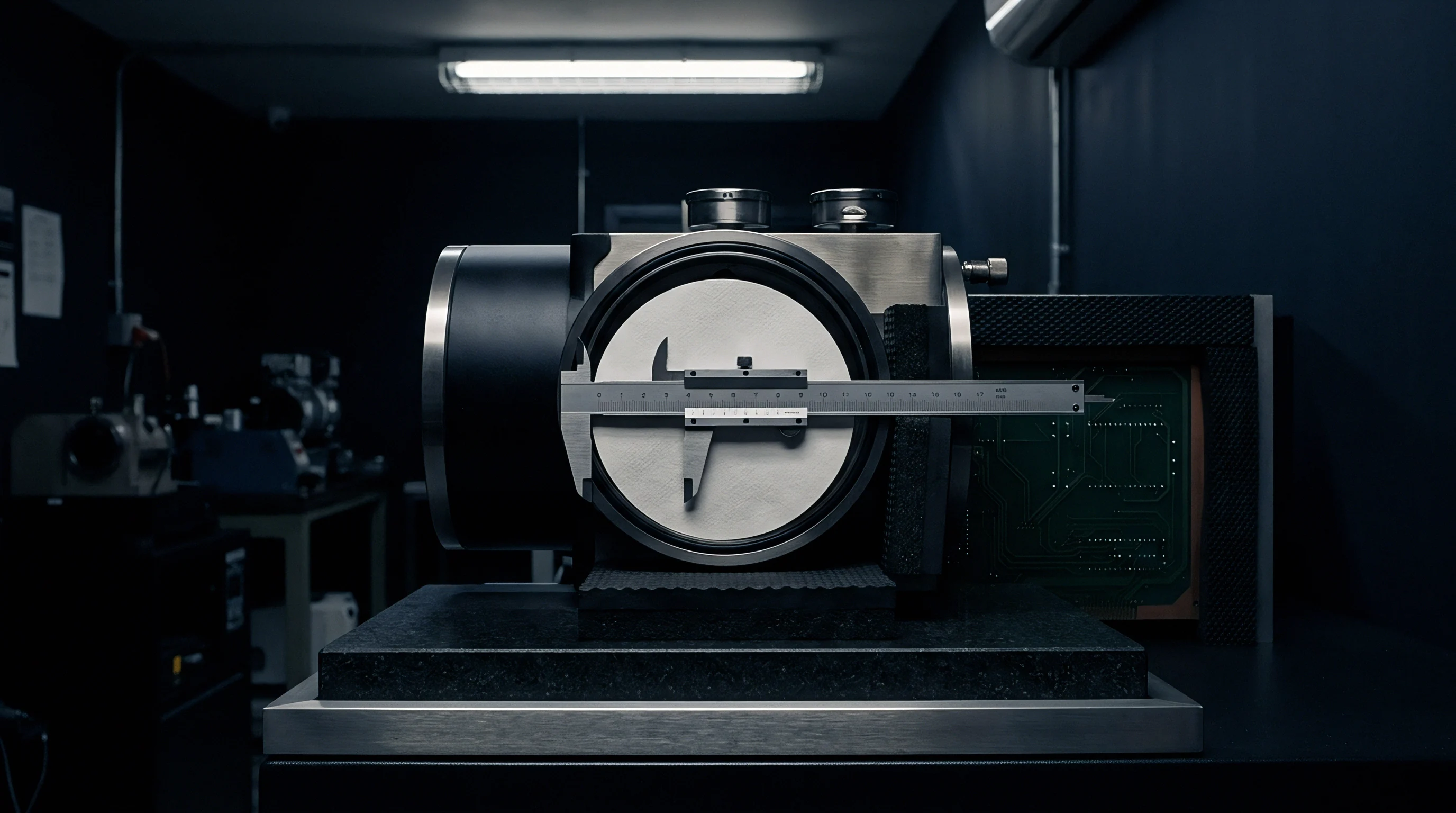
Mounting ultrasonic transducers inside thermal chambers requires strict control over interface acoustic impedance. Temperature fluctuations inside cold chambers cause standard acoustic couplant liquids, such as mineral oils or standard glycerine, to freeze or change viscosity. Phase transitions in couplant materials introduce signal artifacts that obscure cell degradation signatures.
Dry elastomeric coupling pads composed of specialized fluorosilicone retain constant acoustic impedance across wide thermal spans. Constant mechanical clamping force maintains sensor contact pressure despite thermal expansion and contraction of cell walls. Transducer selection must balance spatial resolution with signal penetration depth.
Frequencies between one megahertz and five megahertz offer optimal trade-offs for commercial pouch and prismatic formats.
Dry coupling pads prevent drift. Clamping pressure alters time flight. The table below outlines transducer and couplant configurations tested for sub-zero operando inspection.
| Coupling Material | Operating Temperature Range | Acoustic Impedance (MRayl) | Clamping Pressure Range | Signal Drift Rate over 24 Hours |
|---|---|---|---|---|
| Standard Glycerin Gel | 5°C to 60°C | 2.42 | 0.05 to 0.10 MPa | Severe due to gel freezing |
| High-Vacuum Silicone Grease | -30°C to 100°C | 1.50 | 0.10 to 0.20 MPa | Moderate amplitude decay |
| Fluorosilicone Elastomer Pad | -50°C to 150°C | 1.35 | 0.20 to 0.40 MPa | Negligible below 0.1 dB |
| Cross-Linked Dry Polyurethane | -20°C to 80°C | 1.65 | 0.15 to 0.30 MPa | Minor thermal drift |
Designing robust testing rigs demands strict validation of fixture-induced signal variation. Thermal contraction of metallic mounting brackets alters baseline transducer distance, introducing fictitious time-of-flight shifts if uncorrected. Invar alloy framing minimizes thermal expansion artifacts during deep thermal cycling.
- Transducer Frequency Selection Select two-point-two-five megahertz transducers for pouch cells under ten millimeters thickness, and one megahertz transducers for thick prismatic formats to ensure adequate acoustic penetration.
- Thermal Compensation Baseline Measure acoustic delay variations across an inert, non-cyclable cell dummy across the target temperature range to establish a precise correction matrix for fixture contraction.
- Clamping Pressure Stabilization Apply constant spring-loaded or pneumatic pressure at zero-point-three megapascals to eliminate pressure-induced acoustic impedance variation during electrode swelling.
- Signal Cable Shielding Use double-shielded coaxial cables rated for sub-zero flexibility to prevent ambient electromagnetic noise from corrupting high-frequency acoustic emission channels inside the environmental chamber.
Inserting IEC 62660-2 Annex C requirements into the purchase agreement obligates the cell manufacturer to provide operando acoustic delay data across the full minus forty degree operational envelope.

Yield
Scrap generation from undetected sub-zero lithium plating inflates field warranty reserves across cold-climate battery deployments. Traditional low-temperature cell qualification relies on destructive tear-down audits following cold-chamber electrical cycling. Teardowns destroy expensive prototype lots and provide post-mortem snapshots without pin-pointing the exact cycle or state of charge where plating initiated.
Operando acoustic inspection converts post-test destructive audits into real-time quality assurance protocols. By identifying precise operational boundaries where non-intercalative lithium deposition begins, engineers optimize sub-zero charging algorithms without triggering metallic plating. This capability increases usable cold-climate charge speed while safeguarding pack cycle life.
Field returns destroy gross margin. Operational risk shifts to buyers. Validation prevents field warranty claims.
Integrating operando acoustic inspection into low-temperature cell qualification directly impacts landed battery costs by reducing warranty exposure reserves. The financial matrix below compares conventional validation expenditure against operando acoustic qualification across a ten-thousand-cell procurement batch intended for cold-climate storage applications.
| Qualification Parameter | Conventional Electrical Testing | Operando Acoustic Inspection | Variance Impact |
|---|---|---|---|
| Destructive Audit Sample Size | 50 cells per lot | 5 cells per lot | 90 percent reduction in sample scrap |
| Validation Cycle Duration | 120 days full cycle | 35 days targeted sweep | 70 percent reduction in channel time |
| Undetected Plating Escape Rate | 3.5 percent estimated | Under 0.1 percent verified | Significant decrease in field recall risk |
| Warranty Reserve Allocation | 8.5 percent of lot value | 2.0 percent of lot value | 6.5 percent direct landed cost saving |
| Total Dossier Execution Cost | 145,000 USD per batch | 88,000 USD per batch | 57,000 USD direct savings per lot |
Quantifying financial risk protection through advanced physical validation transforms battery procurement practices. Catching irreversible structural degradation during low-temperature qualification prevents high-volatility warranty claims in commercial vehicle fleet operations. Whether high-frequency ultrasonic transducers can be integrated directly into commercial battery management systems without adding unsustainable bill-of-materials cost remains unresolved across the automotive sector.