Resolving High Rate Dynamic Equalization Currents in Asymmetrically Cooled Large Format Prismatic Electrodes
Asymmetric base cooling drives internal equalization currents up to 0.28C across large prismatic cells, requiring lateral thermal paths to avert lithium plating.
Gradient
Large format prismatic cells with capacities spanning 100 Ah to 320 Ah develop pronounced cross-plane thermal gradients when operated against single-sided bottom cold plates. With liquid cooling limited to the base, heat must travel down electrode heights that typically measure 160 mm to 220 mm. Under sustained 1C to 3C discharge routines, the core of the jelly-roll or stacked electrode assembly runs 8 °C to 18 °C hotter than the cold plate below.
That internal spread creates sharp local variations in charge-transfer kinetics, solid electrolyte interphase resistance, and open-circuit potential along continuous current collector foils.
Equalization currents move through the copper and aluminum foils to level these thermally induced potential differences. Warmer sections offer lower charge-transfer resistance and faster lithium-ion diffusion, taking on an outsized share of incoming current during fast charging or regenerative pulses. Cooler zones near the base show steeper overpotentials and sluggish intercalation.
When current steps down or cuts off entirely, internal parallel domains within the continuous active material planes cross-equalize, producing high local current densities that external battery management systems cannot detect.
A sustained 12 °C thermal divergence between the terminal tabs and the cell bottom drives persistent intra-electrode circulating currents up to 0.28C during dynamic rest periods.
This internal redistribution skews the local state of charge across the electrode leaf. Standard pack instrumentation tracks aggregate string current, terminal voltage, and surface temperatures, none of which provide the spatial resolution needed to spot planar equalization currents on internal foils. During aggressive fast charging, local current density near the tabs frequently spikes to double the nominal operating rate, accelerating localized degradation, driving non-uniform active material loss, and inducing lithium plating along cold electrode margins.
Analyzing this behavior requires coupled electrochemical and thermal models rather than lumped-parameter equivalent circuits. Controlling dynamic internal currents depends on balancing structural conduction paths against active current collector design.
Divergence
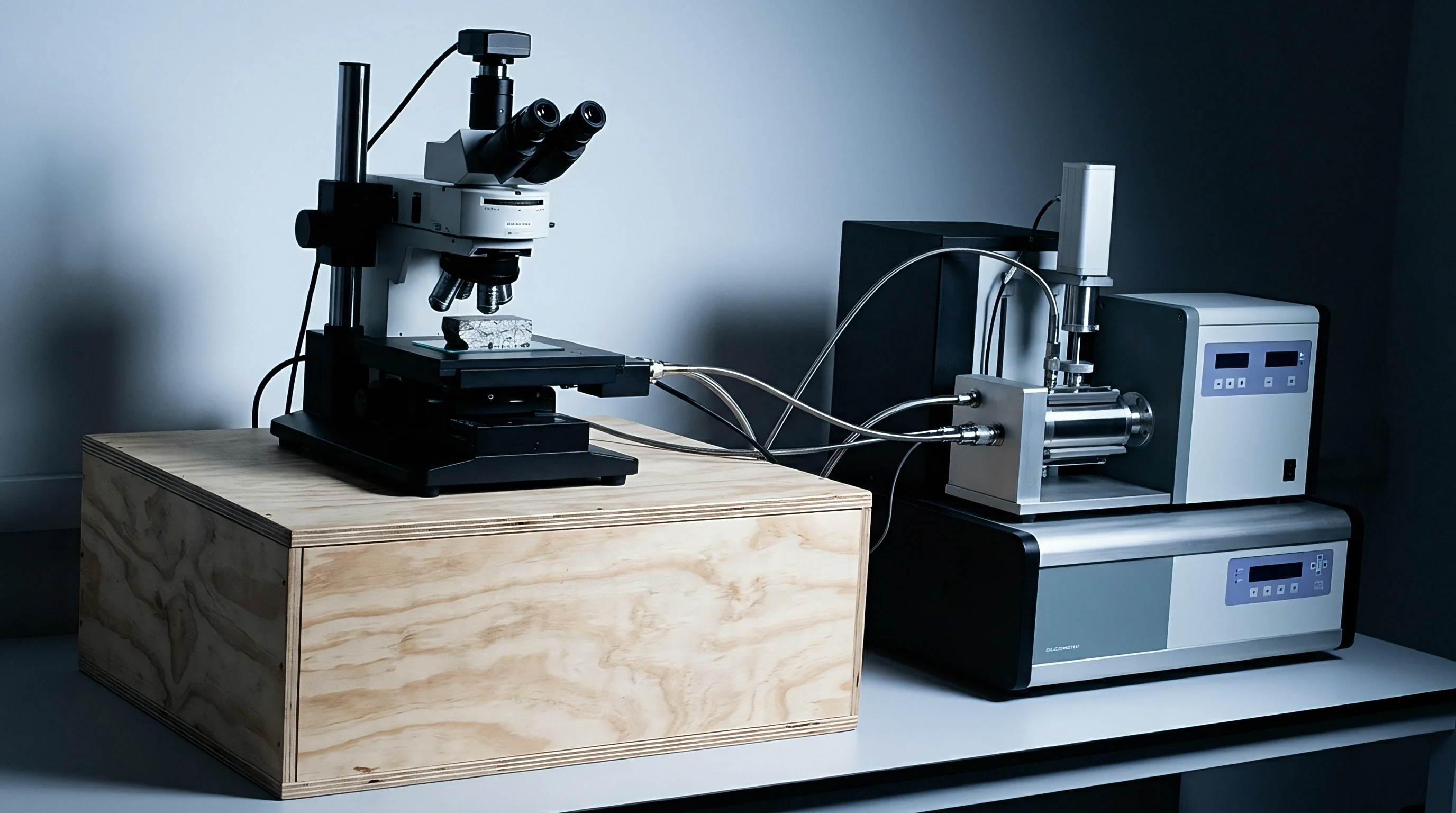
Thermodynamic Coupling across Monolithic Leaves
Local open-circuit potential follows temperature and lithiation depth via the entropic coefficient ~ the derivative of open-circuit potential with respect to temperature. For nickel-manganese-cobalt formulations, this value shifts between negative 0.10 mV/K and negative 0.45 mV/K across lithiation states. Lithium iron phosphate exhibits sign inversions across its two-phase transition zones, swinging between negative 0.08 mV/K and positive 0.05 mV/K at intermediate states of charge.
Across a 280 Ah lithium iron phosphate prismatic cell, an enforced 15 K gradient along the longitudinal face creates an instantaneous internal driving potential difference of 0.75 mV to 1.80 mV across the electrode area.
The internal resistance governing local current distribution combines several distinct elements across the continuous jelly-roll structure:
- Ohmic current collector foil resistance scales with the physical aspect ratio of the cathode aluminum and anode copper substrates, increasing linearly with distance from current collection tabs.
- Electrolyte phase transport resistance increases exponentially near colder boundaries because liquid electrolyte viscosity follows an Arrhenius relationship that retards ionic mobility.
- Charge-transfer interfacial resistance at the particle boundaries decreases at warmer zones, concentrating dynamic current transients within elevated temperature segments.
- Solid-state diffusion resistance inside active storage particles limits relaxation kinetics, causing prolonged potential discrepancies across disconnected spatial domains.
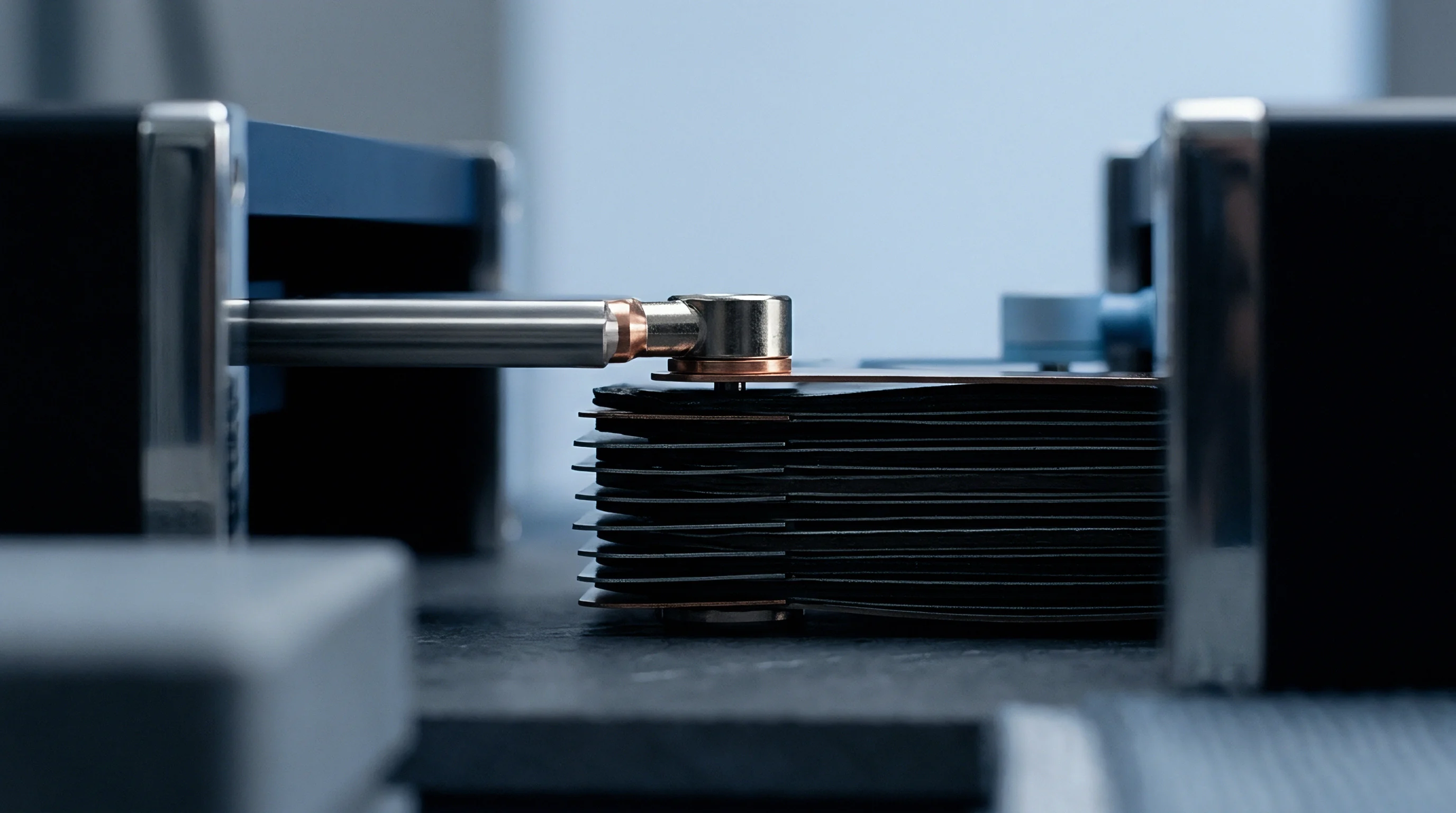
Transient Current Reallocation Dynamics
Under a 2C acceleration pulse, current partitions unevenly across vertical slices of the monolithic stack. The warmer top region below the terminals presents half the charge-transfer impedance of the chilled bottom edge. Over the first 30 seconds of excitation, roughly 65 percent of the dynamic load concentrates in the upper 40 percent of the electrode volume, leaving the bottom zone largely underutilized during rapid high-power demand.
When the cell returns to rest, the resulting disparity in state of charge forces an internal redistribution loop. Electrons migrate through the copper and aluminum foils from depleted warm regions toward under-discharged cold zones, while lithium ions travel through the separator and liquid electrolyte to re-establish thermodynamic equilibrium. In 280 Ah cells, these relaxation currents frequently exceed 30 A and can take 200 to 800 seconds to fully decay.
| Zone Location | Local Temp (°C) | Rct (mOhm cm²) | Ionic Cond (mS/cm) | Dynamic Current Split (%) |
|---|---|---|---|---|
| Upper Tab Region (180-220 mm) | 41.2 | 18.4 | 10.8 | 42.5 |
| Mid Electrode (90-180 mm) | 34.6 | 26.1 | 9.1 | 34.2 |
| Lower Base Region (0-90 mm) | 26.8 | 41.8 | 7.3 | 23.3 |
Repeated thermal cycling entrenches this imbalance. Shifting active lithium inventories back and forth accelerates localized wear, and standard warranty qualification based on isothermal cycler data fails to capture how severe that degradation becomes in service.
The redistribution loop also generates severe localized overpotentials near colder current collector junctions. Once overpotential pulls the anode below 0 V versus lithium metal, metallic lithium starts depositing on cold surfaces even if pack-level terminal voltages remain well within conservative limits.
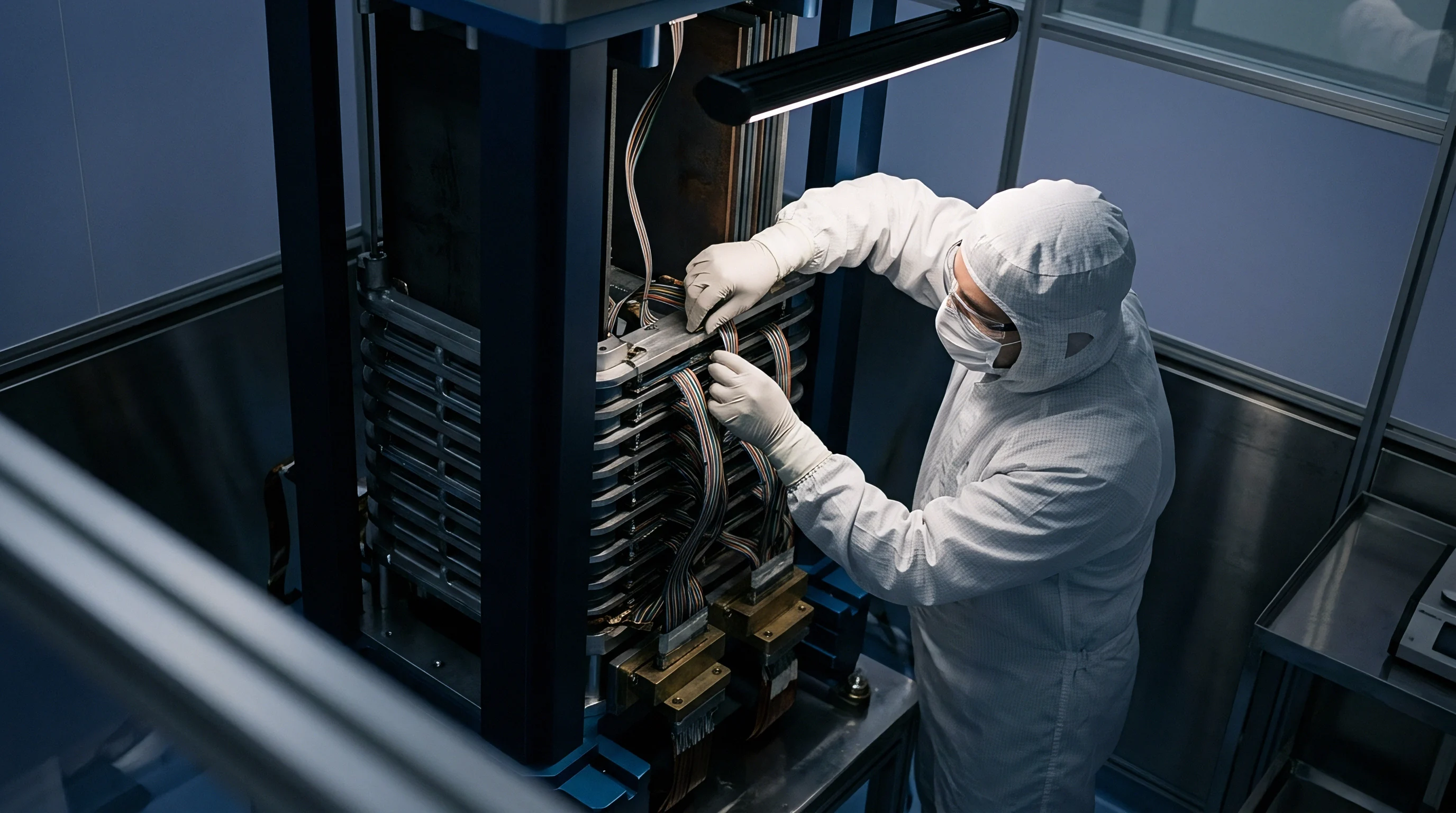
Kinetics
Temperature differentials establish substantial overpotential mismatches along the electrode face. Charge-transfer resistance follows Butler-Volmer kinetics, where exchange current density scales with temperature across an activation energy barrier typically between 30 kJ/mol and 50 kJ/mol for graphite anodes. In an asymmetrically cooled cell, exchange current density at the chilled base falls to roughly one-third of the value at the uncooled upper edge.
Passing identical currents through both regions forces the colder graphite to absorb severe activation overpotentials.
This kinetic gap shifts the cooler zone into rapid degradation regimes. During fast charging, the cold portion of the negative electrode hits the threshold for lithium plating almost immediately. The upper section accommodates lithium ions smoothly thanks to favorable kinetics, but the base plates early, throttling pack-level charge acceptance while external sensors still report acceptable average readings.
Sustained operation with internal thermal deviations exceeding 10 °C reduces cumulative delivered capacity by 22 percent before reaching standard end-of-life criteria.
Solid-state diffusion within active cathode particles exhibits a similar vulnerability. For high-nickel materials, lithium transport through the host matrix carries an activation energy near 40 kJ/mol. Colder cathode zones de-intercalate incompletely during short high-power charge pulses.
When equalization currents surge back into those zones during subsequent discharge transitions, steep lithium concentration gradients form across individual active grains.
Lattice strain follows directly. Particles in the cold base experience anisotropic contraction and expansion out of phase with the warmer top section. Over extended cycling, micro-cracking separates primary particles from the conductive carbon matrix, cutting off active material and driving localized impedance higher.

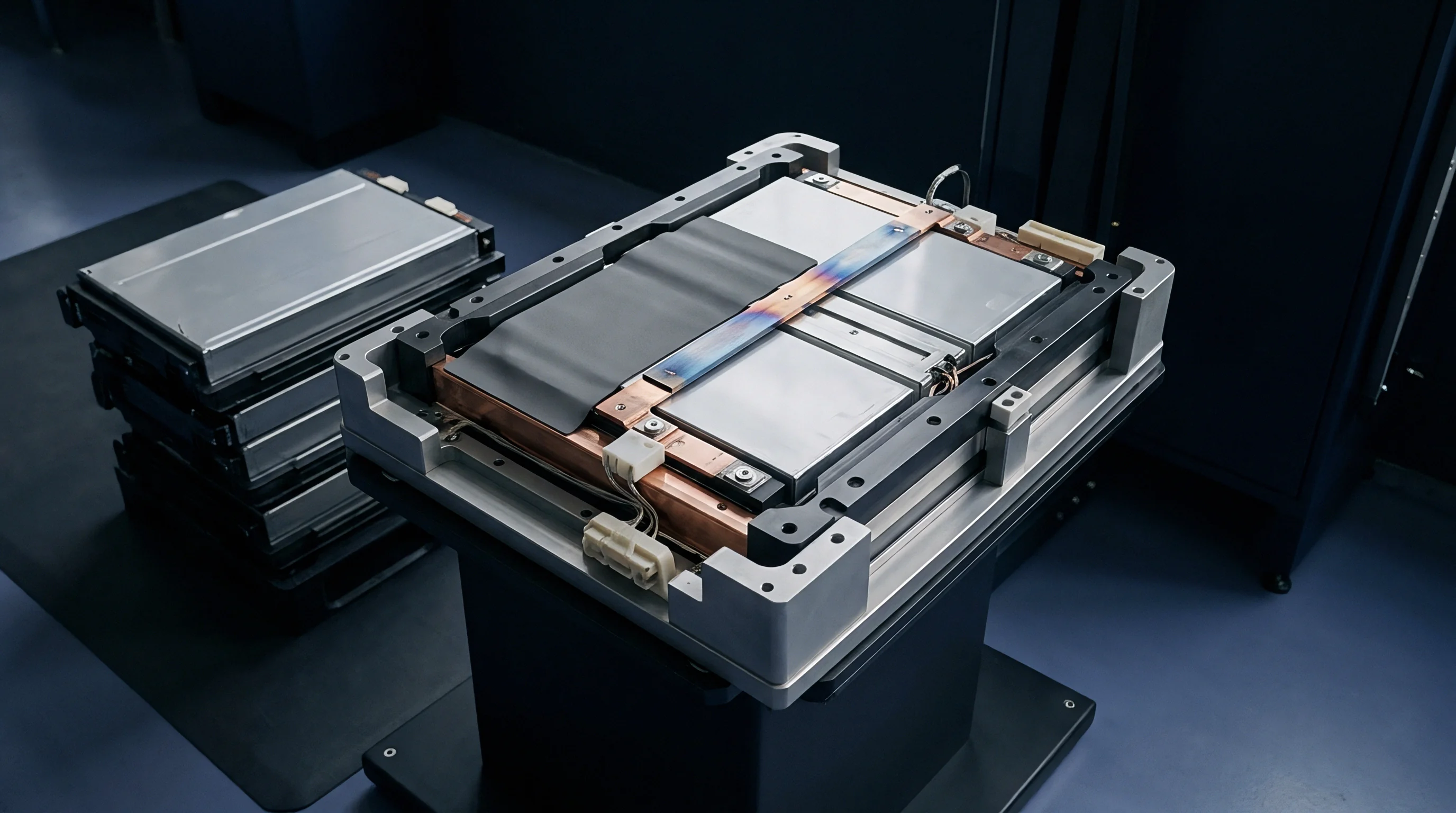
Decay
Interfacial Degradation and Solid Electrolyte Interphase Thickening
Solid electrolyte interphase growth is driven by parasitic solvent reduction that accelerates exponentially with temperature. In the warmer upper region of an asymmetrically cooled cell, ethylene carbonate and ethyl methyl carbonate solvents decompose at an elevated pace. The process steadily consumes cyclable lithium, leaving thick, resistive organic and inorganic decomposition products across the negative electrode face.
The chilled bottom degrades through a different mechanism. Below 25 °C under dynamic charging, high overpotentials trigger metallic lithium plating on the graphite. That deposited metal reacts directly with the electrolyte to build mossy, high-surface-area structures, consuming solvent and salts while locking cyclable lithium into electrically isolated islands.
Electrode Delamination and Structural Stress
Foil current collectors sustain mechanical fatigue from uneven current distributions. Ongoing equalization currents create repeated local thermal expansion spikes along the electrode leaves, and over thousands of operating hours, the resulting shear stresses break down the polymer binder network anchoring active coatings to the foil substrates.
- Electrode expansion mismatch generates interfacial shear stress between warm expanding graphite domains and rigid cold zones attached to the bottom heat sink.
- Polyvinylidene fluoride binder fatigue weakens the cohesive bond between active particles and the aluminum or copper foil substrates, initiating microscopic delamination.
- Localized gas formation from accelerated solvent decomposition in hot zones creates internal void pockets that disrupt uniform mechanical stack pressure.
- Foil impedance degradation occurs as uneven cyclic current loads generate localized resistive hot spots along thin copper tab welds.
Delamination isolates active coatings from current collectors, reducing local conductivity and transferring current onto adjacent material, which amplifies the original imbalance.
Internal equalization is sometimes described as harmless because circulating currents remain contained within a sealed cell, but that position ignores the irreversible capacity loss caused by persistent overpotential imbalances.
Dispatch
Should Cooling Systems Target Base Surfaces Exclusively?
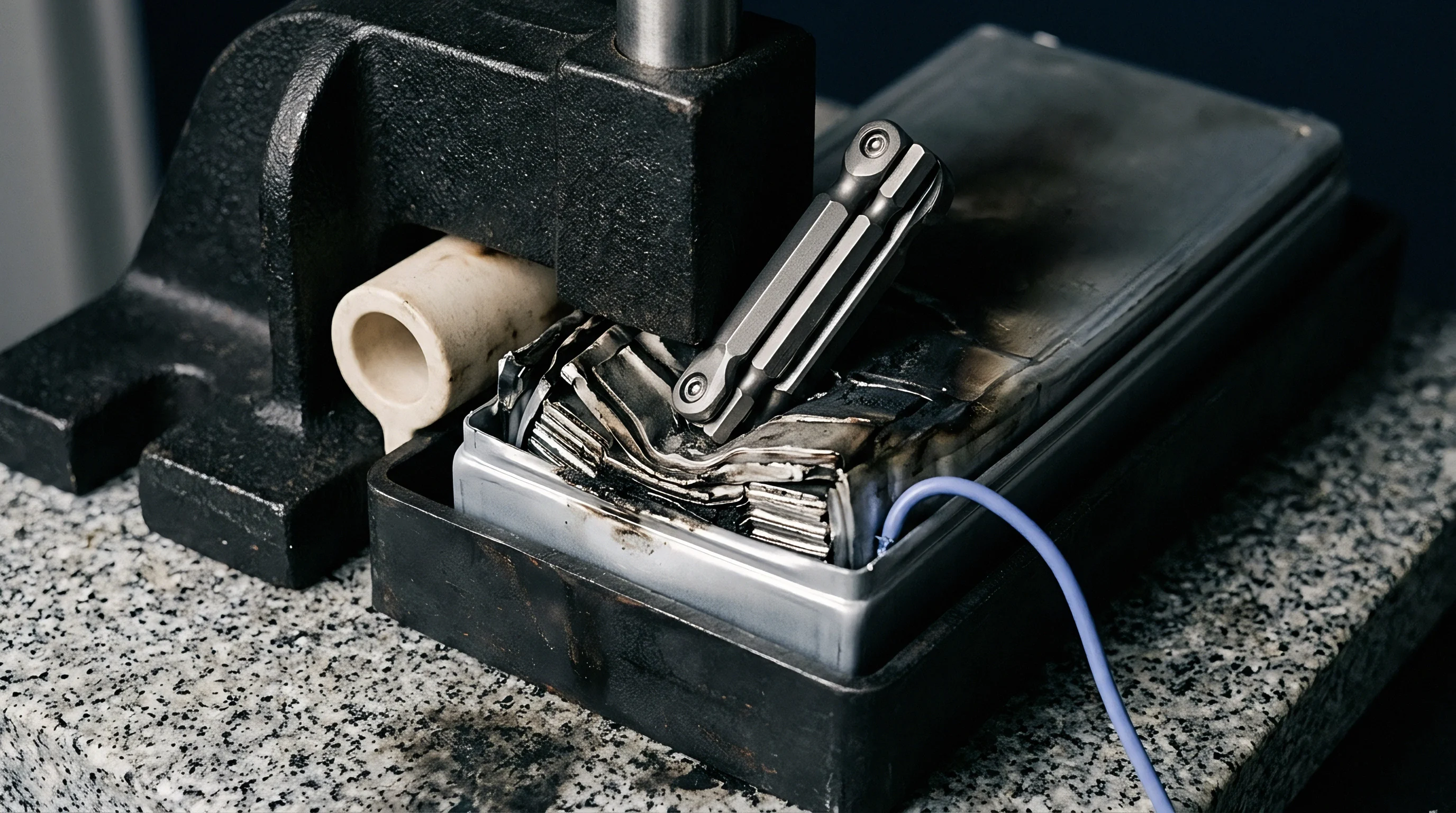
Single-sided base cooling dominates pack design because it simplifies plumbing, keeps structural mass down, and isolates coolant lines from high-voltage electrical links. The design trade-off is vertical thermal spread. Heat generated throughout the electrode core must conduct downward through hundreds of alternating layers of separator, coating, and foil.
Prismatic jelly-rolls have cross-plane thermal conductivities between 0.5 W/m K and 1.2 W/m K, compared to 25 W/m K to 40 W/m K in-plane along the copper and aluminum layers.
Carrying heat vertically through the foils demands cross-sectional metallic mass that high-energy-density cells rarely provide. The 8 µm copper and 12 µm aluminum foils standard in these designs cannot shed large heat fluxes without building steep vertical gradients. Adding dual-sided tab cooling or side-mounted liquid plates circumvents this conduction bottleneck, leveling internal temperatures and checking equalization currents.
| Cooling Configuration | Max Internal Delta T (°C) | Peak Equalization Current (A) | Pumping Work (W/cell) | Relative System Cost |
|---|---|---|---|---|
| Single-Sided Bottom Plate | 14.8 | 38.2 | 1.2 | 1.00 |
| Symmetrical Dual Side Plate | 4.2 | 8.6 | 3.1 | 1.45 |
| Integrated Tab and Bottom Cooling | 3.1 | 5.4 | 2.8 | 1.62 |
| Interleaved Face Cooling Fins | 1.8 | 2.1 | 5.4 | 2.10 |
Side cooling plates apply symmetric thermal boundaries directly across the broadest electrode faces, shortening heat paths to the cross-plane dimension rather than the full cell height. That change cuts maximum internal temperature gradients from nearly 15 °C to under 5 °C during sustained 2C cycling, suppressing the driving potentials that power dynamic equalization currents.
A thermal boundary layer design that limits cross-electrode temperature differentials to within 4 K suppresses dynamic equalization currents below 0.05C.
Side cooling brings clear packaging penalties. Lateral plates, compression pads, and routing channels trim volumetric energy density by 8 to 14 percent while driving up seal requirements, manifold tolerances, and assembly labor. Pack designers must balance those packaging and manufacturing costs against premature field replacements and warranty exposure.
Electrode coating profiles offer another lever. Increasing foil thickness lowers both electrical and thermal resistance at the expense of gravimetric energy density. Tapering coating weights to reduce loading near hot tab zones balances local impedance variations, curbing equalization spikes without requiring an overhaul of the cooling system.
Protocol
Incoming inspection procedures need to flag cell lots prone to severe equalization currents under thermal stress. Standard factory acceptance testing relies on single-point 1 kHz alternating current resistance checks and nominal capacity runs under isothermal conditions, neither of which exposes irregularities in current collector welds, coating density variations, or entropic potential behavior.
Thorough cell characterization requires dynamic electrochemical impedance spectroscopy across an operating window of 10 °C to 45 °C. Taking impedance readings from 10 mHz to 10 kHz across varied states of charge and plotting the Arrhenius response of charge-transfer resistance reveals whether a batch carries excessive kinetic sensitivity to thermal gradients.
Full qualification demands asymmetric thermal fixtures that impose an active 15 K bottom-to-top gradient while cycling cells through dynamic load profiles. Tracking external heat flux, transient overpotentials, and relaxation current behavior quantifies internal polarization disparities. Lots exhibiting wide spreads in relaxation time constants during rest transitions carry elevated risk of premature field wear.
Skipping gradient screening leaves pack integrators vulnerable to cell-to-cell coating variations. Substandard lots with uneven active material distribution develop magnified internal circulating currents once installed on single-sided cold plates in production systems.
Ledger
Procuring large format prismatic cells requires financial modeling that links thermal shortcuts to life-cycle warranty costs. Bill-of-materials accounting routinely favors single-sided bottom cooling because of its low upfront manufacturing cost; a 100 kWh industrial pack using base plates typically saves 450 to 700 dollars in cooling hardware over a dual-sided lateral setup.
Accelerated capacity loss and shorter service intervals erase that initial margin. A representative commercial scenario demonstrates how the costs compound:
- Initial pack procurement cost totals 14,000 dollars based on an initial cell acquisition benchmark of 140 dollars per kilowatt-hour.
- Premature replacement intervals occur at year 4 instead of year 8 because internal equalization currents accelerate localized electrode decay beyond the 80 percent retention limit.
- Direct field labor and warranty expenses for swapping degraded modular packs run roughly 3,800 dollars per installation point.
- Freight and hazardous materials transport fees for moving degraded packs to qualified recycling facilities add 1,200 dollars per transaction under standard Class 9 freight regulations.
Over an eight-year operating window, total cost of ownership rises by more than 40 percent when single-sided cooling drives persistent dynamic equalization currents. The initial hardware savings disappear against early warranty claims and unplanned pack replacements.
Procurement agreements should define capacity retention specifically under verified operational thermal gradients. Contracts that baseline performance solely on isothermal test data shift the entire financial risk of non-uniform thermal aging onto the integrator. Rigorous supply agreements specify minimum cycle life under asymmetric thermal gradients directly in the master service agreement.
If warranty documentation omits cell degradation under specified pack-level temperature gradients, the buyer pays for thermal engineering compromises through field failure liabilities.