Meaning
Dimensional change induced in a solid material by a variation in temperature is proportional to the coefficient of thermal expansion of that material. Unmanaged thermal strain can generate high mechanical stresses within a battery cell during rapid charging and discharging cycles. This parameter represents the physical displacement that would occur if the material were free to expand or contract.
When the material is constrained, this strain is converted directly into mechanical stress.
Structural Consequence
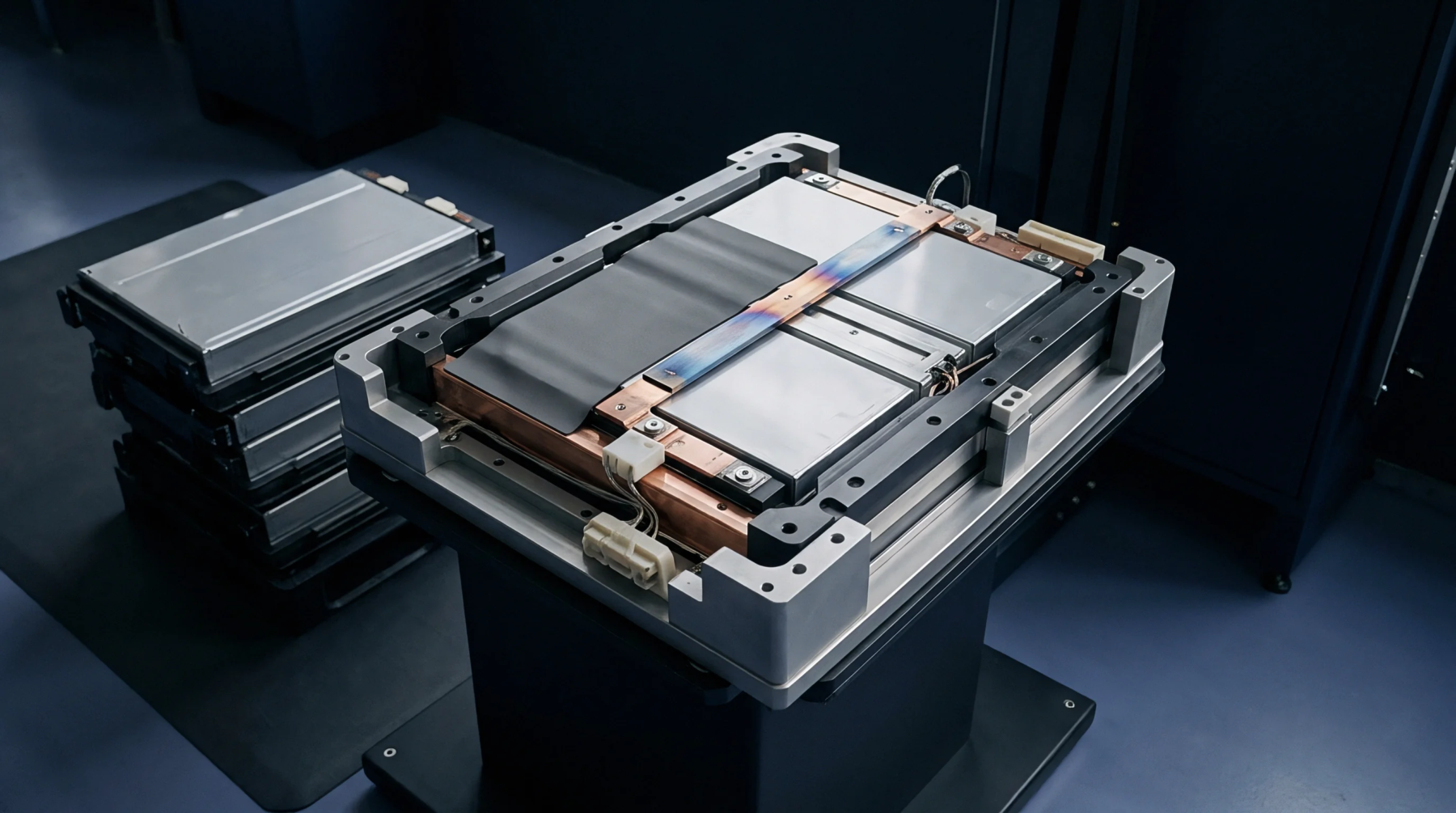
Temperature gradients across the volume of a large prismatic cell generate highly non-uniform expansion that can cause localized warping of the electrode plates. As the core of the cell heats up while the outer casing remains cool, the resulting thermal strain generates high shear forces at the interfaces. These forces can cause the active material to delaminate from the current collector foil.
Over time, this delamination increases the internal resistance and reduces the overall capacity of the cell.
Material Response
Different materials within the cell assembly respond to the same temperature change with varying degrees of physical expansion. The copper current collector has a much lower expansion coefficient than the polymer separator or the aluminum casing. This mismatch generates internal tension during high-temperature operation, which must be carefully evaluated by mechanical simulation.
Design Constraint
Active cooling channels are integrated into the battery pack to minimize the temperature gradients that drive this deformation.