Understanding Argon Gas Inclusion Risks in Additive Manufacturing Powders
Argon gas inclusions in atomized powders create permanent, insoluble matrix pores that expand during post-HIP thermal treatment and degrade fatigue life.


Nozzle
Inert gas atomization paired with vacuum induction melting forms the standard synthesis route for high-integrity additive manufacturing powders. High-pressure gas streams between 2.5 MPa and 6.0 MPa shear a falling column of molten metal into fine droplets. Within sub-millisecond windows, these liquid droplets envelop ambient process gas as turbulent recirculation zones form at the breakup point.
Because cooling rates during freefall flight range from 1,000 K/s to over 100,000 K/s, the outer metal shell freezes before internal gas can escape. Surface tension seals around these high-pressure pockets, leaving spherical particles with trapped internal gas cavities.
The atomization gas determines what stays inside those voids. Argon is standard for reactive and refractory alloys because of its thermodynamic stability and low moisture carryover. Under equilibrium conditions, liquid titanium, nickel superalloys, and stainless steels have virtually zero solid solubility for argon.
While nitrogen or hydrogen can dissolve directly into the molten matrix, argon stays trapped as a distinct gas phase inside the solidifying shell. Nozzle geometry, melt superheat, and gas-to-metal mass flow ratios control how often this entrapment occurs. Higher superheat lowers liquid viscosity, which speeds up droplet breakup but also drives vortex formation that pulls gas into individual droplets.
Argon entrapment during inert gas atomization creates closed internal cavities in up to four percent of powder particles in the fifteen to forty-five micrometer size fraction under four megapascal jet pressure.
Fine droplets solidify before internal bubbles can escape into the tower atmosphere, making particle size distribution a key factor in argon concentration per unit mass. Particles under fifteen micrometers show little internal porosity because high surface-area-to-volume ratios inhibit gas envelope capture during breakup. Conversely, particles over forty-five micrometers carry higher void rates since larger molten volumes accommodate stable gas bubbles during flight.
In addition, satellite particles ~ fine solidified grains that stick to larger semi-molten droplets inside the chamber ~ frequently trap micro-pockets of argon along their contact interfaces.
Internal argon content is an unavoidable consequence of inert gas atomization dynamics. Achieving spherical particle morphology and superior hall flow rates requires high-pressure gas streams, making minor internal argon volumes a standard trade-off of the process route.

Pore
Laser powder bed fusion melts localized zones of metal powder to build up three-dimensional parts layer by layer. When the laser passes over powder particles containing internal argon cavities, that gas enters the liquid melt pool. With scan speeds typically between 800 mm/s and 1,500 mm/s, thermal gradients are steep and melt pool lifetimes last less than two milliseconds.
Insoluble argon released from the melting powder forms spherical bubbles ranging from sub-micron to multi-micron diameters. Buoyancy is too weak to lift these bubbles to the pool surface before the advancing solidification front captures them.
Melt Pool Hydrodynamics and Bubble Trapping
Laser power input and volumetric energy density determine how much argon remains in the solid matrix. High energy densities trigger keyhole melting, where recoil pressure carves out a deep vapor depression. Keyhole instabilities can draw external process gas into the bottom of the pool, adding to the argon already brought in by the powder.
In conduction mode, by contrast, powder-derived argon remains the main source of gas entrapment. Within the pool, Marangoni convection recirculates molten metal at speeds reaching several meters per second. Thermal surface tension gradients sweep bubbles along fluid flow lines, coalescing smaller pockets into larger spherical voids before the metal freezes.
| Defect Category | Morphology Type | Dominant Gas Phase | Hot Isostatic Pressing Response | Thermal Regrowth Risk |
|---|---|---|---|---|
| Powder-Derived Gas Inclusion | Spherical, smooth internal walls | Argon (Ar > 95%) | Volume reduction without pore elimination | High above 0.6 homologous temperature |
| Keyhole Pore Defect | Spherical to elliptical, deep placement | Argon mixed with metal vapor | Partial collapse depending on internal pressure | Moderate during high-temperature stress relief |
| Lack of Fusion Defect | Irregular, sharp edges, un-melted powder | Process atmosphere argon | Complete plastic closure and solid bonding | Zero post-closure thermal expansion |
| Hydrogen Porosity Defect | Fine spherical dispersion | Hydrogen (H2) | Complete diffusion into solid matrix | Zero post-closure thermal expansion |
Distinguishing argon inclusions from lack-of-fusion defects relies on geometric aspect ratio and internal wall texture. Lack-of-fusion voids are irregular, containing un-melted powder grains and sharp corners that concentrate mechanical stress. Argon inclusions form near-perfect spheres with smooth inner walls created by uniform hydrostatic pressure while surrounded by liquid.
Solidification freezes these bubbles across grain boundaries and within grain interiors, with internal gas pressure scaling inversely with void radius according to surface stress balance during cooling.
Components subjected to hot isostatic pressing under ISO 22068 collapse mechanical lack-of-fusion voids while leaving trapped argon gas pockets subject to high-temperature thermal pore regrowth.

Chemical Insolubility in Structural Alloys
Ti-6Al-4V, Inconel 718, and 316L stainless steel exhibit near-zero solid solubility for argon across all phase regimes. Solid-state diffusion coefficients for argon in titanium or nickel lattices are orders of magnitude lower than those of interstitial elements such as oxygen, nitrogen, or hydrogen. While smaller interstitial atoms migrate through the lattice at high temperatures and disperse through the matrix, argon atoms have atomic radii too large to occupy interstitial sites in face-centered cubic or body-centered cubic structures.
Consequently, argon stays trapped as an isolated gas phase, unable to enter solid solution even under strong thermal and mechanical driving forces.
Failing to limit argon content in the starting powder leaves permanent internal void populations in finished parts, accelerating fatigue crack initiation under cyclic loading.
Sieve
Powder recycling loops gradually alter feedstock quality over successive build cycles. Unused powder recovered from the build chamber is screened to strip out oversized spatter agglomerates before fresh powder is blended back in. Over time, fine particles are selectively depleted while fractured satellites accumulate in the recycled batch, raising the concentration of internal argon inclusions per kilogram of material.
- Sample five hundred grams of virgin powder feedstock from three distinct vertical levels of an incoming sealed container using a thief sampler under dry argon purge.
- Measure baseline argon mass concentration using inert gas fusion coupled with thermal conductivity detection per ASTM E1447 methodology.
- Execute build cycles in laser powder bed fusion equipment, tracking virgin powder additions and sieved overflow volume ratios across every manufacturing run.
- Extract representative powder samples after every fifth build cycle following ultrasonic sieving through a sixty-three micrometer mesh screen.
- Record bulk density changes using standard funnel testing alongside hall flow speed shifts per ASTM B213 standard specifications.
- Halt powder lot utilization when argon mass concentration exceeds single-ppm threshold limits specified on component engineering drawings.
Take a 500-kilogram lot of Ti-6Al-4V powder tracked across a fifteen-cycle production run. Fresh powder starts with an initial argon concentration of 0.35 ppm by mass. Each cycle converts 10 percent of the powder into dense parts while sieving returns the remaining 90 percent to the main storage hoppers.
Reused powder picks up fine spatters and satellite fragments with higher gas inclusion rates, so topping off with 10 percent virgin powder each cycle cannot prevent progressive gas buildup. By cycle eight, inert gas fusion tests show argon reaching 1.25 ppm by mass. By cycle fifteen, that concentration rises to 2.80 ppm, driving finished part porosity from a baseline 0.02 percent up to 0.18 percent by bulk volume under standard processing parameters.
Continuous powder reuse without argon mass monitoring steadily degrades final fatigue limits, regardless of how well laser parameters are optimized.

Beam
Energy deposition from laser or electron beams consolidates metal powders into dense components, but internal argon inclusions respond dynamically during downstream heat treatment. Hot Isostatic Pressing (HIP) exposes parts to high temperature and hydrostatic pressures between 100 MPa and 200 MPa within the alloy’s stress-relief window. Plastic deformation, creep, and diffusion bonding collapse the void space, compressing trapped argon to high internal pressures.
Because the gas cannot dissolve into the metal matrix, it remains trapped in micro-cavities at an internal equilibrium pressure that matches the applied HIP pressure.
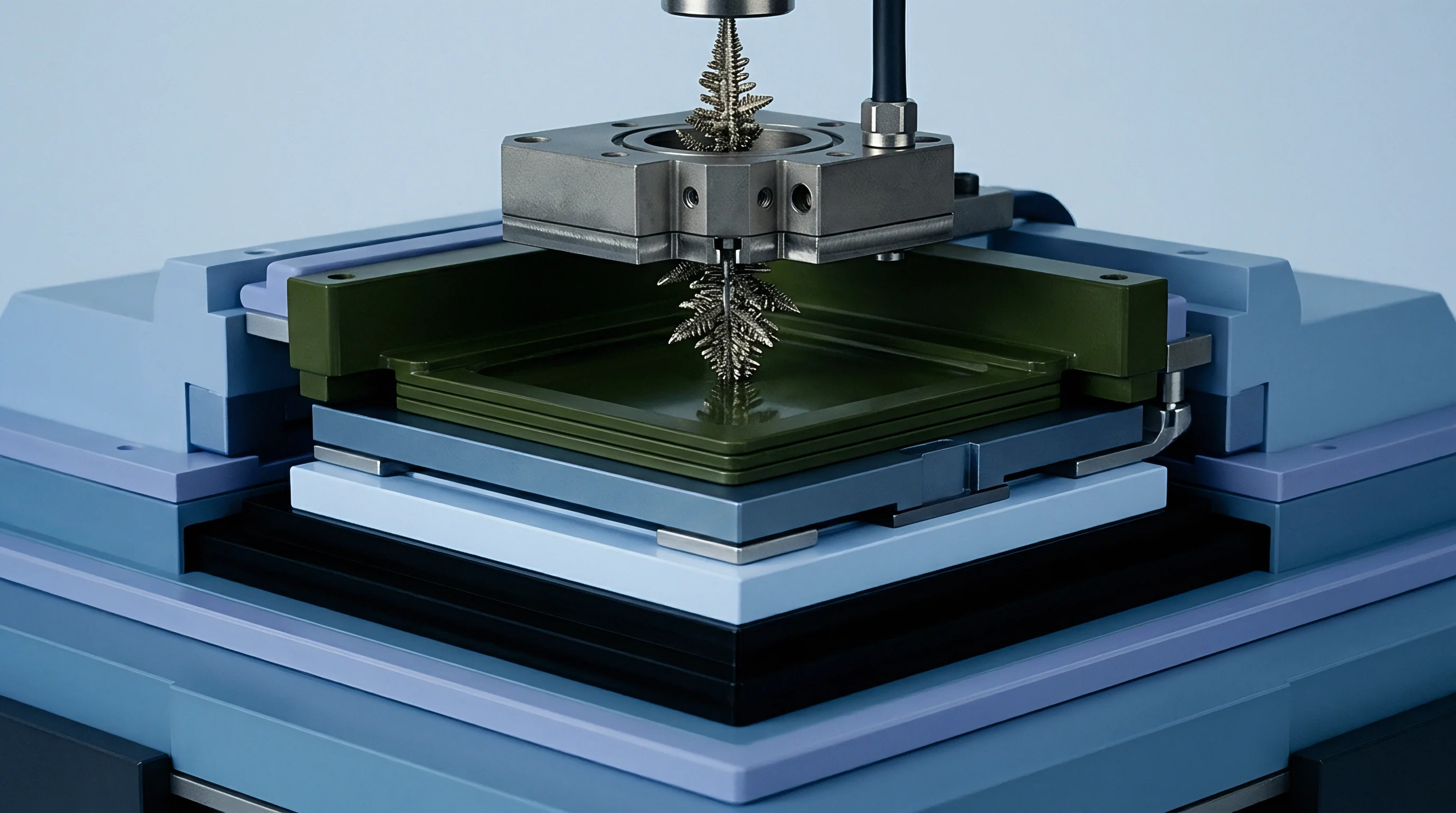
Does Argon Expansion Limit Complete Density Recovery during Hot Isostatic Pressing?
Post-HIP thermal operations release this stored gas pressure. Solution heat treatment, annealing, or high-temperature service above 0.6 homologous temperature lowers the matrix yield strength. The compressed argon inside micro-pores exerts outward radial stress against the softened walls, driving pore expansion through localized matrix creep ~ a process called Thermal Induced Porosity (TIP).
Voids enlarge, reverting toward pre-HIP dimensions or forming expanded cavities that degrade structural performance.
- Thermal induced porosity initiation occurs when internal argon bubble pressure overcomes matrix yield strength at elevated post-processing temperatures.
- High cycle fatigue degradation accelerates when micro-pores within five hundred micrometers of component surfaces act as primary crack initiation sites.
- Creep rupture life reduction stems from thermal pore expansion along grain boundaries under combined thermal and tensile stress.
- Ultrasonic attenuation shifts manifest in heat-treated components, creating false defect indications during non-destructive testing routines.
Elevated operating temperatures drive exponential argon pore growth in critical turbine and structural flight components.
Thermal induced porosity testing requires heating consolidated test coupons to service temperature in vacuum for twenty-four hours to measure volumetric pore expansion.
Fatigue life curves show sharp knockdowns once internal argon inclusions exceed critical threshold sizes. In stress-controlled high-cycle fatigue testing at R = 0.1, Ti-6Al-4V parts with five-micrometer argon pores maintain baseline endurance limits. When pores exceed twenty micrometers ~ due to thermal regrowth of compressed argon ~ endurance limits drop by twenty to thirty-five percent.
Crack initiation shifts from surface slip bands to stress concentrations around internal pore walls, undermining the benefits of surface shot peening.
The unresolved question is whether non-destructive imaging resolution can reliably catch sub-surface argon pockets before high-temperature service triggers irreversible pore regrowth.
Slice
Verifying internal argon gas levels in additive manufacturing requires targeted destructive and non-destructive inspection workflows. Standard Archimedes density measurements per ISO 3369 lack the sensitivity needed to detect spherical argon porosity below 0.05 bulk volume percent. Optical metallography offers two-dimensional cross-sections, but underestimates total gas distribution because polishing planes intercept voids randomly.
Quantifying these gas volumes accurately relies on chemical extraction and high-resolution spatial tomography.
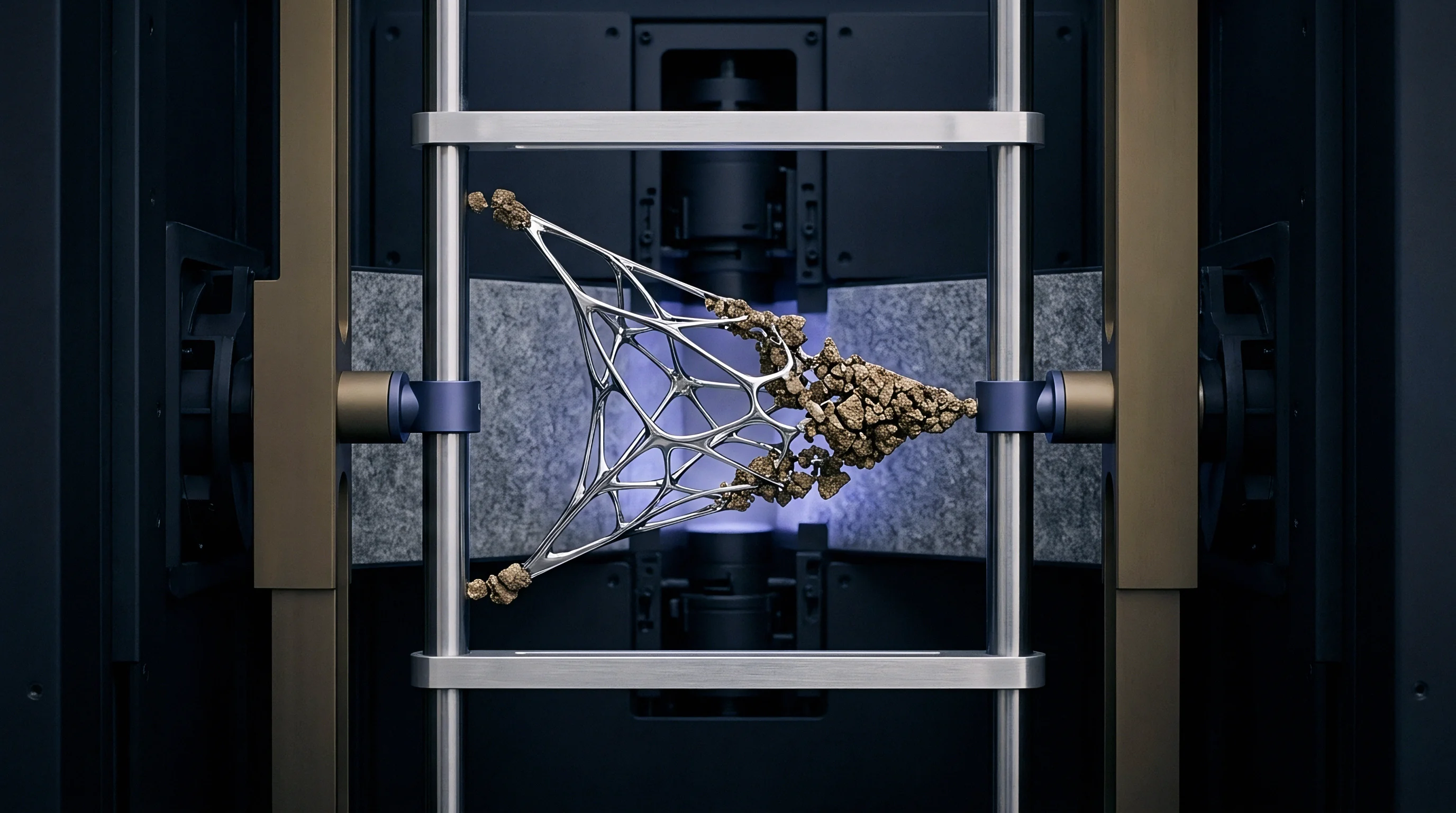
Inert Gas Fusion Mass Spectrometry Analysis
Quantitative measurement of argon mass fraction relies on customized inert gas fusion (IGF) impulse furnace systems coupled with mass spectrometry. Standard IGF units configured for hydrogen, nitrogen, and oxygen use helium or nitrogen carrier gas with thermal conductivity detectors, which cannot distinguish argon from background streams. Specialized units use high-purity helium carrier gas to sweep fusion products from a graphite crucible heated above 2,500 °C. The mass spectrometer monitors atomic mass unit forty, isolating the argon released as the sample melts.
Sample mass, crucible outgassing, and calibration procedures establish lower detection limits down to 0.01 ppm by mass.
| Measurement Method | Target Phase | Detection Limit | Sample Destructive Status | Spatial Resolution |
|---|---|---|---|---|
| Inert Gas Fusion Mass Spectrometry (IGF-MS) | Total argon mass content | 0.01 ppm (mass fraction) | Destructive (total sample melt) | Bulk sample average |
| Laboratory X-Ray Computed Tomography (XCT) | 3D pore spatial morphology | 3.0 to 5.0 micrometers | Non-destructive | Full 3D volumetric mapping |
| Synchrotron X-Ray Micro-Tomography | Sub-micron pore dynamics | 0.3 to 0.8 micrometers | Non-destructive | High-resolution micro-volume |
| Thermal Induced Porosity (TIP) Assay | Post-heat pore growth potential | 0.01 volume percent shift | Destructive (thermal exposure) | Bulk volume density delta |
Laboratory X-ray Computed Tomography (XCT) non-destructively maps pore geometry across printed volumes, but commercial systems are limited to features larger than three to five micrometers. Sub-micron argon inclusions escape detection, appearing as fully dense matrix material despite holding compressed noble gas. Synchrotron sources overcome these resolution limits, imaging sub-micron void populations and tracking real-time pore behavior during in-situ heating experiments.
Mass spectrometry coupled to impulse fusion furnaces measures bulk argon content down to one hundredth of a part per million by mass.
Establishing robust quality control requires combining non-destructive XCT mapping with destructive IGF mass spectrometry sampling across powder lots and build runs.
- Feedstock qualification standards require bulk argon content below 0.50 ppm mass fraction for flight-critical rotating component production.
- Destructive coupon requirements specify extracting three mechanical test blanks per build platform location for total fusion mass spectrometry.
- XCT volumetric scanning mandates inspecting one hundred percent of critical structural regions at minimum voxel sizes below eight micrometers.
- Thermal regrowth acceptance protocols reject lot batches displaying over 0.02 percent volumetric density loss following post-HIP vacuum thermal testing.
Contractual acceptance criteria strictly link component release to compliance with ASTM E1447 argon modifications alongside explicit volumetric pore size limits.

Clause
Procurement specifications for high-integrity metal powders must establish clear legal and technical limits for argon inclusions. Standard purchasing documents cover particle size distribution, interstitial oxygen or nitrogen limits, and hall flow speeds, but frequently omit argon limits entirely. Leaving argon out exposes buyers to non-conforming part yields, premature fatigue failures, and unrecoverable post-processing costs.
Specifying explicit argon caps on purchase orders places compliance responsibility directly on powder suppliers.
Feedstock Procurement Specification Frameworks
Powder supply contracts need clear testing protocols, lot sampling frequencies, and maximum allowable argon thresholds. Processes relying on high-pressure argon jets must state baseline argon limits according to the atomization method. Plasma Rotating Electrode Process (PREP) powders command premium prices partly because centrifugal breakup under an argon shield traps almost zero gas compared to Vacuum Induction Inert Gas Atomization (VIGA).
For VIGA or Electrode Induction Inert Gas Atomization (EIGA) powders, procurement specs should cap argon at 0.50 ppm mass fraction for aerospace applications and 1.00 ppm for general industrial work.
Warranty Seams and Responsibility Boundaries
Assigning liability for argon-induced failures requires clear contractual boundaries between raw powder defects and print-process defects. Powder suppliers take financial responsibility when incoming feedstock tests show baseline argon levels exceeding purchase order specs before container unsealing. Conversely, service bureaus absorb warranty liabilities when porosity traces back to keyhole melting regimes or improper recycling loops that accumulate gas-rich fine fractions.
Retaining sealed glass ampoules of virgin powder from every batch for third-party arbitration clearly distinguishes raw material gas carryover from process-induced entrapment.
Uncontrolled argon accumulation in recycled powder inflates landed part costs by raising HIP rejection rates and triggering non-destructive testing failures. Setting re-sieving yield thresholds, maximum reuse cycles, and mandatory inert gas fusion test intervals protects the commercial line between raw feedstock supply and finished structural component delivery.