Auditing Factory UN 38 3 Test Reports for Battery Pack Import Dossiers
Auditing UN 38.3 dossiers requires verifying full lab reports against 38.3.5 summaries, checking ILAC accreditation, and confirming physical cell mass tolerances.

Anatomy
Importing lithium ion battery packs into international markets requires proving compliance with the United Nations Recommendations on the Transport of Dangerous Goods. Section 38.3 of the UN Manual of Tests and Criteria outlines the mandatory transport safety qualification sequence for lithium cell and battery designs. Freight forwarders, ocean carriers, air cargo acceptance desks, and customs authorities expect a complete technical compliance dossier before accepting a shipment.
The foundation of this compliance file is the factory UN 38.3 test report and its corresponding UN 38.3.5 test summary.
A full test report differs fundamentally from a single-page test summary. The full UN 38.3 test report contains comprehensive bench records, environmental chamber logs, voltage decay curves, mass loss calculations, and pre- and post-test photographs for every sample in the test matrix. The test summary, established under UN 38.3.5, represents a standardized ten-point declaration that summarizes the full report’s findings for logistics personnel who do not need fifty pages of raw laboratory data.

Distinguishing between Full Bench Reports and UN 38.3.5 Test Summaries
Customs officers and dangerous goods inspectors frequently reject incoming dossiers because importers provide only the summary or present a summary that lacks direct linkage to the underlying full report. A compliant test summary must list specific mandatory items. The document must explicitly state the manufacturer’s name, address, telephone, email, and website.
The testing laboratory’s identical full contact details and ISO accreditation scope must appear directly alongside the manufacturer information.
The report identification number on the test summary must mirror the full test report number without missing suffixes or altered revision codes. A clear physical and electrical description of the cell or battery pack is mandatory. The description includes whether the item is a single cell, a component cell used inside a pack, or a fully assembled battery pack.
The document lists the specific cell or pack model designation, mass, watt-hour rating, or lithium content in grams, alongside the exact version of the UN Manual of Tests and Criteria used during testing.

Structural Elements of an Authentic Testing Laboratory Report
Authentic laboratory documentation contains distinct markers that allow an auditor to verify legitimacy. High-caliber testing facilities print unique report tracking numbers, accredited laboratory logos, and official endorsement stamps across every page header or footer. The testing facility must hold ISO/IEC 17025 accreditation for the specific UN 38.3 test protocol at the time the testing occurred.
Accreditation badges from bodies such as the China National Accreditation Service for Conformity Assessment (CNAS), the American Association for Laboratory Accreditation (A2LA), or the Deutsche Akkreditierungsstelle (DAkkS) must carry the laboratory’s specific accreditation registration number.
The internal structure of the full report details the exact configuration of tested samples. UN 38.3 dictates distinct sample counts based on cell format, pack architecture, and whether the test specimen underwent prior electrical cycling. Small cells require twenty undischarged samples and twenty fully discharged samples.
Modules and battery packs demand specific combinations of first-cycle fully charged units and fully charged units that have undergone fifty or one hundred charge-discharge cycles depending on the specific edition applied.
Factory representatives often assert that a simplified summary sheet signed by an internal quality manager satisfies cross-border customs requirements without needing the underlying third-party lab documentation.
Stress
The UN 38.3 testing regime imposes sequential mechanical, thermal, and electrical stresses designed to simulate worst-case transport environments. Transport channels expose battery packs to unpressurized aircraft holds, cargo vessel vibrations, temperature extremes during tarmac staging, and short circuits from damaged wiring. Evaluating a test report demands auditing the physical parameters recorded during each of the eight standardized test procedures, designated T.1 through T.8.
| Test Identifier | Simulated Environmental Stress | Execution Parameters and Duration | Mandatory Pass Criteria |
|---|---|---|---|
| T.1 Altitude Simulation | Unpressurized air transport cargo hold | Absolute pressure equal to or less than 11.6 kPa for 6 hours at 20 degrees Celsius | No mass loss exceeding limit, no leakage, no venting, no disassembly, no rupture, no fire; open circuit voltage remains above 90% of pre-test state |
| T.2 Thermal Test | Extreme temperature variations in transit storage | 10 cycles between 72 degrees Celsius (6 hours) and -40 degrees Celsius (6 hours); maximum transition time 30 minutes | No mass loss exceeding limit, no leakage, no venting, no disassembly, no rupture, no fire; open circuit voltage remains above 90% of pre-test state |
| T.3 Vibration | Vessel engine vibration and rough road transport | Logarithmic sweep 7 Hz to 200 Hz back to 7 Hz in 15 minutes; 3 mutually perpendicular axes for 3 hours per axis | No mass loss exceeding limit, no leakage, no venting, no disassembly, no rupture, no fire; open circuit voltage remains above 90% of pre-test state |
| T.4 Shock | Rough handling, drop, and transport impact shocks | Half-sine shock; 150 gn acceleration peak with 6 ms pulse duration (small packs) or 50 gn acceleration peak with 11 ms pulse duration (large packs) | No mass loss exceeding limit, no leakage, no venting, no disassembly, no rupture, no fire; open circuit voltage remains above 90% of pre-test state |
| T.5 External Short Circuit | Accidental terminal bridging during handling | External resistance less than 0.1 ohm applied at 57 degrees Celsius; maintained for 1 hour after case reaches 57 degrees Celsius | External case temperature does not exceed 170 degrees Celsius; no disassembly, no rupture, no fire within 6 hours of test completion |
| T.6 Impact / Crush | Internal crushing or physical puncture of component cells | Crush force 13 kN applied between flat plates or 9.1 mm bar impact on component cell samples | External case temperature does not exceed 170 degrees Celsius; no disassembly, no fire within 6 hours of test completion |
| T.7 Overcharge | Charger failure or reverse current in battery pack | Charge current equal to twice manufacturer maximum continuous charge current; voltage set to twice maximum charge voltage for 24 hours | No disassembly and no fire within 7 days of test execution |
| T.8 Forced Discharge | Deep discharge or reverse polarity connection in multi-cell series strings | Direct current forced connection at maximum discharge current for duration equal to nominal capacity rating | No disassembly and no fire within 7 days of test execution |
Mechanical and Environmental Testing Integrity
Tests T.1 through T.4 run sequentially on the exact same set of cells or battery packs. Submitting separate groups of samples for T.1, T.2, T.3, and T.4 invalidates the report entirely. Cumulative stress exposes structural flaws.
Micro-cracks formed in cell seals during thermal shock (T.2) often open under vibration (T.3) or shock (T.4), leading to measurable mass loss or electrolyte leakage.
Mass loss evaluation follows strict mathematical boundaries within the standard. For cells or packs with a mass between 1 gram and 75 grams, mass loss cannot exceed 0.2 percent. For units exceeding 75 grams, the mass loss threshold drops to 0.1 percent.
Mass values measured before T.1 and after T.4 must be explicitly recorded in the test tables. Blank entries, averaged figures, or generic pass remarks in lieu of individual unit mass measurements indicate an incomplete or falsified bench log.
Mass loss calculations must compare individual pre-T.1 weight measurements against post-T.4 values using a calibrated scale with a precision of at least 0.001 grams for small cells.

Electrical Stress Evaluation Protocols
Test T.5 measures thermal run-away resistance under direct external short-circuit conditions. The laboratory applies a calibrated shorting resistance under 0.1 ohms at an elevated ambient temperature of 57 degrees Celsius. Data channels must track individual unit surface temperatures throughout the shorting phase and the subsequent six-hour observation window.
Peak temperatures must stay below 170 degrees Celsius. Internal protective components, such as Positive Temperature Coefficient (PTC) thermistors, thermal fuses, or Battery Management System (BMS) switch states, must operate correctly under short-circuit stress without causing catastrophic housing rupture.
Test T.7 evaluates pack-level overcharge protection. The laboratory subjects fully charged battery packs to twice the manufacturer’s specified maximum continuous charge current at twice the maximum charge voltage for 24 continuous hours. The BMS must interrupt the current or survive the power dissipation without cell venting, casing ignition, or physical structural disintegration.
Reports that omit T.7 data for assembled battery packs represent an immediate compliance failure.
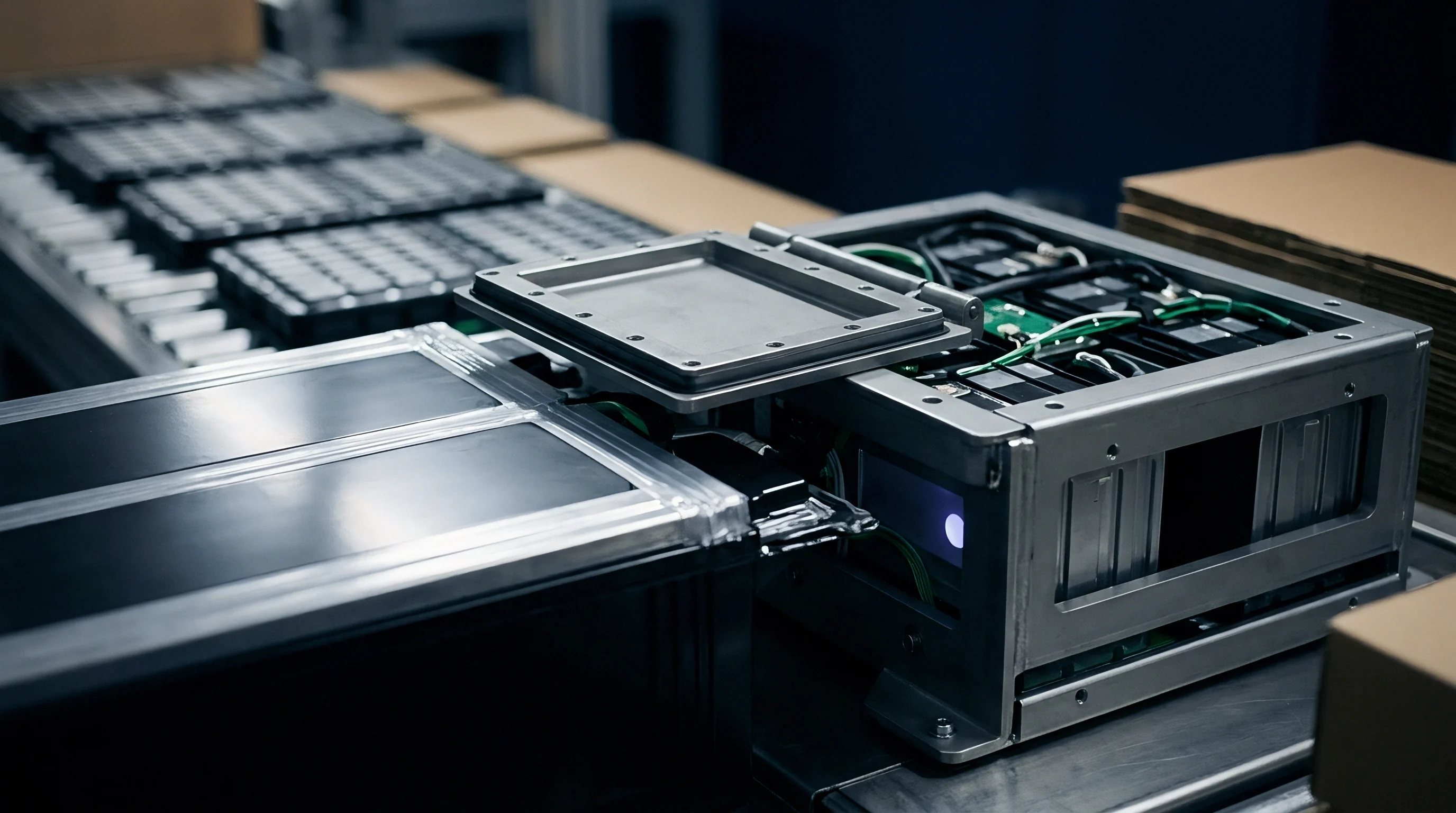
Cumulative physical stress applied to a single battery sample reveals seal degradation that fresh units pass easily.

Paperwork
Building a robust import dossier requires gathering documents beyond the primary UN 38.3 test report. Customs officials and port authority dangerous goods inspectors evaluate the complete paper trail connecting the physical battery shipment to the original laboratory test protocol. A single broken link in this chain of custody results in border holds, expensive demurrage accumulation, or forced shipment rejection at the destination port.
Assembling the Import Dossier Package
The import compliance file must contain five core documents. Omitting any item compromises the shipment’s legal transit status. The file remains active for the entire commercial lifecycle of the imported battery model.
- Full UN 38.3 Bench Test Report with complete raw temperature, voltage, mass loss, and vibration log tables for every individual tested sample unit.
- UN 38.3.5 Official Test Summary matching the exact design and model specifications of the landed cargo.
- Safety Data Sheet (SDS) prepared in accordance with the UN Globally Harmonized System (GHS), updated within the last three years, specifying correct UN transport numbers and proper shipping names.
- Package Drop Test Certificate proving compliance with the 1.2-meter drop test requirement under applicable dangerous goods packing instructions.
- Quality Management System Certificate confirming that the cell and pack manufacturing facility operates under an audited ISO 9001 or equivalent production quality framework.

Accreditation Verification and Laboratory Credentials
Testing laboratories issuing UN 38.3 documentation must operate under recognized national and international accreditation frameworks. Importers must verify the lab’s standing with international accreditation bodies before accepting a factory’s dossier.
| Accreditation Body | Jurisdiction Region | Mutual Recognition Agreement | Verification Method for Importers |
|---|---|---|---|
| CNAS (China National Accreditation Service) | China | ILAC-MRA Signatory | Online verification portal search using the laboratory registration number and specific ISO 17025 scope listing |
| A2LA (American Association for Laboratory Accreditation) | United States | ILAC-MRA Signatory | Database query of active accredited certificate holders and scope renewal dates |
| DAkkS (Deutsche Akkreditierungsstelle) | Germany / European Union | ILAC-MRA Signatory | Federal accreditation register check cross-referencing battery testing capability scopes |
| NVLAP (National Voluntary Laboratory Accreditation Program) | United States | ILAC-MRA Signatory | NIST database lookup for energy storage testing laboratory credentials |

Which Accreditation Mark Validates Test Reports Issued by Overseas Laboratories?
Overseas test reports must carry the official seal of an accreditation body that holds active signatory status in the International Laboratory Accreditation Cooperation Mutual Recognition Arrangement (ILAC-MRA). The presence of the ILAC-MRA mark combined with the national accreditation body logo—such as CNAS in China—guarantees that the laboratory’s technical competence, equipment calibration schedules, and testing methods undergo regular peer review. Reports lacking an ILAC-MRA recognized mark fail international regulatory audits, forcing importers to re-test the battery models at domestic laboratories at substantial expense.
Section 38.3.5 of the UN Manual of Tests and Criteria requires manufacturers and subsequent distributors to make the test summary available to the supply chain without delay.

Verification Workflow for Imported Battery Documentation
Auditing an incoming test report demands a systematic verification procedure. Auditors follow a structured sequence to validate every entry across the regulatory submissions.
- Identify Report Numbers by cross-referencing the full test report identification string against the entry on the UN 38.3.5 test summary and the SDS Section 14 dangerous goods shipping information.
- Verify Lab Credentials through searching the issuing laboratory’s registration number on the official accreditation body database to ensure the facility held active ISO 17025 certification on the exact dates testing took place.
- Audit Physical Specifications by comparing the physical cell dimensions, gross battery pack mass, continuous discharge amperage, and maximum voltage listed in the report against the physical engineering drawing and commercial purchase specification.
- Validate Sample Counts by checking that the sample quantities listed in the T.1-T.8 raw data tables precisely match the minimum sample sizes required by the governing edition of the UN manual.
- Confirm Standard Revision through verifying that the test report cites the current version or applicable active amendment of the UN Manual of Tests and Criteria mandated by destination transport regulations.
A purchase order conditioning final commercial payment on successful laboratory accreditation lookup prevents non-compliant cargo from boarding overseas transport vessels.

Discrepancy
Falsification, alteration, and misrepresentation of UN 38.3 test reports represent significant risks in cross-border battery supply chains. Unscrupulous suppliers often attempt to lower testing costs or hide design modifications by submitting re-edited test reports, borrowing certificates from component cell vendors, or presenting reports executed on non-representative prototype samples. Detecting these discrepancies requires careful scrutiny of report anomalies and physical cell verifications.

Common Red Flags in Factory Submissions
Discrepancy analysis begins with document inspection. Falsified documents display predictable technical and typographical patterns that signal tampering or total fabrication.
| Document Anomaly | Underlying Failure Risk | Verification Countermeasure |
|---|---|---|
| Mismatched font families or line alignments on cell model designations | Altered report created by pasting new model numbers over an old test report | Request digital native PDF directly from the issuing laboratory; inspect PDF metadata and editing history |
| Component cell UN 38.3 report submitted in lieu of completed battery pack report | Battery pack protection circuit, wiring, and enclosure never underwent T.1-T.7 testing | Demand full pack-level test report explicitly naming the complete battery assembly model number |
| Test report date precedes the official release date of the cited cell model | Report conducted on an obsolete precursor chemistry or prototype enclosure design | Cross-reference cell chemistry lot codes and production line setup dates against testing dates |
| Identical sample mass loss numbers recorded across all test specimens | Laboratory fabricated data entries without conducting actual precision balance weighings | Perform incoming lot dimensional and mass sampling using calibrated laboratory balances |

Spotting Document Alterations and Model Mismatches
The most common fraud vector involves altering the cell or pack model number on a legitimate report issued to a different manufacturer. Fraudulent suppliers purchase genuine cells from tier-one producers to pass initial factory audits, then substitute cheaper, uncertified cells inside the production pack while retaining the original brand’s test documentation. Auditing the internal cell component breakdown within the pack report exposes this practice.
The report must explicitly state the exact component cell part number, chemistry, shape factor, and capacity rating.
Weight and dimension discrepancies between report data and production cargo provide immediate evidence of uncertified design changes. A battery pack engineering revision that adds structural housing weight, modifies internal cell balancing boards, or changes the outer casing polymer composition invalidates the existing UN 38.3 report. The UN manual strictly mandates that any change in mass exceeding 20 percent, or any alteration to casing design or internal circuit layout, requires a complete re-testing cycle under UN 38.3.
A change in battery pack gross weight exceeding 20 percent automatically invalidates existing UN 38.3 transport certification and mandates complete re-qualification of the design.
Technical Indicators of Non-Compliant Documentation
Auditors must review submissions against an explicit checklist of failure modes commonly discovered during dangerous goods file reviews.
- Omitted Cycling History Data indicating that test samples were tested fresh without undergoing the mandatory fifty or one hundred charge-discharge conditioning cycles prior to thermal and overcharge testing.
- Truncated Short Circuit Schedules where the laboratory terminated T.5 short-circuit monitoring prior to the full six-hour observation window or failed to maintain the ambient chamber at 57 degrees Celsius.
- Missing Pre-Test and Post-Test Photography preventing visual verification of internal pack construction, wire routing, weld quality, and physical damage state.
- Outdated Edition Citations citing obsolete revisions of the UN Manual of Tests and Criteria that do not incorporate current testing protocols for modern high-energy lithium configurations.
- Conflicting Watt-Hour Rating Formulas where the nominal voltage multiplied by nominal capacity does not equal the watt-hour value printed on the battery label and test summary.

Physical Cell Weight and Dimension Tolerances Cross-Check
Importers must execute physical incoming inspections on sample units drawn from delivered lots to confirm that landed goods match the audited UN 38.3 test report parameters.
- Extract five sample battery packs at random from incoming shipment lots prior to custom clearance acceptance.
- Weigh each sample pack on an ISO calibrated balance scale with a resolution of 0.01 grams and log individual gross mass readings.
- Measure physical pack outer dimensions including width, height, length, and connector harness clearances using calibrated digital calipers.
- Compare physical readings against the baseline mass and dimensions printed in Section 2 of the full UN 38.3 laboratory report.
- Reject the shipment lot if mass variance exceeds 5 percent or if dimensional variances conflict with the baseline specification drawings attached to the report file.
Attempting to import battery cargo under mismatched or fraudulent test reports exposes the importer of record to immediate customs seizure, heavy regulatory fines, and legal liability for dangerous goods transport violations.

Clause
Securing regulatory compliance across cross-border battery supply chains requires translating UN 38.3 requirements into binding commercial purchase contracts. Relying on informal factory assurances or unverified test certificates leaves the buyer vulnerable to supply chain disruptions and legal liabilities. Quality agreements and master service contracts must explicitly define testing responsibilities, document delivery timelines, and financial indemnities for non-compliant cargo.
Structuring Purchase Agreements for Import Compliance
Sourcing contracts must establish that cell and pack production cannot commence until the buyer receives, audits, and approves the complete UN 38.3 compliance dossier. Contracts must bar factories from modifying internal cell suppliers, BMS layout, battery enclosure materials, or internal wiring arrangements without advance written notification and submission of a newly validated UN 38.3 test report.
Commercial contracts must establish explicit financial indemnities holding the supplier liable for all costs stemming from incomplete or fraudulent dangerous goods documentation. Direct financial damages include customs storage fees, port demurrage penalties, carrier return-freight charges, emergency domestic testing fees, and legal penalties levied by transport safety agencies such as the US Department of Transportation Pipeline and Hazardous Materials Safety Administration (PHMSA) or European national dangerous goods authorities.
Importer of Record Obligations under Modern Battery Regulations
Regulatory frameworks globally—including the European Union Battery Regulation 2023/1542 and US hazardous materials transport laws—place direct legal responsibility for transport safety on the Importer of Record. The importer cannot transfer ultimate legal compliance duties to overseas suppliers or freight brokers. If an uncertified battery triggers a thermal runway event during air or ocean transit, regulatory agencies hold the entity listed on the bill of lading legally responsible.
Under the EU Battery Regulation, importers must maintain technical documentation—including UN 38.3 test reports, battery passports, and material compliance certificates—for ten years after placing the battery model on the market. Importers must make these files available to national market surveillance authorities upon request within short statutory deadlines.
The Importer of Record carries primary statutory responsibility for dangerous goods transport safety and cannot shift ultimate legal compliance liability to overseas factory suppliers.
Supplier Quality Agreement Compliance Checklist
Importers should embed explicit compliance verification terms directly into supplier quality agreements.
- Mandatory Re-Testing Triggers requiring full UN 38.3 re-qualification whenever cell suppliers, cathode chemistry, pack housing materials, or internal protection circuits undergo engineering modifications.
- Unrestricted Laboratory Access Provisions granting the buyer rights to contact the issuing testing laboratory directly to verify report authenticity and request unredacted raw data files.
- Serial Code Traceability Obligations binding the supplier to print unique, scannable QR codes or serial numbers on every battery pack linking directly to the specific UN 38.3 compliance dossier.
- Demurrage and Penalty Pass-Through Clauses establishing automatic commercial chargebacks for ocean or air freight demurrage fees resulting from customs documentation holds.
How do procurement teams balance the commercial speed of launching new battery models against the multi-week laboratory testing windows required for full UN 38.3 re-qualification?

Customs
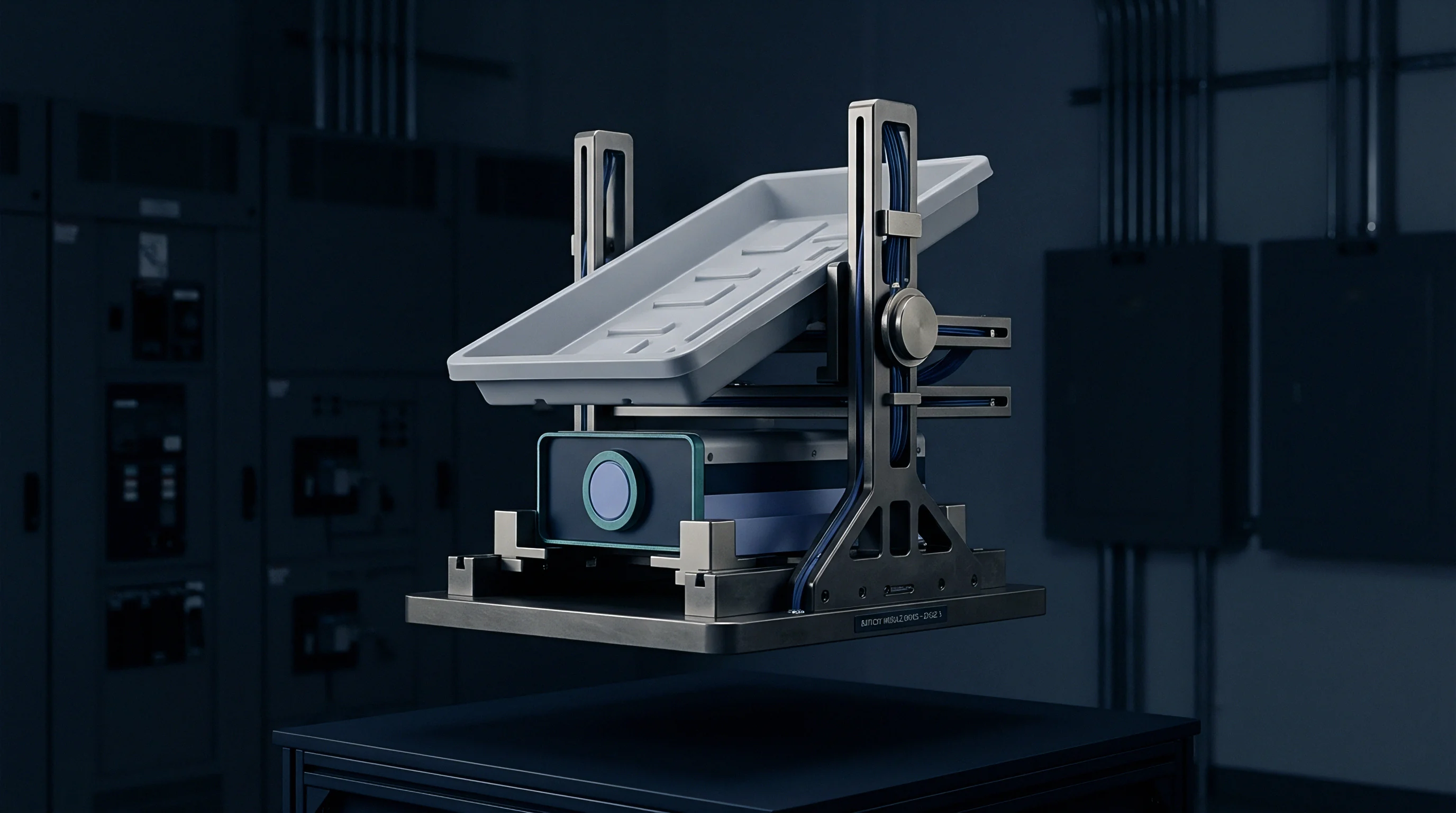
Customs clearance represents the ultimate operational operational checkpoint for imported battery cargo. Port health and safety officials, border customs agents, and dangerous goods inspectors evaluate physical packaging, labeling, and import documentation at the port of entry. A failure at this stage strands valuable cargo in port warehouses where storage fees accumulate daily.
Dangerous Goods Declarations and Packing Instructions
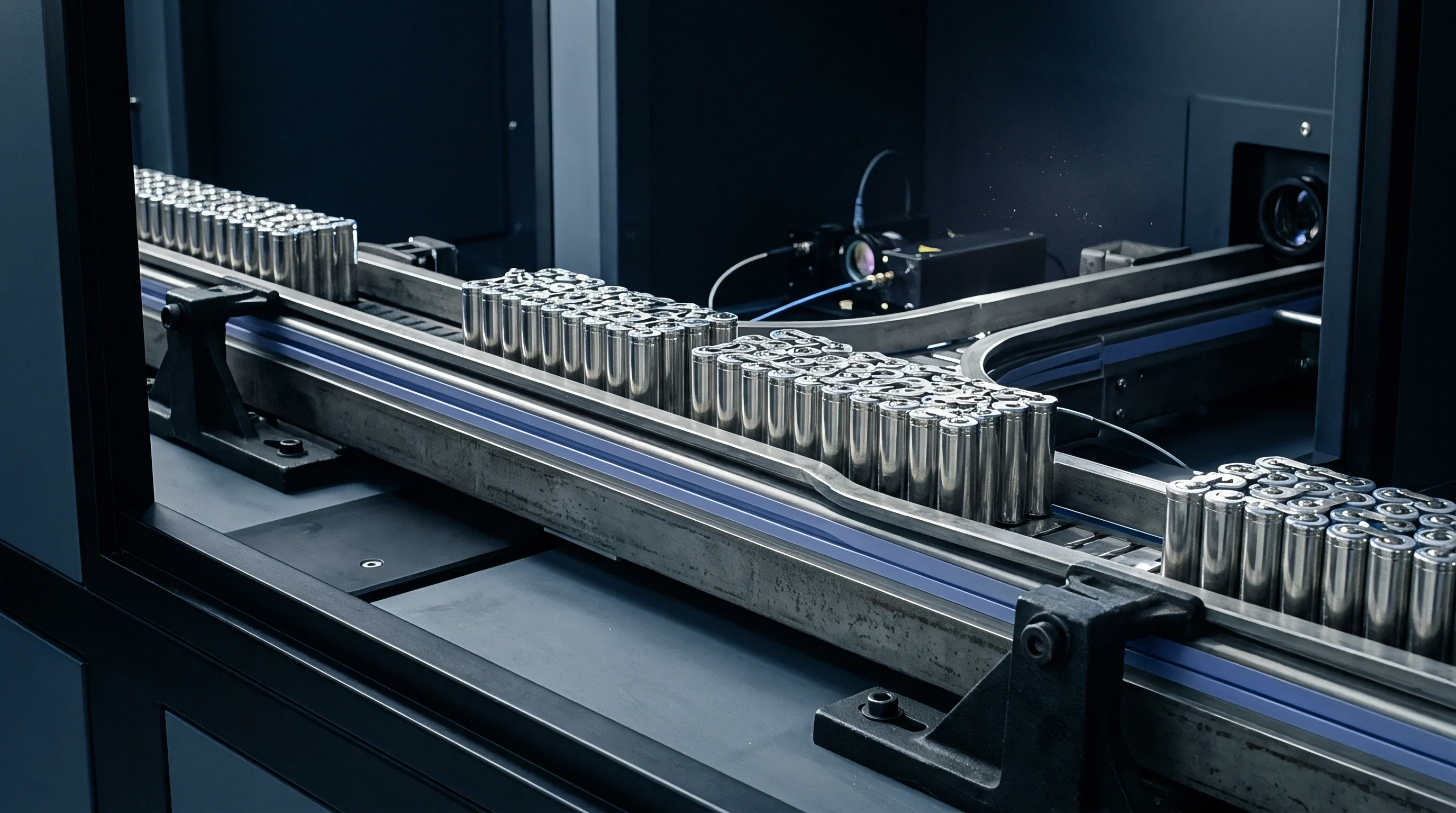
Transporting lithium batteries requires strict compliance with international dangerous goods regulations across air, sea, and land modes. Air cargo follows the International Air Transport Association (IATA) Dangerous Goods Regulations (DGR), ocean transport adheres to the International Maritime Dangerous Goods (IMDG) Code, and European road freight follows the Agreement concerning the International Carriage of Dangerous Goods by Road (ADR).
Lithium ion cell and battery shipments fall under specific UN transportation numbers based on their state of assembly and packaging setup:
- UN 3480 Lithium Ion Batteries shipped standalone as bulk power components. Air transport under IATA Packing Instruction 965 mandates that UN 3480 cargo must ship at a State of Charge (SoC) not exceeding 30 percent of rated capacity unless authorized by state authorities.
- UN 3481 Lithium Ion Batteries Contained in Equipment shipped fully installed inside device housings, governed by IATA Packing Instruction 967 or IMDG Code special provisions.
- UN 3481 Lithium Ion Batteries Packed with Equipment shipped alongside devices in the same outer package, governed by IATA Packing Instruction 966.
Handling Carrier Refusals and Port Authority Audits
Airlines and shipping lines maintain cargo acceptance desks trained to inspect dangerous goods declarations against physical package markings. Freight forwarders will issue a refusal notice if package labels, UN mark dimensions, or handling labels deviate from standard specifications. Outer packaging must display the recognized UN specification marking proving the crate passed the required 1.2-meter drop test and stacking load protocols.
During a port authority audit, customs officials inspect the physical cargo to ensure the watt-hour rating printed on the battery pack case exactly matches the rating listed on the UN 38.3 test summary and safety data sheet. Any discrepancy between physical unit labels and paper documentation flags the shipment for physical inspection, warehouse impoundment, or mandatory re-testing at an independent domestic testing facility before release.
Resolving customs documentation holds requires immediate delivery of the complete technical dossier, including the full UN 38.3 bench test report, the ILAC-MRA laboratory accreditation scope, and the manufacturer quality management system certificate directly to the inspecting border agent. Maintaining organized, digital compliance files indexed by model serial numbers enables rapid response when border inspectors challenge cargo transport compliance.