Quantifying Financial Exposure from Non Compliant Battery Cargo Seizures under International Transit Rules
Non-compliant battery seizures trigger compounding port detention, equipment demurrage, statutory fines, and hazmat destruction costs exceeding cargo value.
Detention
Port authorities at maritime gateways impound shipments as soon as physical cargo markings clash with declared paperwork. When an ocean container loaded with lithium iron phosphate or nickel manganese cobalt cells reaches customs without a valid UN 38.3 test summary, inspectors order immediate quarantine under national dangerous goods oversight mandates.
Liability starts accumulating immediately through terminal storage fees and harbor police escorts. A standard twenty-foot container holding sixteen metric tons of 280 Ah prismatic cells can run up daily hazardous detention charges between 450 and 1,200 dollars, depending on the port facility. Once flagged, the box is shunted onto an isolated containment pad flanked by blast berms and automated water monitors, where the terminal levies separate surcharges for daily log entries, gas sweeps, and thermal imaging passes.
A container held under dangerous goods quarantine at a maritime port accumulates between 3,100 and 8,400 dollars weekly in non-negotiable port authority monitoring charges.
Consignees often assume their freight forwarder will absorb or challenge these expenses during customs clearance, but ocean carriers disclaim liability the moment an inspection notice cites omissions under the International Maritime Dangerous Goods Code. Every terminal handling surcharge, harbor master billing, and specialized hazmat repositioning fee is passed straight to the bill of lading holder. Importers without direct credit accounts at the port find their freight frozen under administrative holds that block transfer, re-export, and independent physical surveys.
Customs agencies typically issue misdeclaration penalties against the importer of record within seventy-two hours of impoundment. In United States jurisdictions, officers assess penalties under 19 U.S.C. 1592 for gross negligence or clerical omissions, scaling up to the domestic landed value of the goods if safety declarations turn out false. European authorities apply parallel administrative measures alongside transport fines under national port state control legislation.
If classification errors raise suspicions of counterfeit cells, customs files formal seizure notices that freeze normal administrative appeal timelines, locking the buyer out while daily storage bills mount.

Crate
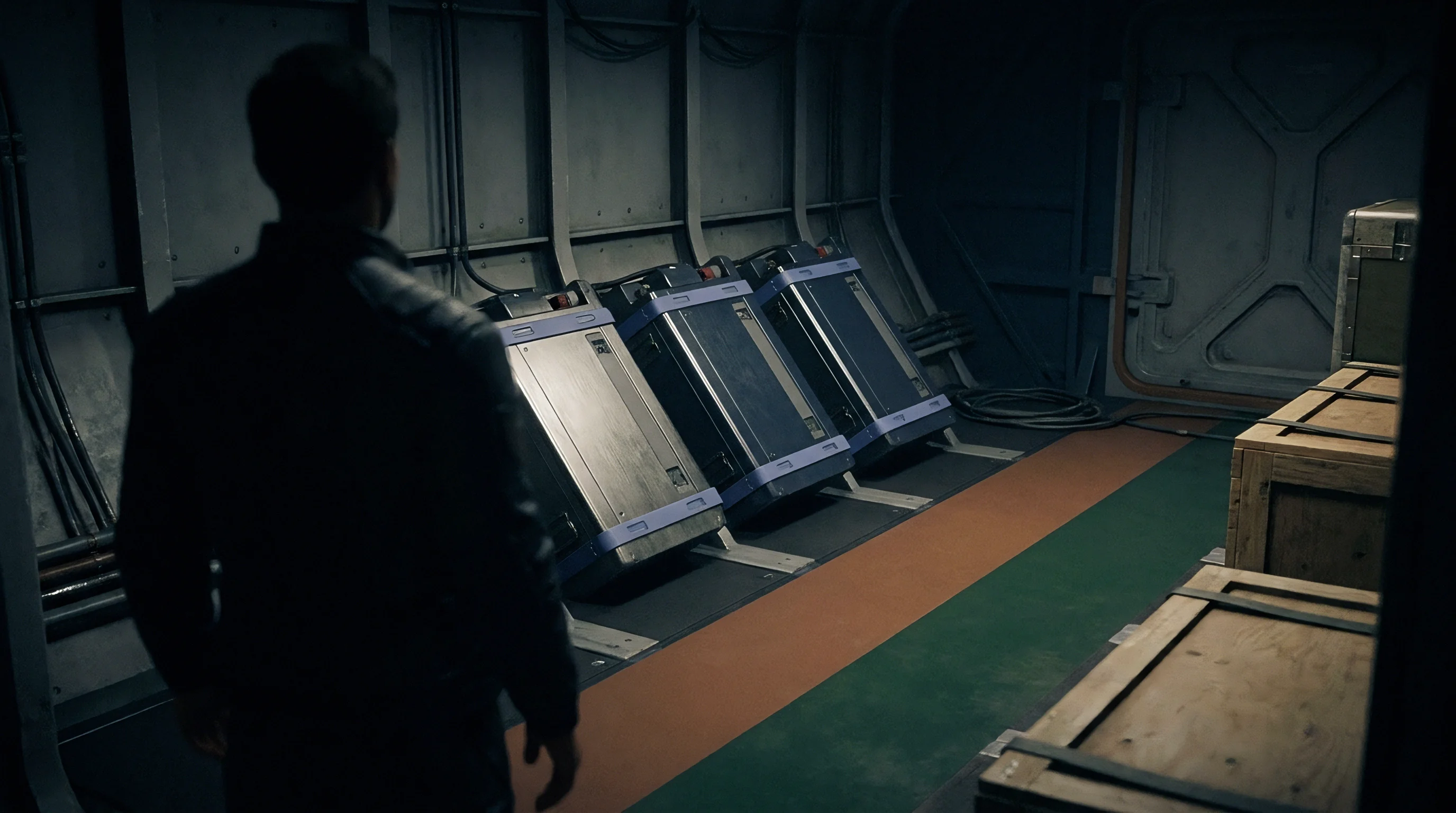
Packaging defects cause more intermodal cargo holds than any other physical issue. Before battery packs are admitted to vessel holds or rail yards, inspectors check crate labels, United Nations packaging specification codes, and orientation arrows. Under IMDG Special Provision 188 and Packing Instruction 903, minor external flaws provide full legal justification to halt a shipment on the spot.

Where Does Physical Packaging Invalidation Occur?
Receiving staff at carrier acceptance desks check whether interior packaging protects against terminal short circuits and isolates cells from transport vibration. When wooden crates or fiberboard boxes show crushing, water damage, or incorrect marks like UN 4G or UN 50D, terminal personnel halt handling and forwarders turn the shipment away. Because crate integrity functions as the primary barrier against cascading thermal runaway, compromised packaging shifts an ordinary cargo run into an active hazardous materials violation.
Field inspectors focus their audits on four distinct physical and documentary packaging criteria:
- UN Specification Markings matching the gross mass on the dangerous goods declaration without exceeding the container’s rated capacity.
- Interior Insulation Barriers positioned between terminals to block unintended electrical continuity across cell terminals during container rocking.
- State of Charge Attestation confirming that cells moved under air transport rules remain at or below thirty percent of their rated capacity.
- Absorbent Cushioning Media present in sufficient volume to capture leaking electrolyte under international transit vibration standards.
Problems often start when secondary distributors buy inventory packaged for domestic road freight and push it into export channels without repackaging. Craters holding 3.2-volt lithium iron phosphate cells rated at 105 Ah require individual terminal cap protection, heavy non-conductive dividers, and certified drop-tested exterior crates that withstand dynamic stacking loads. Skipping drop-test certification under UN Manual of Tests and Criteria Part III, sub-section 38.3 reclassifies the entire consignment as illicit dangerous cargo under international transport law.
Under IMDG Packing Instruction 903, missing terminal protection or uncertified outer packaging voids transport authorization and authorizes carrier impoundment at shipper expense.
Standard bulk pallet configurations commonly clear domestic highway routes without issue, yet fail border inspections when tendered for ocean freight. Pallets that domestic carriers accept without question regularly lack the corner bracing, steel banding, and individual terminal isolation required by international maritime dangerous goods rules.
Tariff
Tariff disputes multiply the cost of an administrative hold. When customs officers inspect impounded batteries, they review declared Harmonized Tariff Schedule codes to see whether the paperwork concealed customs duties, anti-dumping levies, or trade remedy tariffs. Entering full battery storage assemblies under generic electronics codes to bypass hazardous cargo declarations routinely triggers a full reclassification audit.

Does Carrier Rejection Trigger Immediate Civil Fines?
A carrier rejection during customs clearance can initiate civil enforcement actions under maritime and commerce statutes. Port state control inspectors log non-compliance reports with maritime or civil aviation authorities, which assess civil penalties entirely separate from customs tariffs. If cargo is intercepted afloat or at berth, regulators penalize whichever entity booked the movement under an invalid dangerous goods declaration.
| Enforcement Body | Governing Statute | Minimum Civil Penalty | Maximum Penalty Per Violation | Liability Allocation |
|---|---|---|---|---|
| US Department of Transportation PHMSA | 49 CFR 107.329 | 540 USD | 99,756 USD | Shipper, Forwarder, Consignee |
| European Port State Control | Directive 2009/16/EC | 2,500 EUR | 65,000 EUR | Vessel Operator, Shipper |
| UK Maritime and Coastguard Agency | Merchant Shipping Regs SI 1997/2367 | 1,000 GBP | Unlimited fine upon indictment | Consignor, Importer of Record |
| Transport Canada TDG | Transportation of Dangerous Goods Act | 2,000 CAD | 50,000 CAD per day held | Consignor, Freight Carrier |
The financial fallout steepens if customs officers demand back duties alongside penalty multipliers. If an importer lists lithium-ion energy cells under duty-free generic headings instead of the required 8507.60 classification, the agency recovers the unpaid balance with interest backdated to the entry filing. Revenue divisions can also add surcharges reaching four hundred percent of the unpaid duty if records show the hazardous classification was masked to secure lower rates.
Legal retainers drain operating cash while containers sit in bonded yards. Trade compliance attorneys bill upwards of 750 dollars an hour to file mitigation petitions, coordinate with hazardous materials advisers, and work through administrative reviews. Across a multi-container hold, legal fees easily outstrip the salvage value of the cells.
Under Section 13 of typical ocean bills of lading, the importer has already agreed to indemnify the carrier and vessel master against any resulting fines.

Demurrage
Equipment demurrage runs separately from terminal storage. Ocean carriers lease containers on tight turnaround cycles, granting three to five business days of free time before daily detention tariffs take effect. The moment customs or safety inspectors impound a box, the carrier loses use of the equipment.
| Detention Period | Standard Container Daily Rate | Hazmat Surcharge Multiplier | Port Terminal Daily Storage | Combined Daily Run Rate |
|---|---|---|---|---|
| Days 1 to 5 | 0 USD (Free time) | 0 USD | 0 USD | 0 USD |
| Days 6 to 10 | 160 USD | 1.5x Base Rate | 350 USD | 590 USD |
| Days 11 to 20 | 280 USD | 2.0x Base Rate | 600 USD | 1,160 USD |
| Days 21 to 45 | 450 USD | 2.5x Base Rate | 950 USD | 2,075 USD |
| Days 46 and Above | 600 USD | 3.0x Base Rate | 1,400 USD | 3,200 USD |
A seized forty-foot high-cube container carrying 22 metric tons of lithium iron phosphate battery packs can easily rack up more than 70,000 dollars in demurrage and terminal charges over a thirty-day quarantine. Ocean carriers pursue these sums through letters of credit, corporate guarantees, or maritime liens attached to other shipments belonging to the same account.
Devanning seized cargo to return empty containers to the line is rarely straightforward. Port safety rules prohibit unloading non-compliant lithium batteries into general cross-dock warehouses, forcing the importer to find a specialized hazardous storage facility with secondary spill containment, explosion-proof wiring, and chemical-rated fire suppression, while drayage carriers frequently refuse to haul the freight once a seizure order is attached.
Port holds ripple straight into manufacturing schedules. Downstream assembly operations running short on cells face shutdowns that cost hundreds of thousands of dollars per shift. Plants are forced onto the spot market to buy replacement cells at inflated prices to meet contracts with automotive or grid-storage buyers.
Liquidated damages clauses trigger automatically, passing substantial contractual liabilities back to whichever party supplied the faulty paperwork.
Disputes frequently turn on whether forwarders have an enforceable legal duty to audit manufacturer test summaries before filing dangerous goods declarations with ocean carriers.

Remediation
Clearing an active cargo seizure forces the importer through strict remediation steps. Port officials issue binding orders that mandate either on-site recertification, full repackaging by certified hazardous materials handlers, or outright destruction at an approved treatment facility.
Destruction orders wipe out the asset value while generating steep processing bills. Specialized incinerators charge upwards of 4.50 dollars per kilogram to discharge, neutralize, and burn lithium-ion cells under environmental mandates. For a standard 20-foot container holding 18 metric tons of non-compliant cargo, disposal alone reaches 81,000 dollars, before adding hazardous waste manifest fees, heavy-haul trucking, and mandatory police escorts.
Environmental remediation and destruction of a seized eighteen-metric-ton battery shipment frequently costs more than fifty percent of the original cell manufacturing invoice.
When authorities permit corrective repackaging in lieu of destruction, the importer executes a complex recovery sequence:
- Engagement of Dangerous Goods Surveyors to inspect the cargo inside bonded quarantine areas and evaluate thermal stability and terminal integrity.
- Off-Site Transfer Authorization secured through customs bonds to move the quarantined container to an approved hazardous materials rework facility.
- Manual Battery Repackaging to replace uncertified boxes with UN-rated specification packaging, insert non-conductive dividers, and affix Class 9 hazard labels.
- Secondary Sample Testing by accredited ISO 17025 laboratories, running UN 38.3 thermal, shock, and vibration sequences on samples pulled directly from the impounded lot.
- Dangerous Goods Declaration Re-issuance prepared by certified specialists alongside updated Safety Data Sheets and valid UN Test Summaries.
The alternative remediation pathway involves re-exporting the freight back to the country of origin. That requires explicit consent from the original shipping line, export approval from the impounding port state control, and transit permits across every maritime jurisdiction along the return route. Many carriers refuse to accept distressed battery cargo back onto their ships under any circumstances, citing internal safety rules and hull insurance limitations.
Under cross-border sales contracts, an importer who negotiates delivery terms without securing verified dangerous goods documentation before factory gates open absorbs every dollar of remediation exposure the moment customs seals the container.