Meaning
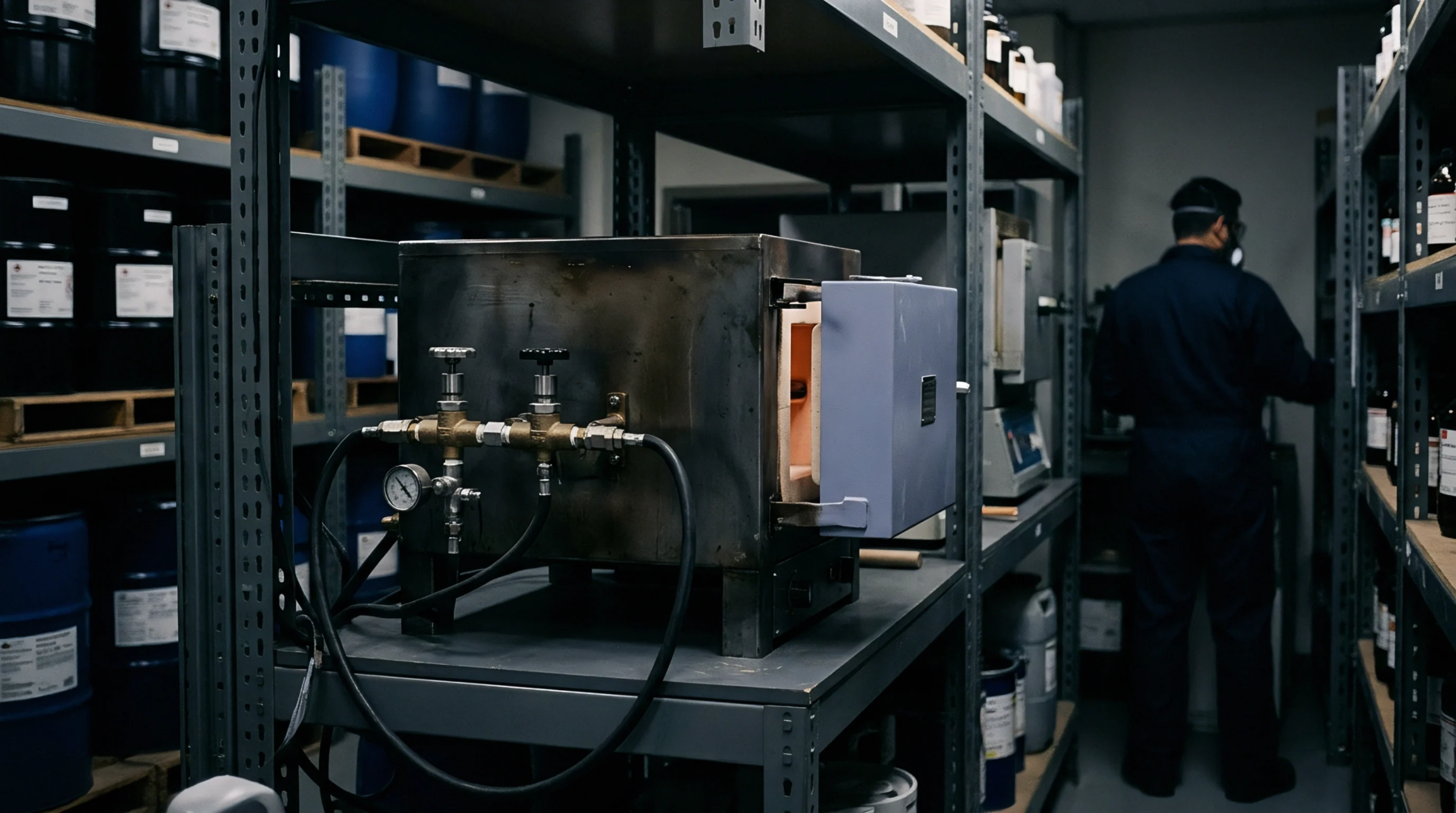
Thermal processing parameters in non-oxidizing atmospheres determine the final ratio of graphitic domains to disordered carbon regions within hard carbon anode materials. In precursor synthesis, carbonization temperature specifies the maximum dwell temperature applied inside nitrogen or argon calcination kilns to convert polymer or biomass feedstocks into sodium-ion battery active materials. The parameter governs interlayer spacing and defect concentration in the synthesized material.
The specification applies from four hundred degrees Celsius to fifteen hundred degrees Celsius and stops applying once graphitization converts disordered structure into crystalline graphite above two thousand degrees Celsius.
Structural Disorder
Structural reordering occurs as heteroatoms like oxygen and nitrogen volatilize during high-heat treatment. Higher processing levels reduce micro-crystallite spacing while consolidating internal carbon lattices. Establishing an optimum carbonization temperature limits surface functional groups that react with liquid electrolytes during initial cell formation cycles.
Lower processing heat leaves residual hydrogen that reduces electronic conductivity.
Pyrolysis Kinetics
Heating profiles govern the rate at which organic polymer chains fragment. Holding a precise carbonization temperature stabilizes the ratio of sp2 to sp3 carbon bonds in the final active mass. Thermal ramp rates must remain below five degrees Celsius per minute to avoid structural collapse.
Electrochemical Yield
Initial coulombic efficiency correlates directly with surface area reduction achieved during heat treatment. At an elevated carbonization temperature, closed porosity increases while exposed surface defects decrease, suppressing electrolyte decomposition. Anode procurement contracts specify strict thermal tolerances within ten degrees Celsius to ensure batch consistency across supply shipments.