Meaning
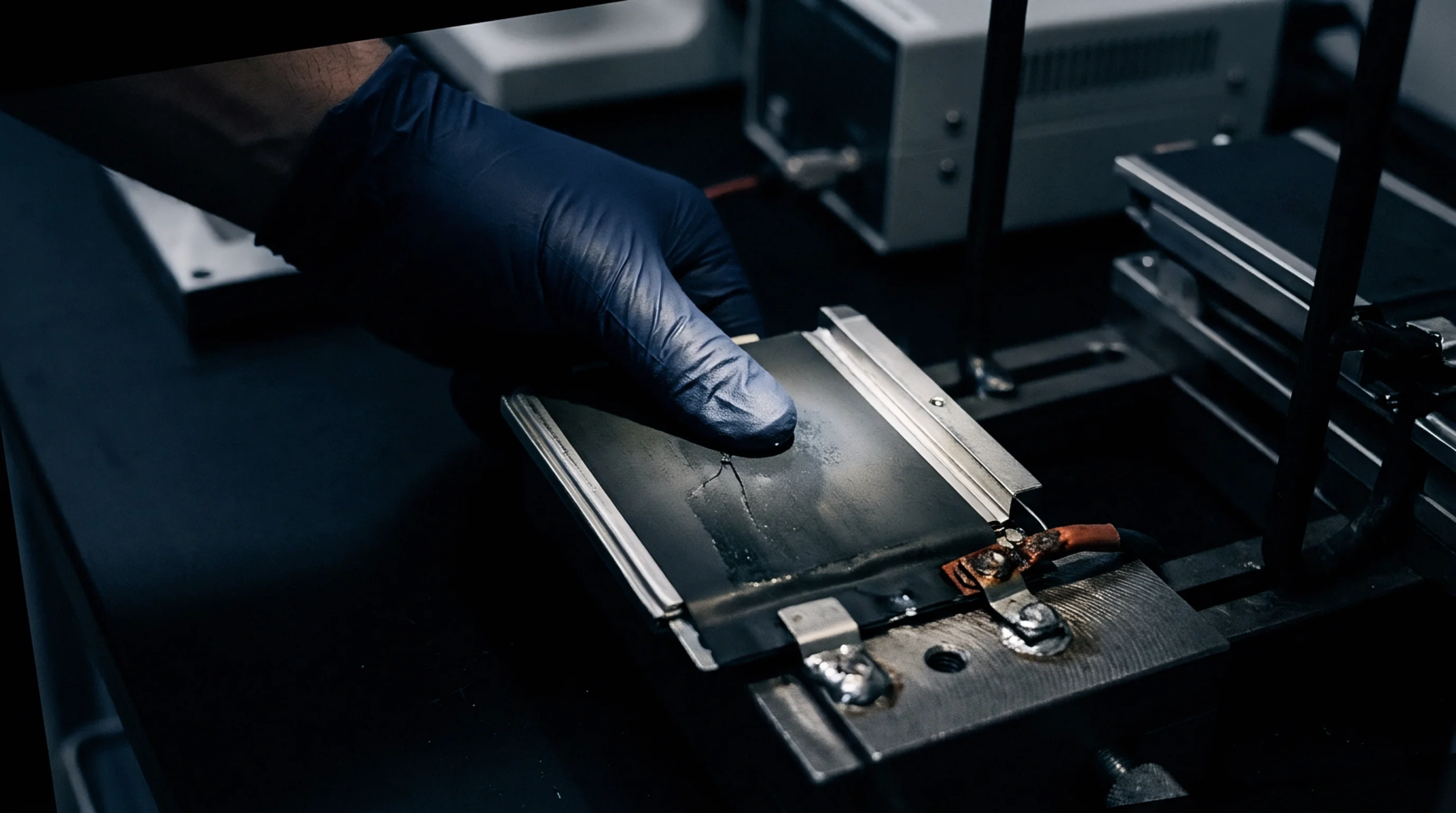
Electrochemical degradation characterizes the unwanted deposition of metallic particles onto the surface of an anode during rapid charging or operation in low temperatures. Localized lithium plating arises when the flow of incoming ions exceeds the rate of intercalation into the host graphite structure. This phenomenon creates dendrites that grow outward into the electrolyte, eventually bridging the separator.
Such structures compromise the internal integrity of the cell through electrical shorts or heat generation. The process occurs primarily at high current densities where kinetic barriers prevent efficient diffusion into the bulk material. Commercial standards classify this event as a failure mode that triggers permanent capacity loss.
Practitioners monitor these microstructural changes to verify the cycle life of automotive grade energy storage systems.
Surface Accumulation
Formation of metallic layers requires high potential gradients between the negative electrode and the surrounding ionic medium. Localized lithium plating concentrates at specific points on the anode where the surface resistance appears lower or the local cooling allows faster reaction kinetics. Ions accumulate because the carbon matrix lacks the necessary vacancy sites to accommodate incoming atoms within the required timeframe.
These metallic islands create regions of high chemical activity that disrupt the standard distribution of charge across the entire stack. Designers mitigate the risk by setting strict voltage thresholds during fast charge protocols. Manufacturers use scanning electron microscopy to detect these features during post mortem investigations of failed cells.
A consistent layer of solid electrolyte interface typically covers the anode, but the metallic deposits eventually fracture this protective film. Constant reformation of the interface consumes active lithium and liquid electrolyte concurrently. Efficiency drops as the cell resistance climbs, forcing chargers to adjust the delivery profile.
Thermal Sensitivity
Cold environments exacerbate the propensity for metallic deposition by slowing the diffusion kinetics of ions within the electrolyte and the solid phase. Localized lithium plating becomes a dominant concern when the operating temperature falls below the freezing point of water. Low kinetic energy prevents the ions from integrating into the graphite lattice, leaving them stranded on the external face.
Rapid charging in these conditions effectively forces a physical layer of metal onto the anode surface. Heaters are often necessary to bring the internal chemistry into a regime that supports normal intercalation before the charging current initiates. Control software monitors the temperature input to prevent the activation of high power settings when the thermal state remains outside safe parameters.
Cells designed for northern climates integrate specialized anode additives to modify the surface energy and speed up ion transfer.
Current Density
High charging rates create a bottleneck that restricts the movement of ions toward the center of the electrode particles. Localized lithium plating occurs when the supply of charge carriers outweighs the rate of diffusion into the graphite bulk. Systems managed through sophisticated battery management units restrict the maximum current as the state of charge approaches full capacity.
Overcharging forces the potential of the anode toward zero relative to the metal, creating a thermodynamically favorable condition for deposition. The probability of failure remains low if the current stays below the threshold where kinetic overpotential dominates the reaction. Proper modulation of the charge profile protects the internal geometry from structural damage.
Consistent current delivery ensures the longevity of the cell.