Meaning
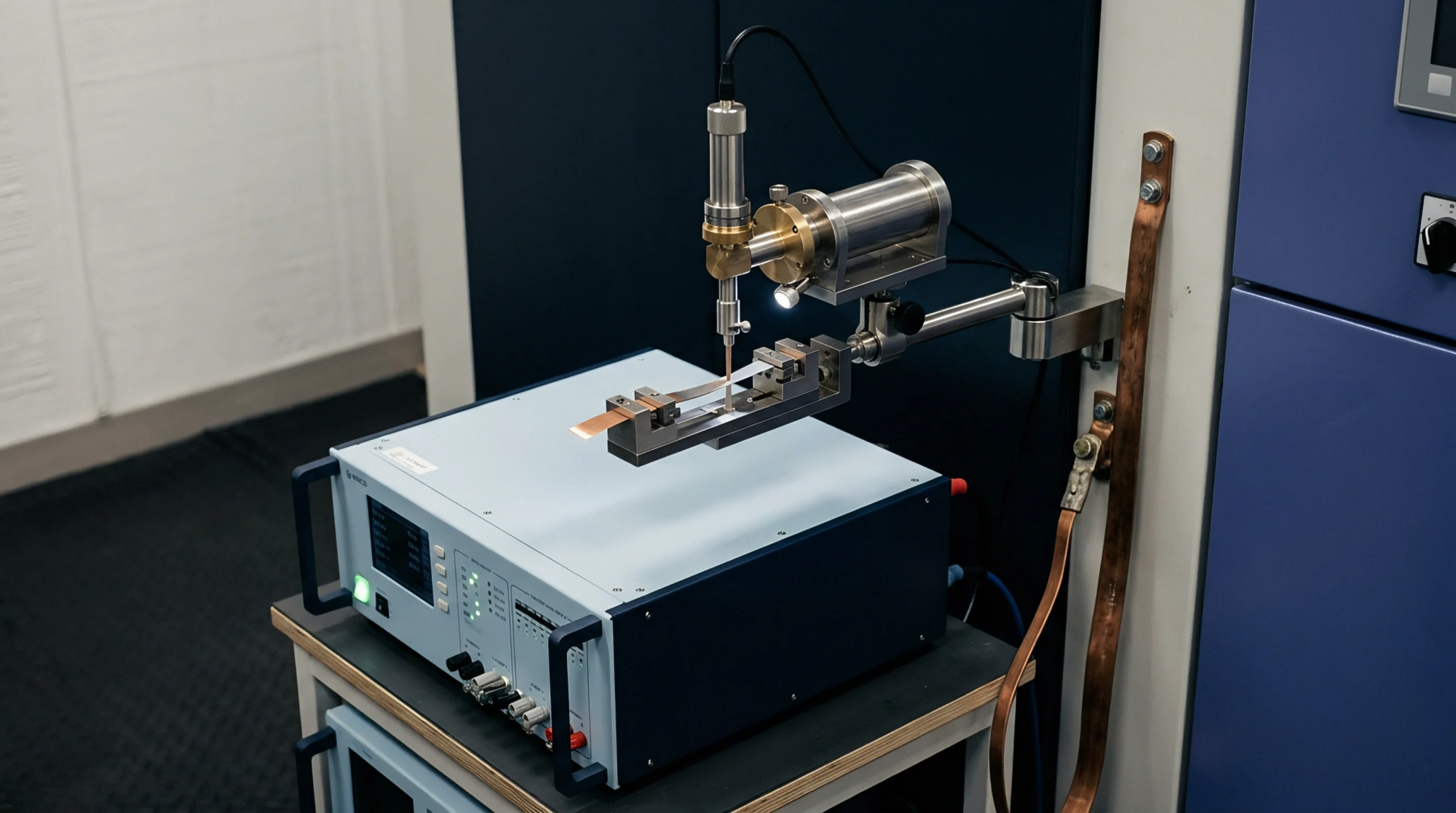
Measurement science dedicated to resolving electrical resistances below one milliohm provides the resolution needed to audit battery welds and busbar contacts. Using micro-ohm metrology helps identify high-resistance joints that could overheat under operating currents of several hundred amperes. It is a critical quality control step in the production of battery modules and packs.
Instrumentation Design
Measuring such small resistances requires high-current excitation and high-resolution digital voltmeters. Standard multimeters are insufficient because their test leads introduce more resistance than the joint being measured. Using specialized micro-ohm meters ensures that the injection current is high enough to generate a measurable voltage drop.
Error Isolation
Thermoelectric voltages generated by dissimilar metals at the contact points can distort the resistance measurement. Alternating current excitation or polarity-reversal methods are used to cancel out these thermal electromotive forces. These techniques allow the instruments to measure the true electrical resistance of the metal joint.
Sourcing Calibration
Traceable resistance standards are required to verify the accuracy of the measurement systems in the factory. These standards are kept in temperature-controlled environments to prevent drift during calibration. Regularly running these checks ensures that weld quality remains within the strict limits allowed by automotive manufacturing standards, where a deviation of a few micro-ohms can trigger a rejection.