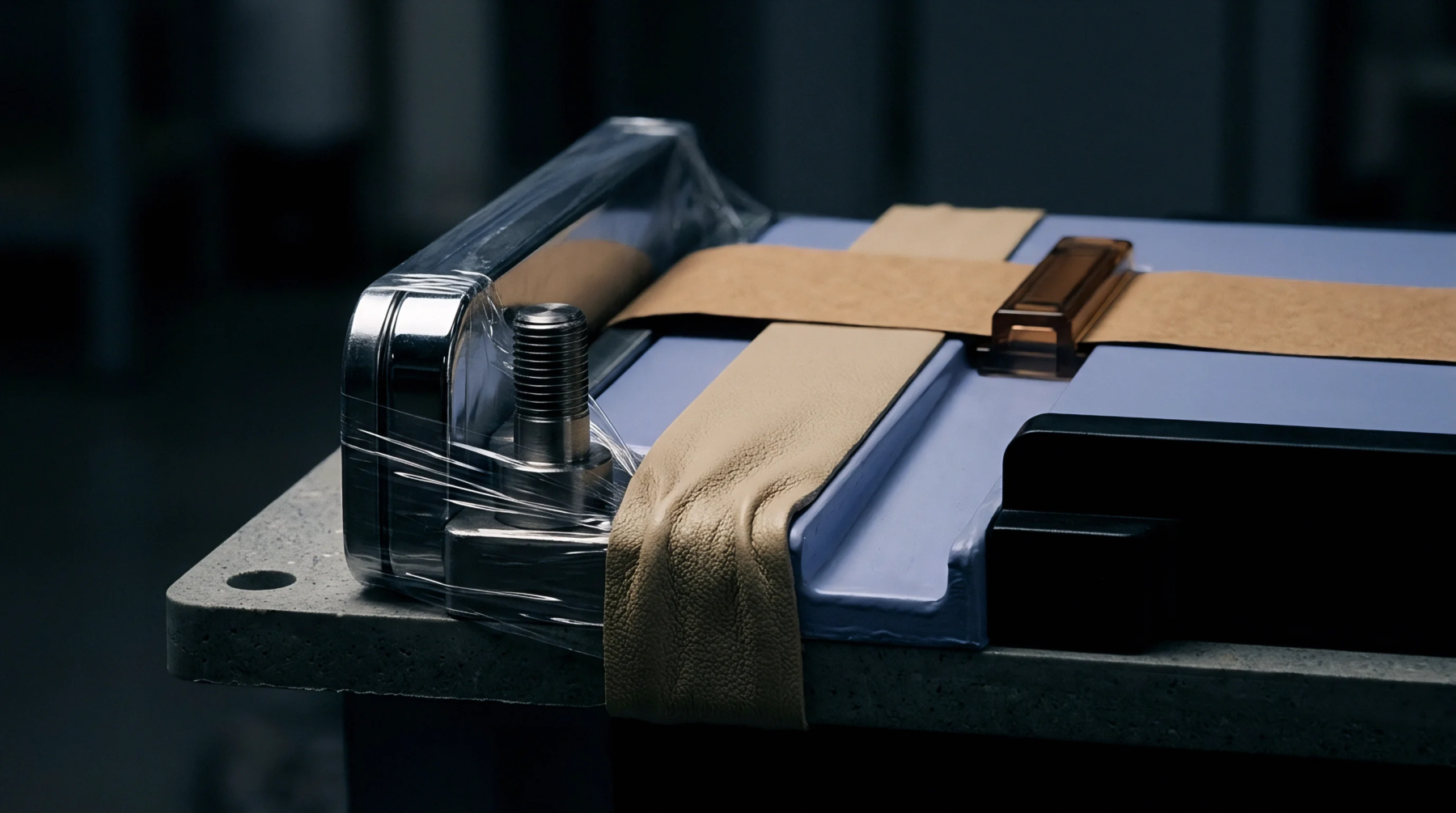
Mechanical Clamping Compression Mechanics under Cyclic Lithium Cell Swelling
Controlled mechanical clamping combines rigid platen bracing with elastomeric cushions to constrain cyclic lithium cell swelling stress between 0.2 and 0.5 MPa.
Rigid metallic enclosures featuring rectangular geometry and sealed terminal feedthroughs to contain lithium ion electrode stacks provide robust mechanical packaging for medium and large format battery applications. The prismatic hard case relies on deep drawn aluminum alloy or nickel plated steel cans fitted with laser welded top cover plates to isolate cell internals from external moisture, air, and mechanical abrasion. Structural boundaries encompass the metal casing, integrated terminal posts, insulating gaskets, and rupture vent discs, ending at the external busbar and module clamping interfaces.
This cell form factor excludes flexible aluminum laminated pouch packaging, cylindrical steel cans, and secondary module housings. Electric vehicle and grid storage supply agreements specify these rigid enclosures to streamline automated module assembly and maximize volumetric packing efficiency within rectangular battery pack envelopes.
Manufacturing of modern prismatic cans utilizes deep drawing or backward extrusion of 3003 series aluminum alloys to achieve uniform wall thicknesses between zero point six and one point two millimeters. Top cover assemblies incorporate glass-to-metal or ceramic-to-metal seals that maintain hermetic electrical isolation for positive and negative terminal posts. An automated laser welding pass seals the top cover into the drawn can body under inert gas shielding to protect sensitive internal components from atmospheric moisture ingress.
Mechanical burst vents stamped into cover plates provide engineered failure thresholds, popping open between zero point four and one point two megapascals to exhaust gases during overcharge. Internal insulating plastic wraps line can interiors to prevent active wound or stacked jelly rolls from shorting against metal casing walls.
Rectangular geometry allows cells to stack flush against each other or against intermediate thermal pads, achieving superior volumetric packing efficiency compared to cylindrical formats. Prismatic hard case designs provide structural resistance against external puncture, mechanical shock, and internal gas pressurization. Rigid casing walls allow external module tie rods to apply uniform initial preloads directly across cell faces without distorting delicate electrode edges.
Large planar bottom surfaces seat directly against extruded liquid cooling plates, lowering thermal resistance from internal windings to external heat sinks. Internal jelly roll geometries within rectangular casings create non-uniform corner radii, which can lead to localized stress concentrations and uneven lithium deposition during fast charging.
Automotive and energy storage system integrators specify hard case prismatic cells based on strict exterior dimensional tolerances, weld seam hermeticity, and burst pressure repeatability. Quality assurance teams audit helium mass spectrometer leak detection rates on raw incoming lots to eliminate cells with micro-porosity along laser weld paths. Flatness variations across wide cell faces govern thermal interface material thickness and baseline assembly reject rates.
Sourcing specifications mandate rigorous drop and vibration testing under UN 38.3 protocols to ensure terminal weld collars do not shear under cyclic transit stresses. Prismatic hard case packaging provides the structural stability and modular scalability required for high capacity industrial battery systems.
Controlled mechanical clamping combines rigid platen bracing with elastomeric cushions to constrain cyclic lithium cell swelling stress between 0.2 and 0.5 MPa.
Expertise is a utility, not a secret. sentiention™ publishes its working knowledge as open reference: intelligence layer covering the materials it sources, the markets it enters, and the reference that serves both.