Meaning
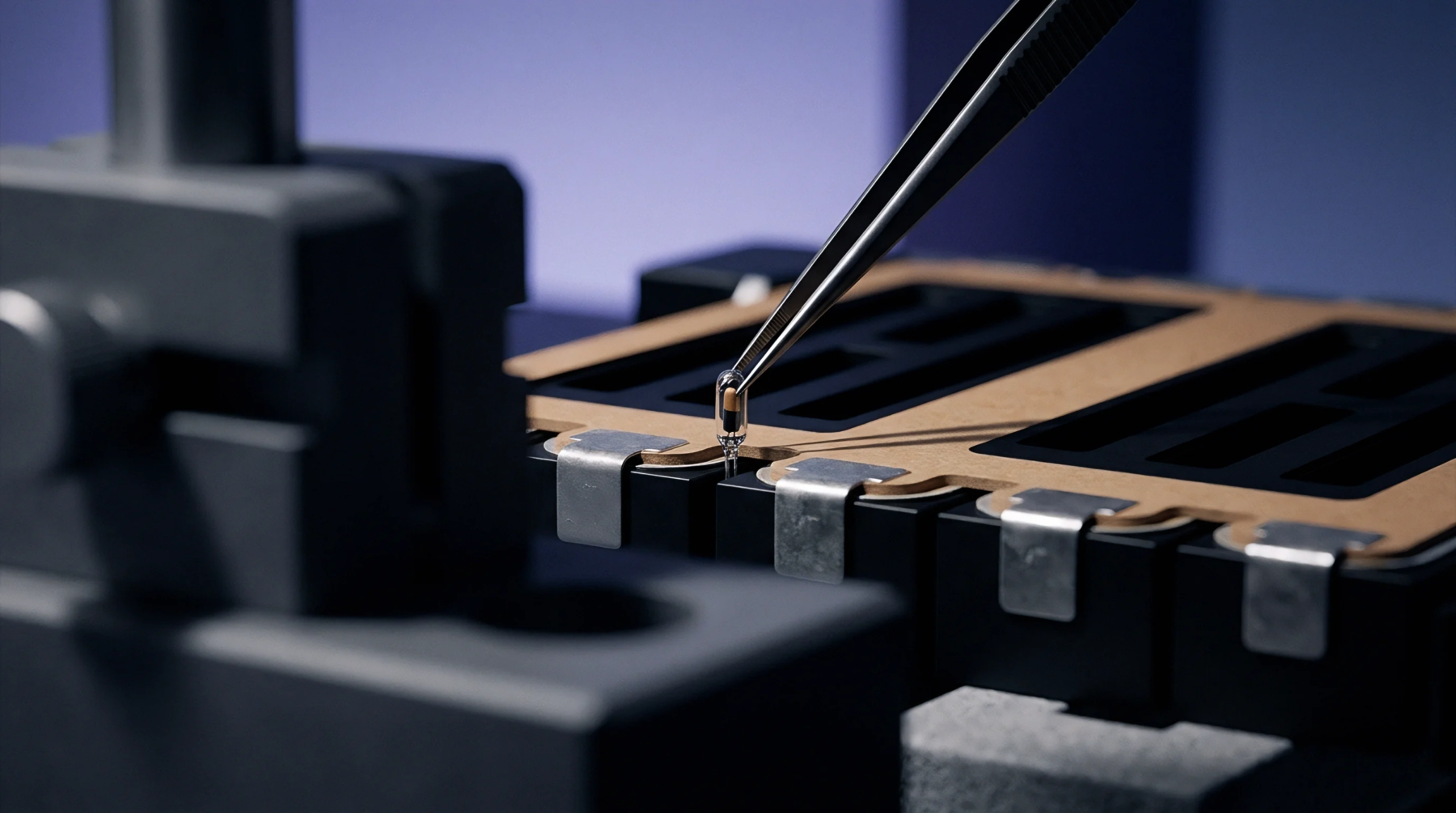
An electrical measurement quantifies the loss at the junction where a battery’s internal collector tabs are joined to the external terminals or busbars. This tab welding contact resistance governs the efficiency and thermal safety of the finished battery module. It measures the quality of the bond created by ultrasonic or laser welding and the boundary of its influence is the physical area of the weld spot.
This parameter is critical because high resistance at this point leads to localized heating and voltage drops during high current operation. Manufacturers use this metric to validate the settings of their welding equipment and to reject units with poor connections.
Joinery Quality
Creating a strong mechanical and electrical bond requires precise control over the energy and pressure applied during the welding process. This tab welding contact resistance provides an immediate indication of whether the weld was successful. If the surfaces are contaminated with electrolyte or oil, the resulting joint will be weak and highly resistive.
The mechanism of measurement involves passing a known current through the joint and measuring the small voltage drop across the interface. This ensures that the two materials are fused together on a molecular level. High quality welds show a resistance value that is nearly identical to the bulk material.
Monitoring this value in real time allows for the detection of worn welding tips or power supply fluctuations.
Ohmic Loss
Energy that is lost as heat at the weld point reduces the overall efficiency of the battery pack and can lead to thermal management problems. This tab welding contact resistance creates a heat source that is directly proportional to the square of the current. In high power applications, even a few micro ohms of extra resistance can cause the temperature to rise by several degrees.
This can damage the surrounding separator material or lead to a thermal runaway event in extreme cases. The loss also impacts the voltage seen by the battery management system which can lead to incorrect state of charge readings. Reducing these losses is essential for maximizing the power density and safety of the battery system.
Battery Integrity
Consistent weld quality is a requirement for the long term reliability of battery systems that experience vibration and thermal cycling. This tab welding contact resistance is a key indicator of the structural health of the internal connections. If the resistance increases over time, it suggests that the weld is fatiguing or that corrosion is occurring at the interface.
This data is collected during the final assembly stage and is often stored in the traceability database. The measurement stops being accurate if the probes are not placed in the correct location relative to the weld. Reliable resistance data helps ensure that the battery can meet the rigorous performance demands of the end user.