Meaning
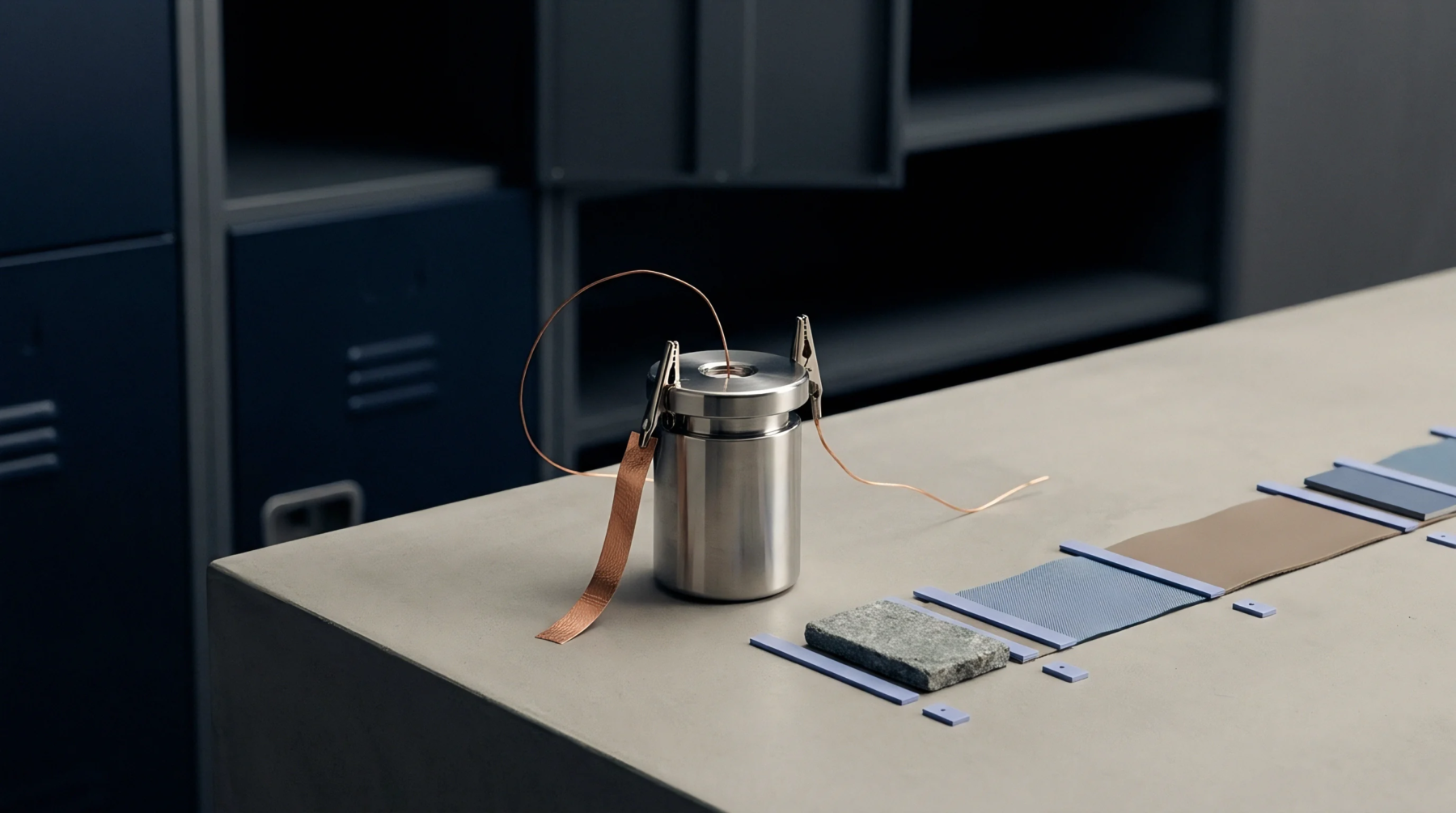
The change in the dimensions of a test fixture due to temperature fluctuations introduces a false displacement signal into long-term mechanical measurements. This thermal expansion drift can mask the true swelling or creep of the specimen under test. When testing takes place over days or weeks, even small ambient temperature shifts cause the steel or aluminum frame to expand or contract.
Software correction or temperature control is needed to isolate the specimen’s behavior.
Error Mitigation
Enclosing the test system in a temperature-controlled chamber reduces the fluctuation of the frame dimension. To correct for the remaining thermal expansion drift, a zero-expansion reference rod can be tested alongside the specimen. This reference measurement provides a baseline of the thermal behavior of the fixture.
The system software then subtracts this baseline from the specimen displacement data in real time.
Sensor Behavior
Displacement sensors themselves can be affected by temperature variations. Manufacturers of linear variable differential transformers specify the thermal coefficient of their sensors to allow for compensation. Correcting both the sensor and the frame drift ensures high measurement accuracy.
Material Selection
Using low-expansion alloys like Invar for the structural components of the test fixture minimizes the magnitude of the drift. This choice reduces the reliance on software compensation algorithms.