Hard Carbon Anode Precursor Selection and Industrial Carbonization
Select precursors by carbon yield and ash content, then carbonize at 1300°C with CVD pore sealing to optimize closed porosity and initial coulombic efficiency.
Feedstock
Sodium-ion cell development shifts anode procurement away from natural and synthetic graphite toward non-graphitizable carbons. The raw precursor dictates carbon matrix architecture, initial coulombic efficiency, tap density, and the ultimate economic floor of the cell. Three distinct precursor streams supply the bulk of hard carbon production: carbohydrate-rich biomass, fossil-derived pitches, and synthetic thermosetting resins.
Each stream enforces trade-offs among carbon yield, residual mineral ash, and internal pore structure.
Biomass origins dominate commercial sodium-ion battery programs due to precursor availability and low base cost. Coconut shells, walnut shells, sucrose, and agricultural wastes contain complex carbohydrate matrices of cellulose, hemicellulose, and lignin. Coconut shell delivers a naturally dense cellular morphology that resists excessive microstructural expansion during pyrolysis.
The resulting carbon yields run between 25 percent and 32 percent of dry mass. Lignin isolated from paper pulp processing offers carbon yields near 40 percent, yet its high oxygen content demands aggressive devolatilization. Residual biogenic minerals present operational hazards during processing.
Fossil sources, specifically coal tar pitch and petroleum asphalt, offer high carbon yields ranging from 55 percent to 70 percent. These materials consist of polycyclic aromatic hydrocarbons that naturally form ordered graphitic domains during heat treatment. Conversion into non-graphitizable hard carbon demands chemical cross-linking before thermal processing.
Air oxidation or liquid-phase nitration between 200°C and 350°C introduces oxygen- or nitrogen-bearing bridges between aromatic fragments. This oxidative stabilization fixes the molecular chains in three dimensions, preventing aromatic lamellae from sliding into graphitic registry during subsequent high-temperature treatment.
Hard carbon produced from unwashed coconut endocarp retains potassium fractions exceeding 800 parts per million, depressing initial coulombic efficiency below 78 percent at a C/10 formation rate.
Synthetic precursors encompass phenolic resins, resorcinol-formaldehyde polymers, and polyacrylonitrile. Phenolic resins undergo three-dimensional cross-linking during condensation polymerization, establishing an amorphous network prior to thermal breakdown. The resulting hard carbon exhibits exceptional purity, with total metallic impurities below 20 parts per million and negligible inorganic ash.
Reversible sodium capacities reliably reach 320 to 350 mAh/g. The commercial drawback sits in the landed precursor invoice. Phenolic resins trade at five to eight times the unit price of refined biomass shells, limiting resin-derived hard carbon to niche high-rate cells or aerospace applications.
Precursor Chemical Architecture and Pyrolysis Metrics
Molecular composition determines thermal response during initial decomposition. The ratios of atomic oxygen to carbon and hydrogen to carbon dictate volatile release patterns, skeletal shrinkage, and final carbon mass recovery.
| Precursor Class | O/C Atomic Ratio | H/C Atomic Ratio | Ash Content (wt%) | Carbon Yield (wt%) | Tap Density (g/cm³) |
|---|---|---|---|---|---|
| Coconut Shell Endocarp | 0.72 | 1.45 | 0.80 to 2.20 | 28 to 33 | 0.85 to 0.95 |
| Pine Wood Kraft Lignin | 0.58 | 1.20 | 1.50 to 4.50 | 36 to 42 | 0.55 to 0.70 |
| Cross-Linked Coal Tar Pitch | 0.12 | 0.68 | 0.05 to 0.20 | 58 to 66 | 0.95 to 1.05 |
| Resol-Type Phenolic Resin | 0.22 | 1.05 | 0.01 to 0.03 | 45 to 52 | 0.72 to 0.82 |
| Refined Sucrose Monomer | 0.91 | 1.83 | 0.01 to 0.05 | 18 to 24 | 0.60 to 0.72 |
Precursor choices establish strict particle morphology limits. Biomass requires extensive mechanical comminution prior to thermal entry. Coarse crushing, jet milling, and classification down to an average particle size (D50) between 6 and 10 microns generate irregular, angular particles with broad particle size distributions.
Phenolic resins allow emulsion polymerization into uniform spherical particles, providing tight control over electrode packing and electrolyte wetting. Pitch demands hot-melt pulverization or liquid-phase atomization. If pitch stabilization fails to achieve complete cross-linking throughout the core of each particle, core domains undergo catalytic graphitization, generating localized soft carbon pockets that trigger rapid capacity fade during extended cycling.
Procuring raw feedstocks with uncontrolled ash fractions forces downstream acid demineralization costs into the bill of materials, erasing initial raw material cost advantages through chemical consumption and hazardous waste treatment.
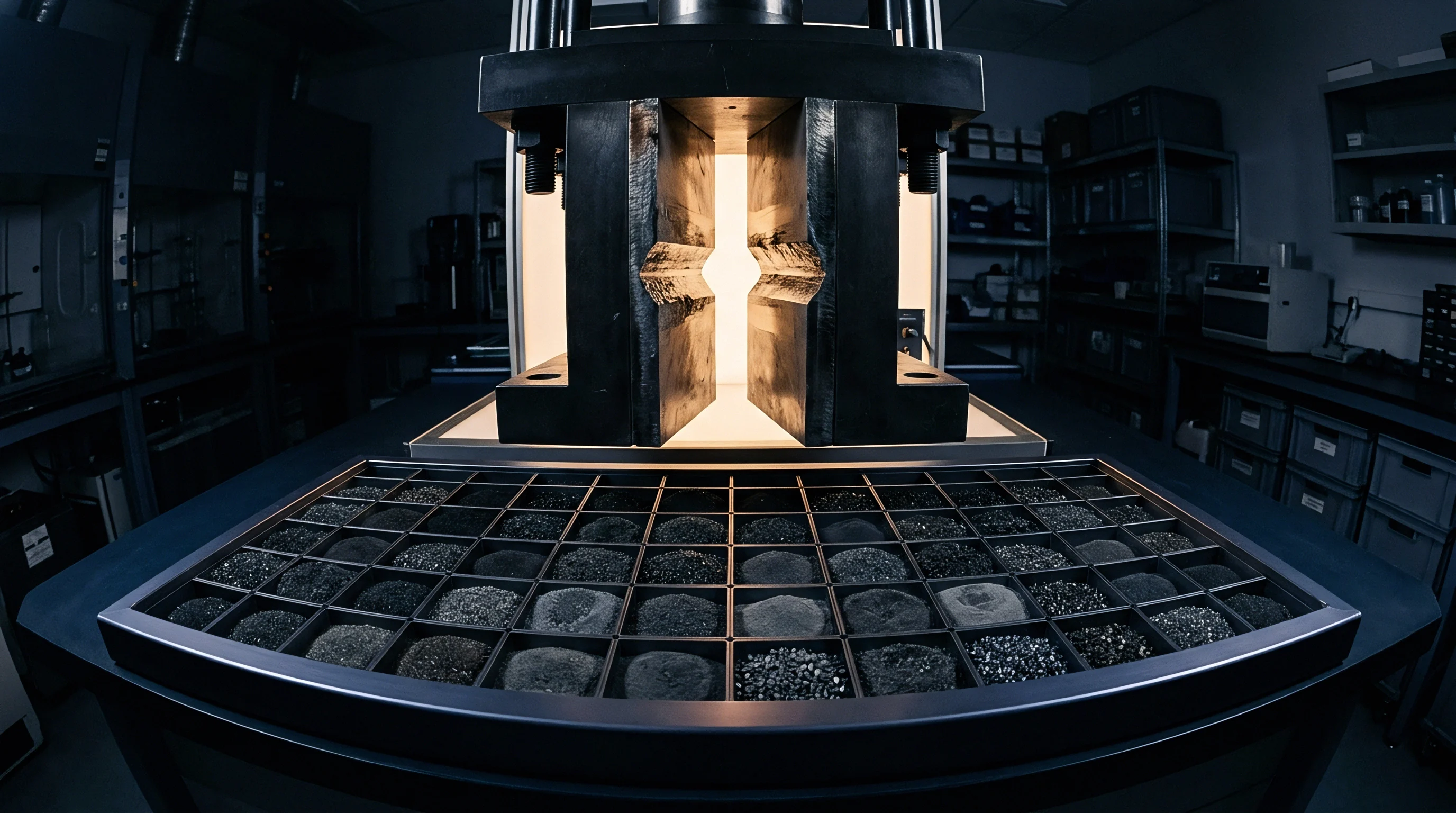
Kiln
Thermal conversion separates into two distinct mechanical and chemical regimes: low-temperature devolatilization below 600°C and high-temperature carbonization between 1100°C and 1400°C. Industrial operations isolate these steps inside dedicated processing equipment to prevent contamination of the high-temperature zone by condensable pyrolysis vapors. The low-temperature thermal process drives off moisture, volatile organic acids, carbon monoxide, carbon dioxide, methane, and condensable tars. The off-gas stream presents significant condensation hazards, requiring continuous trace heating on exhaust ducting to prevent tar accumulation and fire risk.
Rotary tube furnaces process the bulk of low-temperature precursor streams. Direct-fired or indirectly heated rotary kilns maintain continuous mass movement through an inclined cylinder. Flight designs inside the barrel lift and shower the raw particulate through the hot purge gas, promoting uniform heat transfer across the bed.
The sweep gas, consisting of industrial nitrogen with oxygen content certified below 10 parts per million, evacuates volatile degradation products toward an integrated thermal oxidizer. Purge velocity demands precise calibration. Excessive nitrogen flow sweeps fine particulate out of the hot zone into the exhaust condensors, reducing product yield and clogging filtration infrastructure.
Insufficient sweep velocity allows volatile aromatics to recondense onto cooling carbon surfaces, blocking pores and lowering reversible capacity.
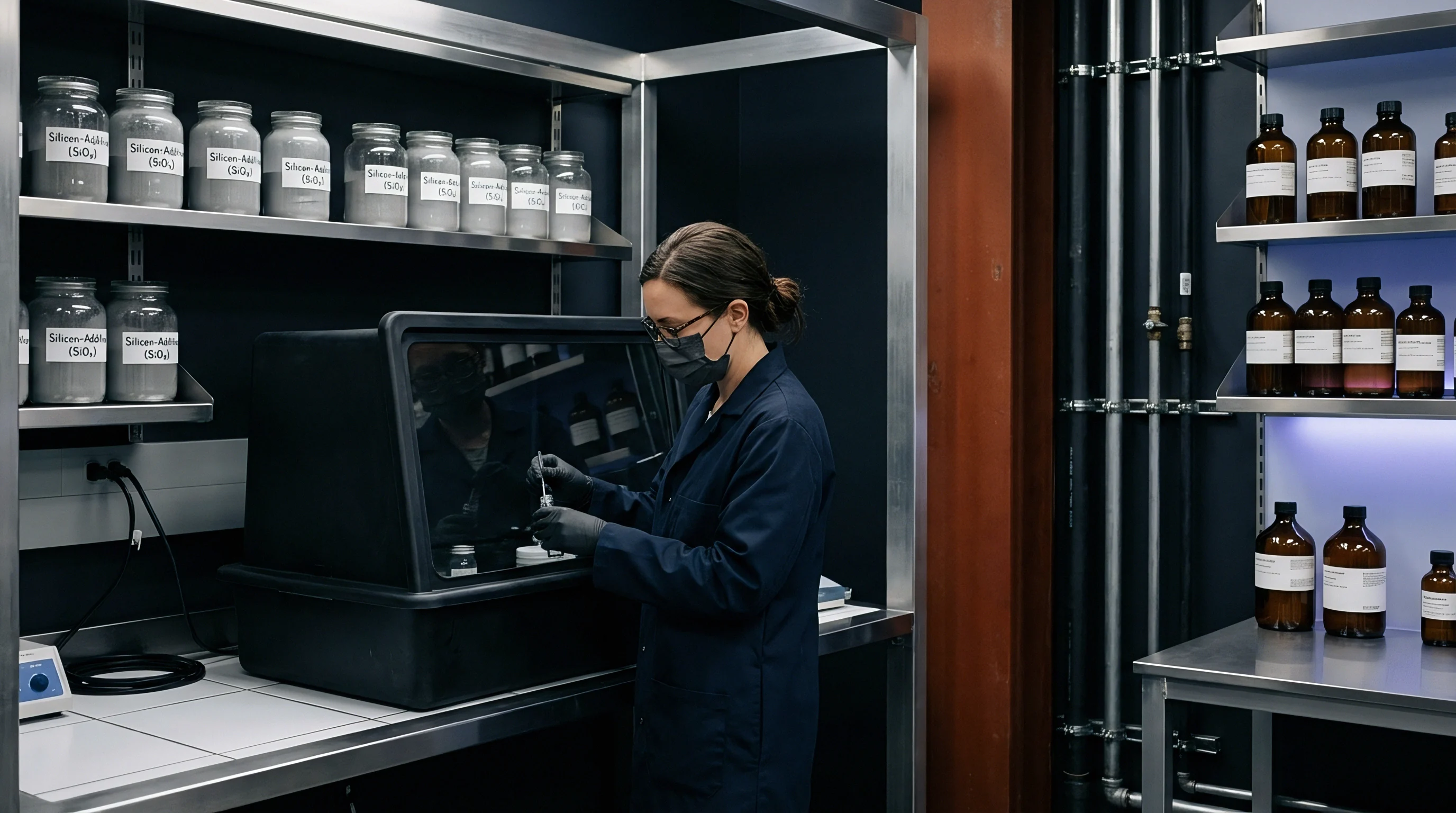
Which Rotary Configuration Controls Residence Time Variations?
Internal flight geometry dictates bed mixing dynamics. Spiral flights drive precursor forward, while radial lifters optimize radiant heat transfer throughout the dynamic particle bed.
- Axial Dam Geometry establishes the dynamic material bed depth inside the rotary tube, maintaining continuous particle hold-up across production throughput fluctuations without inducing local thermal stagnation.
- Rotational Drive Tuning regulates the residence time distribution across the kiln length, holding particle exposure within narrow thermal boundaries to eliminate unpyrolyzed core material.
- Counter-Current Purge Injection sweeps heavy polycyclic tar vapors away from the cooling discharge zone toward high-temperature thermal oxidizers, eliminating surface fouling on exiting precursor granules.
- Multi-Zone Shell Thermocouples measure the outer tube skin temperature to adjust localized external heating elements, correcting radial thermal gradients across the bed to within three degrees Celsius.
High-temperature carbonization takes place inside roller hearth kilns or specialized electric rotary retorts. Roller hearth systems load saggers filled with devolatilized char onto ceramic rollers, advancing them through progressive heating zones under clean inert gas. Sagger loading density directly influences final product consistency.
Deep sagger beds build vertical temperature gradients exceeding 40°C between the outer perimeter and the sagger center line. Carbon particles on the outer edges reach targeted turbostratic ordering, while the core remains under-carbonized. Under-carbonized particles retain surface heteroatoms, lowering cell efficiency.
Atmospheric oxygen excursions above twenty parts per million inside the high-temperature kiln zone trigger preferential etching of closed micropores, halving the low-potential plateau capacity during formation testing.
Temperature control inside the final soak zone governs the electrochemical profile. Thermal soaking at 1300°C typically lasts between two and four hours. The furnace refractory lining must not contain silicon carbide or alumina that outgases transition metals into the process atmosphere.
Trace iron contamination above 50 parts per million catalyzes graphitic crystal growth, degrading non-graphitic disorder. Kiln atmosphere dew points must remain below -40°C. Water vapor at 1300°C functions as an aggressive chemical activator, oxidizing active carbon atoms into carbon monoxide, blowing open closed nanopores, and creating immense specific surface area that consumes active sodium through excessive solid electrolyte interphase formation.
Kiln operators routinely attribute batch-to-batch variations in plateau capacity to external raw material moisture swings rather than inspecting failing heating elements across the middle furnace zones.
Lattice
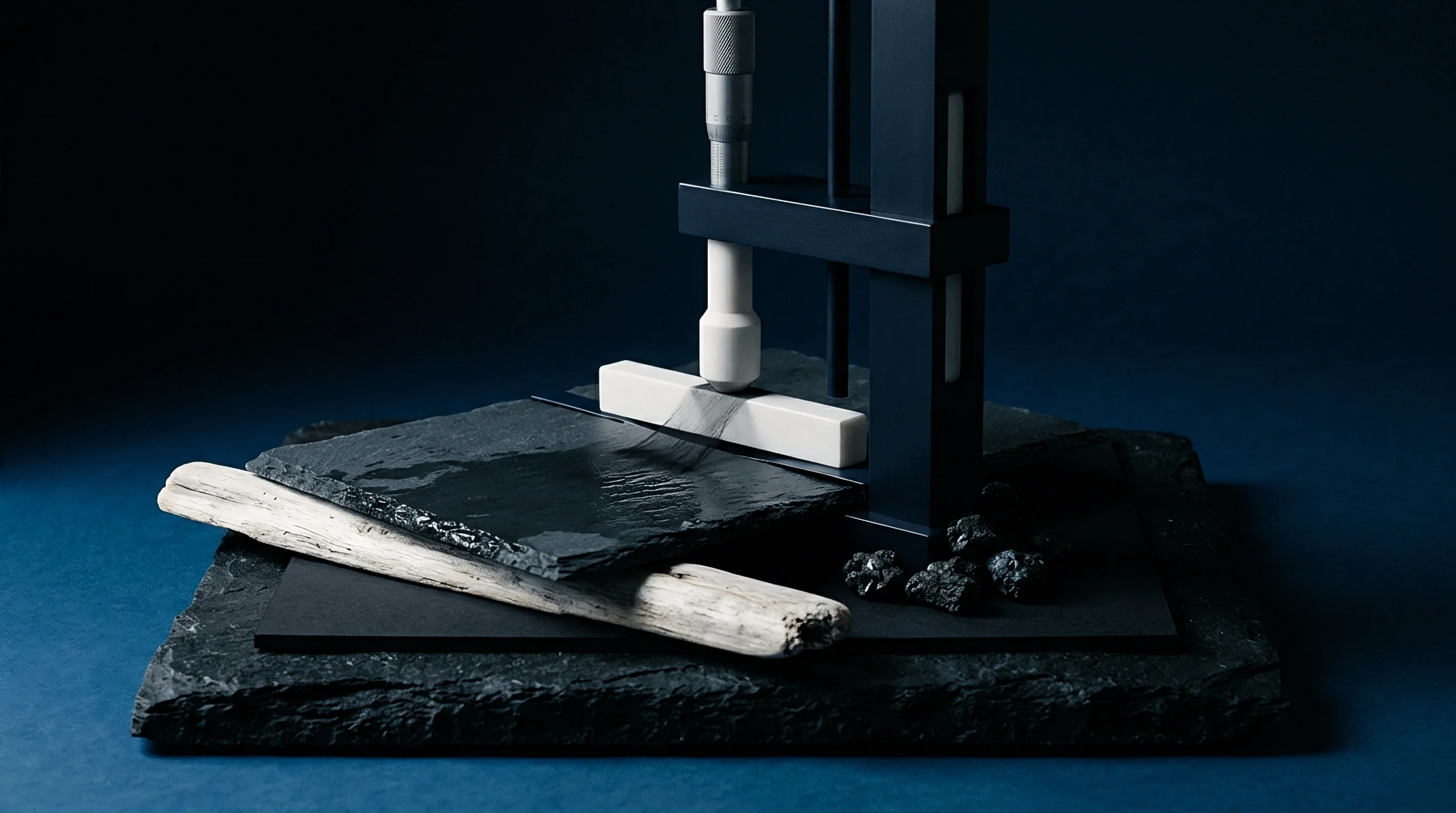
Electrochemical storage inside hard carbon operates across two voltage domains: a sloping region above 0.10 V versus Na/Na+ and a flat plateau region extending from 0.10 V down to 0.01 V. The sloping domain corresponds to sodium-ion adsorption onto defects, oxygen-containing edge sites, and exposed graphene surfaces. The plateau domain reflects sodium insertion between expanded aromatic sheets and pore condensation inside closed internal voids. Controlling carbon lattice parameters determines the distribution between these two capacity mechanisms.
X-ray diffraction tracks the structural evolution of the carbon skeleton. The (002) diffraction peak reveals an average interlayer spacing (d002) between 0.370 nm and 0.400 nm for hard carbon treated at 1300°C. Graphitic carbon exhibits a d002 spacing of 0.335 nm, an interlayer gap too narrow to host bare sodium ions without severe volume expansion and thermodynamic resistance. The expanded spacing in hard carbon allows reversible sodium intercalation between curved, defective graphene sheets.
Small crystalline domains, characterized by lateral crystallite dimensions (La) under 3.0 nm and stacking heights (Lc) under 1.5 nm, prevent structural exfoliation during rapid cycling.
Where Does Sodium Condensation Dominate the Charge Curve?
Sodium-ion storage shifts mechanistically as the operational potential drops below 100 millivolts against pure sodium metal. The flat plateau represents the filling of closed sub-nanometer voids embedded within turbostratic graphene stacks.
Small-angle X-ray scattering (SAXS) quantifies this closed pore architecture. Pores below 2.0 nanometers in diameter, fully sealed from the particle exterior, provide the physical volume necessary for sodium cluster condensation. When carbonization temperatures increase from 1000°C to 1300°C, open micropores collapse as adjacent aromatic sheets cross-link and bend, forming enclosed voids.
At temperatures exceeding 1400°C, the graphitic sheets align and flatten, eliminating internal voids and dropping plateau capacity toward zero. The window for maximum closed porosity remains narrow.
| Treatment Temp (°C) | Interlayer Spacing d002 (nm) | Raman ID/IG Ratio | Closed Porosity (cm³/g) | Sloping Capacity (mAh/g) | Plateau Capacity (mAh/g) |
|---|---|---|---|---|---|
| 900 | 0.398 | 1.25 | 0.012 | 190 | 45 |
| 1100 | 0.388 | 1.12 | 0.045 | 140 | 110 |
| 1200 | 0.382 | 1.02 | 0.078 | 115 | 165 |
| 1300 | 0.376 | 0.88 | 0.115 | 95 | 215 |
| 1400 | 0.368 | 0.79 | 0.062 | 80 | 140 |
| 1600 | 0.352 | 0.54 | 0.018 | 65 | 35 |
Raman spectroscopy tracks carbon lattice defect density through the intensity ratio of the D-band near 1350 cm⁻¹ to the G-band near 1580 cm⁻¹. High carbonization temperatures drive the ID/IG ratio downward, signaling the annealing of localized dangling bonds, point vacancies, and edge dislocations. Annealing reduces the concentration of high-potential adsorption sites, lowering the sloping capacity.
This structural trade-off matters for pack engineering. Sloping capacity provides a continuous, linear voltage change ideal for state-of-charge tracking by the battery management system. Plateau capacity delivers high energy density at a low operating potential, matching the voltage profile demanded by traction inverters.
Balancing these profiles requires precise thermal boundary controls.
The unresolved engineering dispute centers on the precise sodium state inside closed pores: whether sodium exists as dense metallic clusters with neutral charge or as partially ionic intercalants stabilized within quantum-confined nanovoids.
Wash
Biomass and pitch precursors carry inorganic ash that damages cell stability. Coconut shells concentrate potassium, sodium, calcium, magnesium, and silica within their structural tissue. Ash content in unwashed precursor char can exceed 2.0 percent by weight.
If retained into the final anode powder, these elements trigger parasitic electrolyte oxidation and induce binder degradation. Demineralization removes these inorganic fractions before final high-temperature carbonization.
Acid leaching breaks down inorganic mineral phases into soluble salts. Hydrochloric acid solutions, heated between 60°C and 80°C at concentrations of 1.0 to 3.0 molar, dissolve basic metal oxides and carbonates. Silica requires specialized management.
Because silica remains inert to hydrochloric acid, hydrofluoric acid or concentrated hot alkaline washes (such as sodium hydroxide at 80°C) must dissolve residual silica networks into water-soluble silicates. Alkaline leaching adds neutralisation and rinsing stages to prevent alkali-ion contamination. Following chemical digestion, filter presses separate the solid char from the spent leach liquor, followed by multi-stage counter-current washing with deionized water until the wash effluent resistivity reaches 10 megohm-centimeters.
Washing creates fine surface pores that increase nitrogen-accessible surface area. Nitrogen adsorption measurements using the Brunauer-Emmett-Teller (BET) method on freshly leached chars often show surface areas between 200 and 600 m²/g. Exposing this high surface area to battery electrolytes results in immediate commercial failure.
The initial coulombic efficiency drops below 60 percent as active sodium ions and liquid solvent molecules consume themselves building an expansive solid electrolyte interphase across every exposed pore wall. Final carbon powder requires a specific surface area below 5.0 m²/g.
Chemical vapor deposition using toluene gas at 850°C seals surface entry channels into closed internal pores, dropping nitrogen BET surface area below 2.5 square meters per gram.
Surface modification seals open entry throats into internal pores while leaving the core closed porosity intact. Two primary industrial routes achieve this surface sealing: liquid pitch coating and chemical vapor deposition (CVD). In liquid pitch coating, low-melting petroleum pitch dissolves in an organic solvent or blends dry with the carbon powder, coating each grain in a thin organic layer.
Subsequent pyrolysis at 900°C to 1100°C converts the outer pitch into a dense, non-porous carbon shell. CVD systems fluidize the hard carbon particulate inside a vertical reactor, injecting vaporized methane, propane, or toluene at 800°C to 1000°C. Pyrolytic carbon cracks onto the particle surfaces, depositing inside micro-fissures and neck openings. The BET specific surface area drops below 3.0 m²/g, elevating initial coulombic efficiency above 88 percent.
Incoming cell purchase agreements enforce strict contamination baselines through testing protocols governed by standard IEC 62660-1, which invalidates lot acceptance whenever water-extractable chlorides or residual ash fractions exceed 150 parts per million.

Yield
Mass conversion efficiency and electrical energy consumption determine the landed cost of hard carbon anodes. The industrial production chain involves multiple process steps with compounding yield losses: raw material drying, crushing and sizing, low-temperature devolatilization, acid demineralization, high-temperature thermal carbonization, secondary jet milling, surface coating, and final screening. Sourcing engineers track mass balance across every step to calculate the total raw precursor required per metric ton of battery-grade active powder.
Total production yield varies drastically by precursor chemistry. Producing one ton of battery-grade hard carbon from coconut shell requires approximately 4.5 to 5.5 tons of clean, dried raw endocarp. Devolatilization drives off 65 percent of the mass as water and combustible bio-gas.
Milling and de-ashing filtration induce mechanical losses between 8 and 12 percent. High-temperature carbonization loses an additional 5 to 8 percent through skeletal densification and trace heteroatom off-gassing. Final classification and surface-coating runs extract a further 10 percent as out-of-spec particle fines.
Phenolic resins deliver higher thermal yields near 45 percent, but their high initial purchase cost maintains a high total material cost per kilogram.
Energy consumption accounts for a substantial fraction of manufacturing expenses. Graphitizing synthetic graphite anodes requires temperatures between 2800°C and 3100°C inside Acheson or continuous graphitization furnaces, consuming 10 to 14 kilowatt-hours of electrical power per kilogram of finished product. Hard carbon carbonization terminates at 1300°C, lowering electrical consumption to 3.5 to 5.5 kilowatt-hours per kilogram.
This thermal advantage balances the lower mass yield of biomass precursors, shifting cost models in favour of hard carbon in locations with elevated grid tariffs.

Critical Quality Attributes for Incoming Hard Carbon Lots
Incoming inspection of anode material lots relies on analytical verification to screen out poorly carbonized or contaminated raw batches before cell winding.
- Particle Size Distribution (D10, D50, D90) measured via laser diffraction ensures uniform slurry rheology and prevents large agglomerates from piercing thin battery separator films.
- Inductively Coupled Plasma Mass Spectrometry screens for residual iron, copper, and nickel content, holding transition metal contaminants below twenty parts per million to avoid internal micro-shorts.
- Tap Density Determination confirms the packing efficiency of the powder under standardized mechanical tapping, holding minimum densities above 0.85 grams per cubic centimeter.
- Single-Point BET Surface Area measures nitrogen gas adsorption at cryogenic temperatures to identify unsealed open pores that depress initial coulombic efficiency.
A worked mass balance analysis clarifies the raw material input requirements across typical plant operations. Producing a 40-tonne commercial lot of finished, surface-coated hard carbon anode powder from a coconut shell baseline requires starting with 200 tonnes of raw, dried shell input. The low-temperature devolatilization kiln converts this input into 64 tonnes of raw bio-char.
Chemical demineralization, washing, and mechanical drying recover 57 tonnes of washed particulate, losing 7 tonnes to dissolved ash and mechanical filtering fines. High-temperature carbonization at 1300°C shrinks this mass down to 45.6 tonnes through lattice compaction. Jet milling, CVD surface treatment, and final classification down to a target D50 of 8.5 microns yield the final 40 tonnes of qualified powder, sending 5.6 tonnes of undersized fines back to secondary boiler fuel.
The cumulative process yield sits at 20.0 percent.
Hard carbon powders displaying high surface areas invariably consume active cathode inventory during the first charging cycle.