Structuring Data Telemetry Protocols for Cold Storage Fleet Warranty Enforcement
Subzero fleet battery warranties require high-frequency edge telemetry capturing transient overpotentials to defend claims against lithium plating denial excuses.


Frost
Sub-zero operating environments alter battery degradation pathways, creating chemical shifts that standardized room-temperature warranties fail to capture. Standard commercial cell datasheets specify performance envelopes at twenty-five degrees Celsius, quoting cycle life expectations between two thousand and five thousand cycles to eighty percent state of health. Refrigerated transport fleets, pharmaceutical delivery vans, and industrial cold storage automated guided vehicles operate between minus thirty degrees Celsius and four degrees Celsius.
Under these thermal conditions, internal cell resistance increases by orders of magnitude while reaction kinetics slow significantly. Standard telemetry data payloads configured for over-the-road trucking fail to log the high-frequency voltage spikes and transient lithium plating conditions that destroy cold-chain packs within their first eighteen months of service.
When lithium-ion cells charge at sub-zero temperatures, solid-state diffusion of lithium ions into the graphite anode matrix drops drastically. Overpotential at the anode interface drives the potential of the graphite below zero volts relative to the lithium reference electrode, causing metallic lithium to deposit directly on particle surfaces rather than intercalating cleanly into the host structure. This plating consumes active lithium inventory, degrades electrolyte solvents, and generates dendritic structures that pierce separator membranes.
A pack exposed to a C-over-two charge current at minus fifteen degrees Celsius without adequate preheating loses three percent of its total capacity in ten charge events, yet standard five-minute telemetry logging intervals miss the brief overpotential spikes that presage this loss. Fleet managers receive packs that degrade three times faster than laboratory projections while cell manufacturers reject warranty claims by citing unmonitored operation outside nominal temperature windows.

Subzero Charging Kinetics and Anode Plating
Refrigerated warehouse fleets rely heavily on Lithium Iron Phosphate (LFP) and Nickel Manganese Cobalt (NMC) chemistries due to energy density and thermal stability requirements. Electrochemistry in frozen environments behaves predictably when analyzed at the microstructural level. LFP cells exhibit a flat discharge plateau around three point two volts, but their charge transfer resistance surges below zero degrees Celsius.
At minus twenty degrees Celsius, charge transfer resistance accounts for over eighty percent of total pack impedance. Applying charge current to an unheated LFP cell at minus ten degrees Celsius shifts the intercalation voltage curve upward, dropping the anode potential below the thermodynamic threshold for lithium reduction within seconds.
Lithium plating severity depends on three interacting variables: instantaneous current density, local cell temperature, and instantaneous state of charge. A cell charging at eighty percent state of charge at minus five degrees Celsius experiences higher plating propensity than the same cell charging at twenty percent state of charge under identical thermal conditions. Telemetry protocols structured for warranty defense track these three variables simultaneously at high temporal resolution; logging temperature alone leaves the buyer vulnerable during warranty disputes.
Disputed capacity loss claims often turn on whether fleet operators initiated charge commands before thermal stabilization. Detailed time-series logs showing current ramps paired with thermistor readings expose whether thermal management systems reached safe operating thresholds before current entry.
Cell design choices complicate this dynamic further. Thicker electrodes engineered for high energy density suffer severe ion concentration gradients across their thickness during cold operation. Ions accumulate near the separator face, creating localized overpotentials that trigger dendrite growth while the core of the electrode remains underutilized.
Electrolyte formulations containing high concentrations of ethylene carbonate freeze or turn viscous below zero degrees Celsius, suppressing ionic conductivity. Sourcing contracts specifying low-temperature performance call for electrolyte additives like fluoroethylene carbonate or low-viscosity carboxylate co-solvents. Telemetry logs must document cell voltage relaxation behavior following charge termination, where rapid voltage drops immediately post-charging indicate severe concentration polarization and active metallic lithium re-intercalation or reaction with electrolyte components.

Thermal Gradients across Cold Fleet Modules
Temperature distribution across a heavy battery module in a cold storage vehicle is never uniform. Outer cells exposed to ambient freezer air at minus twenty-five degrees Celsius lose heat rapidly, while internal cells insulated by neighboring modules retain heat generated during high-discharge maneuvers. Thermal imaging of operational packs reveals temperature deltas exceeding twelve degrees Celsius across a single series string of forty cells.
This thermal gradient creates severe current imbalance in parallel cell groups, forcing cold cells to operate at dangerous overpotentials while warm cells carry excess current loads.
Single-point temperature logging per pack creates legal blind spots in warranty enforcement dossiers. A pack reporting an average temperature of five degrees Celsius hides individual cells operating at minus eight degrees Celsius. When these cold cells undergo localized lithium plating, the whole pack capacity drops to match the degraded parallel block.
Warranty adjusters exploit single-point sensor placements to deny coverage, alleging that pack failure resulted from localized thermal isolation failures rather than cell manufacturing defects. Structuring effective telemetry protocols requires placing surface-mounted thermistors at the outer corners, geometric center, and busbar connection points of every module.
Electrolyte decomposition products form a secondary Solid Electrolyte Interphase (SEI) layer that permanently traps lithium ions. In cold environments, mechanical stress caused by volume changes in graphite particles fractures the existing fragile SEI layer. Fresh lithium reacts with electrolyte solvent to repair the cracks, causing continuous loss of active lithium inventory and irreversible capacity fade.
Dynamic internal resistance measurement via telemetry registers this degradation before capacity loss manifests in operational range metrics. BMS telemetry protocols calculate real-time internal resistance during rapid acceleration or fast-charge initiation by recording the ratio of change in voltage to change in current over a fifty-millisecond window.
Charging LFP cells below minus ten degrees Celsius at rates exceeding C-over-five induces metallic lithium dendrite formation within two hundred operating cycles.
Failure to capture sub-zero thermal gradients and high-frequency voltage responses in telemetry logs leaves fleet operators unable to prove that cell degradation occurred under covered operating conditions, forcing full absorption of pack replacement costs when early fleet degradation strikes.

Payload
Data payload structure dictates whether a fleet operator can enforce warranty terms or remain trapped in prolonged supplier disputes. Standard telemetry gateways transmit aggregate metrics: average pack voltage, average pack temperature, state of charge, and total current. These aggregate summaries smooth out cell-level anomalies that trigger premature capacity fade.
When an individual cell inside a cold storage pack drops to two point zero volts under heavy load while the pack average remains at three point two volts, standard telemetry logs show normal operating parameters. The damaged cell degrades the entire series string, yet the fleet owner possesses no granular data to establish manufacturing cell inconsistency versus operational abuse.
Telemetry byte allocation must balance cellular bandwidth costs with data granularity needed for legal evidence. Cold storage fleets operating across international borders incur substantial roaming data expenses. Edge-computing microprocessors within the battery management system solve this constraint by executing continuous statistical analysis locally and transmitting high-density structured payloads.
Instead of dumping raw one-hertz data streams over cellular links, the edge processor tracks moving window minimums, maximums, standard deviations, and electrochemical anomaly flags, packaging these into compact binary frames signed with cryptographic hashes.
CAN Bus Signal Architecture for Subzero Monitoring
Controller Area Network (CAN) bus protocols inside cold storage battery packs run at bit rates between two hundred fifty and five hundred kilobits per second. The physical layer faces continuous thermal cycling from minus thirty degrees Celsius inside freezer units to thirty-five degrees Celsius on outdoor loading docks. Moisture condensation inside enclosure seals threatens signal integrity through capacitive loading and intermittent bus errors.
Standard CAN 2.0B frames provide eight bytes of payload space per message, requiring structured signal multiplexing to transmit cell-level health metrics without overwhelming bus bandwidth.
Designing telemetry payloads for warranty defense requires reserving specific CAN message IDs for low-temperature operating flags. Frame 0x18FF014B carries individual cell extreme values: the lowest cell voltage, highest cell voltage, lowest thermistor reading, and highest thermistor reading, along with the precise physical cell ID numbers associated with those extremes. This allows auditing tools to trace recurring cell failures back to specific serial numbers and manufacturing lot positions.
Frame 0x18FF024B carries dynamic impedance values computed during automated current steps. Transmitting cell extreme IDs every five hundred milliseconds ensures that brief voltage drops during cold-start vehicle maneuvers enter the permanent record.
Modern CAN FD protocols expand payload capacity to sixty-four bytes per frame, allowing simultaneous transmission of multi-node thermal matrices. In cold-chain fleet logging specs, switching from classical CAN to CAN FD reduces message arbitration overhead by forty percent while increasing thermal mapping density by a factor of four. The extra payload room permits embedding timestamped error count counters directly into every frame, proving that data logs were not backfilled or modified after a pack failure event occurred.
Edge Calculation of Cell Impedance and Plating Risk
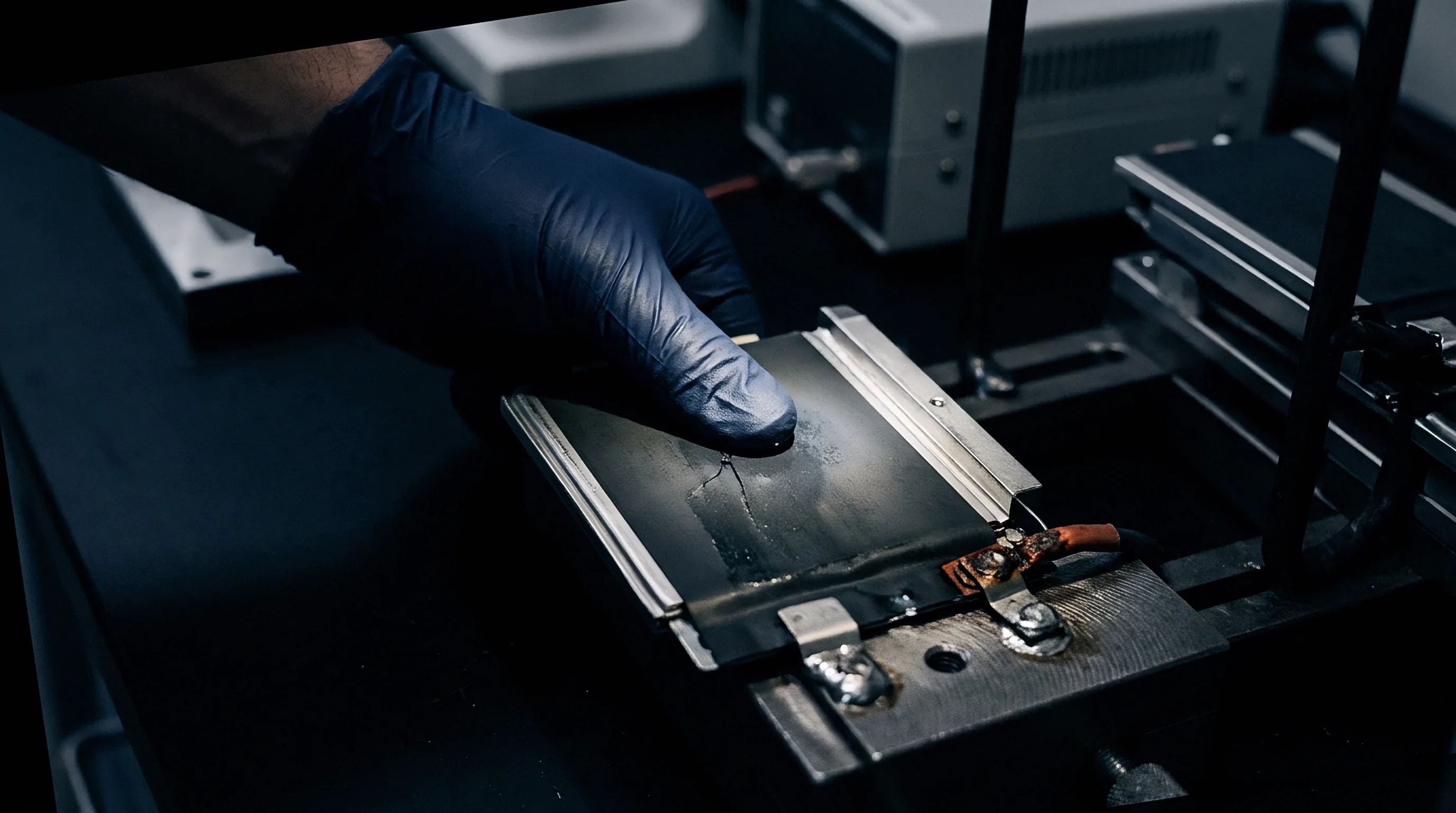
Edge processors inside modern battery management systems calculate complex electrochemical health indices in real time. Rather than raw voltage and current arrays, the edge algorithm computes the instantaneous derivative of voltage with respect to current during charge start events. A rapid increase in effective resistance at temperatures below zero degrees Celsius triggers an internal warning bit.
The system logs a high-frequency telemetry burst storing fifty consecutive data points captured at ten-millisecond intervals around the trigger event.
Plating risk metrics combine instantaneous cell temperature, state of charge, and charge C-rate into a single numerical index. When this index exceeds a pre-set threshold defined by the cell manufacturer limits, the edge processor initiates high-frequency logging and increments an immutable breach counter. This counter resides in write-once flash memory inside the BMS hardware.
Fleet operators read these breach logs during routine maintenance audits to identify drivers or charging stations that violate sub-zero operating rules before catastrophic pack degradation occurs.
High-capacity non-volatile memory chips mounted on the BMS board buffer data during cellular blackouts. Cold storage warehouses act as Faraday cages, blocking wireless telemetry transmission while vehicles operate deep inside refrigerated rooms. The onboard buffer stores up to ninety days of high-frequency anomaly records using non-volatile flash memory rated for operation down to minus forty degrees Celsius.
When the vehicle exits the cold room and reconnects to the fleet gateway, the buffered frames transmit via secure encrypted protocols without loss of temporal continuity.
- Trigger Threshold Identification ~ Battery management systems capture voltage spikes within ten milliseconds of charge current initiation at sub-zero temperatures.
- Edge Packet Compression ~ Onboard processors aggregate cell delta values to preserve storage memory without discarding peak voltage transients.
- Local Non-Volatile Buffering ~ Flash storage units preserve high-frequency telemetry during cellular blind spots across international transit routes.
- Gateway Cryptographic Signing ~ Fleet telemetry hardware appends SHA-256 hashes to incoming sensor frames before wireless transmission.
- Cloud Ingestion Verification ~ Central servers validate payload checksums to confirm telemetry continuity before updating life-decay models.
Unbuffered telemetry packets dropped during loss of cellular connection obscure low-temperature charge events that void pack performance coverage.
Missing telemetry periods during warranty disputes are often attributed to unmonitored charging violations conducted by warehouse staff using unapproved fast chargers.

Audit
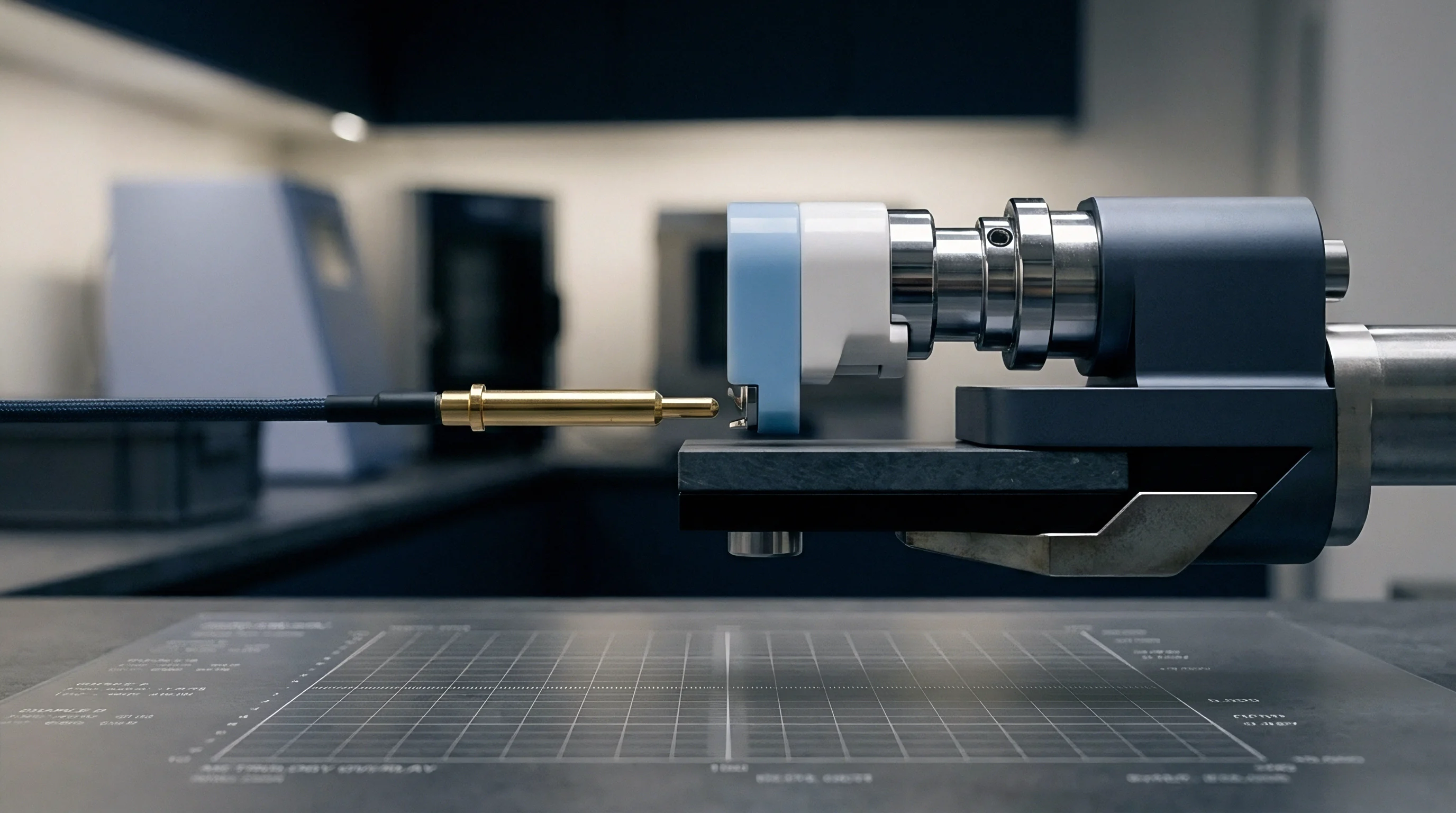
Field verification of battery telemetry integrity requires strict hardware and software inspection procedures. Telemetry data is only as valid as the physical sensors and security protocols generating it. In high-stakes fleet warranty disputes, telemetry authenticity is routinely challenged on grounds of sensor drift, firmware corruption, or operator tampering.
A defensible verification protocol establishes an unbroken chain of custody for every telemetry frame, from physical sensor leads to cloud database entries.
Hardware audits begin at the physical battery interface. Temperature sensors embedded within cold storage packs experience severe thermal stresses that degrade sensor accuracy over time. Negative Temperature Coefficient (NTC) thermistors uncalibrated after repeated thermal cycling exhibit measurement drift up to three degrees Celsius.
In sub-zero environments, a three-degree calibration shift causes the BMS to miscalculate lithium plating boundaries, allowing high-rate charging at actual temperatures far colder than reported values. Verification protocols mandate annual thermistor recalibration checks against calibrated platinum resistance thermometers during scheduled maintenance windows.

Can Cryptographic Data Logs Overcome Pack Tampering?
Tamper prevention begins with securing the physical and digital interfaces of the battery management system. Vehicle operators facing downtime penalties sometimes attempt to bypass BMS thermal interlocks by installing resistor networks in parallel with external thermistors, tricking the controller into registering safe operating temperatures when packs are frozen. Modern telemetry systems combat hardware spoofing by measuring sensor circuit impedance alongside raw temperature values.
An artificial resistor network alters the expected loop impedance, triggering an immediate hardware fault flag within the signed diagnostic log.
Firmware integrity forms the second layer of defense against data falsification. Telemetry gateways execute cryptographically signed microcode authenticated via secure boot loaders. If unauthorized personnel attempt to flash modified firmware designed to hide operational breaches or erase historical error logs, the hardware cryptographic engine revokes memory access keys and locks the telemetry buffer.
Public key infrastructure implementations assign each battery pack a unique hardware device certificate burned into protected silicon during manufacturing. Telemetry payloads uploaded to cloud servers are signed using private keys stored within hardware security modules, rendering post-hoc data manipulation computationally impossible.
Cloud database ingestion pipelines enforce strict timestamp audit rules. Storage systems verify that arriving data frames follow monotonically increasing hardware counter sequences. Frame sequence gaps indicate dropped data transmissions, hardware resets, or deliberate power disconnection events designed to suppress violation logs.
Database algorithms flag sequence anomalies automatically, generating exception reports that document missing operational windows with microsecond precision.

Hardware Placement Verification for Thermal Sensors
Physical positioning of thermal sensors inside cold fleet packs determines whether localized sub-zero hotspots are detected or ignored. Auditing sensor placement requires reviewing CAD drawings, cell module assembly instructions, and physical tear-down reports of sampled production units. Thermistors affixed to busbars measure electrical resistance heating rather than cell core temperatures.
Conversely, sensors isolated from cell casings by thick silicone adhesive pads exhibit delayed thermal response times, lagging actual cell temperature shifts by up to fifteen minutes during rapid chilling cycles.
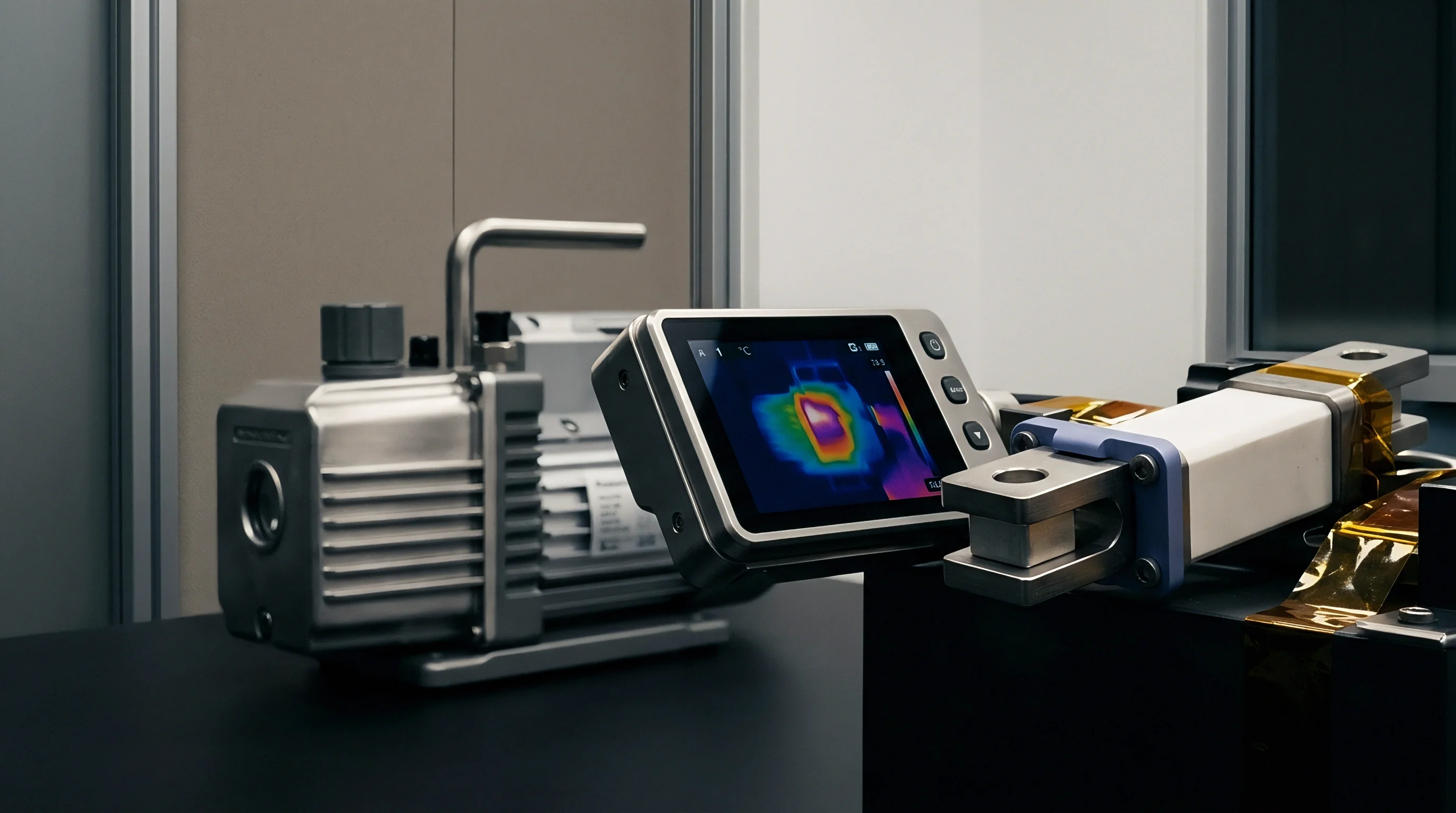
Audit standards specify placing sensors directly against cell pouch walls or cylindrical casing bases using thermally conductive epoxy with minimum thermal conductivity ratings of two point five Watts per meter-Kelvin. Verification teams utilize thermal imaging cameras during fast-charge validation cycles to map pack temperature distributions, matching thermal camera hot and cold spots against live BMS sensor outputs. Any discrepancy exceeding one point five degrees Celsius between camera readouts and BMS telemetry triggers mandatory sensor repositioning and protocol recalibration.
- Connect diagnostic interfaces directly to the internal flash memory header to extract raw uncompressed log files.
- Cross-reference internal temperature sensor timestamps against external ambient climate telemetry recorded by the reefer unit recorder.
- Recalculate cell voltage variance statistics to detect synthetic signal injection or artificially smoothed values.
- Verify firmware cryptographic signatures against the manufacturer released binary checksum dossier.
- Measure impedance drift across internal sensor traces to identify physical bypass resistors installed to manipulate readings.
Clause 14.2 of standard cold-chain warranty agreements voids cell replacement obligations if temperature telemetry sampling drops below ninety-eight percent coverage during active refrigeration cycles.
When physical sensor drift leads to undetected sub-zero overcharging, which party bears the legal liability if the calibration schedule specified in the user manual was followed but the sensor failed within its documented tolerance window?


Arbitration
Resolving warranty disputes over cold storage fleet batteries involves complex technical legal claims where millions of dollars in pack replacement costs hang on telemetry interpretation. Cell manufacturers construct warranty agreements with precise exclusions covering sub-zero charging, over-discharge, high-temperature storage, and excessive thermal gradients. Fleet operators claiming pack failure under standard capacity retention guarantees must present clean telemetry evidence proving full compliance with these operational boundaries.
Without structured telemetry protocols designed specifically for legal arbitration, fleet owners find their warranty claims routinely rejected based on ambiguous data logs.
Dispute resolution processes rely on comparing operational telemetry histories against contractual operational maps. A contract specifying that cells must not undergo charging below minus ten degrees Celsius without preheating requires telemetry evidence showing two distinct variables: heater circuit current draw and cell surface temperature prior to charge contactor closure. If telemetry shows charge current flowing while cell temperatures read minus twelve degrees Celsius, the supplier automatically disallows claims for capacity fade on affected modules.
If telemetry proves that heater elements drew power for twenty minutes, raising cell temperatures to five degrees Celsius before charge current initiated, the burden of proof shifts back to the manufacturer to explain premature capacity loss.

Discrepancy Resolution between Reefer and Pack Loggers
Refrigerated trailer climate controllers and onboard battery loggers record environmental parameters independently. Disputes frequently arise when reefer unit sensors record ambient cargo bay temperatures of minus twenty-five degrees Celsius while battery BMS loggers record module temperatures of minus five degrees Celsius during identical time windows. Reefer logs may indicate ambient operation below certified limits even as BMS loggers show internal pack heating systems functioned correctly.
Arbitration protocols resolve these discrepancies by establishing hierarchical evidence rules. BMS internal thermistor records take precedence over external cargo bay sensors for cell warranty evaluations, provided the BMS hardware passes tamper authentication and calibration checks. External ambient sensors provide secondary context, explaining thermal stress levels placed on pack insulation and active heating systems.
When BMS data logs exhibit unexplainable data gaps, reefer telemetry serves as admissible secondary evidence to reconstruct missing ambient thermal profiles, applying physical heat transfer models to estimate cell exposure conditions during telemetry blackouts.