Subzero Capacity Testing for Lithium Ion Cells
Subzero capacity testing requires calibrated thermal soak times and strict voltage cutoff standardization to prevent artificial capacity truncation and unrecorded lithium plating risks.
Frost

Electrolyte Phase Dynamics and Charge Transfer Obstacles
Subzero temperatures disrupt the transport properties of liquid electrolytes in lithium-ion cells. As the cell cools below freezing, ethylene carbonate solvent mixtures thicken rapidly, driving up dynamic viscosity. This sluggish molecular state cuts liquid-phase ionic conductivity, slowing the transit of solvated lithium ions between cathode and anode.
At the same time, desolvation at the electrode-electrolyte boundary faces a steep energetic barrier; stripping the solvent coordination shell prior to lattice intercalation demands thermal energy the environment cannot supply. Below minus twenty degrees Celsius, charge transfer resistance overtakes solid electrolyte interphase resistance as the dominant component of total pack impedance.
Thick, high-density electrode coatings compound this transport bottleneck. Heavily calendered graphite and dense nickel-rich cathodes present tortuous pore networks that starve inner active particles during high-current pulses. Severe concentration gradients develop across the coating thickness, causing extreme localized polarization.
Active material adjacent to the separator sustains damaging overpotentials while the deeper regions sit largely unutilized, bringing discharge to an abrupt halt long before the active materials reach electrochemical exhaustion.
Standard room-temperature capacity metrics provide zero statistical correlation with delivered energy when ambient conditions drop to minus twenty degrees Celsius.
Anode Plating Mechanics at Low Potentials
Charging in the cold creates severe degradation pathways that degrade both usable capacity and operational safety. Because lithium intercalation kinetics into graphite decay far more rapidly than the thermodynamic potential for lithium reduction, forced charging currents quickly outpace the intercalation rate. The graphite anode potential drops below zero volts against the lithium reference, causing metallic lithium to deposit directly on particle exteriors instead of intercalating into the carbon lattice.
This plated metal forms high-surface-area mossy films or crystalline dendrites that react with the electrolyte, consuming active lithium inventory and forming passivating resistive layers. Repeated cold charging accelerates irreversible capacity loss and raises the risk of dendrites piercing the separator to create internal shorts. Discharge carries far fewer safety risks, though high C-rates in severe cold can still induce microcracking in cathode particles under steep intra-particle stress gradients.
Electrochemical stability varies substantially by cathode choice and electrolyte chemistry. Formulations using low-viscosity co-solvents like ethyl acetate or fluoroethylene carbonate preserve fluid transport down to minus forty degrees Celsius. Similarly, synthetic graphite treated with specialized surface coatings or blended with amorphous silicon lowers the desolvation activation energy, damping the localized overpotentials that trigger metallic plating.

Chamber
Thermal Soak Dynamics and Sensor Calibration
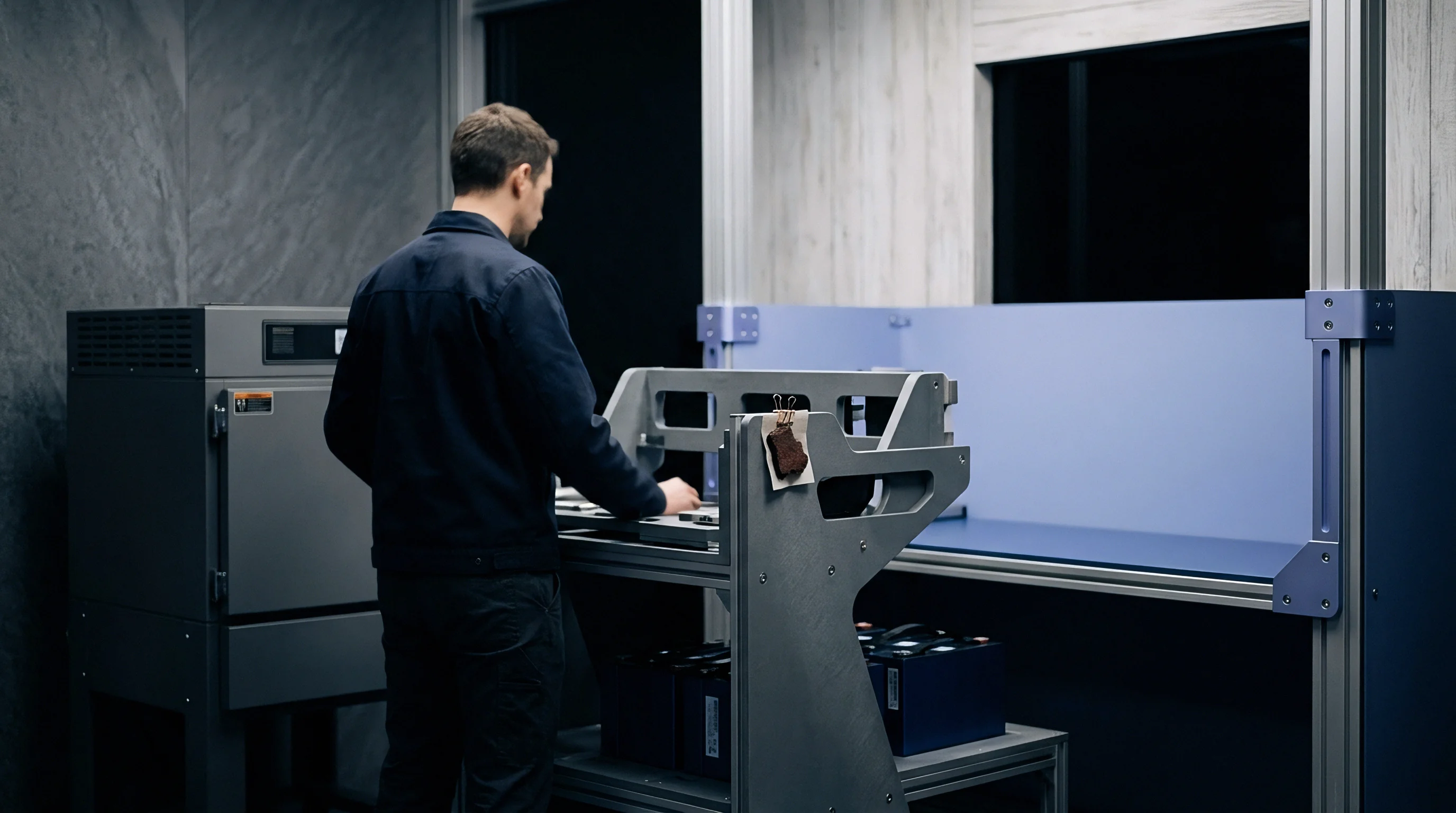
Reliable subzero testing depends on long dwell periods to bring the cell core into true equilibrium with the chamber. The air temperature reaches the setpoint hours before the internal mass of a prismatic or large cylindrical cell cools through. Beginning a discharge cycle before the core reaches equilibrium yields misleadingly high capacity figures supported by lingering heat from room-temperature storage.
Sensor placement must track the conductive pathways of greatest thermal mass. Thermocouples taped to thin aluminum cans track air adjustments in minutes while missing deep internal gradients. Placing calibrated sensors directly on the terminal posts offers a more accurate indication of core temperature, since the heavy copper and aluminum current collectors conduct internal heat straight outward.
Soak schedules must scale with overall cell volume and terminal mass.
| Cell Format | Nominal Ah | Chamber Setpoint (°C) | Minimum Soak Duration (Hours) | Core-to-Surface Delta at Test Start (°C) |
|---|---|---|---|---|
| 18650 Cylindrical | 3.5 | -10 | 2.5 | < 0.3 |
| 21700 Cylindrical | 5.0 | -20 | 3.5 | < 0.2 |
| Pouch Cell (8mm thickness) | 20.0 | -20 | 4.0 | < 0.2 |
| Prismatic Aluminum (30mm) | 100.0 | -30 | 8.0 | < 0.1 |
| Prismatic Heavy (50mm) | 280.0 | -40 | 12.0 | < 0.1 |
Which Environmental Specifications Control Test Repeatability?
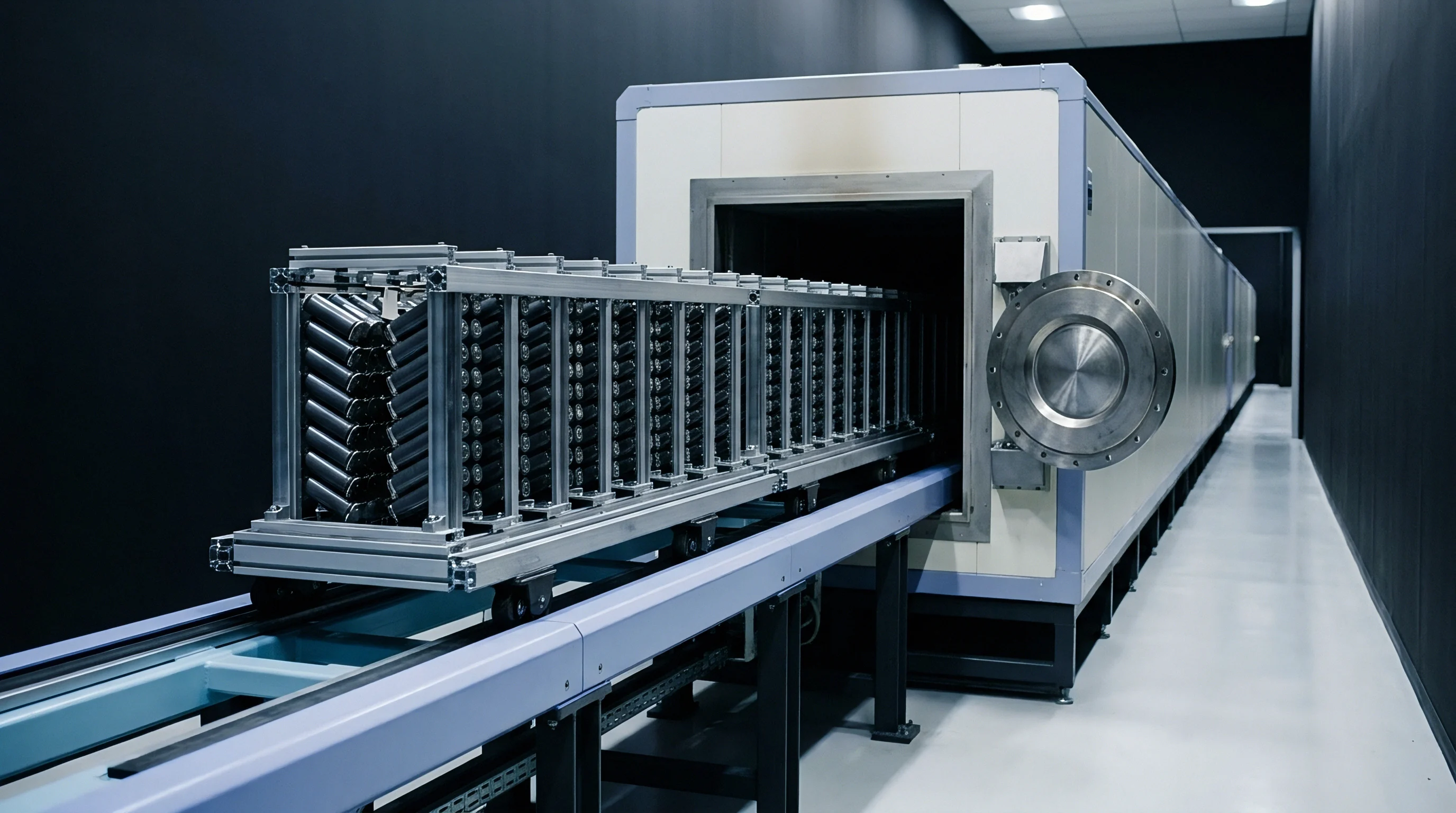
Chamber airflow velocity distorts low-temperature discharge measurements if left unregulated. High-velocity forced convection without proper baffling strips surface heat off discharging cells, suppressing internal ohmic heating and understating field performance. A working cell generates internal heat proportional to current squared times internal resistance; sweeping that heat away artificially deepens the operating voltage drop.
Stagnant air introduces the opposite bias by letting surface temperatures climb during moderate or high discharge rates. A cell soaked to minus twenty degrees Celsius can self-heat to minus five degrees internally over a one-hour run, improving ionic transport and producing an inflated discharge capacity. Repeatable test protocols require recorded specifications for chamber air speed, spacing geometries, and harness insulation.
IEC 61960 specifies a ambient thermal soak of no less than sixteen hours for heavy industrial secondary lithium cells prior to low-temperature discharge verification.
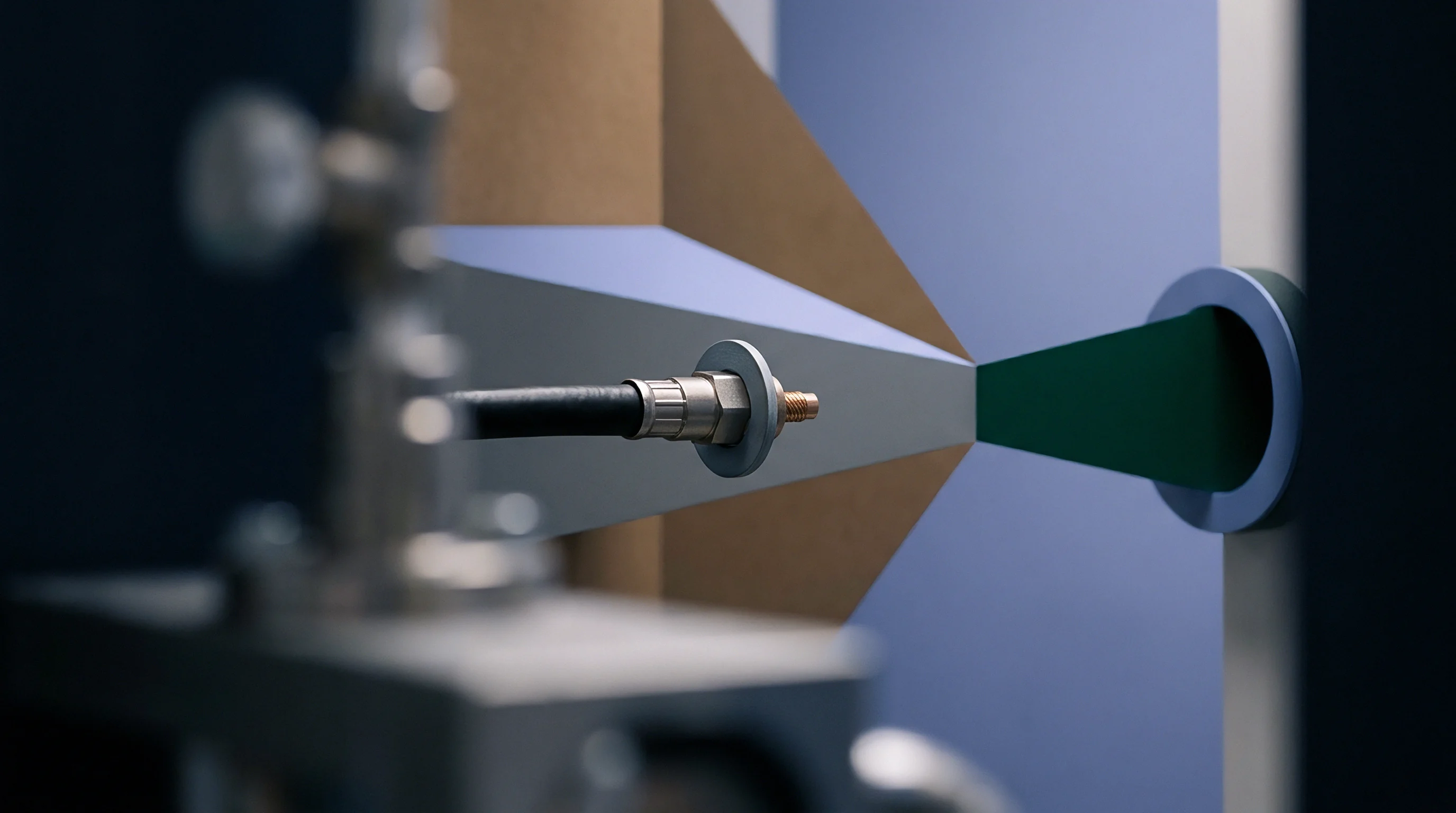
Fixturing requires thermal breaks so test bench cables do not turn into heat conduits. Thick copper busbars running to external load banks either wick heat away or channel ambient warmth inside, corrupting surface readings. Controlled low-temperature testing relies on specialized low-conductivity alloy leads calibrated for thermal chamber service.
Rapid air circulation does not replace soak time; three hours in forced convective air chills the surface while leaving the core misaligned compared to a passive overnight soak.
Polarization

Ohmic and Non-Ohmic Overpotential Decomposition
Operating a cell below freezing depresses terminal voltage across three distinct overpotential mechanisms. The immediate drop seen upon applying a load is pure ohmic loss across the electrolyte, separator pathways, foil collectors, and ultrasonic tab welds. This IR drop climbs exponentially at lower temperatures, tracking the Arrhenius behavior of electrolyte viscosity.
Following that initial step, charge-transfer overpotential develops as lithium ions cross the interfacial double layer into electrode particles. Finally, mass transport overpotential accumulates as concentration gradients steepen within the pore network and solid active material. Mass transport losses remain minimal through most of a room-temperature cycle, but at minus thirty degrees Celsius they dominate the voltage profile within the first twenty percent of discharge.
Fixed room-temperature cutoff voltages cause premature test shutoffs in cold chambers. Because internal impedance translates the entire discharge curve downward, the cell strikes the lower cutoff floor while significant usable charge remains trapped inside the active material.

Worked Energy Yield Calculation under -20°c Discharge
Determining available energy requires tracking both capacity losses and operating voltage suppression. Consider a 100 Ah nickel-manganese-cobalt (NMC 811) prismatic cell rated at a nominal 3.7 V mean discharge, delivering 370 Wh under a 0.5C load (50 A) down to a 2.8 V cutoff at room temperature.
At twenty-five degrees Celsius, the cell exhibits an internal resistance of 0.6 milliohms. Ohmic drop accounts for 50 A multiplied by 0.0006 ohms, or 0.03 V. The cell delivers 100 Ah over two hours at an average of 3.67 V, yielding 367 Wh and achieving a ninety-nine percent energy efficiency relative to theoretical capacity.
Soaking this cell for twelve hours at minus twenty degrees Celsius alters behavior completely. At this temperature, DC internal resistance climbs to 14.5 milliohms. Drawing the same 50 A (0.5C) load produces an initial drop of 50 A multiplied by 0.0145 ohms, or 0.725 V, dropping terminal voltage from an open-circuit 4.20 V straight to 3.475 V.
As current flows, combined charge-transfer and diffusion overpotentials add another 0.35 V of sustained loss. The operating profile hits the 2.8 V cutoff after just 62 Ampere-hours. Mean discharge voltage falls from 3.67 V to 3.05 V, leaving the total delivered energy at 62 Ah multiplied by 3.05 V, or 189.1 Wh.
Delivered capacity drops to sixty-two percent of baseline, while total energy falls to fifty-one percent because of lower operating voltage and an early cutoff. Lowering the cutoff limit from 2.8 V down to 2.0 V recovers roughly 18 Ah of capacity, but runs the cell in an overpotential state where localized heating and cathode particle cracking accelerate.
Retaining room-temperature cutoffs under freezing field conditions cuts usable run times short and prompts over-engineering of pack capacities.
Grading
High-Throughput Screening Vs Subzero Validation
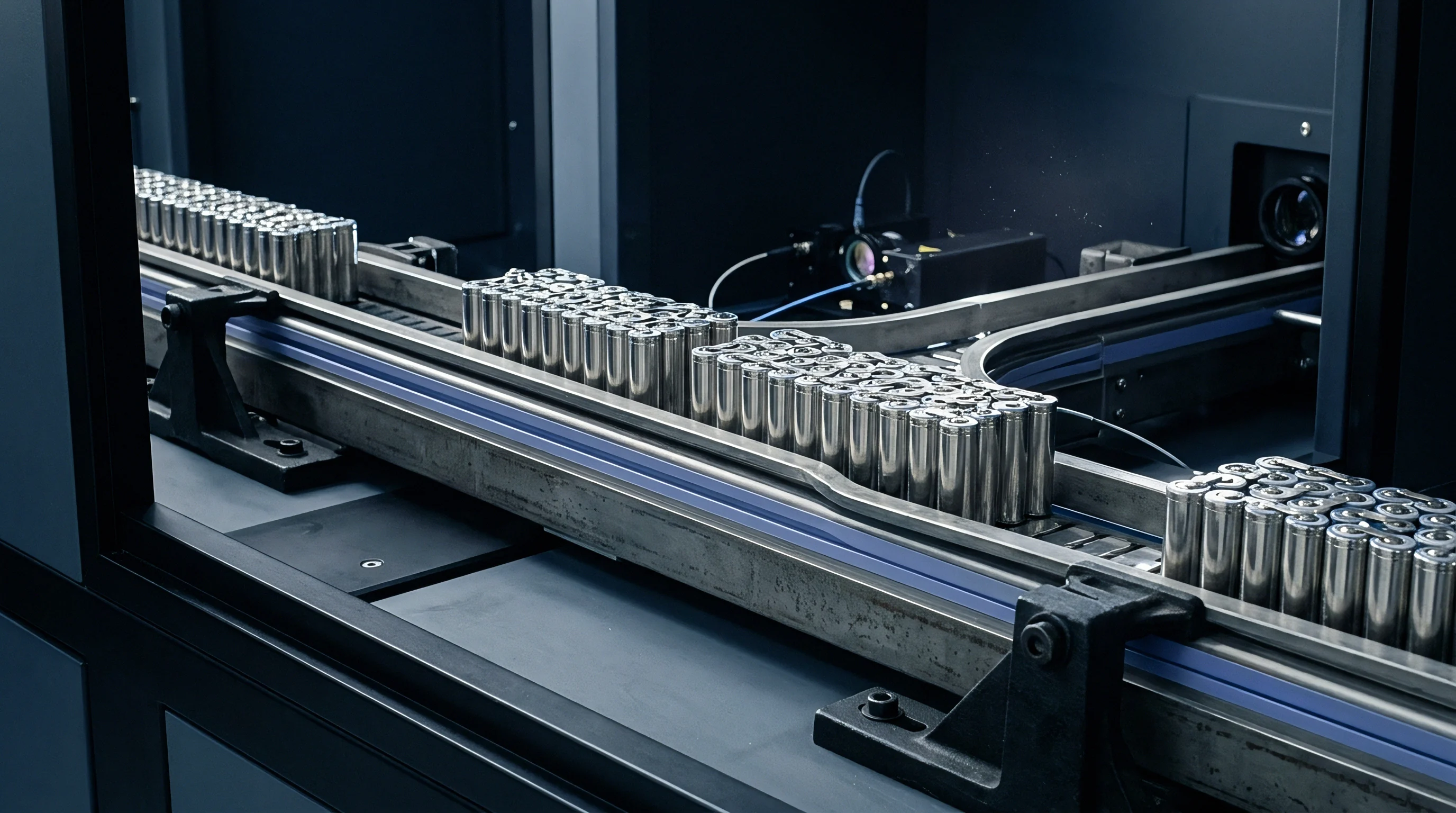
Production grading operates almost exclusively at twenty-five degrees Celsius on high-speed formation equipment. High-throughput lines process hundreds of thousands of cells per shift, measuring ambient capacity, 1 kHz AC impedance, and short DC resistance pulses. These baseline checks fail to expose subtle anomalies that only show up in cold operation.
Minor manufacturing variations in electrolyte dosing, separator wetting, or pore structure produce little deviation on room-temperature grading curves. Under subzero loads, these tiny variations turn into severe performance spreads. A cell with marginally low electrolyte fill functions normally at ambient temperatures but drops forty percent of its capacity at minus twenty degrees because ions starve in under-wetted cathode pores.
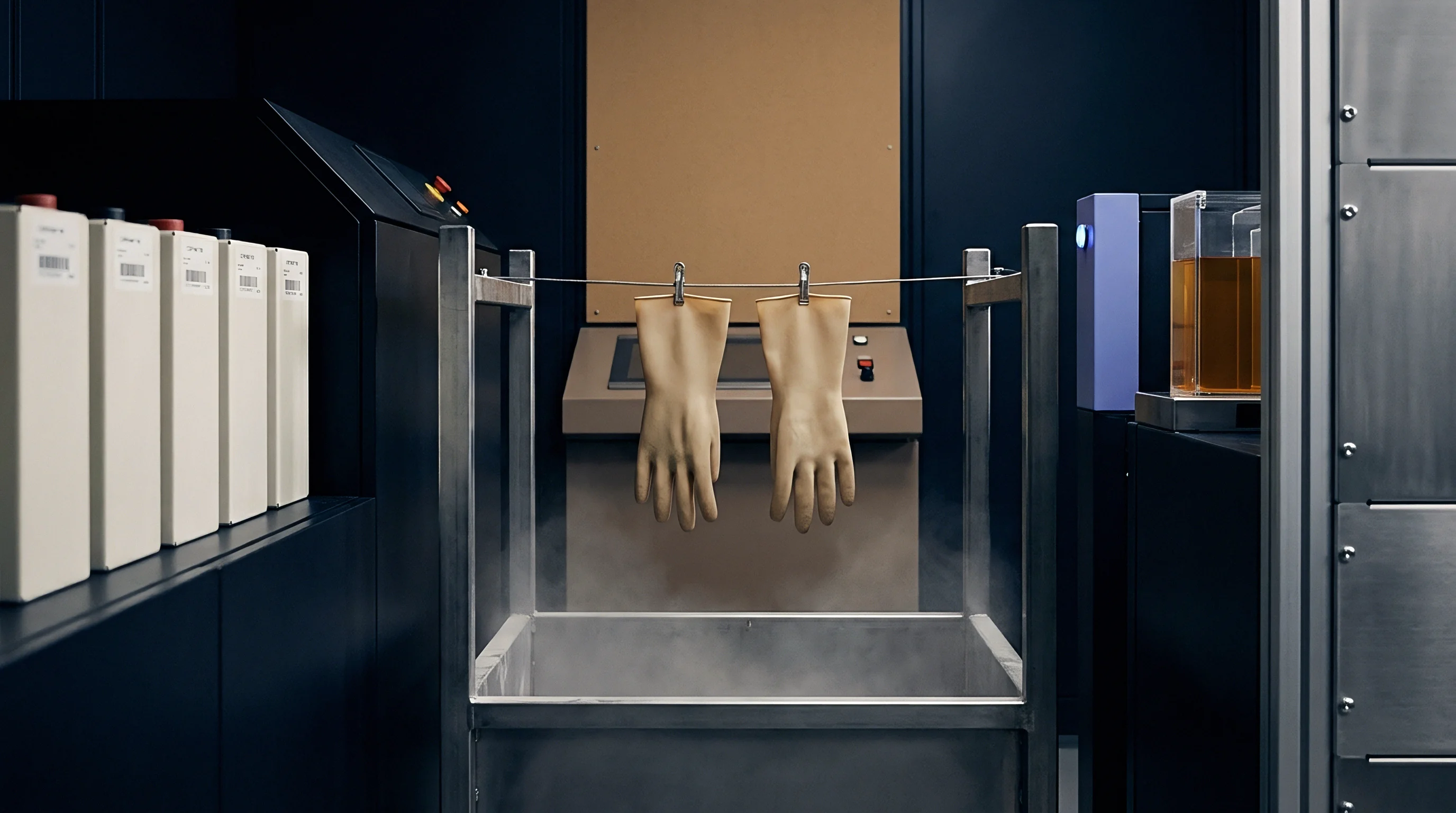
Screening entire production volumes at low temperatures remains economically unfeasible given the thermal chamber footprint and soak times required. Quality assurance programs instead rely on statistical batch audits that pull sample lots into dedicated subzero validation loops away from the main formation lines.
Batch Variance and Acceptance Sampling Criteria
Incoming quality inspections require strict statistical bounds on subzero performance spread within procured lots. While room-temperature capacity standard deviations generally stay within one percent for tier-one manufacturing, subzero metrics from that same production batch often scatter across four to eight percent.
Acceptance sampling programs require Acceptance Quality Limit thresholds tailored to cold metrics. A respectable average capacity across a batch matters little if wide cell-to-cell variance trips premature low-voltage cutoffs that disable entire series-connected battery strings.
- Anode Delamination Under Thermal Contraction Differential shrinkage coefficients between copper foil current collectors and graphite active material coatings cause localized micro-unbonding during extreme thermal cycling.
- Electrolyte Salt Crystallization Precipitation of lithium hexafluorophosphate out of saturated solvent mixtures occurs when local temperatures drop below phase stability thresholds, permanently altering liquid phase stoichometry.
- Separator Pore Closure Thermal stress on stretched polyethylene or polypropylene separator membranes reduces effective pore diameter, triggering extreme mass transport impedance spikes.
- Terminal Seal Micro-Leakage Subzero contraction of elastomer or crimped gasket seals creates temporary hermetic breaches, allowing ambient moisture ingress into cell interiors.
| Chemistry Type | Specific Energy (Wh/kg) | -20°C / 0.5C Capacity Retention (%) | -30°C / 0.2C Capacity Retention (%) | Safe Continuous Subzero Charge C-Rate |
|---|---|---|---|---|
| NMC 811 / Graphite | 250 – 280 | 60 – 70 | 40 – 50 | 0.02 C |
| NMC 532 / Synthetic Graphite | 200 – 230 | 70 – 78 | 50 – 60 | 0.05 C |
| LFP / Graphite | 140 – 170 | 50 – 60 | 25 – 35 | 0.01 C |
| LTO (Lithium Titanate Anode) | 80 – 110 | 85 – 92 | 75 – 85 | 0.50 C |
| Sodium-Ion (Hard Carbon Anode) | 130 – 160 | 80 – 88 | 70 – 78 | 0.10 C |
Subzero internal resistance variance wider than five percent within a single receiving lot guarantees early pack-level thermal runaways during high-power cold discharge cycles.

Contract
Standardizing Discharge Cutoff Voltages in RFQs
Procurement documents that omit test condition boundaries leave room for overly optimistic low-temperature datasheets. A specification quoting eighty percent retention at minus twenty degrees Celsius frequently rests on a low discharge rate or an artificially depressed cutoff voltage selected to inflate promotional retention figures.
Requests for Quote must define the test boundary conditions completely. Contracts need to fix soak durations, airflow parameters, fixturing thermal conductance, discharge rates, and termination voltages. Shifting a cutoff limit from 2.8 V down to 2.0 V lets a supplier report twenty percent more low-temperature capacity, even though the cell spends much of that time below the inverter or motor operating window.
Contracts defining subzero performance must stipulate both total Ampere-hour capacity and watt-hour energy yield above a fixed functional system voltage floor.
Guarantee Conditions and Test Execution Parameters
Supply agreements for custom cell production must tie warranty commitments directly to clear subzero test standards. Lot acceptance should hinge on statistical distributions across the batch rather than simple sample means.
Audit processes must run through fixed sequence steps to maintain data comparability before authorizing volume production release.
- Pre-condition sample cells with three standard formation cycles at twenty-five degrees Celsius using specified 0.2C constant-current constant-voltage profiles.
- Record baseline 1 kHz AC impedance and 0.5C DC resistance at fifty percent state of charge under ambient room temperature.
- Transfer cells into environmental test chambers, establishing minimum 50 mm clearance between cell faces to ensure uniform thermal exposure.
- Lower chamber temperature to target subzero setpoint at a controlled cooling rate not exceeding one degree Celsius per minute.
- Maintain thermal soak at target temperature for a minimum duration scaled to cell format mass according to validated thermal mass lookup tables.
- Execute continuous discharge at contractually designated C-rates until terminal voltage hits the strict upper subzero cutoff threshold.
- Rest cells in subzero environment for two hours post-discharge, recording voltage recovery curves to calculate relaxation polarization coefficients.
- Return chamber to ambient twenty-five degrees Celsius, allow four-hour thermal equilibration, and run baseline cycle to measure irreversible subzero capacity loss.
Section 12.4 of international master supply agreements mandates that vendor low-temperature performance guarantees remain binding only when incoming inspection tests mirror supplier production batch test profiles precisely.
Yield
Thermal Management Overhead Vs Oversized Cell Chemistry
Subzero battery design involves weighing base chemistry costs against the equipment needed for active heating. Using energy-dense NMC 811 cells demands positive temperature coefficient heating mats, liquid thermal plates, and insulated housings to keep cell cores above zero degrees during operation. This equipment adds parasitic load, increases dry pack mass, and introduces leak and failure risks across cooling circuits.
Shifting chemistry changes this balance. Lithium titanate and sodium-ion cells dispense with active discharge heating and accept low-rate charging down to minus thirty degrees Celsius. Sodium ions desolvate more readily than lithium, maintaining ionic mobility in subzero electrolytes.
While the lower volumetric density of sodium-ion and LTO cells requires larger enclosures, it removes heater drain, insulation weight, and the warranty hazards tied to cold-weather lithium plating.
| Design Metric | NMC 811 + Active Thermal System | LFP + High-Power Heaters | Sodium-Ion (Passive Thermal) |
|---|---|---|---|
| Raw Cell Cost ($/kWh nominal) | $95 | $60 | $65 |
| Heating Systems & Insulation Cost | $2,400 | $2,800 | $0 |
| BMS Thermal Control Complexity | High | High | Low |
| Total System Weight (kg) | 290 | 420 | 410 |
| Net Delivered Energy at -20°C (kWh) | 42.5 (including heater load) | 31.0 (including heater load) | 41.0 (no heating required) |
| Landed Cost Per Delivered Subzero Cycle ($) | $0.18 | $0.22 | $0.11 |
Delivered Cost per Subzero Wh across Cell Chemistries
Cold-climate economics depend on the cost per delivered kilowatt-hour over operating life rather than nominal cell pricing. Sourcing low-cost LFP cells at sixty dollars per kilowatt-hour nominal often yields poor life-cycle figures under sustained minus twenty degree operations. Severe ohmic resistance, continuous heater draws, and degradation from low-temperature charging inflate the real cost per delivered cycle.
Procurement audits apply specific technical checks to evaluate cold-weather claims before committing capital.
- Verify Complete Test Envelope Parameters Confirm that supplier capacity retention curves detail explicit C-rates, thermal soak durations, ambient airflow speeds, and voltage cutoff thresholds.
- Audit Electrolyte Low-Temperature Additive Formulations Inspect vendor material specifications to ensure solvent blends contain low-viscosity co-solvents like ethyl acetate or carboxylate esters.
- Establish Temperature-Dependent Cutoff Protocols Adjust BMS lower voltage thresholds dynamically based on real-time cell core temperature to maximize usable Ah without triggering low-voltage faults.
- Mandate Batch Variance Control Limits Tighter acceptance limits on subzero internal resistance spread prevent premature cell-level series cutoffs in multi-cell series strings.
- Calculate Net System Energy Yield Factor heating mat energy consumption, insulation space penalties, and parasitic enclosure loads into final landed cost models rather than relying on raw cell datasheets.
Fast-charging sodium-ion cells at high rates under minus forty degrees Celsius continues to present unresolved electro-chemo-mechanical trade-offs.