
Four Wire Kelvin Sensing Principles in Low Impedance Battery Testing
Four-wire Kelvin sensing isolates drive current from potential sensing, eliminating lead and contact resistance errors in sub-milliohm battery impedance tests.
Four-wire Kelvin sensing isolates drive current from potential sensing, eliminating lead and contact resistance errors in sub-milliohm battery impedance tests.

Real-time fixture thermal drift compensation eliminates cell sorting errors by isolating thermomechanical trace expansion from true battery impedance shifts.

Lattice micro-strain accelerates baseline entropic potential drift, shifting cell thermal profiles and skewing long-term state-of-charge estimation accuracy.

Fast screening of manganese substituted LFP requires separating rate polarization from permanent capacity loss to prevent improper cell grading.
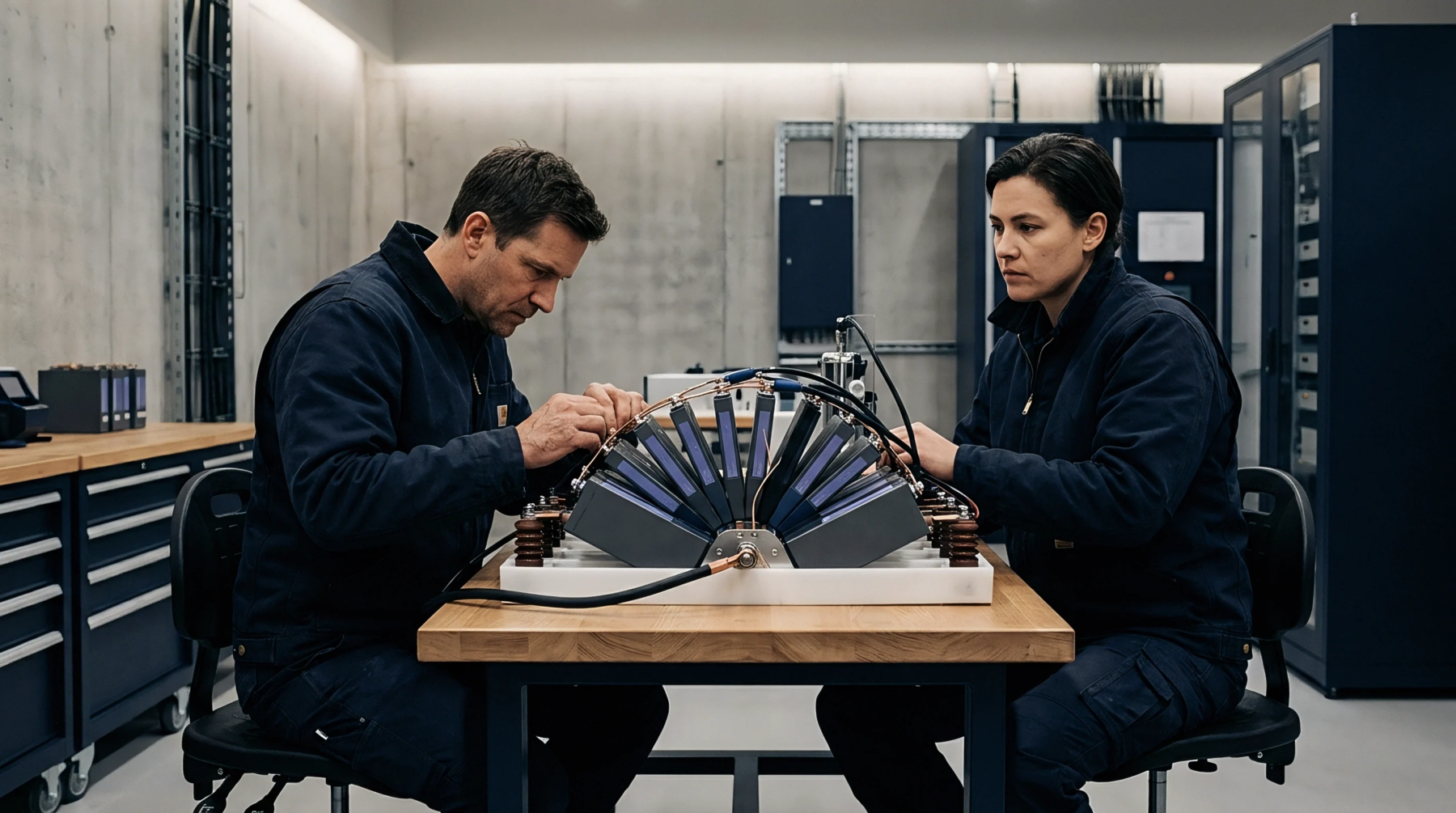
Procuring custom industrial battery modules requires locking cell format trade-offs, welding verification, and compliance files before amortizing tooling.

Differential capacity analysis transforms flat LFP voltage plateaus into distinct peak signatures to quantify lithium loss and electrode decay non-destructively.
Differential capacity analysis extracts thermodynamic phase boundaries to deconvolve lithium inventory loss from active material degradation non destructively.

LFP OCV relaxation requires multi-hour decay modeling and hysteresis tracking to prevent large SOC estimation errors across the flat voltage plateau.

Structure custom pack sourcing by retaining mechanical IP and UN 38.3 file ownership while negotiating cell-direct contract manufacturing terms.
Voltage relaxation transients distort open circuit measurements causing state of charge errors exceeding twelve percent without persistent diffusion modeling.
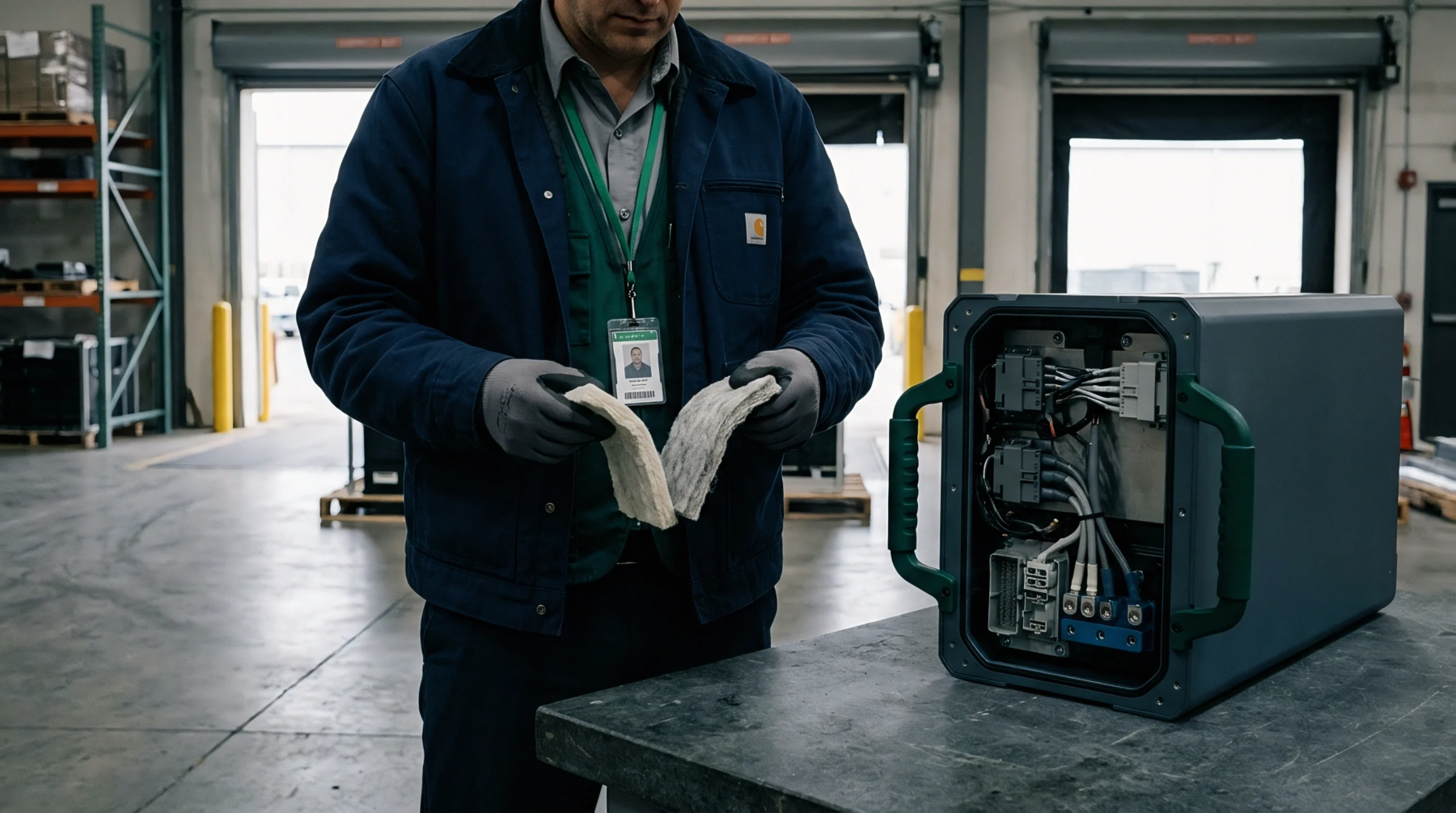
LFP phase transitions and voltage relaxation kinetics create severe OCV hysteresis and multi-hour voltage drift requiring dynamic BMS filtering to prevent SOC errors.

Datasheet cycle life claims overestimate real field performance by up to 45 percent under uncompressed thermal dynamic stress envelopes.
Buying cells requires owning BMS development, weld quality, thermal isolation, and pack safety files; buying packs trades unit margin for transferred liability.
Expertise is a utility, not a secret. sentiention™ publishes its working knowledge as open reference: intelligence layer covering the materials it sources, the markets it enters, and the reference that serves both.