Upper Cutoff Voltage Thresholds in High Nickel Cathode Formulations
Raising high nickel cathode upper cutoff voltage above 4.20V increases initial capacity but accelerates interfacial degradation and slashes cycle life.


Voltage
Lithium-ion cells utilizing nickel-rich layered oxide cathodes, including LiNi0.8Co0.1Mn0.1O2 and LiNi0.9Co0.05Mn0.05O2, present a steep trade-off between available electrochemical capacity and structural integrity. Operating these cell formulations above standard potentials changes internal chemical stability. Raising charge boundaries expands energy density while initiating aggressive degradation pathways inside the cell.

Electrochemical Capacity Gain versus Lattice Stability
Pushing high-nickel cathode formulations past 4.20 V relative to Li/Li+ extracts additional lithium ions from the crystal framework. Lithium extraction above 80 percent increases initial specific discharge capacity from 200 mAh/g to over 220 mAh/g in NMC811 compositions. Oxygen release accelerates cathode dissolution.
Delivered capacity drops rapidly.
The extra energy gain introduces severe structural penalizations. Delithiation beyond 0.8 equivalents per formula unit collapses the interlayer unit cell volume. The c-axis lattice parameter expands initially due to electrostatic repulsion between adjacent oxygen layers, then contracts sharply above 4.15 V as electron shielding diminishes.
Higher potential degrades carbonate solvents.
Cells featuring NMC811 cathodes charged to an upper cutoff of 4.35V at 45 degrees Celsius gain 8.4 percent initial specific capacity while losing 65 percent of their 1,200-cycle life capability.

Transition Metal Valence Changes at High Potentials
Nickel ions transition from Ni3+ to Ni4+ during oxidation, driving localized surface instability. Highly oxidized Ni4+ ions act as strong oxidizing agents capable of pulling electrons from organic carbonate electrolyte solvents. Cobalt suppression worsens structural decay.
The relative proportion of nickel, cobalt, and manganese dictates the onset potential of destabilization. Higher nickel content lowers the voltage threshold where surface oxygen release occurs. NCMA and NMC90 formulations exhibit localized phase transformations at charge potentials where legacy NMC523 materials remain stable.
- Establish baseline operational limits based on cathode stoichiometry and grain structure.
- Derate maximum charge thresholds by 50 millivolts for pack environments operating above 35 degrees Celsius.
- Implement active cell monitoring to limit duration spent above 4.25 V during constant voltage charging stages.
- Verify coulombic efficiency metrics across initial formation cycles before finalizing target charge thresholds.
| Upper Cutoff Potential (V vs Li/Li+) | Specific Capacity (mAh/g) | First Cycle Efficiency (%) | Capacity Retention at 500 Cycles (%) | Lattice Volume Change (%) |
|---|---|---|---|---|
| 4.20 | 201.5 | 89.2 | 88.4 | -3.1 |
| 4.30 | 212.0 | 87.5 | 76.2 | -5.4 |
| 4.35 | 218.3 | 86.1 | 64.0 | -7.8 |
| 4.40 | 224.8 | 84.3 | 48.5 | -10.2 |
Operating high-nickel cells at lower charge potentials prolongs structural cohesion and reduces long-term impedance growth.

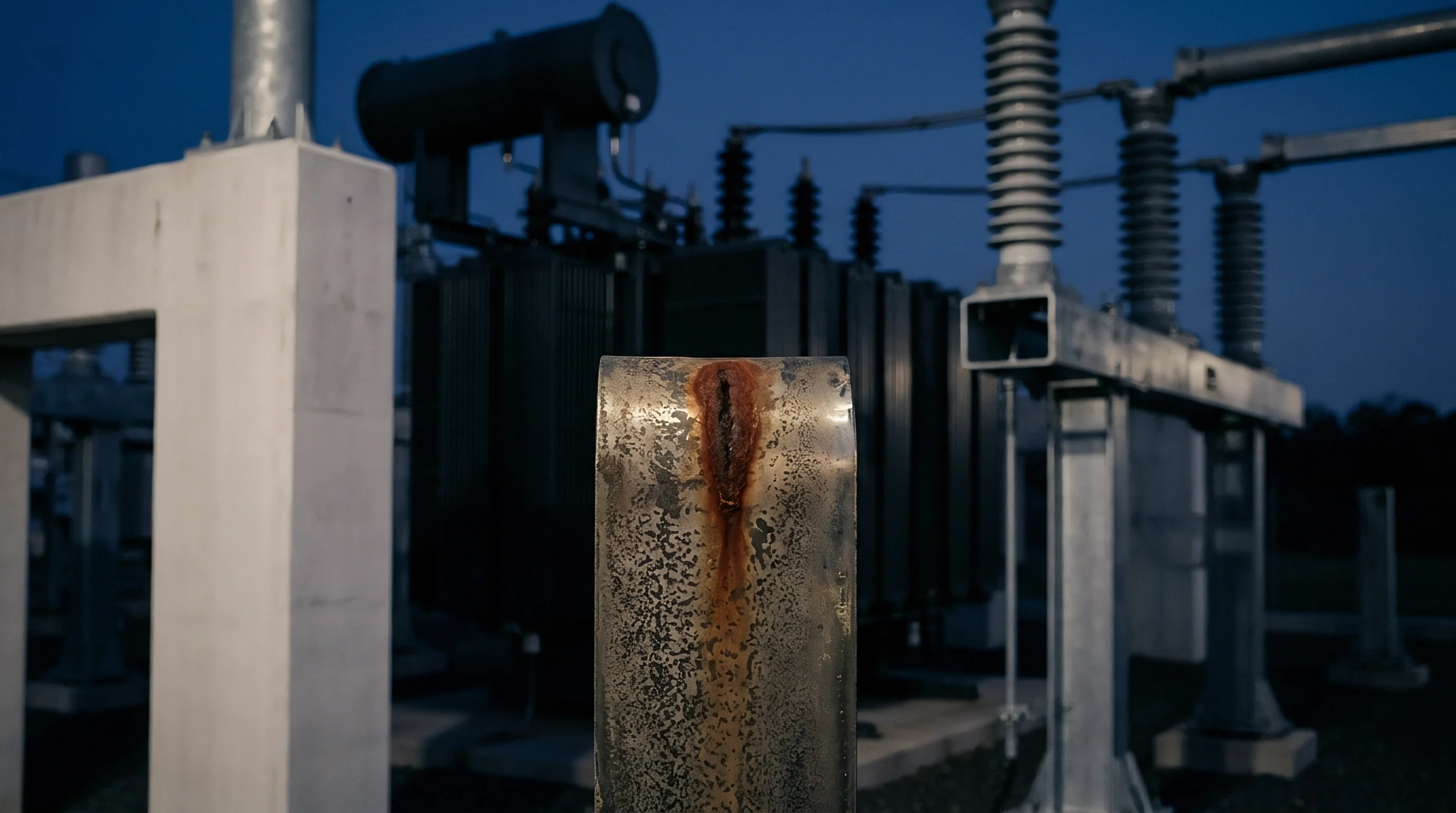
Cracking
Structural degradation in polycrystalline nickel-rich cathode aggregates manifests as isotropic strain during charge-discharge cycling. Repeated volume changes induce internal mechanical stresses that separate primary crystallites within secondary spherical particles. Microcracks expose fresh bulk material.

Phase Transition Mechanics in Nickel-Rich Frameworks
The anisotropic lattice contraction along the c-axis occurs beyond 4.15 V vs Li/Li+ as the H2-to-H3 structural shift proceeds. The H2 to H3 phase transformation causes abrupt localized unit cell shrinking. Zirconium doping stabilizes grain boundary shear.
Polycrystalline aggregates experience non-uniform stress distribution because individual primary grains orient randomly. Grains expanding along one axis push against neighboring grains contracting along another, generating internal shear stress exceeding the critical fracture toughness of the material. Single crystal morphology eliminates intergranular fracture.

Polycrystalline Grain Boundary Fracture Modes
Primary particles within secondary spherical aggregates experience internal anisotropic stresses during rapid lithium extraction. Intergranular fracture propagates from the core of secondary particles toward the surface. Liquid electrolyte penetrates newly formed microcracks, reacting with exposed active surfaces.
- Intergranular Microcracking separates adjacent primary crystallites, disrupting electronic pathways and isolating active mass from the conductive matrix.
- Transition Metal Dissolution releases free manganese and nickel ions into the electrolyte, which migrate across the separator and destroy the solid electrolyte interphase at the graphite anode.
- Phase Transition Instability triggers irreversible conversion of layered active material into inactive rock-salt spinel structures at particle surfaces.
- Surface Oxygen Evolution releases reactive gaseous oxygen species into particle voids, accelerating electrolyte breakdown and internal cell pressurization.
Elevated charge potentials trade long-term crystal structure stability and interfacial integrity for immediate volumetric energy density gain.
Ignoring lattice strain mechanisms results in accelerated capacity fade, active material isolation, and severe cell swelling.


Interphase
Surface decomposition reactions between oxidized cathode particles and organic electrolyte components govern high-voltage battery impedance growth. Elevated potentials accelerate cathode electrolyte interphase formation and alter its chemical composition. Thermal stability margins collapse.

Electrolyte Oxidation and Gas Evolution Pathways
Carbonate solvent molecules transfer electrons to highly oxidized Ni4+ surface sites at states of charge exceeding 80 percent. Alkyl carbonates decompose into carbon dioxide, carbon monoxide, and acidic polymer species. Transition metal dissolution poisons graphite anodes.
Electrolyte oxidation generates gaseous products.
Trace moisture reacts with lithium hexafluorophosphate salt to generate hydrofluoric acid, which attacks exposed cathode surfaces. Acid etching releases nickel, cobalt, and manganese ions into solution. Free transition metals migrate to the anode, where they catalyze continuous solid electrolyte interphase growth and consume inventory lithium.
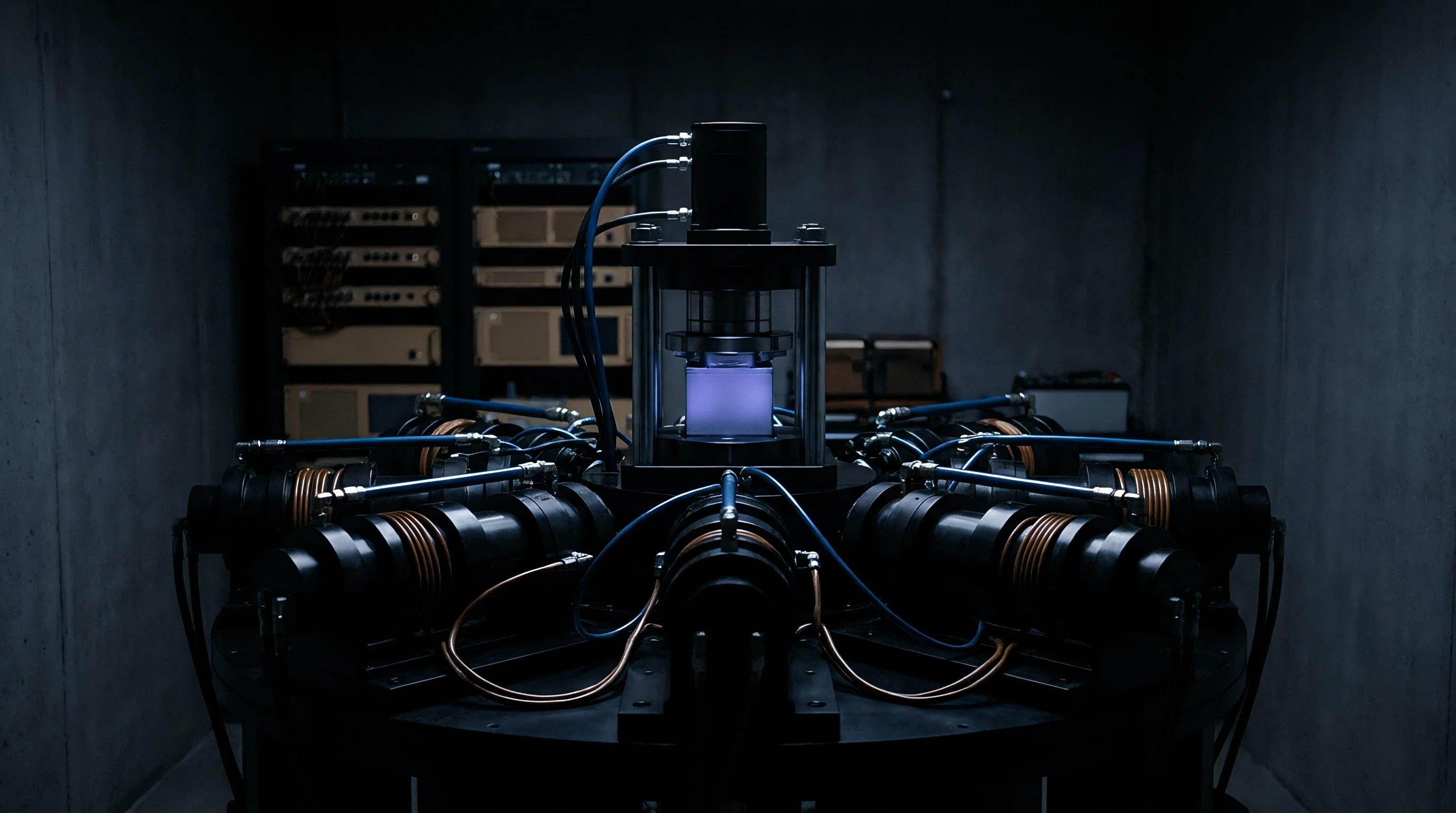
Surface Coating and Bulk Doping Stabilization
Atomic layer deposition of oxide barriers limits direct contact between bare active material and liquid electrolyte. Surface coatings such as aluminum oxide, zirconium oxide, and lithium boron oxide prevent direct electrolyte oxidation at high potentials. Coating layer thickness ranges from 1 to 5 nanometers.
Bulk doping modifies lattice binding energy and stabilizes crystal symmetry. Replacing fraction of transition metal ions with aluminum, titanium, zirconium, or niobium reduces volume changes during the H2-to-H3 phase shift. Doped lattice structures retain mechanical strength under deep delithiation conditions.
| Formulation Approach | Primary Mechanism Suppressed | Energy Density Impact (%) | Cycle Retention Gain at 4.35V (%) |
|---|---|---|---|
| Polycrystalline Bare NMC811 | Baseline reference state | 0.0 | Baseline |
| Al2O3 Surface Coating | Direct solvent oxidation | -0.5 | +18.2 |
| 1 mol% Zr Bulk Doping | H2 to H3 volume contraction | -0.8 | +24.5 |
| Single Crystal Morphology | Intergranular microcracking | -1.2 | +42.0 |
| Core-Shell Gradient Structure | Surface transition metal leaching | -0.3 | +31.0 |
Electrolyte oxidation at bare particle surfaces accelerates oxygen gas evolution and increases internal cell pressure during high state of charge storage.
Cell manufacturers attribute high-temperature swelling at elevated voltage cutoffs to inevitable solvent breakdown rather than unpassivated cathode surface sites.


Qualification
Cell test protocols designed for lower-nickel chemistries fall short when assessing high-nickel formulations operating above 4.20 V. Advanced diagnostic techniques isolate chemical instability from baseline capacity loss. Standard cycle life screening hides microcrack accumulation during early cycling stages.

Can Differential Capacity Profiling Isolate Lattice Strain?
Plotting incremental capacity against cell potential reveals distinct peaks corresponding to structural phase transitions. Shifts in peak position and reduction in peak area during cycle life testing indicate loss of structural reversibility. The sharp dQ/dV peak above 4.15 V tracks the onset of the destructive H2-to-H3 transformation.
Tracking peak degradation over 100 cycles provides early indication of cathode decay before gross capacity loss manifests. Widening peak separation signals growing charge transfer resistance caused by interphase thickening. Coulombic efficiency drops below four nines.
Impedance growth doubles cell self-discharge.

High Precision Coulombic Efficiency Diagnostics
Ultra-precise current measurements capture parasitic side-reaction currents during early cycle life testing. High-precision coulombic efficiency testing quantifies side-reaction rates within 15 to 20 cycles, eliminating the need for multi-month cycling screens. A coulombic efficiency below 0.9990 indicates ongoing electrolyte decomposition and rapid capacity decay.
- High Precision Coulombic Measurements evaluate parasitic reaction rates during early charge-discharge cycles at controlled temperatures.
- Gas Generation Profiling measures volumetric cell expansion during high state-of-charge storage at elevated temperatures.
- Differential Capacity Differential Logging tracks peak decay and voltage polarization growth caused by structural phase changes.
- Accelerated Storage Derating Verification quantifies irreversible capacity loss and impedance growth following constant voltage hold periods.
Whether high-precision coulombic efficiency testing under short testing timelines can reliably project multi-year degradation rates under variable field conditions remains unsettled.


Warranty
Commercial pack commitments require strict contractual alignment with operational voltage windows specified by cell manufacturers. Pushing charge cutoffs above standard baseline levels changes cell lifecycle costs and invalidates baseline warranty terms. Landed costs rise per cycle.

Landed Cost per Delivered Kilowatt Hour
Extended cycle retention lowers the amortized expense of battery storage in stationary and automotive applications. Cell selection based solely on initial volumetric energy density introduces financial risk when high voltage operation degrades overall cycle life. Cell expansion breaches pack tolerances.
Assume a procurement lot of 10,000 21700 cells featuring LiNi0.80Co0.10Mn0.10O2 cathodes at a base cost of $2.10 per cell, yielding 18.0 Wh per cell when charged to 4.20 V upper cutoff. Operating at 4.20 V yields 1,200 cycles to 80 percent capacity retention, delivering 194.4 kWh total energy throughput per cell over its lifetime. At $2.10 per cell, the levelized cell cost is $0.0108 per delivered kWh.
Raising the upper cutoff threshold to 4.35 V increases initial cell energy to 19.5 Wh, an 8.3 percent capacity gain, but degrades cycle life to 450 cycles. Lifetime energy throughput drops to 78.9 kWh per cell. The levelized cell cost rises to $0.0266 per delivered kWh, more than doubling energy storage expenses over the operational life.
Contractual Voltage Limits and Telemetry Compliance
Battery management system logs serve as primary evidence during early failure investigations and commercial claims. Cell suppliers define upper potential boundaries within standard specification sheets. Operating cells beyond published limits shifts financial liability directly to system integrators.
Standard warranty schedules under IEC 62133-2 void cell degradation coverage if operational telemetry records persistent exposure to upper cutoff potentials exceeding the supplier limit by more than 20 millivolts.
Inclusion of standard upper potential telemetry logging clauses shifts financial liability for premature capacity loss directly onto system integrators who override factory charge boundaries.