Cross Border Tooling Asset Recovery under International Commercial Bailment Treaties
Cross border tooling recovery relies on foreign bailment registration, explicit title stamping, and pre-negotiated factory access deeds.


Jurisdiction
For cross-border tooling to survive a foreign supplier’s insolvency, it requires physical asset tagging and filed bailment deeds. Battery pack manufacturers frequently fund tooling at overseas facilities ~ whether high-precision stamping dies for aluminum enclosures, injection molds for module carrier trays, or progressive forming fixtures for nickel-plated copper busbars. Paying Non-Recurring Engineering charges does not automatically transfer legal ownership of that hardware.
If a foreign assembly plant enters liquidation or faces a court-ordered asset freeze, unsecured equipment inside the facility remains vulnerable to local creditor claims. While the United Nations Convention on Contracts for the International Sale of Goods provides a general framework, Article 4 explicitly excludes property ownership effects. Disputed proprietary tooling falls instead under local real-property and possessory laws, known in private international law as lex loci rei sitae.
Recovering equipment across borders depends heavily on whether the contract is structured as an executory sales agreement or an explicit international commercial bailment. A bailment separates legal title from physical custody: the buyer retains ownership while the contract manufacturer receives temporary possession only to fulfill production runs. Without a perfected bailment filing under local host-country law, courts usually treat custom tooling as plant property.
Commercial codes in countries like China, Vietnam, and Mexico require public registration or official customs filings before local courts will recognize foreign ownership of equipment located on domestic shop floors.
Paper titles alone offer little protection on the shop floor.
Customs programs in major manufacturing hubs offer ways to establish non-possessory title before disputes arise. Under Mexico’s IMMEX regime, tooling enters under temporary import status, with the owner’s tax ID and serial numbers registered in the customs database. This entry record provides prima facie evidence of foreign ownership in local commercial courts, shielding the equipment from tax liens filed against the host plant.
In China, establishing foreign title requires a dedicated Sino-Foreign Bailment Agreement registered with commerce authorities, paired with asset tagging under Civil Code Article 888. Tracking bailment registrations across Asian jurisdictions prevents foreign courts from pooling custom battery molds into general plant assets during corporate restructurings.
| Jurisdiction | Governing Bailment Framework | Required Public Registration | Average Recovery Lead Time | Primary Enforcement Obstacle |
|---|---|---|---|---|
| China | Civil Code (Book of Contracts, Chapter 22) | Local Commerce Commission Bailment Deed | 14 to 26 weeks | Statutory retention rights asserted by sub-tier vendors |
| Mexico | Ley General de Títulos y Operaciones de Crédito | IMMEX Temporary Importation Customs Registry | 6 to 12 weeks | Labor court asset attachments (Embargo Laboral) |
| Vietnam | Civil Code 2015 (Property Custody Provisions) | Department of Planning and Investment Filing | 18 to 30 weeks | Customs clearance delays on non-registered capital goods |
| Germany | Bürgerliches Gesetzbuch (BGB § 688) | Notarial Ownership Assignment (Sicherungsübereignung) | 3 to 8 weeks | Insolvency administrator possession rights (Insolvenzordnung) |
Securing title requires matching the paper contract to the physical hardware on the floor. Enclosure tooling for a 400V or 800V electric vehicle battery pack uses multi-cavity injection molds machined from H13 tool steel, holding tolerances tighter than +/-15 µm to meet IP67 and IP69K sealing specifications. When an OEM or tier-1 integrator spends $650,000 USD on a progressive die set, the vendor agreement must specify tracking tags engraved directly onto the mold base plate.
That tag needs to identify the non-transferable owner, the bailment contract reference, and the local commercial registry code. Missing or incomplete tagging allows local bankruptcy courts to group the tool with general supplier assets, giving marshals clear grounds to seize it.
Contract clauses designating foreign court jurisdiction fail to secure physical asset repossession when local courts exercise exclusive territorial jurisdiction over tangible personal property situated within their borders.
Choice-of-law clauses in supply agreements often give battery pack integration teams false reassurance. Specifying that the High Court of London or the State of New York governs obligations works between buyer and seller, but carries no weight with a court marshal enforcing a labor debt in Shenzhen or Monterrey. When a contract manufacturer shuts down, local workers or vendors place possessory attachments on all equipment inside the facility.
The local court enforces those claims under domestic law, setting aside foreign arbitration awards until a local court validates the judgment through a lengthy exequatur proceeding.
Protecting tooling assets requires combining legal filings with physical safeguards to shield proprietary hardware from general factory liabilities.
- Unregistered Equity Commingling creates immediate title exposure when custom battery enclosure dies are co-funded with supplier capital, potentially reclassifying the bailment as a joint-venture asset under local civil codes.
- Missing Customs Re-export Markers cause severe regulatory delays when attempting to export stamped aluminum cooling plate tooling without active temporary import records on file.
- Omission of Physical Title Plates allows local court marshals to inventory high-value busbar assembly fixtures as general debtor assets during sudden asset freezes.
- Commenced Piece-Price Amortization without clear milestone records allows factory operators to assert partial ownership based on unrecovered Non-Recurring Engineering balances.
Cross-border bailment agreements require explicit termination triggers that end possessory rights well before full insolvency occurs. A standard 30-day cure window leaves high-value tooling exposed to vendor creditors for far too long. Effective contracts establish immediate default triggers: failure to maintain insurance, informal debt restructuring, unapproved relocation of tools to sub-tier plants, or production line stoppages exceeding 72 hours.
Upon default, the agreement should give the owner an irrevocable right to enter the plant, unbolt, pack, and remove the machinery without awaiting court intervention, subject only to local public order regulations.
Standard contract language should be modified to separate tooling ownership from general supply disputes:
“All progressive dies, injection molds, brazing fixtures, and testing gear listed in Schedule A remain the sole personal property of the Bailor, held by the Bailee strictly under a temporary, revocable bailment regime. The Bailee explicitly waives any statutory right of retention, commercial lien, or possessory attachment under local laws, acknowledging that possession is maintained solely to fulfill production orders issued under Purchase Order terms. In the event of contract termination or Bailee insolvency, the Bailor retains the immediate right to repossess and export the assets without offset or deferral based on pending commercial disputes.”
Dock
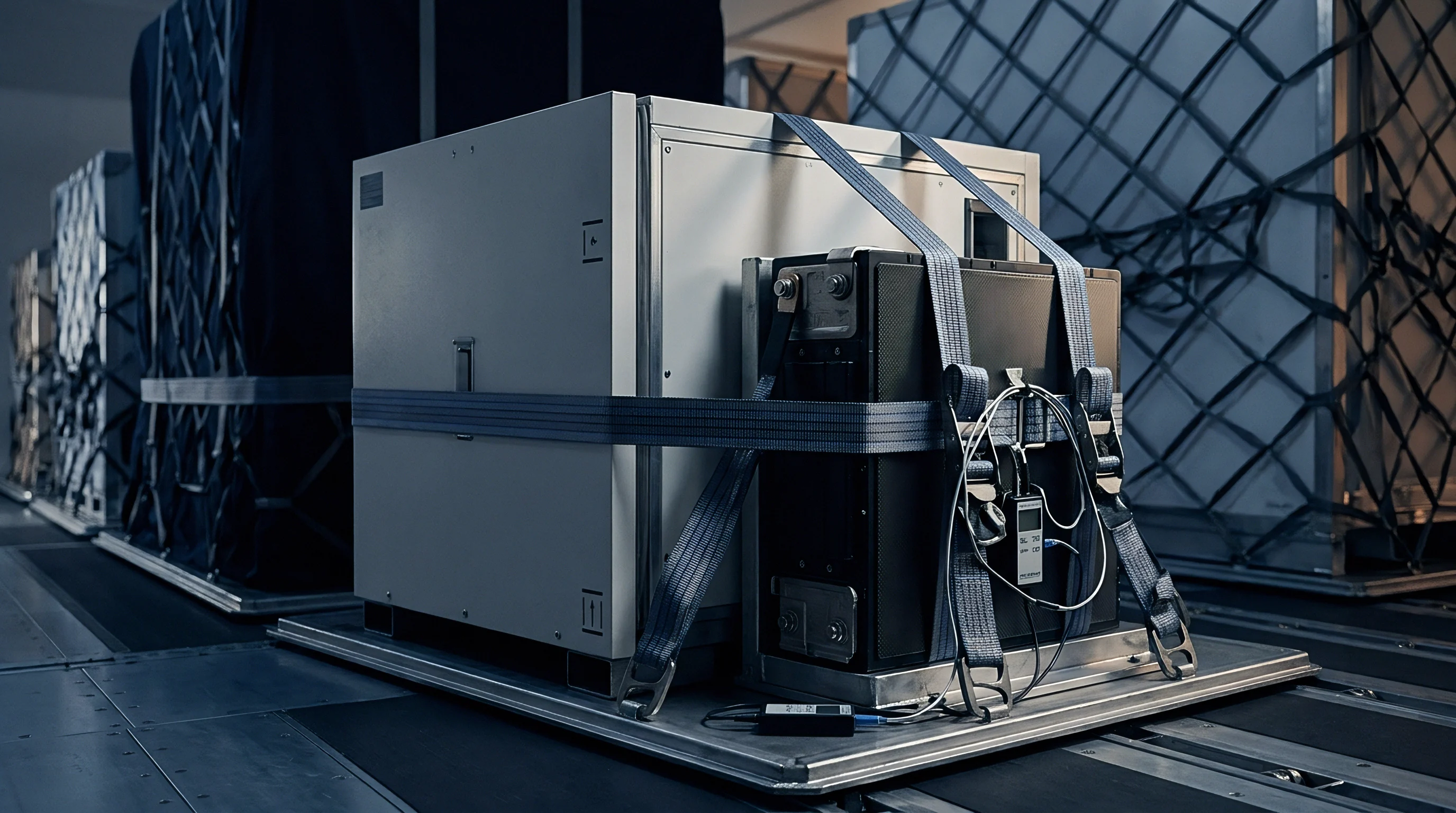
Physically retrieving high-precision injection molds and busbar stamping dies requires getting onto the shop floor before local liens or freezes take effect. Extracting a 12-metric-ton upper enclosure stamping die from a foreign tier-2 plant demands heavy rigging, structural line clearance, and complete paperwork verification. Plant managers facing financial collapse often lock loading bay gates, disable overhead cranes, or demand inflated de-rigging fees before allowing floor access.
A recovery team needs to arrive with original tool drawings, crane capacity certificates, structural rigging plans, and an extraction order verified by local law enforcement.
De-installing precision battery tooling calls for careful engineering controls to avoid permanent hardware damage. Structural injection molds for cell carrier frames feature core-pull hydraulics and micro-finished optical surfaces built for glass-filled polybutylene terephthalate or flame-retardant polycarbonate. A rushed job by inexperienced riggers can ruin hot-runner manifolds, bend guide pins, and score core faces.
Before unbolting a die set from a 500-ton press platen, technicians must lock moving slides with high-visibility steel transport straps, flush internal cooling lines with dry nitrogen gas to prevent oxidation during ocean transit, and coat exposed tool steel cavities with a vapor corrosion inhibitor.
Once a press line stops, physical retrieval becomes an urgent engineering operation.
Rigging crews must check floor loading and crane capacities before lifting heavy tooling blocks. Many tier-2 facilities in Southeast Asia rely on overhead bridge cranes rated for 5 metric tons, whereas multi-cavity aluminum cold-plate stamping tools often exceed 8 metric tons. Attempting to move heavy tooling without verified equipment risks a drop that can permanently ruin critical dimensions.
Surface tolerances for cell-to-cooling-plate contacts require coplanarity within 0.08 mm across a 1,200 mm span to prevent gaps in thermal interface material during module assembly. A single drop deforms alignment keys and renders the die unusable for high-voltage pack manufacturing.
A custom 800V busbar progressive die set stored in an unconditioned coastal warehouse exhibits micro-pitting corrosion on D2 steel cutting edges within 72 hours of moisture exposure, reducing punch life by 40 percent.
Export clearance presents its own technical and administrative hurdles.
Export freight terminals represent a major operational bottleneck during physical asset recovery. Local customs officials inspect high-value capital equipment exiting domestic manufacturing zones, checking for unpaid duties, missing re-export permits, or discrepancies in registered asset values. Molds entered under temporary import programs must have their serial numbers verified against original import manifests.
If a team attempts to ship a stamping die without reconciling past IMMEX or bonded warehouse entry records, customs authorities will impound the shipment at the port under suspicion of tax evasion or capital flight.
| Tooling Category | Target Machinery Weight | Harmonized System (HS) Code | Critical Physical Protection Requirement | Export Customs Clearance Marker |
|---|---|---|---|---|
| Structural Enclosure Die | 8,000 to 15,000 kg | 8480.41 (Metal Dies) | Mechanical slide locks and cavity VCI oil coating | Original temporary import customs manifest |
| Module Carrier Mold | 3,500 to 7,000 kg | 8480.71 (Plastic Molds) | Hot-runner purge and nitrogen blow-down | Certificate of non-bonded capital asset |
| Busbar Progressive Tool | 1,200 to 3,000 kg | 8480.49 (Forming Dies) | Punch stroke retention blocks and vacuum foil wrap | Bailment owner serial tag match confirmation |
| Cooling Plate Fixture | 800 to 2,200 kg | 8479.90 (Machine Parts) | Pneumatic seal cap closures and silica desiccant bags | Proof of Non-Recurring Engineering invoice settlement |
Extracting proprietary battery tooling from a disputed factory site requires a disciplined sequence to avoid physical damage or legal complications.
- Serve formal legal notice of bailment termination simultaneously to the factory management, the local municipal court, and the bonded logistics provider.
- Mobilize an accredited third-party engineering team equipped with original First Article Inspection setup sheets and mobile Coordinate Measuring Machine calibration tools to the facility.
- Conduct an immediate physical inventory verification, taking high-resolution macro photographs of all tool identification tags, mold cavity impression faces, and mechanical guide surfaces.
- Install calibrated transport locks across all hydraulic core slides, slide blocks, and die ejector plates to secure internal mechanical components against movement during transit.
- Evacuate all internal fluid circuits using pneumatic blow-down tools, injecting vapor-phase rust inhibitors into fluid passages before sealing ports with threaded metal plugs.
- Apply thick layers of military-grade corrosion protective grease to all unpainted tool steel faces, sealing the entire mold assembly inside vacuum-sealed moisture-barrier foil bags.
- Execute lifting and rigging procedures using certified spreader bars matched exactly to the center-of-gravity calculations stamped on the tool layout drawing.
- Transport the packaged assets via bonded logistics carriers directly to an international free-trade zone warehouse, bypassing local off-site storage locations vulnerable to possessory liens.
Physical repossession frequently encounters practical resistance on the ground. When a recovery team arrived at a facility outside Ho Chi Minh City, the custom busbar bending dies were initially reported as scrapped for copper. Rigging engineers subsequently found the complete tool set hidden in an unmarked maintenance shed behind a row of deactivated CNC machines.
Plant management then asserted that the tools were being held as collateral for unpaid electricity expenses attributed to the pack program.

Lien
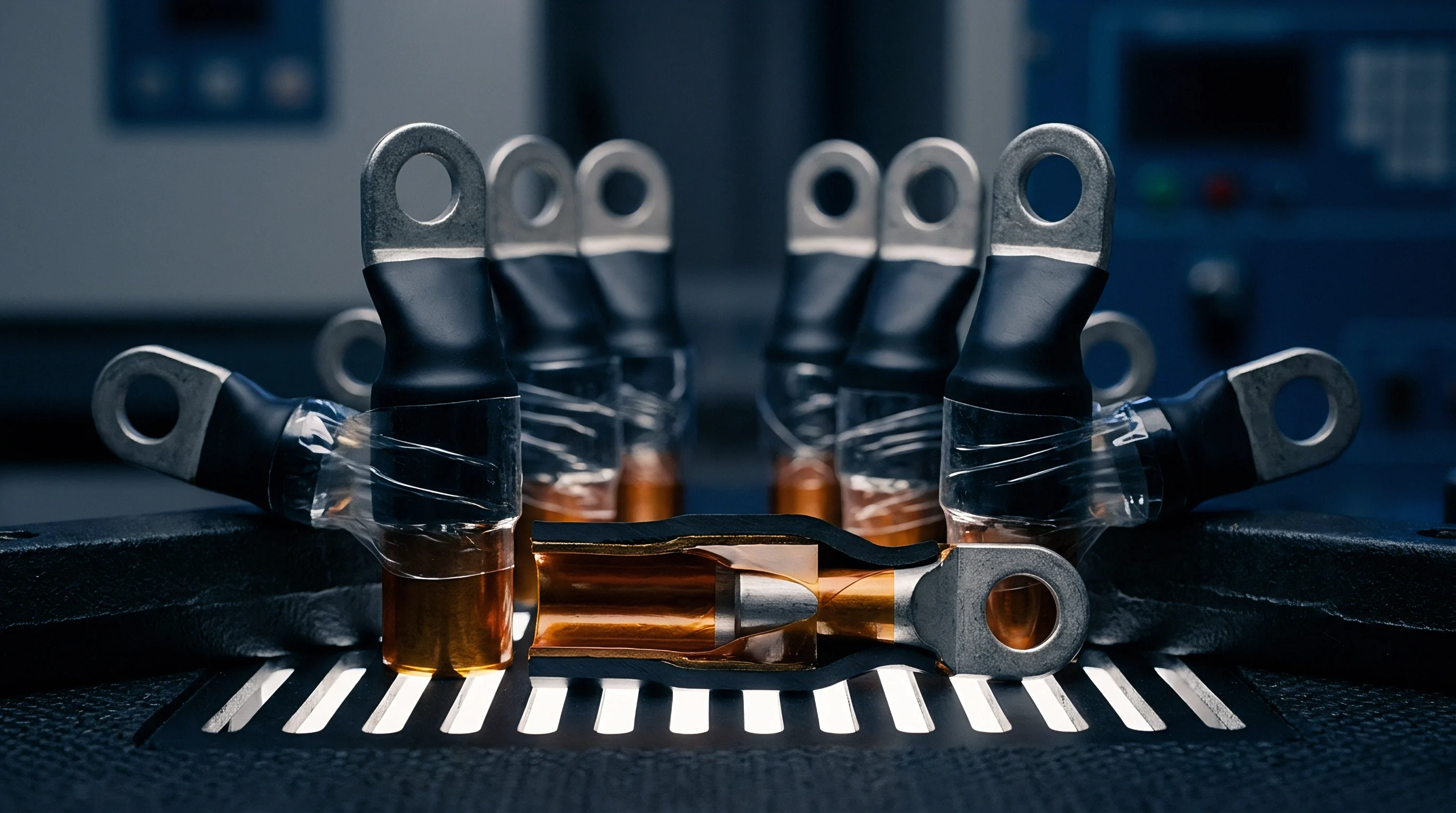
Factory operators frequently assert statutory retention rights over foreign molds when commercial relationships dissolve over financial disagreements. Civil law codes across Europe, Asia, and Latin America grant plants a possessory remedy known as the right of retention, or jus retentionis. This provision allows a facility to hold foreign equipment on site until open accounts are settled.
The primary risk arises when a plant expands this right to cover disputed piece-price claims, unrecovered overhead, or termination penalties, effectively holding millions of dollars in tooling hostage over minor commercial disputes.
Separating legitimate tooling debts from unfounded claims forms the core legal dispute during recovery efforts. A plant holds a valid statutory lien over a tool only if the outstanding debt directly involves the manufacture, maintenance, or engineering modifications of that specific piece of equipment. Once an OEM settles all Non-Recurring Engineering invoices, the factory has no legal basis to attach a lien for unpaid piece-price invoices on finished battery packs.
Contract manufacturers frequently obscure these boundaries, claiming that general supply defaults trigger a blanket lien over all machinery on the floor.
On the shop floor, physical possession dictates operational leverage.
Third-party financing creates further complications in possessory disputes. Contract manufacturers in Asia and Europe regularly pledge factory equipment as collateral for local credit lines or supply-chain financing. If management improperly includes foreign bailment tooling on the corporate asset register, local lenders place blanket security charges over those assets.
When the plant defaults, court-appointed receivers move in to seize the shop floor. Foreign owners are then forced to file third-party intervention actions (such as a Drittwiderspruchsklage in Germany or a Third-Party Claim on Assets in China) to separate their tooling from the foreclosure proceedings.

How Does Local Statutory Retention Override Foreign Title?
In local creditor disputes, domestic possessory laws consistently prioritize physical custody over paper title. Statutory retention rights under civil codes function as encumbrances that attach directly to the physical asset, regardless of legal ownership. If a foreign bailor attempts to retrieve equipment without settling local plant debts, local courts and law enforcement view the effort as unauthorized self-help or theft.
Foreign owners typically must satisfy the underlying claim through a judicial deposit or bank guarantee to obtain an enforceable repossession order.
Challenging an invalid factory lien requires a swift legal strategy to minimize production downtime.
- Audited NRE Payment Proofs must be presented to local courts immediately to prove that all specific design, machining, and debugging charges for the seized tool have been satisfied.
- Escrow Surety Accounts can be opened with local judicial institutions, depositing disputed funds into escrow to compel the court to release the physical tool while litigation continues over the underlying contract claims.
- Emergency Injunction Orders must be sought from regional commercial courts to enjoin the factory from altering, scrapping, or utilizing the tooling to produce unauthorized parts for third parties.
- Criminal Conversion Charges can be filed against factory directors who intentionally hide or alter physical title tags on foreign-owned tooling to fraudulently obtain local credit lines.
Injunctions need to focus directly on the physical asset to prevent damage while litigation unfolds. Battery enclosure stamping tools rely on tight clearances to form 6061-T6 aluminum sheet without micro-fissuring along bend radii. If an insolvent plant continues operating encumbered dies on poorly maintained equipment to generate short-term cash flow, tool wear accelerates rapidly.
Punch clearances widen, edges burr, and core inserts fail. A targeted court injunction should compel an immediate operational halt, directing court marshals to place physical seals across press platens and mold assemblies.
Commercial courts routinely reject foreign asset recovery petitions when the bailor fails to produce original, contemporaneous First Article Inspection acceptance certificates stamped by both parties at the time of tool delivery.
Sub-tier supplier liens pose an additional hazard for battery pack supply chains. Tier-1 integrators frequently outsource thermal plate brazing, module frame anodizing, or top-cover gasket injection molding to specialized tier-2 shops. If the tier-1 integrator defaults on payments to these sub-vendors, the tier-2 supplier can assert a mechanic’s lien against the foreign-owned tooling in its facility.
Even if the OEM paid the tier-1 in full, the lack of direct contractual privity with the tier-2 vendor limits immediate legal remedies, often forcing the OEM to pay the sub-vendor directly to release the equipment.
Resolving a three-way tooling dispute at a casting plant in Jiangsu required placing $140,000 USD into a local court security account. The tier-1 integrator had diverted the OEM’s tooling funds to service unrelated debt, leaving the sub-tier die-casting plant unpaid for 18 months of die maintenance. Directly settling legal fees and court filing expenses secured an emergency asset release, averting a six-month delay on a commercial vehicle pack launch.

Ledger
Balance sheet entries for cross-border production assets frequently mask the financial write-downs involved in extracting dies from foreign plants. Tooling is usually classified under long-term capital assets, depreciating across unit volumes or multi-year straight-line schedules. When a commercial relationship collapses and physical recovery becomes necessary, asset valuations drop sharply.
Repossessed tooling incurs substantial re-qualification expenses, freight charges, setup recalibrations, and tax adjustments that directly impact the project ledger.
Piece-price amortization models can disguise significant financial liabilities during asset recovery. Integrators frequently structure contracts so that tooling NRE is folded into unit prices over a set volume (such as $20 USD per pack across 25,000 units). If the vehicle program underperforms and terminates after 8,000 units, the plant may assert possessory rights over the remaining unamortized balance of $340,000 USD.
Unless the supply agreement includes explicit shortfall caps or buyout provisions, retrieving the tooling early triggers substantial financial penalties.
Amortization structures frequently mask true financial exposure during early contract terminations.
Re-importing recovered tooling introduces significant tariff and tax exposure. Customs authorities inspect re-entered machinery to determine whether overseas modifications or refurbishments added taxable value. If an OEM retrieves a mold base after spending $150,000 USD on mid-cycle cavity updates, customs may assess duties against the full asset value upon re-entry unless engineering change orders and temporary export filings explicitly document the financial delta.
Lacking that documentation, companies risk double taxation on capital assets already assessed during initial procurement.
| Tooling Asset Type | Initial NRE Procurement Cost | Amortization Basis | Residual Value at Recovery (Year 2) | Re-qualification and Setup Cost Factor |
|---|---|---|---|---|
| Structural Enclosure Press Die Set | $520,000 USD | 500,000 Stamping Shots | 62% of Book Value | 18% to 25% of Original NRE |
| Module Carrier Frame Injection Mold | $280,000 USD | 250,000 Injection Cycles | 45% of Book Value | 22% to 30% of Original NRE |
| Cooling Plate Vacuum Brazing Fixtures | $140,000 USD | 36-Month Straight Line | 30% of Book Value | 15% to 20% of Original NRE |
| Automated Busbar Laser Welding Fixture | $390,000 USD | 100,000 Pack Cycles | 50% of Book Value | 35% to 50% of Original NRE |
Determining the true landed cost of recovered tooling requires accounting for re-qualification expenses at the receiving facility. Relocating a complex 16-cavity cell carrier injection mold to a new plant is rarely straightforward. The replacement facility will likely feature different press platen dimensions, hydraulic clamping systems, and thermal controls.
Restoring process capability (Cpk >= 1.67) on tight dimensions requires dedicated NPI engineering, updated mold flow simulations, and fresh First Article Inspection runs. These steps routinely cost between 20 and 40 percent of the original procurement expense, reducing anticipated recovery savings.
Under GAAP and IFRS rules, asset impairment standards mandate immediate write-downs when tooling recovery is hindered by legal freezes or physical damage. If a foreign court shuts down access to a facility, accounting rules require testing those assets under ASC 360 or IAS 36. If recovery probabilities drop below required thresholds, or estimated legal expenses exceed net recoverable value, the asset must be written down to zero.
That sudden charge hits operating earnings directly, drawing scrutiny to missing or incomplete bailment filings.
Tooling assets amortized strictly through piece-price additions carry a 3.5 times higher probability of legal encumbrance during vendor insolvency compared to tools paid under milestone-based NRE contracts.
Contract drafting should keep tooling financial structures distinct from general component purchasing terms. Executory guarantees ought to ensure that physical tooling remains fully paid and unencumbered throughout the production cycle. NRE payments are best structured around clear engineering milestones: 30 percent at 3D CAD sign-off, 40 percent upon T1 sample dimensional approval, 20 percent on complete First Article Inspection acceptance, and a final 10 percent retainage released only after the bailment deed and physical asset tags are formally registered with local authorities.
Recovered asset value deteriorates rapidly while physical tooling sits idle in unconditioned warehouses during legal disputes.