Quantifying Sacrificial Additive Depletion Kinetics in Commercial Lithium Pouch Cells
Sacrificial additive depletion in commercial pouch cells follows pseudo-first-order kinetics, triggering gas evolution and rapid impedance rise when exhausted.
Decomposition
Commercial lithium pouch cells rely on sacrificial electrolyte additives to passivate electrode interfaces during formation and maintain the solid electrolyte interphase during service. Typical formulations introduce compounds such as vinylene carbonate, fluoroethylene carbonate, 1,3-propane sultone, and lithium difluorophosphate at concentrations between 0.5 and 5.0 weight percent within standard carbonate solvent blends. These molecules reduce preferentially at the graphite or silicon-graphite negative electrode, or oxidize at high-voltage nickel-manganese-cobalt positive electrodes, before the bulk solvent decomposes.
The resulting films block electron transfer from the lithiated negative electrode to solvent molecules, suppressing continuous parasitic side reactions.
Electrochemical Reduction Pathways
During initial charging, vinylene carbonate undergoes single-electron reduction near 0.90 V against lithium metal, producing radical anions that polymerize into insoluble poly(vinylene carbonate) and lithium alkyl carbonate species across the negative electrode surface. Fluoroethylene carbonate reduces at approximately 1.10 V against lithium, releasing fluoride anions that build a dense lithium fluoride matrix within the inner interphase. Lithium difluorophosphate acts at both interfaces, forming fluorinated phosphate complexes that inhibit transition metal dissolution from the positive active material while lowering interphase resistance.
Between 30 percent and 60 percent of the original additive charge is consumed by these reactions during the first three formation cycles.
A standard 1.5 weight percent vinylene carbonate charge drops below 0.7 weight percent after formation cycling at 45 degrees Celsius.
The remaining additive stays dissolved in the bulk electrolyte, acting as a chemical reservoir to passivate fresh electrode areas exposed by particle volume changes during expansion and contraction. Cycling steadily draws down this residual pool. As active particles microcrack under cyclic strain, newly exposed surfaces contact the electrolyte and induce localized additive reduction.
Operating cells at elevated temperatures accelerates consumption against the active mass.
Parasitic Gas Evolution Mechanics
Depleting the sacrificial reservoir shifts the chemical pathway of ongoing parasitic reactions. When additive levels fall below approximately 0.1 weight percent, solvent molecules such as ethylene carbonate, ethyl methyl carbonate, and dimethyl carbonate reduce and oxidize unchecked. Direct reduction of linear carbonates produces volatile gases including ethylene, ethane, methane, carbon monoxide, and hydrogen.
Solvent oxidation at high potentials generates carbon dioxide and alkyl dicarbonates, distending the flexible aluminum-laminated pouch enclosure.
Field-swelling in aged pouch cells stems from moisture ingress through perimeter seals rather than premature additive exhaustion.
Metrology
Tracking additive depletion in sealed cells pairs non-destructive electrochemical diagnostics with destructive spectroscopic analysis of sacrificial units. Destructive qualification requires extracting residual electrolyte from uncycled, partially aged, or failed cells inside an argon-filled glovebox. Gas chromatography coupled with mass spectrometry resolves linear carbonate solvent ratios and volatile additive concentrations down to 10 parts per million.
High-performance liquid chromatography alongside quantitative phosphorus-31 or fluorine-19 nuclear magnetic resonance spectroscopy quantifies ionic additives such as lithium difluorophosphate and lithium bis(oxalato)borate.
Does Differential Capacity Analysis Isolate Additive Depletion?
Differential capacity curves derived from high-precision cycling data track the loss of specific reduction signatures non-invasively. As sacrificial additives diminish, the low-voltage reduction peaks during charge contract until they vanish from the derivative curve. Losing the 0.90 V vinylene carbonate signature or the 1.10 V fluoroethylene carbonate signature marks the transition from additive-controlled passivation to uninhibited bulk solvent consumption.
Differential capacity peaks below three volts disappear once the bulk additive concentration drops under fifty parts per million.
Open-circuit voltage relaxation of cells held at high states of charge reveals shifts in parasitic leakage current caused by additive depletion. Cells retaining an active additive reservoir maintain stable voltage plateaus, self-discharging at less than 0.5 millivolts per day at 40 degrees Celsius. Cells with exhausted additives exhibit accelerated self-discharge rates exceeding 2.5 millivolts per day as oxidized species shuttle continuously across the separator.
| Metrology Method | Analyte Target | Detection Limit | Cell State Requirement | Operational Precision |
|---|---|---|---|---|
| Gas Chromatography-Mass Spectrometry | Vinylene Carbonate, Fluoroethylene Carbonate | 10 ppm | Destructive extraction | Plus or minus 2 percent |
| Fluorine-19 Nuclear Magnetic Resonance | Lithium Difluorophosphate, Fluorinated Solvents | 25 ppm | Destructive extraction | Plus or minus 1.5 percent |
| High-Precision Coulometry | Coulombic Inefficiency, Parasitic Currents | 0.1 uA | Non-destructive cycling | Plus or minus 5 ppm efficiency |
| Differential Capacity Analysis | Interphase Reduction Reaction Potentials | 100 ppm equivalent | Non-destructive C/20 cycle | Plus or minus 3 mV peak shift |
Electrochemical impedance spectroscopy provides independent verification of the depletion state. While residual additive remains, the high-to-medium frequency semicircle tracking interphase resistance stays stable. Once the additive is fully consumed, film thickening from ongoing solvent breakdown produces a steep rise in charge-transfer impedance and interphase resistance.
Stable interphase resistance confirms the presence of an active additive reservoir.


Film
Passivating film integrity dictates transition metal dissolution rates and pouch swelling. Sacrificial additives form an interphase that accommodates the cyclic volume swings of graphite and silicon-graphite anodes. Films derived from fluoroethylene carbonate and vinylene carbonate show higher elastic modulus and lower electronic conductivity than those formed exclusively by bulk alkyl carbonate solvents.
This compliance suppresses film fracturing during lithiation and traps transition metal cations migrating from the cathode.

Interphase Degradation Mechanisms
Depleting the additive pool triggers progressive film breakdown. Without free additive to heal fresh crack surfaces, exposed graphite edges catalyze the reduction of bulk solvent and dissolved hexafluorophosphate salt species. This sequence deposits porous, electronically resistive layers rich in lithium carbonate and lithium alkyl carbonates.
Transition metal ions such as manganese and nickel plate onto the anode surface in metallic form, providing catalytic sites for further electrolyte breakdown.
The physical breakdown of the protective film triggers specific failure stages:
- Mechanical microcracking develops across the active particle surface during repeated expansion cycles, creating unprotected active surface area.
- Direct solvent reduction occurs at newly exposed active sites in the absence of free additive molecules, consuming inventory lithium.
- Transition metal deposition on the negative electrode accelerates catalytic electrolyte decomposition, increasing internal cell temperature.
- Gaseous phase growth expands the sealed pouch enclosure, raising internal mechanical stress and causing electrode delamination.
Cell internal resistance doubles within one hundred cycles following the complete depletion of sacrificial film-forming agents.
Thickness measurements under controlled mechanical restraint reflect the shift from stable passivation to unchecked degradation. Unaged pouch cells operating under 20 kilopascals of uniform compression maintain a linear swelling profile under 0.05 percent thickness increase per equivalent full cycle. Post-depletion operation shifts swelling into an exponential regime exceeding 0.30 percent thickness increase per cycle.
| Operational State | Residual Additive Ratio | Interphase Resistance Growth | Linear Swelling Rate | Coulombic Inefficiency |
|---|---|---|---|---|
| Fresh Post-Formation | 50 to 70 percent | 0.02 mOhm per cycle | 0.03 um per cycle | 15 to 30 ppm |
| Stable Operating Phase | 10 to 50 percent | 0.05 mOhm per cycle | 0.05 um per cycle | 35 to 60 ppm |
| Threshold Depletion | 1 to 10 percent | 0.18 mOhm per cycle | 0.15 um per cycle | 80 to 140 ppm |
| Exhausted Interphase | Under 1 percent | 0.85 mOhm per cycle | 0.65 um per cycle | 250 to 600 ppm |
Undetected additive exhaustion allows unconstrained pouch swelling, risking module frame distortion, pack housing rupture, and warranty failure.

Kinetics
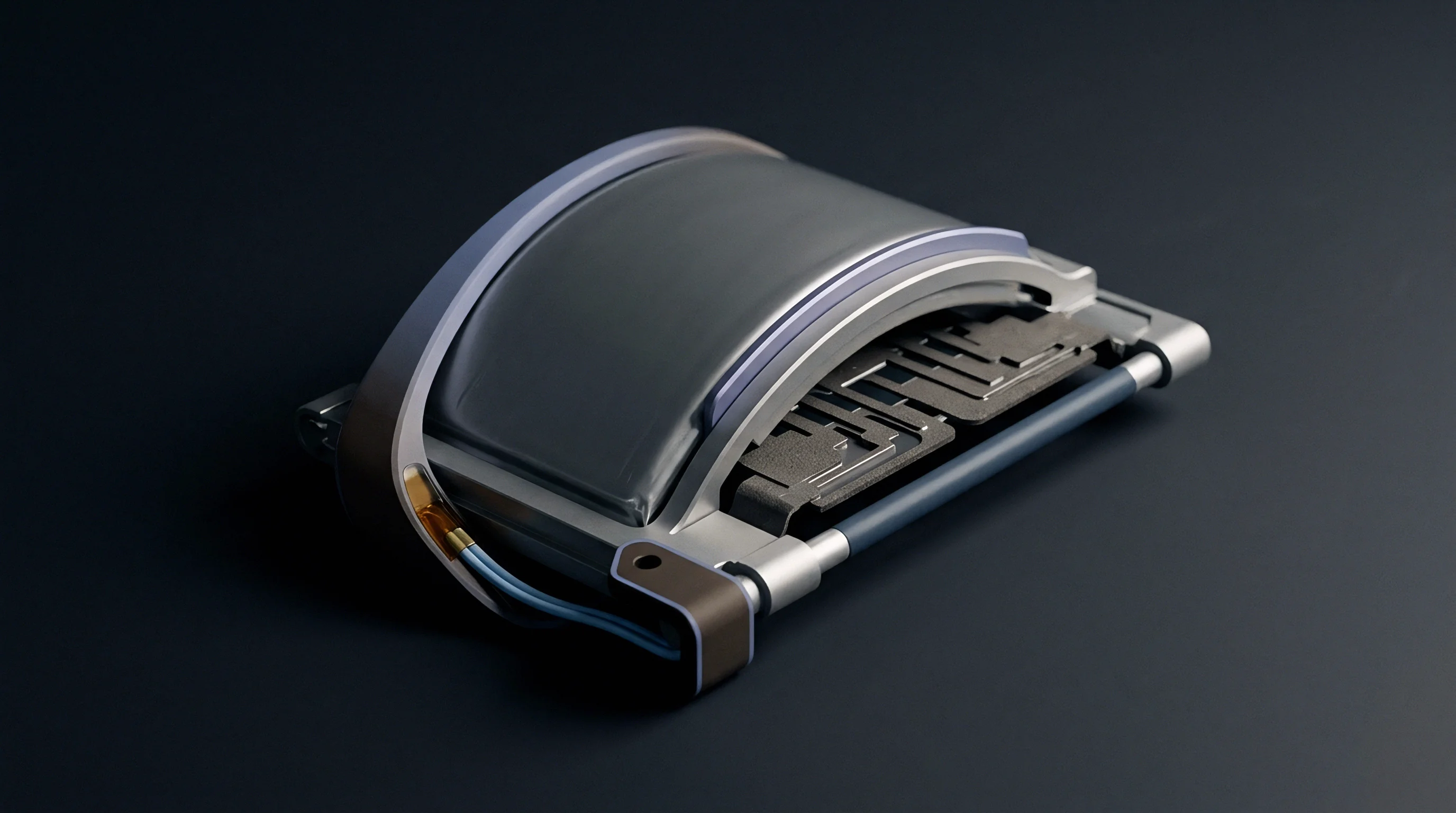
Sacrificial additive consumption follows pseudo-first-order kinetics relative to residual additive concentration in the electrolyte, scaled by accessible electrode surface area, operating potential, and ambient temperature. The reaction velocity constant obeys an Arrhenius relationship, with activation energies typically between 45 and 65 kilojoules per mole for standard carbonate solvent mixtures. Higher operating voltages accelerate positive electrode surface catalytic activity, elevating the apparent depletion rate constant.
Will Elevated Formation Temperatures Accelerate Additive Depletion?
Elevated formation temperatures accelerate early additive uptake. Raising the formation bath temperature from 25 degrees Celsius to 45 degrees Celsius increases the initial consumption rate by a factor of 2.8, consuming a larger proportion of the starting charge before cells enter distribution. Strict parameter control during factory formation protocols is therefore required to prevent premature depletion of the chemical reservoir.
The operational lifetime of the additive reservoir is modeled through a rate equation combining calendar consumption and cycling consumption:
- Calendar depletion velocity scales with storage temperature, open-circuit voltage, and state of charge, proceeding independently of external current flow.
- Dynamic cycling consumption depends on charge and discharge C-rates, particle volume strain amplitude, and cumulative active area renewal.
- Voltage cutoff acceleration increases additive oxidation rates exponentially when charging beyond 4.25 V against lithium metal.

Worked Depletion Projection
Kinetic modeling illustrates the service-life impact of operating temperature and voltage cutoff. Consider a 50 Ampere-hour pouch cell containing 120 grams of electrolyte with an initial charge of 2.0 weight percent vinylene carbonate, corresponding to 2.40 grams of additive. Initial formation consumes 1.10 grams, leaving 1.30 grams of unreacted additive in the bulk solution.
The steady-state consumption rate during continuous 1C cycling at 25 degrees Celsius and 4.20 V cutoff is 0.65 milligrams per equivalent full cycle. Under these baseline conditions, the cell reaches the critical 0.10 gram threshold after 1,846 equivalent full cycles.
Operating at 45 degrees Celsius elevates the kinetic rate constant, raising dynamic consumption to 1.75 milligrams per cycle and exhausting the reservoir at 685 cycles. Raising the upper cutoff voltage to 4.35 V at 45 degrees Celsius further accelerates positive electrode oxidative consumption, driving the depletion rate to 2.40 milligrams per cycle. The reservoir reaches critical exhaustion after 500 cycles under these combined stress parameters.
Whether secondary surface reactions between consumed additive fragments and mobile trace water regenerate active passivating species remains an open question in pouch cell degradation modeling.

Underwriting
The consumption status of sacrificial additives governs regulatory classification, testing validity, and commercial warranty liability for pouch cells. International transport regulations under UN 38.3 require design type testing on cells that accurately reflect the chemical and mechanical state of units entering transport streams. Cells subjected to UN 38.3 Test T.2 thermal cycling and Test T.5 external short circuit post-depletion show significantly higher failure rates due to compromised interphase resistance and internal gas pressure.
Under UN 38.3 Section 38.3.2.1, a significant change in cell electrolyte formulation or chemical stability invalidates existing transport test summaries.
Purchase agreements for high-reliability pouch cells require explicit chemical baseline documentation within the manufacturing quality dossier. Technical specifications must define minimum post-formation additive concentrations, standard gas chromatography audit schedules, and allowable thickness swelling tolerances under fixed compression fixtures. Sourcing contracts that omit specific analytical verification thresholds transfer financial exposure for mid-life rollover capacity failure to the battery pack integrator.
Quality agreements must incorporate IEC 61960-3 endurance test compliance coupled with destructive chemical verification clauses to ensure incoming production lots maintain the specified additive reservoir.