Primary Precursor Droplet Breakup Physics in Two-Fluid Gas Atomization
Primary precursor breakup in two-fluid gas atomization depends on aerodynamic shear matching liquid surface tension to yield uniform droplets before secondary breakup.


Jet
Pneumatic atomization converts a continuous precursor solution stream into finely dispersed liquid elements inside high-velocity gas flows. Synthesizing nickel-manganese-cobalt precursor powders for cathodes requires precise control over this initial fluid breakup before chemical precipitation or thermal dehydration takes place. The primary breakup process dictates how aerodynamic shear forces overcome liquid surface tension and viscous resistance, triggering surface instability within millimeters of the nozzle exit.
When aqueous precursor streams containing nickel sulfate, cobalt sulfate, and manganese sulfate discharge from an orifice into supersonic gas streams, the relative velocity differential drives rapid momentum exchange. The primary parameter governing this initial disruption is the gas Weber number, calculated as gas density multiplied by the square of relative velocity and the initial liquid jet diameter, divided by liquid surface tension. As the gas Weber number rises past specific physical thresholds, the disintegration mechanism shifts from long-wavelength capillary oscillations to immediate surface stripping.
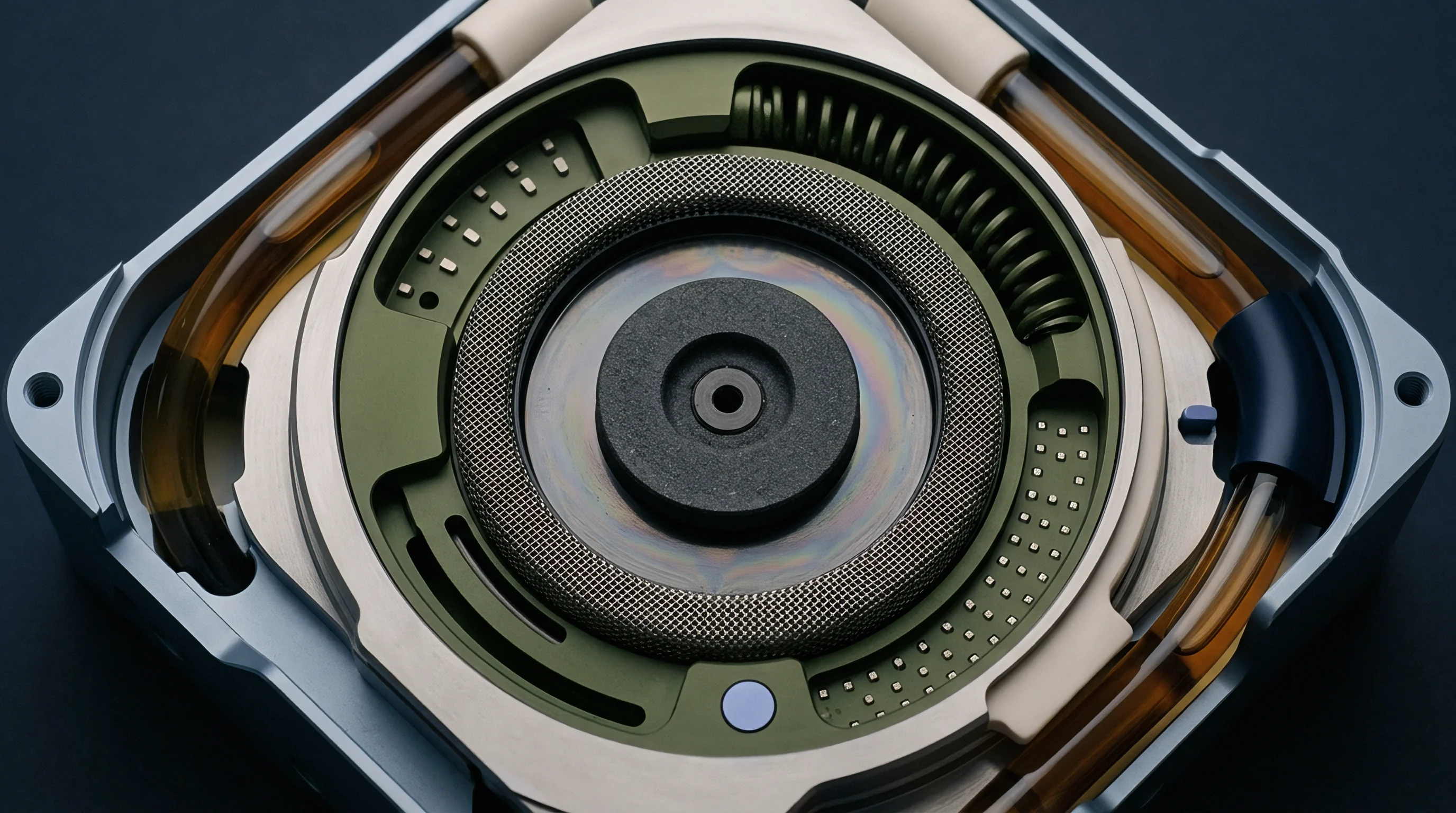
Liquid Core Decay along Aerodynamic Shear Layers
Continuous fluid columns extending from central feed passages experience intense momentum transfer from concentric high-speed gas flows. Intact core length measures the axial distance from the nozzle exit to where the liquid column loses structural integrity. The kinetic momentum flux ratio ~ gas density times gas velocity squared divided by liquid density times liquid velocity squared ~ determines how fast the core decays.
Higher momentum flux ratios shorten the intact liquid column, exposing smaller fluid volumes to primary aerodynamic shear.
Empirical models tie intact core length calculations to dimensionless velocity ratios. At a baseline momentum flux ratio of 12, measured intact core length reaches approximately 6.2 jet diameters in ambient air at 20 degrees Celsius. Elevating precursor solution temperature to 60 degrees Celsius lowers fluid viscosity and surface tension, dropping the non-dimensional intact length constant from 6.2 to 4.8.
This thermal shift accelerates core breakdown, moving primary ligament detachment closer to the nozzle orifice face.
| Breakup Regime | Gas Weber Number Range | Ohnesorge Number Range | Dominant Physics | Primary Ligament Morphology |
|---|---|---|---|---|
| Rayleigh-Plateau | We < 12 | Oh < 0.1 | Capillary tension dominance | Large spherical drops equal to jet diameter |
| Bag Breakup | 12 ≤ We < 50 | Oh < 0.1 | Aerodynamic pressure ballooning thin liquid membranes | Hollow liquid bags surrounded by toroidal rings |
| Multimode Breakup | 50 ≤ We < 100 | Oh < 0.1 | Combined membrane inflation and central filament stretching | Stamen threads surrounded by bag fragments |
| Shear Stripping | 100 ≤ We < 350 | Oh < 0.3 | Boundary layer sheet stripping along jet periphery | Elongated micro-filaments shed from core rim |
| Catastrophic Breakup | We ≥ 350 | Oh > 0.3 | Rayleigh-Taylor wave growth shattering liquid core | Sub-micron liquid mist and short thread fragments |

Dimensionless Scaling in Two-Fluid Nozzle Interfaces
Predicting primary disintegration mechanics relies on force balance ratios established between aerodynamic drag, inertia, and surface tension. The Ohnesorge number quantifies the relative magnitude of liquid viscosity to capillary forces, expressed as liquid dynamic viscosity divided by the square root of liquid density, surface tension, and jet diameter. Precursor formulations containing organic dispersants display Ohnesorge numbers above 0.1, shifting primary breakup boundaries toward higher gas Weber numbers.
At a gas Weber number exceeding 350, shear stripping converts liquid core surfaces into sub-five-micrometer filaments within two nozzle orifice diameters.
In high-pressure two-fluid nozzles operating with nitrogen at 0.8 MPa, gas density increases sevenfold compared to ambient air. This elevation in gas density increases the gas Weber number without requiring supersonic gas velocities, enabling low-velocity pneumatic atomization of shear-sensitive metal precursor solutions. Operating below the minimum kinetic momentum flux ratio results in incomplete core disintegration, producing coarse droplets that pass into calcination furnaces as unatomized liquid slugs.
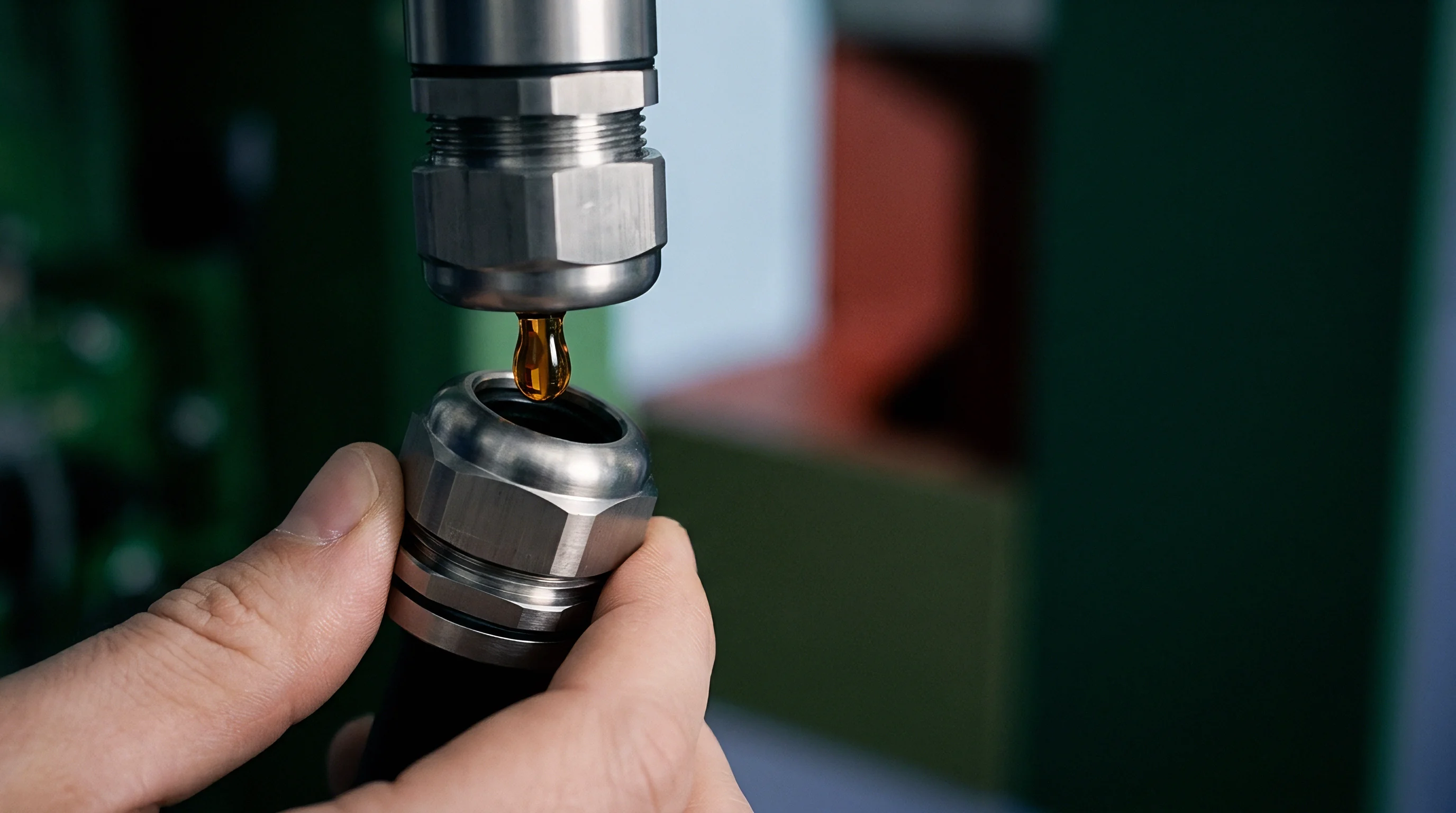

Disruption
Surface wave growth along precursor stream boundaries determines the physical transition from continuous liquid columns to detached droplets. Oscillations at the gas-liquid interface amplify under aerodynamic stress, forming thin liquid sheets and elongated filaments that quickly sever into discrete droplets. The spatial amplification rate of these surface waves dictates the initial droplet spectrum generated in industrial precursor production lines.
High-velocity gas streams flowing parallel to the liquid boundary generate localized pressure drops across wave crests, amplifying microscopic surface perturbations. Shear layer instabilities grow in two distinct spatial modes, determined by the relative velocity between the driving gas stream and the central liquid core.

Kelvin Helmholtz Surface Waves and Ligament Pinch Off
Velocity gradients between moving liquid streams and surrounding gas sheaths generate microscopic ripples along fluid interfaces. Shear instability drives initial wave amplification, forming surface ripples with wavelengths inversely proportional to the square of gas-phase velocity. As wave amplitudes reach sizes comparable to shear layer thickness, high-speed gas strips wave crests into continuous liquid threads known as primary ligaments.
Primary filaments break down through Rayleigh capillary pinch-off mechanics once detached from the main fluid mass. Surface tension acts to minimize interfacial surface area, causing elongated liquid threads to contract into spherical droplets. Higher solution viscosity delays Rayleigh pinch-off, causing primary ligaments to stretch further downstream into long liquid strings before breaking, expanding the final droplet size variation.
- Viscous Filament Roping occurs when concentrated nickel sulfate solution viscosity exceeds 15 mPa·s, causing detached ligaments to resist capillary pinch-off and form thick liquid strings that yield irregular particles.
- Ligament Re-coalescence takes place inside dense atomization plumes when primary micro-droplets collide with slowly moving fluid fragments near the nozzle face.
- Asymmetric Core Deflection arises from non-uniform gas velocity profiles exiting annular gas channels, bending the central precursor stream off-axis and broadening droplet size distributions.
- Capillary Pulsation develops when liquid feed pressure fluctuates, inducing mass flow oscillations that alter local gas-to-liquid mass ratios during continuous atomization runs.

Viscous Resistance within Concentrated Precursor Solutions
Dissolved metal salts and organic binder additives elevate dynamic fluid friction, dampening high-frequency surface oscillations. Higher fluid viscosity dampens surface wave amplification rates, shifting peak instability to longer wavelengths. Consequently, viscous precursor solutions require higher gas energy inputs to achieve primary droplet sizes identical to pure water feeds.
High precursor liquid viscosity suppresses capillary instability growth and forces the breakup region downstream into lower velocity gas zones.
Published literature documents a transition Weber number boundary near 350 under subsonic gas flow conditions. Under supersonic shock wave interaction, this transition boundary moves down to 280 due to sharp static pressure jumps across localized shock fronts. Operating two-fluid atomizers near this instability transition boundary without precise pressure control leads to unpredictable shifts between shear stripping and catastrophic wave breakup modes.
High precursor viscosity forces surface wave growth further downstream into regions where gas kinetic energy has decayed, increasing primary droplet diameters and widening particle size distributions.


Geometry
Mechanical configurations of internal delivery channels determine the spatial intersection between expanding gas conduits and central liquid supply lines. Two-fluid nozzles partition into close-coupled designs, where gas and liquid meet directly at the orifice plane, and free-fall designs, where the liquid jet travels several orifice diameters through ambient gas before meeting converging gas streams.
Alignment of internal gas rings relative to central precursor feed passages determines the velocity profile delivered to the shear interface. Minor physical offsets introduce asymmetric aerodynamic forces, distorting the central liquid core into an oval profile and destabilizing primary breakup.
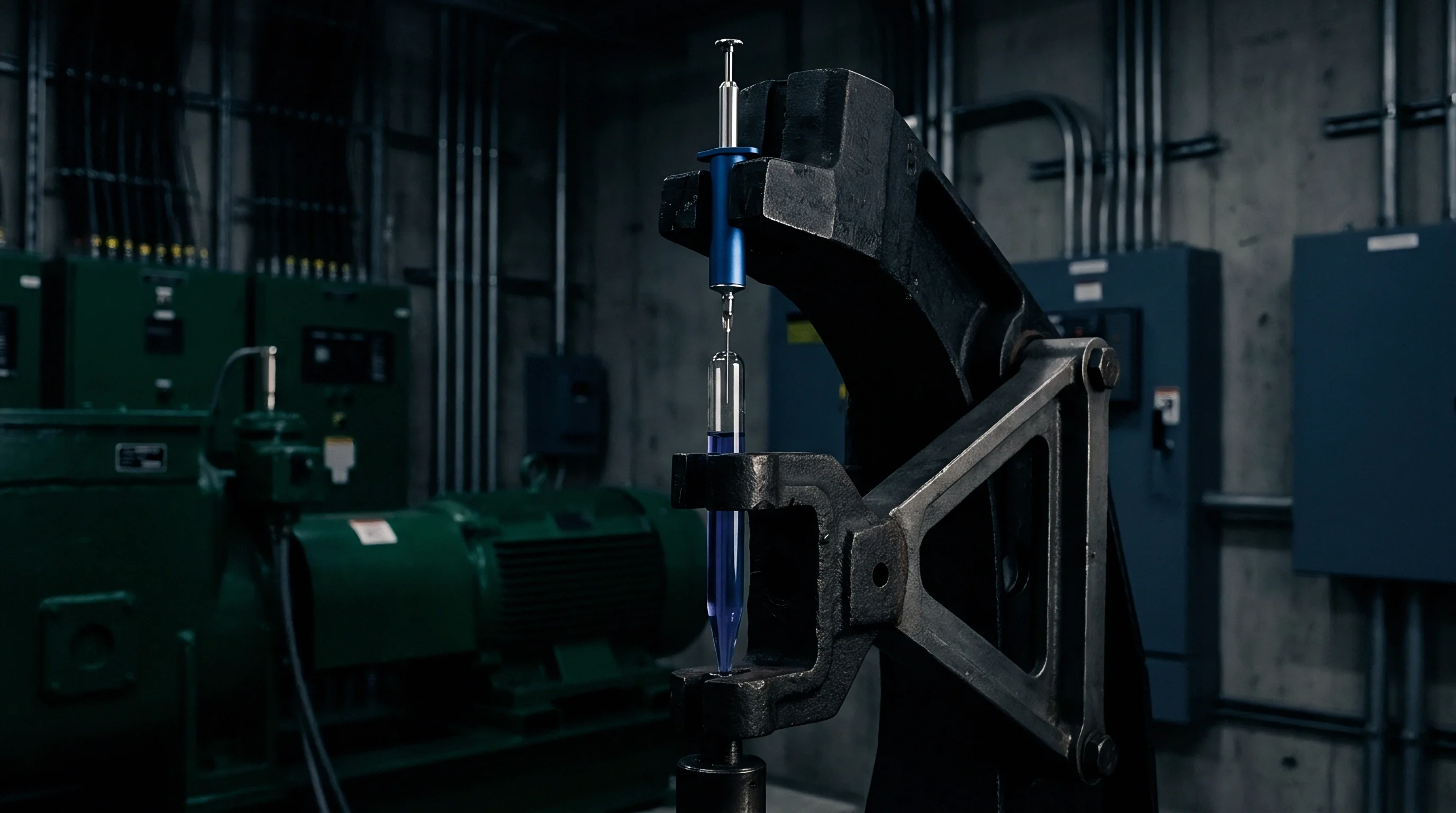
Close Coupled Annular Delivery versus Free Fall Nozzle Manifolds
Direct interaction between gas expansion rings and liquid orifice exit planes creates immediate momentum transfer before stream divergence occurs. Close-coupled gas atomization nozzles direct gas through narrow annular gaps directly onto the liquid stream as it emerges from the central tip. This configuration maximizes local gas kinetic energy at the breakup point, producing fine primary droplets at lower total gas consumption.
Free-fall configurations deliver precursor solutions through an extended liquid nozzle tip, allowing the fluid stream to fall freely over a distance of 20 to 100 millimeters before intersecting converging gas jets. Atmospheric drag decelerates the gas jets before impact, reducing effective gas Weber numbers at the fluid interface. Free-fall atomizers handle highly corrosive or hot precursor melts without nozzle tip freezing or salt encrustation, but demand higher gas-to-liquid mass ratios to yield fine droplet spectra.
This gas-liquid velocity field mirrors the coaxial propellant injection structures engineered for cryogenic rocket engines, where liquid oxygen core preservation dictates combustion stability. Atomization nozzles adapt this fluid coupling logic to dismantle the liquid column rather than maintain it.
| Nozzle Architecture | Annulus Gap Tolerance | Gas Jet Apex Angle | Gas Velocity at Impact | Relative Intact Core Length | Primary Sauter Diameter |
|---|---|---|---|---|---|
| Close-Coupled Annular | ±0.005 mm | 30 to 45 degrees | Mach 1.5 to 2.2 | 1.5 to 3.0 diameters | 12 to 18 μm |
| Free-Fall Converging Jets | ±0.025 mm | 15 to 25 degrees | Mach 0.8 to 1.2 | 8.0 to 15.0 diameters | 35 to 60 μm |
| Internal Mixing Swirl | ±0.010 mm | 60 to 90 degrees | Mach 0.5 to 0.9 | 0.0 (Internal Breakup) | 20 to 30 μm |
| External Coaxial Shear | ±0.008 mm | 0 to 10 degrees | Mach 1.0 to 1.4 | 4.0 to 7.0 diameters | 22 to 38 μm |

Where Does Filament Instability Dominate Primary Breakup?
Transition boundaries from surface shear erosion to bulk thread detachment move upstream as gas-to-liquid mass flow ratios increase. In close-coupled nozzles operating at gas-to-liquid mass flow ratios above 2.0, primary breakup occurs almost entirely within the high-shear boundary layer adjacent to the liquid orifice face. Filament instability dominates primary breakup when local gas Weber numbers remain between 50 and 100, where shear forces are strong enough to strip threads but insufficient to shatter the entire liquid core instantaneously.
Non-conformance to tight geometric tolerance standards on gas nozzle annulus alignment shifts the primary breakup point and voids particle size uniformity guarantees.
While proprietary internal swirl vanes are intended to eliminate primary ligament roping regardless of precursor solution viscosity, physical trials demonstrate that high precursor viscosity continues to damp high-frequency surface wave growth. Swirl vanes impart tangential velocity components that widen spray cone angles, but primary droplet size distribution remains largely governed by relative axial gas velocity.


Dispersion
Sauter mean droplet diameters resulting from initial liquid stream disintegration set the physical boundaries for downstream thermal dehydration and precipitation reaction rates. The primary droplet size spectrum establishes the maximum diffusion distances within evaporating liquid droplets during spray drying or calcination steps in battery material precursor lines.
Generating smaller primary droplets requires exponentially higher gas kinetic energy inputs. Gas compressor infrastructure represents the largest operational expense in pneumatic atomization facilities, making primary atomization efficiency critical to plant economics.

Sauter Mean Diameter Predictions for Cathode Syntheses
Empirical correlations governing droplet formation predict median particle diameters using liquid surface tension, gas momentum flux, and fluid viscosity parameters. The Sauter mean diameter, representing the ratio of total droplet volume to total surface area, scales inversely with the square root of the gas Weber number in shear stripping breakup regimes. For aqueous precursor solutions with surface tensions near 0.072 N/m, target primary Sauter mean diameters of 15 micrometers require relative gas velocities exceeding 220 m/s at close-coupled nozzle exits.
Quantifying primary droplet coalescence rates within dense spray plumes remains an unresolved challenge in two-fluid precursor processing. Droplet interaction models predict a 15% to 35% reduction in total available droplet surface area within 50 millimeters of the nozzle exit due to micro-droplet collisions. Buyers manage this analytical uncertainty by evaluating new precursor formulations on pilot-scale atomization loops to empirically determine final particle sizes rather than relying on supplier computational fluid dynamics simulations.
- Verify precursor solution rheology and surface tension on laboratory samples at target process temperatures prior to commissioning atomization runs.
- Establish baseline nitrogen supply manifold pressures to guarantee sonic velocity conditions across the gas annulus exit slot.
- Adjust central liquid precursor volumetric pump flow rates until the targeted gas-to-liquid mass ratio is reached on mass flow telemetry channels.
- Log differential pressure across the liquid injection needle to confirm stable central jet discharge without back-pressure oscillations.

Mass Balance and Energy Expenditure per Yield Unit
Operating compressor infrastructure at elevated supply pressures increases specific electrical consumption per kilogram of atomized product. Increasing nitrogen supply pressure from 0.4 MPa to 0.8 MPa doubles mass flow rate through the gas annulus, elevating compressor energy consumption by 115% while reducing primary Sauter mean droplet diameter by less than 22% in close-coupled geometries.
Excessive gas supply pressures increase plant compressor power demands while failing to reduce primary droplet diameter once catastrophic breakup limits are reached.
Contractual agreements for two-fluid precursor atomization plant procurement incorporate strict energy consumption standards, referencing ISO 1217 for compressed air and gas volumetric flow measurements. Equipment guarantees stipulate that specific gas consumption must not exceed 1.8 normal cubic meters of nitrogen per kilogram of atomized precursor liquid at target Sauter mean droplet diameters of 20 micrometers (±2.5 micrometers). Non-compliance with this efficiency threshold requires equipment manufacturers to re-machine gas exit annulus profiles to restore ideal momentum flux transfer.


Dossier
Procurement documents for atomization equipment establish verification parameters for spray stability, nozzle wear limits, and powder size conformity. Quality management systems for battery cathode precursor synthesis require continuous monitoring of atomization parameters to prevent batch contamination and irregular particle morphology.
High-velocity precursor solutions containing insoluble metal salt precipitates or recycling contaminants erode nozzle orifices over extended operating cycles. Orifice enlargement alters liquid exit velocities, disrupting momentum flux balances established during process qualification.

Factory Acceptance Testing Protocols for Atomizer Assemblies
Verification trials conducted at equipment manufacturing plants measure water-equivalent spray distributions under baseline pressure conditions prior to shipment. Factory acceptance testing protocols specify patternator measurements to map spatial liquid distribution across the spray plume profile. Angular asymmetry exceeding 5% from the central nozzle axis indicates machining errors in annular gas passages, invalidating factory sign-off.
Acceptance testing requires continuous 8-hour operation at rated liquid and gas mass flow rates while logging acoustic emissions and high-speed imagery of the primary breakup zone. Optical diagnostics confirm intact liquid core length stability and verify the absence of liquid sheet flapping instabilities during continuous operation.
- Nozzle Concentricity Tolerances must sit within ±0.005 mm total runout across gas annulus and liquid feed components to maintain symmetric shear layer generation.
- Pressure Differential Logging requires real-time sensing channels installed directly upstream of gas and liquid entrance ports with data capture frequencies of at least 100 Hz.
- Precursor Rheology Boundaries define acceptable dynamic viscosity ranges from 1.0 to 25.0 mPa·s and surface tension limits between 0.045 and 0.075 N/m for certified nozzle operation.
- Particle Size Distribution Cutoffs mandate that primary atomization output yields less than 2.0% volume fraction of droplets larger than 50 micrometers to prevent incomplete calcination.

Nozzle Orifice Wear Limits and Material Qualification
Abrasive precursor suspensions containing recycled battery metal salts cause progressive geometric distortion of ceramic fluid exit channels. Sapphire and reaction-bonded silicon nitride inserts exhibit wear rates below 0.001 mm per 1,000 operating hours when atomizing neutral sulfate solutions. Standard 316L stainless steel nozzle tips experience orifice enlargement exceeding 0.040 mm over the same duration, causing liquid jet velocity to drop and momentum flux ratios to drift outside control specifications.
How changes in internal gas channel surface roughness over extended operating cycles alter micro-shock wave patterns governing primary sheet stripping in close-coupled nozzles remains a critical question for long-term atomizer qualification.