Meaning
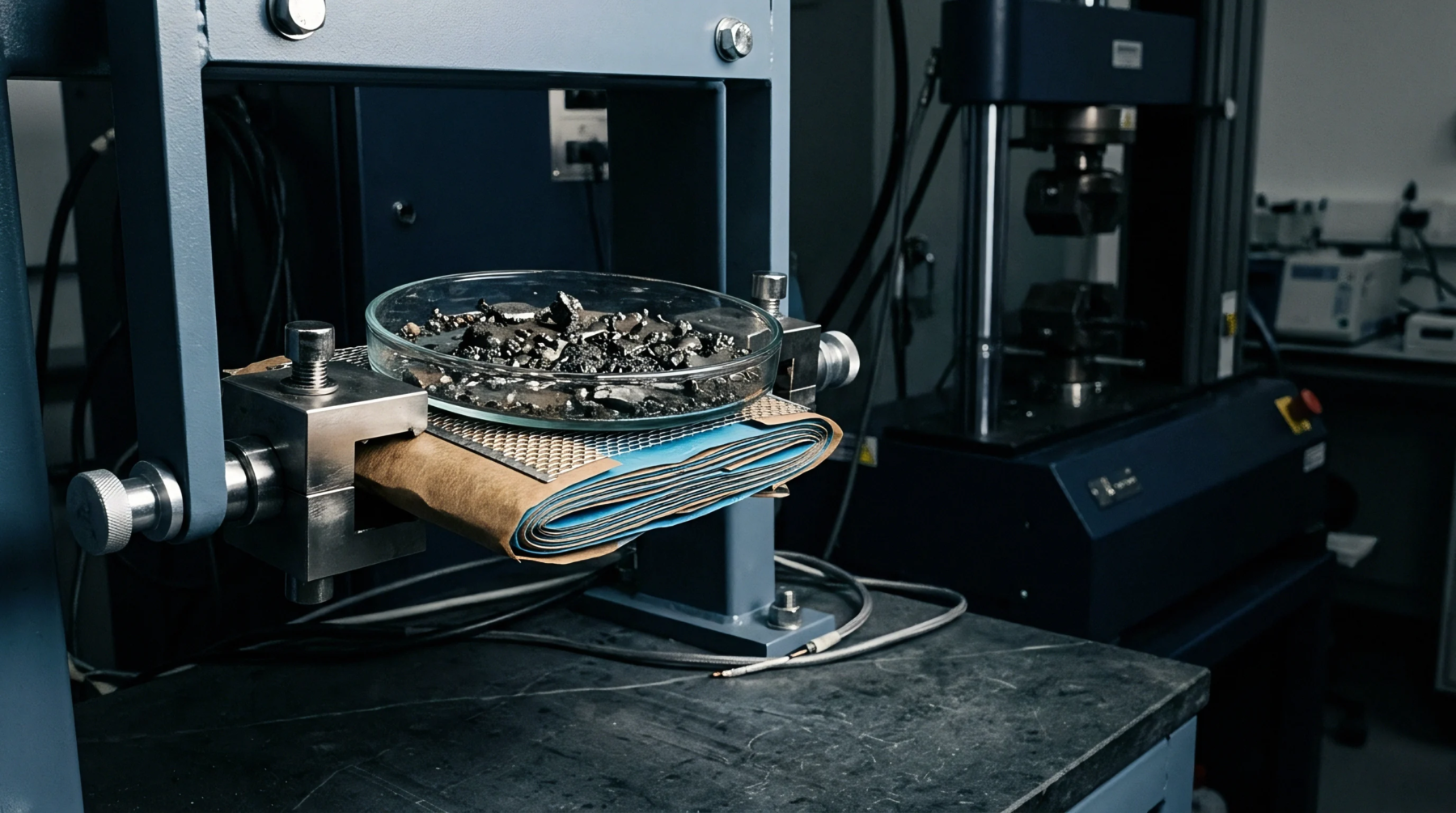
Mechanical separation occurs when high lateral forces exceed the bonding strength between a battery electrode coating and its current collector. In shear stripping, the active material layer slides away from the metal foil substrate during high speed roll-to-roll manufacturing or subsequent winding operations. This failure mode stems from inadequate adhesion promoters or improper drying profiles that leave internal voids at the interface.
High interfacial stress creates a risk of internal short circuits because loose debris often bridges the gap between opposing electrodes within a finished cell.
Coating Adhesion
Engineers measure the resistance to this separation using a standard peel test performed at a controlled angle. Results determine whether the electrode preparation process maintains the structural integrity of the current collector bond under tension. Stable adhesion values indicate that the binder chemistry effectively maintains the electrical connection between the active material and the conductive base foil.
Manufacturing Dynamics
Rollers exerting excessive pressure during the calendering stage drive the active layer toward the edge of the substrate. If the force distribution remains uneven across the web width, one side of the coated strip experiences premature delamination. Line operators adjust the clearance between the compression rolls to balance these internal stresses while maintaining the required electrode density.
Precise thermal control during solvent evaporation prevents the formation of a brittle interface that tends to fail under mechanical agitation.
Substrate Integrity
Metallic foils require a clean surface and specific surface energy to ensure that the slurry attaches firmly during the casting phase. Microscopic pitting on the foil surface provides physical anchor points that prevent the active mass from sliding under high shear loads. A high level of surface roughness typically improves the mechanical interlock between the metallic base and the coating layer.
Properly managed interface chemistry remains the final defense against delamination during the assembly process.