Secondary Gas Loop Extraction Dynamics for Reducing Parasitic Accretion in Tool Steels
Secondary gas loops sweep metal condensate and ejecta out of laser paths, eliminating parasitic accretion and void formation in tool steels.
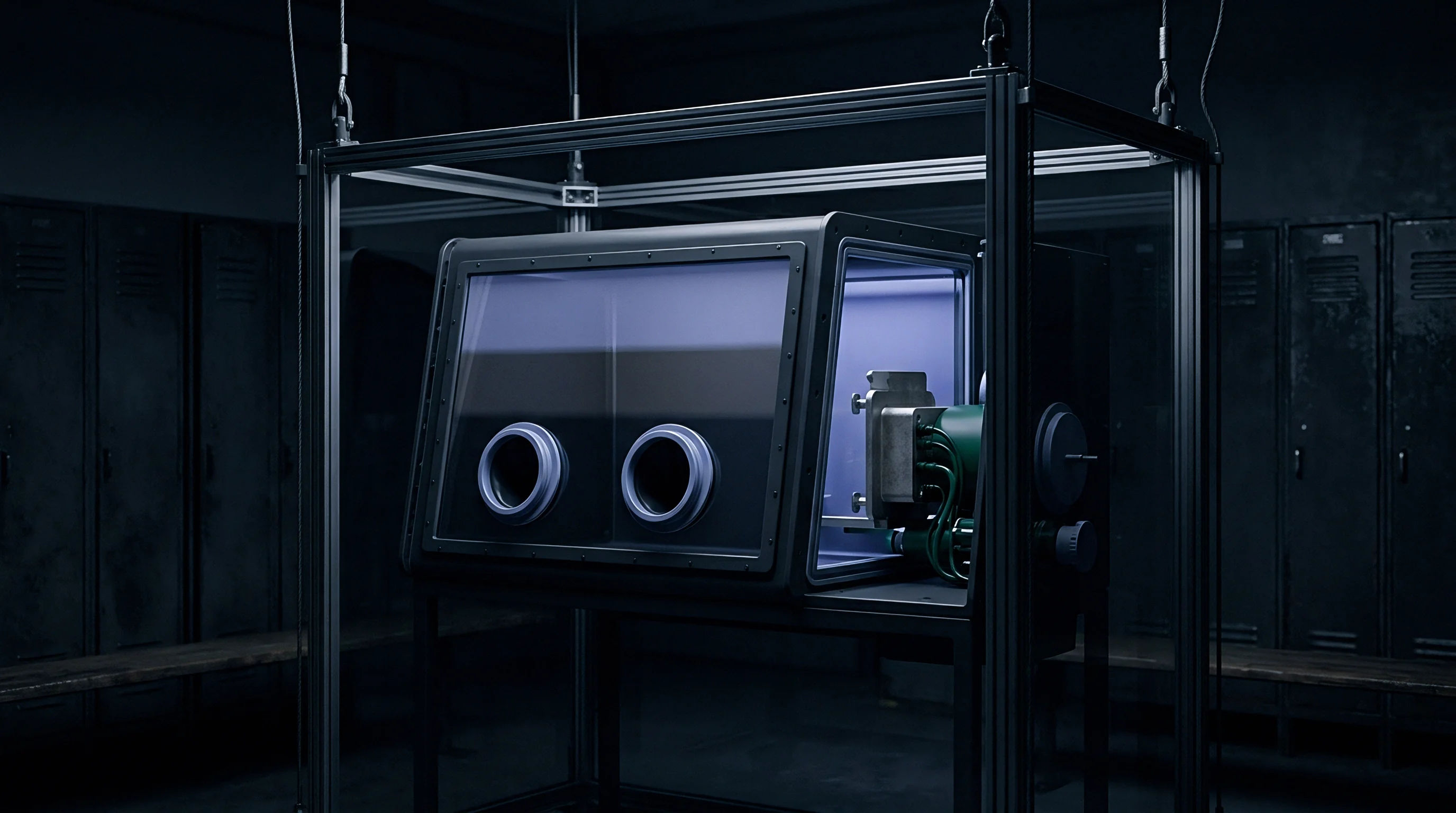

Plume
High-energy laser melting of tool steels generates intense localized thermodynamic vapor pressure at the molten keyhole pool. During powder bed fusion or directed energy deposition of high-carbon, high-alloy tool steels such as H13, M2, and CPM 10V, localized surface temperatures routinely exceed thirty-two hundred degrees Celsius. At these thermal thresholds, volatile alloying elements vaporization creates a dense vapor column above the melt track.
This expanding vapor interacts with the surrounding chamber atmosphere, forming liquid metallic droplets that solidify mid-air into sub-micron condensates and heavy metal spatter.
Chromium vapor oxidizes rapidly. Manganese vaporizes at lower temperatures than iron, altering the local alloy chemistry of the molten pool. Without active sweep management, these vaporized particles form an opaque cloud directly above the processing area.
This vapor cloud attenuates incoming laser energy, scattering beam focus and causing thermal melt pool instability. Uncontrolled vapor columns alter laser power delivery to the substrate, leading to inconsistent melt track dimensions and shallow laser penetration depth.

Keyhole Evaporation and Vaporization Physics
Laser spot energy densities exceeding one megawatt per square centimeter melt alloying elements rapidly. The vapor pressure created inside the keyhole ejects liquid metal micro-droplets upwards at velocities ranging from ten to eighty meters per second. These ejected droplets mix with volatile metallic gases, creating a multi-phase thermal cloud.
As the vapor moves away from the intense heat of the laser beam, cooling causes nucleation into sub-micron aerosol particles ranging from twenty nanometers to two micrometers in diameter.
Heavy ejecta fall outside melt tracks. These larger spatter particles, measuring between ten and one hundred micrometers, carry sufficient kinetic energy to land on adjacent powder beds or previously solidified die steel surfaces. When micro-spatter lands on cold tool steel surfaces, it forms parasitic accretions.
These accretions interrupt the smooth re-coating of fresh powder layers and introduce localized surface irregularities that subsequent laser passes fail to re-melt completely.
Inert gas extraction velocity needs to match vapor plume expansion speed without disturbing the liquid melt pool.
Thermodynamic Accretion Modes in Alloy Steels
Volatilized chromium and manganese cool into liquid micro-droplets above the molten weld pool. In high-vanadium tool steel processing, vanadium oxides condensate onto surrounding metal substrates, creating brittle intermetallic surface layers. These layers present higher electrical resistivity and altered thermal conductivity compared to the parent tool steel matrix.
The presence of parasitic accretions disrupts the uniform thermal dissipation required for martensitic grain structure formation during rapid solidification.
Tool steel dies demand density. Microstructural integrity suffers when volatile species redeposit onto active fusion zones. Parasitic accretion mechanisms manifest in three distinct geometric forms across tool steel build surfaces:
- Inter-Layer Sintered Agglomerates emerge when fine metallic condensate falls onto un-melted powder layers, forming loosely bonded clusters that create secondary drag against the powder spreader blade.
- Melt-Line Oxide Scales develop as volatile chromium and iron vapors react with trace oxygen inside the processing enclosure, redepositing as thin refractory films along weld boundaries.
- Recirculated Spatter Inclusions occur when heavy metallic ejecta roll back into active melt tracks, introducing un-melted core defects and high-density void seeds into the solidified tool steel matrix.
Ignored vapor columns cause systematic power loss, un-melted inclusion networks, and localized micro-cracking across high-stress tool steel sections. Failure to sweep volatile metallic gases away from the fusion zone results in a fifteen to twenty-five percent reduction in fatigue strength across finished tool steel inserts.

Recirculation
Auxiliary loop piping channels filtered argon across the active processing zone to maintain continuous sweep mechanics. A primary gas flow across a build plate clears broad atmospheric debris, yet secondary boundary layer eddies form near chamber sidewalls and nozzle exits. These micro-eddies trap volatile condensates, allowing sub-micron metallic soot to swirl back toward the laser interaction zone.
Secondary gas loop extraction systems introduce target-directed vacuum extraction zones, establishing isolated pressure drops that prevent volatile vapor from re-entering the primary gas stream.
Argon sweep eliminates oxide soot. Secondary extraction loops balance inlet blowers and exhaust vacuum units to generate a balanced push-pull gas dynamic above the tool steel substrate. Positioned opposite to the supply nozzle, secondary extraction ducts collect aerosol condensate before particle nucleation expands into heavy agglomerates.
Fluid dynamic modeling indicates that secondary extraction loops reduce local vapor residence times from several hundred milliseconds down to under fifteen milliseconds.

Laminar Boundary Layer Sweep Mechanics
Fluid dynamics in the primary process cavity govern whether volatile particles exit or hover above the powder bed. A laminar sweep gas layer running parallel to the build plane prevents vapor clouds from rising into optical pathways. When sweep gas velocity drops below critical thresholds, thermal buoyancy forces dominate, pushing hot metallic vapors upward where they condense on cold chamber components or optical protection glass.
Secondary gas channels supply a localized high-velocity gas curtain directly over the melt zone. This continuous gas blanket forces vapor plumes to remain horizontal, conveying volatile aerosol particles straight into high-efficiency vacuum intakes. Maintaining stable boundary layer thickness prevents turbulent boundary layer separation, eliminating back-flow zones where parasitic soot settles on tool steel parts.
Pressure Differentials and Vacuum Extraction Nozzles
Suction manifolds situated downstream create localized force gradients that sweep micro-spatter from the chamber. The secondary extraction system maintains a negative pressure differential between two and five kilopascals relative to ambient chamber pressure. This localized pressure differential draws particulate-laden argon through narrow suction slits located within twenty millimeters of the active tool steel build plane.
Suction pressure holds steady differential. Extraction nozzle geometry utilizes tapered slit configurations to equalize suction pressure across the full width of the tool steel build envelope. Secondary loop extraction designs must optimize nozzle geometry, proximity, and pressure metrics to prevent boundary layer turbulence.
| Loop Architecture | Sweep Velocity (m/s) | Pressure Drop (kPa) | Condensate Clearance (%) | Optics Lifespan (Hours) |
|---|---|---|---|---|
| Single-Pass Primary Sweep | 1.2 | 0.3 | 62.4 | 45 |
| Co-Axial Nozzle Extraction | 3.5 | 1.8 | 84.1 | 120 |
| Dual-Zone Secondary Loop | 2.8 | 3.2 | 96.7 | 380 |
| Multi-Port Push-Pull Vacuum | 4.2 | 4.8 | 98.2 | 520 |
Commercial equipment suppliers frequently state that primary gas sweep systems clear all process fumes without requiring secondary extraction channels. Machine builders claim that standard cross-flow filtration adequately protects tool steel build beds from soot redeposition during extended builds. Factory floor observations demonstrate that primary sweeps leave fine sub-micron condensates floating in secondary recirculation pockets, forcing operators to manual clean build plates between layers.

Velocity
Sweep speed across the build area determines whether sub-micron condensates hover or exit the processing area cleanly. Gas velocity governs the mechanical drag force applied to suspended metallic particles within the gas stream. If extraction velocity runs too low, thermal buoyancy carries metal vapors upward toward optical windows.
If extraction velocity runs too high, the gas stream disturbs the underlying tool steel powder bed, blowing un-melted metal particles out of the build plane and creating severe layer thickness variations.
Laminar boundary layers remain stable. The ideal secondary loop extraction velocity balances particle drag force against powder bed displacement thresholds. For typical H13 and D2 tool steel powder distributions measuring fifteen to forty-five micrometers, sweep velocities between two point zero and three point five meters per second capture suspended condensate aerosols without entraining heavier un-melted powder particles.

Reynolds Number Calibration for Boundary Layers
Streamlined gas flow destabilizes when turbulent eddies form above the laser interaction zone. Operating the gas sweep within the laminar regime requires maintaining a internal Reynolds number below twenty-three hundred inside the process cavity channel. Reynolds number calculations depend on gas density, dynamic viscosity, flow velocity, and effective duct hydraulic diameter.
Gas density alters kinetic drag. Argon presents a higher density than nitrogen at equivalent operating temperatures, providing superior momentum transfer to airborne metallic condensate. Utilizing argon within secondary extraction loops enables effective condensate removal at lower gas velocities, reducing the risk of powder bed scouring during laser execution.
A gas velocity of 2.2 meters per second across the build zone prevents condensate redeposition during 300-watt laser processing.

How Does Extraction Rate Prevent Condensate Redeposition?
Gas dynamic force pushes light airborne particles directly into the exhaust manifold. By maintaining precise mass flow rates inside the secondary loop, volatile metallic aerosols receive continuous lateral momentum. This lateral momentum overrides thermal updrafts generated by laser heat, directing volatile species into high-efficiency filter units before condensation forms heavy surface accretions.
System tuning requires balancing intake and exhaust fan performance. Operators calibrate secondary extraction systems using a structured, sequential process:
- Measure background chamber pressure using differential piezoresistive pressure sensors under zero-flow conditions.
- Initiate primary sweep argon flow to establish the base chamber circulation pressure field.
- Activate secondary extraction vacuum pumps, adjusting blower speed until negative differential pressure reaches two point five kilopascals at the duct inlet.
- Increase secondary sweep gas velocity incrementally while monitoring the powder bed surface through high-speed optical camera feeds to detect powder movement.
- Lock blower fan frequency at ninety percent of the velocity threshold that initiates visible powder particle movement.
- Verify condensate removal effectiveness by measuring optical window transmission decay over a four-hour continuous test execution.
Matching sweep kinetic energy to aerosol drag profiles keeps build environments clear of redeposited metallic soot.
Accretion
Redeposited metallic soot and un-melted alloy inclusions severely degrade the fatigue life of high-hardness tool steels. Parasitic accretion introduces discontinuous interfaces within dense martensitic microstructures. When tool steel dies operate under high-cycle mechanical loading or thermal fatigue regimes, like die-casting or hot stamping, these inclusions function as primary stress concentration sites that initiate premature fatigue cracking.
Micro-spatter creates stress risers. Metallographic examination of failed M2 tool steel inserts reveals that parasitic accretions contain high concentrations of chromium oxides and un-melted alloy cores. These oxide-rich accretions exhibit weak interfacial bonding with the surrounding primary steel matrix, leading to local delamination under cyclic operational strain.
Inclusion Formation and Carbide Segregation
Trapped oxide films weaken the grain boundaries inside martensitic tool steel matrices. In high-vanadium alloys like CPM 10V, parasitic accretions alter local carbon-to-vanadium stoichiometry. Volatile carbon loss during vapor plume formation creates localized pockets of low-carbon ferrite surrounding vanadium carbide clusters, resulting in soft spots across polished tool steel die surfaces.
Secondary gas extraction loop dynamics eliminate these soft spots by removing vaporized alloy components before redeposition occurs. Ensuring homogenous carbide distribution across tool steel build planes yields uniform heat treatment response and consistent Rockwell C hardness values after double-tempering stages.
Standard ISO 21809 dictates inert gas purity thresholds below five parts per million oxygen for processing reactive tool steel powders.
Defect Analysis in High-Cycle Tooling
Non-destructive evaluation of additive inserts reveals micro-void networks caused by swept spatter. High-resolution industrial X-ray computed tomography scans reveal that tool steel parts produced without secondary extraction display higher internal porosity metrics compared to secondary-swept components. Quality managers rely on precise audit criteria when verifying tool steel density:
- Volumetric Porosity Thresholds must remain below zero point zero five percent across critical functional die tool zones under computed tomography audit.
- Maximum Inclusion Size Limits restrict single parasitic accretion particle dimensions to under fifteen micrometers in structural core sections.
- Surface Roughness Deviations require Ra values below six point three micrometers in the as-built state prior to secondary machining or polishing operations.
- Micro-Hardness Uniformity Ranges mandate hardness variance under plus or minus one point five Rockwell C across twenty random test points on tempered tool steel surfaces.
Consider a production facility manufacturing custom H13 hot-stamping die inserts using a three-kilowatt fiber laser bed fusion system. Assume a single tool steel die insert requires seventy-two hours of continuous build time, consuming forty-eight kilograms of H13 powder at forty-five dollars per kilogram. Without secondary loop extraction, volatile soot accretion causes inter-layer lack-of-fusion defects, yielding an internal rejection rate of eighteen percent during post-build ultrasound inspection.
Integrating a secondary extraction loop maintains a uniform extraction velocity of two point eight meters per second, capturing ninety-five percent of volatile aerosols. This dynamic reduces the insert rejection rate from eighteen percent down to two point one percent. Across a yearly production volume of two hundred die inserts, scrap reduction saves approximately fifty-five thousand dollars in raw material powder costs alone, while eliminating three hundred and sixty hours of wasted machine processing capacity.
What structural limit prevents secondary gas extraction systems from eliminating sub-five-nanometer oxide nucleation during ultra-high power laser processing of carbon-rich tool steels?

Outlay
Capital investments in auxiliary sweep systems yield direct financial payback through reduced tool insert scrap rates. Secondary gas extraction loops require initial hardware purchases, including positive-displacement blowers, differential pressure sensors, stainless steel ductwork, and multi-stage particulate filtration units. Amortizing these capital costs across multi-year tool steel production contracts demonstrates that extraction hardware adds minor overhead compared to the expenses associated with scrapped high-alloy tool steel components.
Inert gas costs aggregate rapidly. Closed-loop secondary extraction systems recycle argon gas, circulating it through HEPA and sintered metal filters to remove metallic aerosol condensate without venting gas to ambient atmosphere. Gas recycling significantly reduces total operational expenditure during lengthy tool steel production runs.

Gas Consumption and Filtration Cost Models
Operating expenses for auxiliary extraction depend heavily on inert gas recovery rates. Open-loop systems that vent sweep argon consume up to forty liters of fresh gas per minute, generating substantial operational costs during continuous tool steel processing operations. Closed-loop secondary extraction systems filter and re-pressurize argon, maintaining gas consumption rates below two liters per minute to make up for minor mechanical seal leakage.
Filter differential pressure rises slowly. Sintered metal filter elements catch condensate particles down to zero point three micrometers. Automated pulse-jet cleaning systems periodically blast high-pressure argon backward through filter elements, dislodging accumulated metallic soot into sealed collector bins without interrupting active tool steel build processes.
| Cost Parameter | Open-Loop Single Pass | Closed-Loop Secondary Extraction | Cost Variance ($) |
|---|---|---|---|
| Argon Gas Consumption ($/hr) | 18.50 | 1.20 | -17.30 |
| Filter Element Replacement ($) | 450.00 | 1200.00 | +750.00 |
| Blower Power Consumption ($) | 120.00 | 380.00 | +260.00 |
| Tool Steel Scrap Cost Allocation ($) | 14200.00 | 1650.00 | -12550.00 |
| Net Operational Expense ($) | 33270.00 | 4430.00 | -28840.00 |
Procurement contracts for tool steel manufacturing machinery include specific gas quality and environmental control specifications. Standard equipment supply agreements mandate that secondary extraction loops hold chamber oxygen concentrations below ten parts per million throughout laser execution. Failure to meet this requirement releases the buyer from final machine acceptance obligations and transfers responsibility for consequential tool steel scrap costs directly back to the equipment supplier.
Secondary loop extraction systems recover up to 88 percent of recirculated argon while capturing metallic aerosol condensate.
Quality guarantees stipulate that certified extraction systems deliver clean gas streams containing under zero point zero one milligrams of particulate per cubic meter. Incorporating standard compliance clauses into procurement documentation establishes clear performance boundaries between machine vendors and tool steel tooling manufacturers.