Air Freight Packing Instruction 965 State of Charge Compliance Verification
Verify air cargo cell charge limits below 30 percent using rested open-circuit voltage lookups or bench discharges backed by signed UN 38.3 test records.


Threshold
Under UN 3480, International Civil Aviation Organization technical instructions set a maximum 30 percent state of charge ceiling for lithium ion cells moving by air. Enforced as a hard limit across the industry, the restriction applies to all standalone lithium ion batteries under Packing Instruction 965 of the International Air Transport Association Dangerous Goods Regulations. While passenger aircraft prohibit bulk shipments of lithium cells altogether, cargo carriers accept them only if the shipper proves every cell in the lot sits strictly within the legal charge limit before tender.
The severity of thermal runaway scales directly with stored chemical energy. At higher states of charge, an internal short circuit is far more likely to trigger cell-to-cell propagation throughout the package. Because of this risk, shippers must verify charge levels across full production lots before issuing dangerous goods documentation.
Under Section IA of Packing Instruction 965, exceeding thirty percent stored energy invalidates the dangerous goods declaration and subjects the cargo to immediate carrier rejection.
Shipment rules split along three main lines: cell format, watt-hour rating, and gross consignment weight.
- Section IA Consignments cover lithium ion cells exceeding 20 watt-hours and battery packs exceeding 100 watt-hours. These consignments demand full Class 9 Dangerous Goods documentation, UN specification packaging, and certified transport declarations signed by qualified personnel.
- Section IB Packages apply to smaller cells below 20 watt-hours or packs below 100 watt-hours shipped in quantities exceeding minimal parcel thresholds. These goods require rigid outer packaging capable of passing a 1.2-meter drop test, appropriate lithium battery handling marks, and documented dangerous goods transport manifests.
- State of Charge Exceptions permit transport above thirty percent solely under formal approvals granted by the civil aviation authority of the state of origin and the state of the carrier. Obtaining these statutory waivers demands extensive propagation testing alongside verified containment engineering.
- Overpack Consolidations bring multiple compliant individual cartons together into a single handling unit. Each constituent package inside the outer wrapping maintains individual compliance with marking, labeling, and charge limits.

Regulatory Boundaries under Packing Instruction 965
Airlines run acceptance audits against standardized dangerous goods checklists, matching pallet paperwork to package markings and individual carrier rules. Many international freight lines impose extra restrictions beyond the baseline technical instructions. Some will not touch standalone lithium battery consignments at all, while others turn away third-party assembled secondary cells unless the assembler has passed a prior audit.
Compliance relies primarily on the legal declaration signed by the shipper. Regulators audit manufacturing plants and air cargo warehouses, pulling random cell samples to check against factory charge logs. Falsifying these declarations carries criminal penalties across multiple jurisdictions.

Section IA and Section IB Distinctions
Package structure depends heavily on mass thresholds. Section IA shipments on Cargo Aircraft Only flights permit up to 35 kilograms net battery weight per box, requiring UN-specification packaging rated to Packing Group II standards. Section IB packages are capped at 10 kilograms net mass and can use non-UN outer packaging, provided it meets basic rigidity requirements.
Independent test labs validate design safety under UN 38.3 before any commercial flights occur. While the resulting test summary proves structural, thermal, and electrical resistance, it says nothing about the charge level of a specific outgoing shipment. To satisfy receiving carriers, shippers must supply separate, lot-specific proof showing the factory state of charge.
Cargo tenders with conflicting capacity figures are routinely held or seized by port authorities, leaving the consignor with heavy storage fees and terminal penalties.

Curve
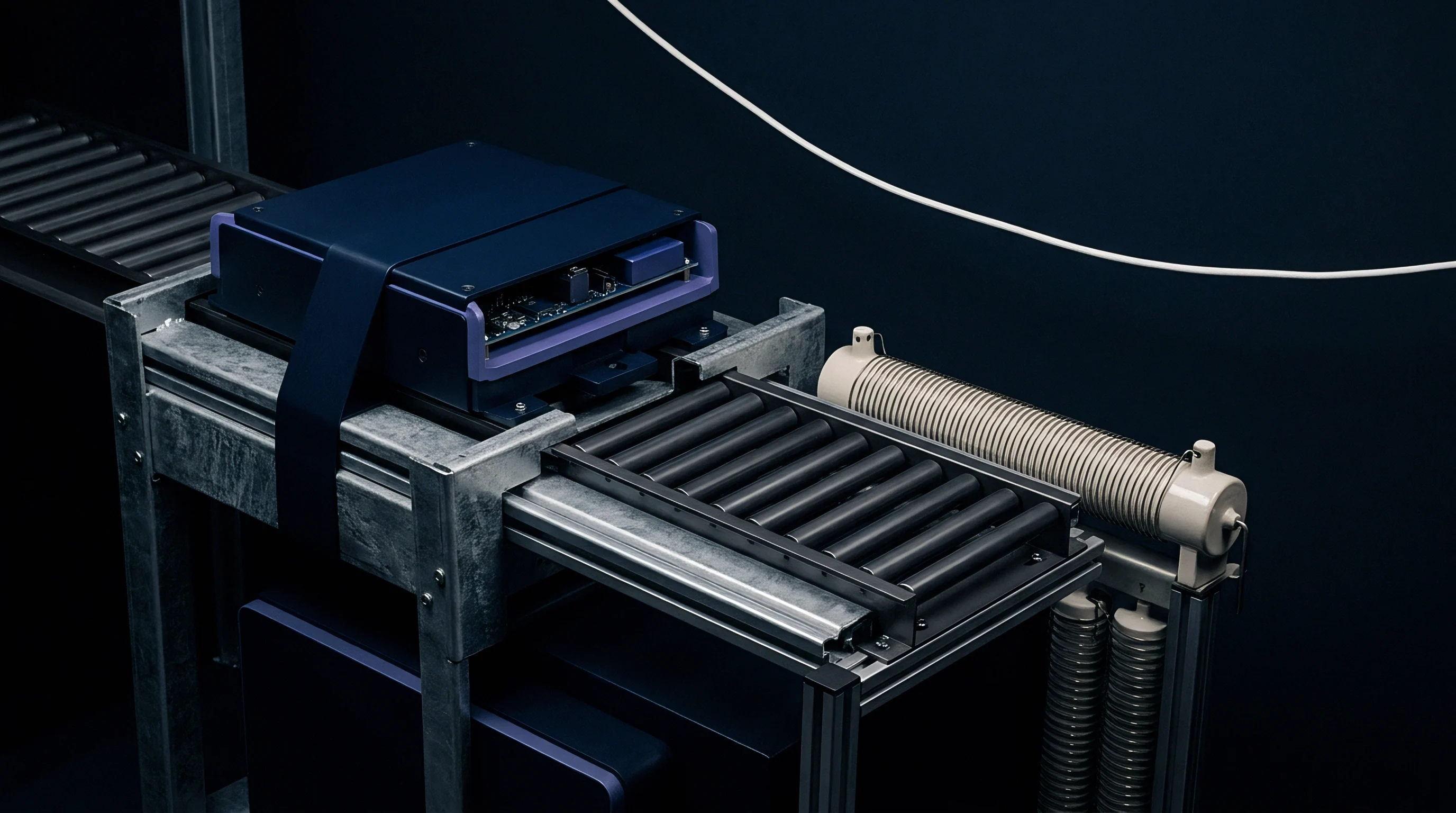
Open-circuit potential reflects the thermodynamic equilibrium of active electrode materials. Reading terminal voltage offers a quick, non-destructive way to estimate remaining charge, but the relationship varies considerably across chemistries, transport temperatures, and cycle history. Maintaining low energy states remains essential for chemical stability.
Nickel manganese cobalt (NMC) cells exhibit a distinct voltage slope between ten and forty percent charge. This gradient allows technicians to estimate stored energy from rested open-circuit readings using reference tables, though surface charge will distort measurements taken too quickly after cycling.
A lithium iron phosphate cell at thirty percent charge exhibits an open-circuit potential resting within four millivolts of its fifty percent charge level at room temperature.
Lithium iron phosphate (LFP) chemistry makes non-invasive verification difficult. Because LFP voltage remains almost flat across twenty to seventy percent charge, a measurement error of just one millivolt at the terminal can throw off estimated charge by as much as fifteen percent.
| Stored Charge Level | NMC811 Cylindrical (V) | LFP Prismatic (V) | LCO Pouch (V) | Acceptance Margin (mV) |
|---|---|---|---|---|
| 10 Percent | 3.52 | 3.21 | 3.68 | ±15 |
| 20 Percent | 3.61 | 3.26 | 3.74 | ±12 |
| 30 Percent Legal Limit | 3.68 | 3.28 | 3.80 | ±10 |
| 35 Percent Non-Compliant | 3.72 | 3.29 | 3.83 | ±8 |
| 50 Percent Target Failure | 3.84 | 3.31 | 3.92 | ±6 |
Because the LFP voltage curve is so flat, thirty percent and thirty-five percent charge states sit within a narrow millivolt window. Passive voltage checks cannot reliably resolve this difference without giving the cells time to fully relax.
- Anode Delithiation Dynamics govern how internal potential settles after high-rate factory cycling. Hysteresis in graphite anodes means the rested open-circuit voltage differs depending on whether a cell reached thirty percent charge from a higher or lower state.
- Cathode Phase Transitions create distinct voltage plateaus in nickel-rich and manganese-spinel formulations, which quality auditors map to locate state-of-charge boundaries.
- Electrolyte Concentration Gradients clear slowly in wound cylindrical cells and stacked pouches. If measured right off the packaging line before chemical relaxation finishes, voltmeter readings can read 12 to 20 millivolts high.
- Thermal Sensitivity Coefficients shift cell potential by roughly 0.5 to 1.2 millivolts per degree Celsius. Unheated warehouse docks can depress measured voltage enough to make an overcharged lot look compliant.

Electrochemistry of Voltage Plateaus
Voltage stabilization requires extended dwell times in temperature-controlled rooms to clear concentration polarization across the electrodes. Establishing an accurate correlation between voltage and charge takes at least 24 hours of rest for nickel-based chemistries, and up to 72 hours for iron phosphate.
Plants that speed up shipments by testing cells immediately after high-rate balancing risk dispatching cargo above the legal charge limit. As the cells sit on pallets and internal ions redistribute, terminal voltage often drifts across the 30 percent threshold.

Does Cell Aging Distort Open Circuit Voltage?
Cell aging shifts the relationship between open-circuit voltage and original rated capacity. As active lithium is lost to solid electrolyte interphase growth, usable amp-hour capacity drops, but Packing Instruction 965 measures the 30 percent ceiling against the original design capacity stated in the UN 38.3 test summary.
If aged inventory loses capacity, charging a cell to 30 percent of its remaining usable capacity keeps total energy safely below 30 percent of design capacity. However, checking aged stock using lookup tables built for fresh cells can generate misleading voltage readings during carrier intake checks.
Whether quality control teams can defend voltage-based charge estimates on older inventory without running full destructive discharge tests on sample batches remains a point of contention in air freight logistics.


Probe
Physical testing confirms whether export paperwork matches actual battery conditions. Technicians use digital multimeters, automated cyclers, and calibrated current shunts to verify cell states before staging containers, providing baseline data to resolve disputes between shippers and logistics inspectors.
Relying solely on hand-held voltmeters across high-volume shipments frequently yields false pass readings. Automated test systems use spring-loaded Kelvin probes to eliminate lead resistance, providing precise current integration during lot screening.
A calibrated cycler conducting a controlled discharge to manufacturer cutoff voltage provides the sole legally irrefutable evidence of actual stored charge.
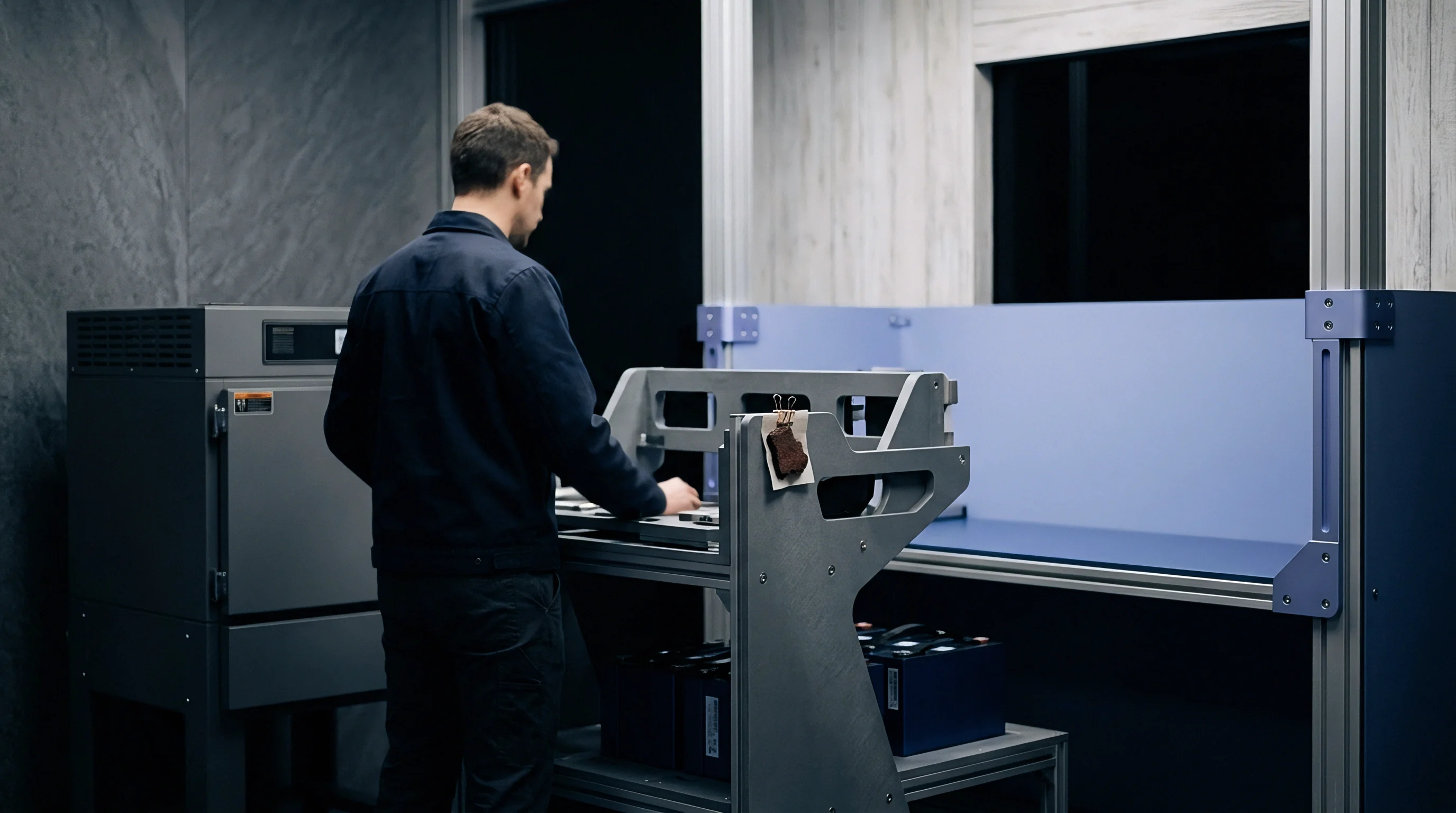
Using constant-current discharge channels, technicians pull sample cells from random cartons across the consignment and run verification discharges inside test chambers held at 25°C.
| Methodology | Execution Time | Equipment Investment | Destructive Impact | Legal Defensibility |
|---|---|---|---|---|
| Resting Voltage Scan | Under 10 Seconds | Calibrated Multimeter | Non-Destructive | Moderate for NMC, Poor for LFP |
| BMS Telemetry Query | Under 30 Seconds | Communication Interface | Non-Destructive | Contingent on Fuel Gauge Quality |
| Partial Rate Discharge | 1.5 to 3 Hours | Multi-Channel Cycler | Consumes Single Cycle | High Across All Chemistries |
| Full Benchmark Cycling | 6 to 12 Hours | Environmental Cycler Bay | Consumes Full Cycle | Absolute Judicial Standard |
Coulomb counting remains the benchmark verification method in battery procurement. By measuring current over time during a constant-current discharge down to the manufacturer’s cutoff voltage, auditors determine exact delivered milliamp-hours.
- Lot Quarantine and Sampling Selection starts by isolating the shipment pallet in a temperature-controlled holding area. Technicians pull sample cells according to ANSI/ASQ Z1.4 General Inspection Level II plans to ensure statistical validity.
- Thermal Normalization holds sample cells in a 25°C chamber for at least four hours to eliminate temperature variations that affect internal impedance.
- Baseline Potential Recording logs open-circuit voltage using four-wire Kelvin probes connected to a calibrated 6.5-digit voltmeter, flagging any cell that drifts more than 10 millivolts from the batch average.
- Controlled Discharge Execution applies a continuous 0.2C load via an automated cycler down to the cell’s minimum voltage cutoff, recording delivered amp-hours every second.
- Mathematical Compliance Calculation divides measured discharge capacity by the nominal design capacity listed in the UN 38.3 test summary. Lots exceeding thirty percent delivered capacity are sent back for reconditioning.

Coulomb Counting against Bench Discharge
Interpreting bench test data requires strict adherence to baseline capacity conditions. Manufacturers rate cell capacity at 0.2C discharge rates under standard lab temperatures. If an inspector increases the discharge rate to 1.0C to speed up screening, Peukert losses depress delivered capacity, generating a deceptively low charge calculation.
Cold temperatures lower terminal voltage under load by reducing ion mobility in the liquid electrolyte. Running tests below 20°C causes premature voltage drop, which is why testing teams keep environmental chambers calibrated during high-volume screening.

Can Rested Voltage Confirm Compliance Limits?
Airlines and handling agents sometimes run non-invasive voltage spot-checks upon warehouse intake. Placing probe leads on exposed terminals measures surface potential rather than true chemical equilibrium. If a factory rapidly discharges cells from 50 down to 28 percent right before packing, concentration gradients depress terminal voltage below its true equilibrium level.
Once the cargo sits in a warm airport transit shed, these internal gradients relax, causing terminal voltage to climb back above the acceptance threshold before loading. Shippers avoid this issue by building mandatory relaxation windows into their packing workflows.
Re-checking voltage after twelve hours of thermal rest prevents surface charge effects from skewing test results.


Log
Documentation controls the movement of regulated air cargo. Dangerous goods agents at airline sheds clear shipments based on document accuracy, and missing or inconsistent records stall customs clearance. If a consignment arrives without traceable links between pallet serial numbers and certified test logs, handlers reject the tender immediately.
The compliance dossier centers on three documents: the Shipper’s Declaration for Dangerous Goods, the UN 38.3 Test Summary report, and the factory charge verification certificate. Without this paperwork, forwarders hold pallets on site, as these records form the audit trail connecting the factory floor to the aircraft hold.
A dangerous goods transport declaration bearing an invalid UN 38.3 test report link grounds the shipment regardless of physical cell compliance.
Dangerous goods paperwork includes explicit charge-level declarations under Special Provision A331, where the signing agent certifies that no cell in the consignment exceeds 30 percent of its rated capacity at tender.
- Factory Discharge Certificates record cycle steps, current rates, cutoff voltages, and timestamps for the final discharge of each serialized lot, providing underlying proof for external transport declarations.
- Dangerous Goods Transport Manifests must display Cargo Aircraft Only handling labels, Class 9 lithium battery hazard labels, and the UN 3480 designation. Leaving off any required label leads to immediate rejection at intake.
- UN 38.3 Test Summaries need to match the specific cell model, physical format, gross mass, watt-hour rating, and lab accreditation. Any mismatch between commercial invoices and test summaries invalidates cargo acceptance.
- Quality Management Affidavits confirm that production followed an audited quality system per ICAO standards, helping protect buyers from unverified cell rewrapping or unauthorized component substitution.

Documentary Architecture of Shippers Declarations
The Shipper’s Declaration for Dangerous Goods is a legally binding document detailing package counts, net weights, and applicable packing instructions. Under Packing Instruction 965, it explicitly certifies compliance with the 30 percent charge limit and identifies whether Section IA or Section IB rules apply.
Freight forwarders check the declaration against airway bill line items before dispatch. Discrepancies between carton counts, declared weights, or paperwork figures halt movement, while ground crews reject packages with torn labels, illegible text, or non-standard hazard markings.

Acceptance Checklist Mechanics at Airline Hubs
Ground handlers evaluate dangerous goods using standardized acceptance checklists from aviation governing bodies. Inspectors check box integrity for damage or bulging, verify label placement, and review declaration phrasing for regulatory compliance.
Agents cross-reference airway bill numbers against carrier booking systems. If the electronic booking lacks dangerous goods approval codes, cargo stays grounded on the intake dock even if physical paperwork appears complete.
Factory teams sometimes rely on internal battery management system logs to prove compliance, but air cargo acceptance agents accept only signed third-party lab test certificates and traceable bench logs.

Tariff
Financial losses from rejected shipments go well beyond lost freight charges. When an airline turns away a battery pallet at a transit hub, tarmac demurrage starts accumulating immediately. Port authorities apply hazardous material storage surcharges that compound daily when dossiers are incomplete.
Charter cancellations carry heavy costs for high-volume shippers. Flight charters booked for product launches require total compliance upon receipt; if a forwarder holds twenty tons of batteries over ambiguous paperwork, the charter operator keeps the full dead-freight fee while forfeiting the departure slot.
| Cost Category | Assessment Basis | Typical Financial Range (USD) | Direct Commercial Impact |
|---|---|---|---|
| Airport Hazardous Storage | Per Pallet / Per Day | $350 to $850 | Compounding Daily Operational Loss |
| Charter Dead Freight Fee | Per Canceled Flight Leg | $180,000 to $450,000 | Non-Refundable Capacity Forfeiture |
| Emergency Re-Conditioning | Per Unit Discharge Labor | $2.50 to $6.00 per Cell | Third-Party Off-Site Remediation |
| Customs Hazardous Fine | Per Non-Compliant Lot | $15,000 to $75,000 | Regulatory Sanctions and Export Holds |
| Ocean Freight Diversion | Per 40-Foot Container | $8,500 to $18,000 | Transit Time Extended by 28 Days |
Secondary remediation costs build quickly after a failed audit. Because airport cargo sheds cannot discharge battery packs on site, shippers must hire licensed hazardous waste handlers to move rejected pallets to specialized processing facilities.
Remediation facilities must unbox individual cartons, connect packs to programmable cyclers, discharge energy down to 25 percent, and repackage the batch in new UN-rated containers ~ substantially raising the final landed cost per cell.
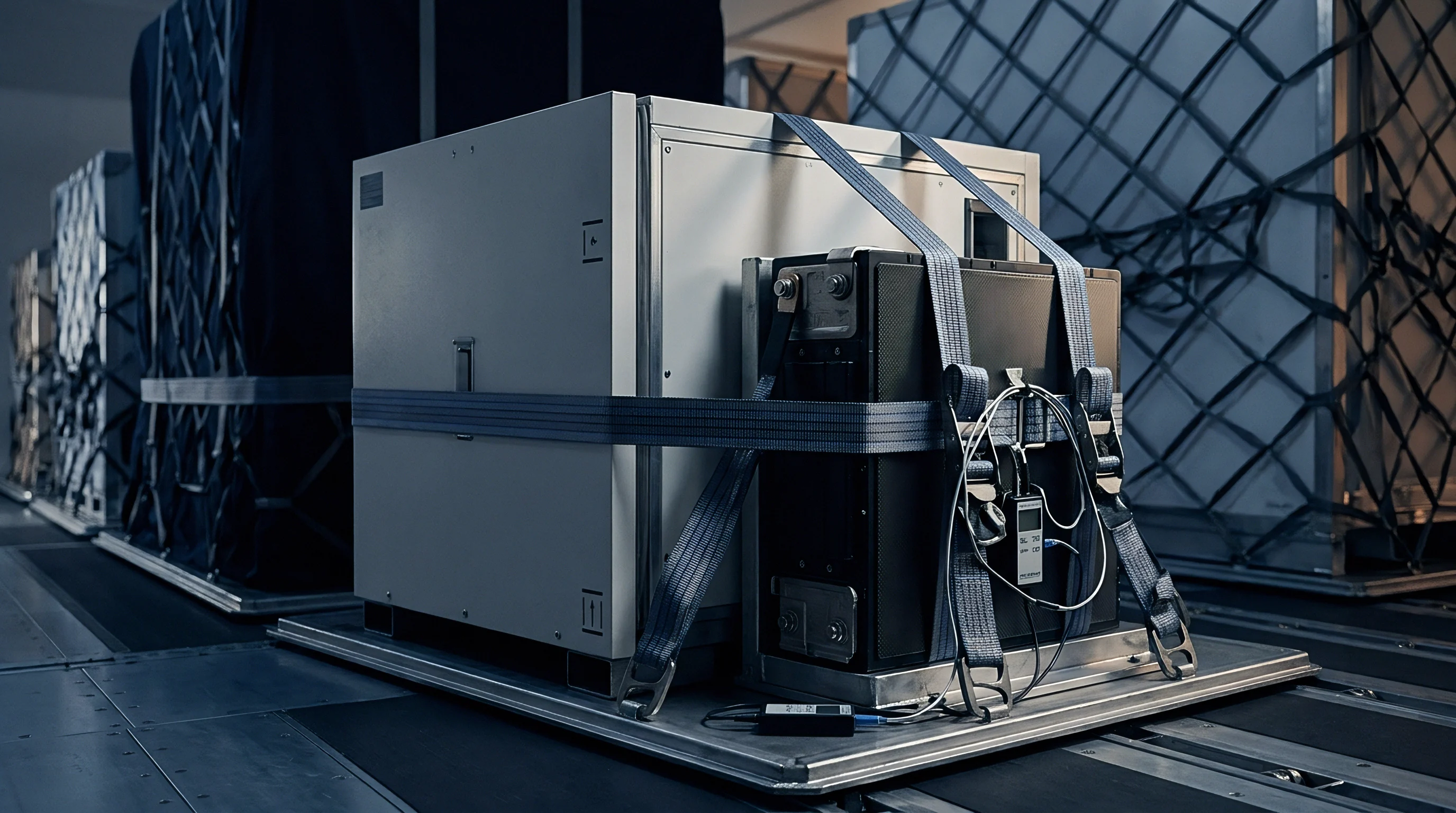
Commercial Exposure of Stranded Consignments
Assembly plants operate on tight inventory timelines. Holding a cell shipment disrupts just-in-time pack assembly, threatening delivery schedules and leaving buyers liable for contractual damages if component shortages stall downstream production.
Air freight leaves little margin for regulatory error. Sourcing managers protect supply contracts by assigning charge verification requirements directly to manufacturers through specific incoterm riders.

Contractual Apportionment of Ground Handling Penalties
Purchase orders for cell production need clear terms assigning financial liability for rejected shipments. Buyers routinely include indemnification clauses requiring suppliers to pay demurrage, repacking, re-inspection, and dead-freight costs caused by improper charge certification.
Standard warranties covering only cell material defects offer little protection against cargo delays. Master supply agreements often include covenants linking invoice payment directly to successful dangerous goods acceptance by the carrier.
Under Incoterms 2020 (Carriage and Insurance Paid To), pre-carriage dangerous goods compliance risks remain with the seller until final delivery at the designated carrier terminal.