Cast Polypropylene Sealing Parameters and Inspection Methods
Cast polypropylene sealing requires precise temperature, dwell, and pressure control to achieve macromolecular entanglement without thinning the sealant layer.

Jaw
Aluminum laminated film serves as the primary barrier envelope for pouch cell lithium-ion batteries, where cast polypropylene acts as the inner thermocompression sealant layer. Heat transfer efficiency across the sealing tool controls the fusion quality of this multi-layer laminate. Solid metal heating bars apply simultaneous heat and clamping force to melt opposing polypropylene surfaces, driving polymer chain entanglement across the joint interface.
Thermal conductivity across the tool face determines how rapidly heat penetrates the protective outer polyamide layer and core aluminum foil to reach the internal sealant film.

Thermal Conduction and Mechanical Pressure Uniformity
Heat transfers through aluminum foil. Internal temperature sensors positioned within the upper and lower heated platens reveal steep thermal gradients when tool designs fail to account for edge losses. Heat sinks at the tool corners drop local surface temperatures by 8 to 15 degrees Celsius relative to the center zone.
This differential creates uneven polymer melting along the pouch seam. Pressure drops across the platen. Pneumatic or servo actuators driving the tool must distribute clamping force evenly across the entire seam area to avoid localized pressure variations.
Cold platens cause seal weakness. Inadequate contact pressure prevents full contact between the molten polyolefin surfaces, trapping microscopic air voids along the seal width. High local pressure squeezes molten polymer out of the bond area, leaving thin regions vulnerable to mechanical tearing.
Maintaining tight tolerances on sealing bar flatness within 0.005 millimeters across the full seal length limits variations in applied force.
| Configuration Type | Thermal Gradient Across Sealing Area | Contact Pressure Range | Application Envelope |
|---|---|---|---|
| Flat Anvil Single Heat | ±5.0°C | 0.2 to 0.4 MPa | Secondary perimeter side seals without metal tab penetrations |
| Contoured Serrated Dual Heat | ±2.0°C | 0.4 to 0.7 MPa | Top tab seals containing metallic current collector leads |
| Silicone Buffer Backed Dual Heat | ±1.5°C | 0.3 to 0.6 MPa | High-capacity thick pouch cells prone to corner strain |
| Hard-Anodized Aluminum Flat | ±3.5°C | 0.25 to 0.5 MPa | Standard high-speed side sealing operations |
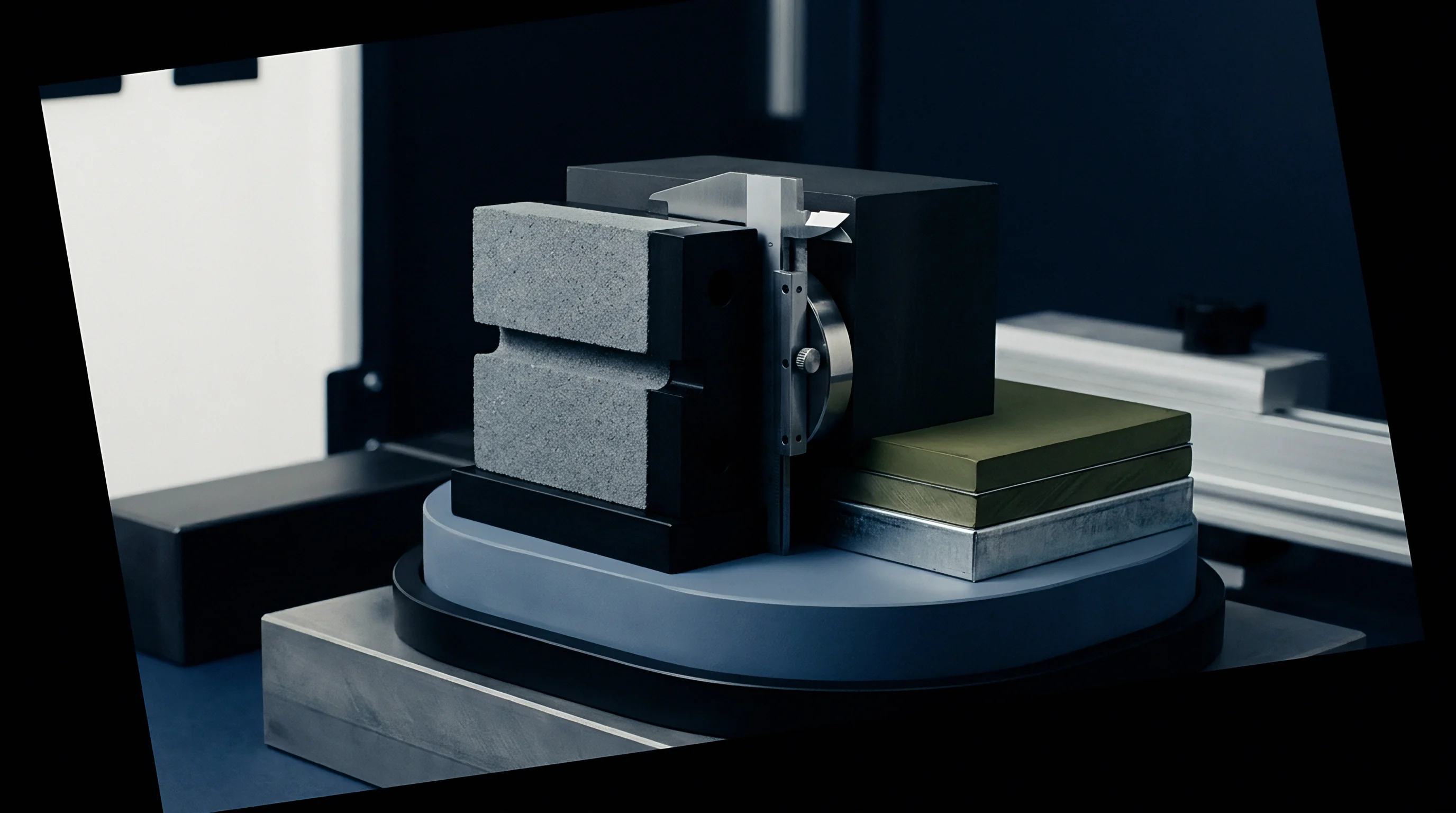
Bar Surface Treatments and Elastomeric Buffers
Tooling engineers apply fluoropolymer coatings or hard-anodized surface finishes to prevent molten polyolefin from adhering to the sealing faces during rapid cycling. Untreated metallic surfaces accumulate polymer residue over extended production cycles, creating localized thermal insulation spots that degrade heat delivery. Elastomeric backing layers, such as high-temperature silicone pads installed beneath the lower anvil, conform to surface irregularities and compensate for minor mechanical misalignments across the tooling line.
Direct contact thermocouple placement inside the platen prevents undetected thermal drift across extended packaging runs.
Polymer buildup on the sealing face alters surface contact dynamics, increasing friction and distorting the outer polyamide protective film. Routine cleaning schedules combined with periodic non-contact thermal imaging identify surface contamination before thermal delivery degrades. Factory technicians frequently maintain that minor surface temperature variations across the bar are compensated by extending the cycle dwell time.


Rheology
Macromolecular interdiffusion across the contact boundary governs the mechanical strength of the cast polypropylene joint. Cast polypropylene is a semi-crystalline thermoplastic exhibiting a melting temperature between 160 and 170 degrees Celsius. Achieving a structural weld demands heating the polymer film into its viscoelastic melt regime while applying external clamping force.
Melted polymer chains migrate across the original contact interface, entangling with chains from the opposing film layer to form a continuous polymer matrix upon cooling.

Process Window Boundaries for Cast Polypropylene
Molten polymer flows under pressure. Temperature, dwell time, and clamping pressure form a tightly coupled parameter window inside which joint integrity develops. Operating below 175 degrees Celsius fails to achieve complete crystalline melting, producing weak interfacial bonding that splits under low peel forces.
Operating above 210 degrees Celsius triggers thermal degradation of the polypropylene matrix, lowering molecular weight and generating low-viscosity melt fractions that squeeze out of the joint zone.
Crystallinity controls final tensile strength. Prolonged dwell times at elevated temperatures degrade the outer maleic anhydride modified tie layer connecting the polypropylene film to the core aluminum foil. Squeeze-out thins the sealant layer.
Excessive clamping force reduces the nominal 40 micrometer sealant layer down below 20 micrometers, exposing the bare aluminum foil to corrosive internal battery chemistries.
Consider a process window optimization model for a 40 micrometer nominal cast polypropylene sealant layer on an automated pouch cell packaging line:
- Set upper and lower heater platen temperatures to 190 degrees Celsius with an initial dwell time of 2.5 seconds at 0.4 megapascals.
- Measure cross-sectional film thickness post-seal using optical microscopy to verify that final film thickness remains between 28 and 32 micrometers.
- Increase dwell time in 0.2-second increments if interfacial peel testing exhibits adhesive separation along the original film boundary.
- Reduce platen pressure by 0.05 megapascals if polymer squeeze-out exceeds 0.5 millimeters beyond the bar footprint edge.
- Lock sealing parameters once peel testing demonstrates cohesive polymer tearing with tensile failure exceeding 35 Newtons per 15 millimeter width.
Assumptions under this model dictate a constant ambient relative humidity below 30 percent and initial film moisture content under 200 parts per million. Shear stress aligns polymer chains. Rapid cooling rates post-sealing preserve a balanced ratio of amorphous and crystalline domains within the weld seam, maximizing impact resistance against internal battery swelling forces.
A temperature reduction below 175 degrees Celsius at 0.4 megapascals yields incomplete macromolecular interdiffusion and adhesive failure.
Higher platen pressure cannot compensate for a temperature set below the polymer crystalline melting point.

Destruction
Physical stress testing provides quantitative metrics for heat seal performance under mechanical load. Quality assurance relies on destructive mechanical evaluation to verify batch conformity before cells advance to electrolyte filling operations. Testing procedures isolate specific load conditions, including T-peel tensile separation and internal hydrostatic pressure burst dynamics, to identify structural weaknesses in the pouch seam.

Quantifying Peel Strength via ASTM F88
Standardized testing of flexible barrier materials under ASTM F88 evaluates bond strength by measuring the force needed to peel open a 15-millimeter wide sealed strip. Bond failure destroys cell containment. The test standard outlines three distinct specimen holding methods: unsupported, 90-degree supported, and 180-degree supported.
Tensile testing machines pull the sealed arms apart at a constant rate of 200 to 300 millimeters per minute while recording force profiles.
Mechanical testing exposes seam defects. High-quality cast polypropylene seals exhibit cohesive failure, where the polymer material itself tears while the weld interface remains intact. Low peel values below 25 Newtons per 15 millimeter width indicate incomplete thermal bonding or thermal degradation of the inner tie layer.
Inconsistent force spikes during the peel test signal non-uniform pressure or temperature profiles across the sealing bar width.

Internal Hydrostatic Burst Testing per ASTM F2054
Internal pressurization testing under ASTM F2054 subjects the entire pouch cell perimeter to rapid pressure loading to evaluate seam integrity. Pneumatic injectors pressurize the sealed pouch interior while restraining plates limit outer wall expansion. Restraining plates force the internal pressure load directly onto the sealed edges, mimicking gassing conditions generated during cell formation or electrical abuse events.
Peel strength tests focus on specific local failure points, while burst pressure tests evaluate the weakest point along the entire continuous perimeter seal. Retained stress causes seal opening. Typical cell packaging specifications demand a minimum internal burst resistance of 0.3 megapascals for 30 seconds without pressure loss or physical seam separation.
- Interfacial Delamination occurs when opposing polypropylene layers separate along their original contact boundary under low peel forces, confirming insufficient temperature or dwell time during processing.
- Polymer Squeeze Out manifests as excessive material displacement along the seal edge, leaving an ultra-thin barrier layer that fails prematurely under mechanical fatigue.
- Foil Separation takes place when the cast polypropylene layer detaches from the core aluminum foil, indicating thermal damage or chemical failure of the maleic anhydride tie layer.
- Thermal Degradation Pinholes arise from excessive sealing temperatures that melt through the polyolefin film, creating direct leakage paths through the inner laminate barrier.
| Standard Designation | Test Velocity or Inflation Rate | Pass-Fail Threshold | Primary Failure Mode Detected |
|---|---|---|---|
| ASTM F88 Technique C | 250 mm/min crosshead speed | >35 N/15 mm strip width | Interfacial boundary separation and tie-layer delamination |
| ASTM F2054 Restrained | 0.05 bar/sec pressure ramp | >0.30 MPa sustained for 30s | Weakest perimeter seal location and corner stress concentrations |
| ASTM F1140 Unrestrained | 0.10 bar/sec rapid inflation | >0.18 MPa peak burst pressure | Gross pouch envelope rupture and localized seam splitting |
| ISO 11607-2 Compliance | 300 mm/min tensile pull rate | >30 N/15 mm strip width | Incomplete polymer fusion across tab insulation sleeves |
Compliance with ASTM F88 Technique C mandates T-peel specimen restraint to eliminate bending moments that artificially elevate load values.
Clause 5.3 of IEC 61960-3 mandates that pouch cell seals maintain mechanical integrity under internal vacuum and elevation pressure drops without bond separation.


Permeation
Non-destructive inspection methods identify barrier flaws that allow electrolyte solvent evaporation or atmospheric moisture ingress. Microscopic channels within the heat seal edge compromise battery life by enabling moisture reaction with lithium hexafluorophosphate salts. Water reacts with electrolyte.
This reaction forms hydrofluoric acid, which attacks internal electrode materials and corrodes the metal foil laminate boundary.

Can Heat Seal Strength Predict Long Term Electrolyte Leakage?
High mechanical peel strength does not confirm absolute hermetic closure across extended operating lifespans. Micro-voids cause helium leakage. Tensile peel tests measure macro-scale polymer entanglement strength, whereas solvent vapor escape occurs through sub-micron voids and tortuous micro-channels within the polymer matrix.
Small pinholes created by trapped dust particles or localized thermal contraction during cooling pass standard ASTM F88 mechanical tests while suffering steady electrolyte loss over months of storage.
Electrolyte solvent leakage alters internal cell chemistry, increasing equivalent series resistance and accelerating capacity decay. Non-destructive leak testing post-filling and seal trimming acts as an essential quality barrier against long-term field failures.
Dye Penetration and Helium Leak Measurement
Dye penetration testing under ASTM F1929 utilizes low surface tension liquid colorants to reveal capillary leakage paths along the seal edge. Liquid ingress degrades seal strength. Technician visual inspection under ultraviolet light spots dye channels down to 50 micrometers in width, establishing a fast diagnostic tool for seal tool alignment verification.
Helium mass spectrometry leak detection provides higher sensitivity, measuring leak rates down to 10 to the minus 9 cubic centimeters per second at standard temperature and pressure. Sealed pouch cells undergo helium charging inside a vacuum chamber. Helium atoms trace microscopic paths.
Mass spectrometers quantify escaping helium molecules, pinpointing sub-micron containment breaches that escape optical examination.
- Vacuum Leak Screening detects gross packaging defects post-sealing by monitoring pressure decay in a sealed chamber held at sub-atmospheric pressure.
- Electrolyte Solvent Vapor Sensing uses metal-oxide chemical sensors inside storage chambers to detect organic carbonate gas emissions from filled pouch cells.
- Optical Cross-Section Micrographs verify polypropylene layer thickness profiles across the metallic tab seal region without subjecting production units to liquid dyes.
- Helium Mass Spectrometry measures exact quantitative gas diffusion rates across the seal joint boundary under controlled differential pressures.
Hydrofluoric acid formed by trace moisture in carbonate solvents rapidly attacks the maleic anhydride bonding film at the tab seal interface.
Standard helium mass spectrometry cannot easily distinguish whether microscopic leak paths originate from polymer chain voids or micro-cracks in the tab passivation layer.


Exposure
Regulatory frameworks for lithium battery shipping mandate containment verification to prevent active chemical spillage during transit. Pouch cell seal failure during air or ocean transport exposes active materials to ambient air, creating immediate fire risks under thermal runaway conditions. Transport regulations classify leaking batteries as dangerous goods compliance violations, exposing manufacturers to immediate shipment seizures and carrier financial penalties.
Regulatory Transport Compliance and Containment Risk
Unsealed pouches fail altitude tests. UN 38.3.4.3 dictates altitude simulation testing, subjecting fully charged pouch cells to low-pressure conditions of 11.6 kilopascals for six hours at 20 degrees Celsius. Seal structures containing micro-voids suffer differential pressure loading that expands internal gas pockets, accelerating mechanical peel failure along weak joint segments.
Seam rupture during altitude simulation constitutes a test failure, barring the cell design from commercial transit under IATA Packaging Instruction 965.
Acid formation degrades metal interfaces. International Maritime Dangerous Goods rules mandate periodic inspection of battery packaging integrity before cargo loading. Liquid electrolyte escaping through defective seals corrodes outer steel containment drums, leading to carrier rejection at port terminals.

Landed Quality Contracts and Warranty Defect Allocation
Cell supply agreements incorporate landed quality metrics that bind manufacturers to strict defect thresholds measured at destination receiving docks. Standard procurement terms establish maximum acceptable defect limits between 50 and 200 parts per million for seal integrity failures upon arrival. Containment breach voids cargo insurance.
Procurement contracts stipulate that lot defect rates exceeding these thresholds trigger full batch rejection, forcing cell suppliers to absorb return logistics costs and replacement expenses.
- UN 38.3.4.3 Altitude Test Summary proves cell seam structural resistance against pressure differentials encountered during high-altitude air transit.
- Packaging Certificate per PI 965 documents external carton drop test compliance and dangerous goods containment performance under emergency transport stress.
- Batch Thermal Seal Lot Records trace platen temperature, applied pressure, and dwell time parameters for every manufactured pouch cell serial number.
- EU Battery Regulation Conformity File verifies supply chain compliance with safety, performance, and material durability standards prior to commercial distribution.
| Defect Mode | Primary Standard Violated | Financial Impact Category | Contractual Risk Transfer Mechanism |
|---|---|---|---|
| Tab Corner Seal Delamination | UN 38.3.4.3 Altitude Test | Immediate Batch Seizure and Cargo Quarantine | Supplier Absorbs Full Scrap Value and Freight Costs |
| Slow Solvent Micro-Permeation | IEC 62133 Clause 7.2.2 | Accelerated Field Warranty Recalls and Replacement | Supplier Indemnifies Buyer Against System Recalls |
| Gross Electrolyte Containment Rupture | IATA PI 965 Section IA | Carrier Fines and Port Authority Cleanup Penalties | Automatic Liquidated Damages Charged to Cell Vendor |
| Outer Foil Polyimide Corrosion | EU Battery Regulation Art. 6 | Market Sales Ban and Regulatory Compliance Audits | Contractual Rejection of Non-Compliant Lot Shipments |
| Note: Financial impacts include secondary logistics, warehouse holding fees, and third-party lab inspection costs incurred during container quarantine operations. | |||
Electrolyte leakage during ocean transport invalidates dangerous goods packaging certification, resulting in customs quarantine, mandatory container repacking fees, and total loss of lot warranty coverage.