Measuring Electrolyte Additive Consumption in Lithium Pouch Cells
Residual electrolyte additive depletion in lithium pouch cells causes rapid gassing, impedance growth, and dangerous goods transit non-compliance under UN 38.3.


Kinetics
Sacrificial electrolyte additives stabilize the electrode-electrolyte interface during the initial formation cycles of lithium-ion pouch cells. Compounds such as Vinylene Carbonate (VC), Fluoroethylene Carbonate (FEC), Ethylene Sulfate (DTD), and Lithium Difluorophosphate (LiDFP) reduce at higher electrochemical potentials than standard carbonate solvents. This preferential reduction builds a passivating solid electrolyte interphase (SEI) on graphite anodes and a protective cathode electrolyte interphase (CEI) on nickel-rich layered oxides.
Additive consumption occurs primarily through electrochemical reduction during formation, followed by slower chemical breakdown during long-term storage and operational cycling.

Sacrificial Reduction Mechanisms during Cell Formation
Electrochemical reduction of Vinylene Carbonate begins at approximately 0.9 V versus Li/Li+, preceding the reduction of Ethylene Carbonate (EC) at 0.7 V. The single-electron reduction of VC generates poly(vinylene carbonate) radical species, which cross-link to form an insoluble organic matrix on the graphite surface. This process consumes two moles of electrons per mole of VC polymerized. Fluoroethylene Carbonate undergoes a two-electron reduction path at 1.0 V versus Li/Li+, releasing lithium fluoride (LiF) solids and lithium alkyl carbonate salts into the passivating layer.
Additive exhaustion triggers gas generation. Initial additive concentrations in commercial pouch formulations range between 1.0 wt% and 3.0 wt% depending on cathode stoichiometry and target cycle life. During the initial two formation cycles at 45°C, high-nickel NMC811 pouch cells consume up to 60 percent of the original VC payload to construct the baseline SEI layer.
The remaining unreacted additive remains dissolved in the bulk electrolyte phase to repair interface cracks during subsequent volume changes of the silicon-graphite or graphite anode.
High-nickel NMC811 pouch cells stored at 45°C consume up to 60 percent of initial vinylene carbonate payload within the first two formation cycles.

Continuous Parasitic Breakdown under Thermal Stress
Residual additives undergo continuous secondary consumption through thermal decomposition and reaction with dissolved crossover species. Transition metal ions, specifically manganese and nickel dissolved from cathode lattice defects, migrate to the anode where they catalyze the chemical breakdown of the protective film. This catalytic destruction forces the unreacted VC or FEC in the bulk solution to undergo further reduction to repair the damaged film.
Elevated temperature accelerates sacrificial consumption. Storage at 60°C doubles the rate of parasitic additive loss relative to 25°C ambient conditions. When bulk additive levels drop below 0.2 wt%, the passivating film loses its self-healing capability.
Unpassivated graphite sites react directly with linear carbonate solvents like Ethyl Methyl Carbonate (EMC) and Dimethyl Carbonate (DMC). This uninhibited solvent breakdown releases carbon dioxide, methane, and ethylene gases, creating mechanical strain across the pouch envelope. Passivation layers demand active sacrificial compounds.
The rate of chemical consumption follows pseudo-first-order reaction kinetics with respect to additive concentration during high-temperature storage. At room temperature, the consumption shifts to zero-order transport-limited kinetics governed by diffusion of solvent molecules through the existing interphase. The transition between these kinetic regimes defines the calendar life ceiling of sealed pouch architectures.

Diagnostics
Accurate quantification of residual electrolyte additives in sealed pouch cells requires non-destructive operational monitoring combined with destructive bench analytical techniques. Cell teardowns performed inside ultra-dry argon gloveboxes yield liquid electrolyte fractions for direct chemical analysis. Non-destructive electrochemical methods infer additive depletion states by tracking parasitic current signatures, differential capacity shifts, and impedance spectra across aging intervals.
Chromatographic and Spectrometric Gas Analysis
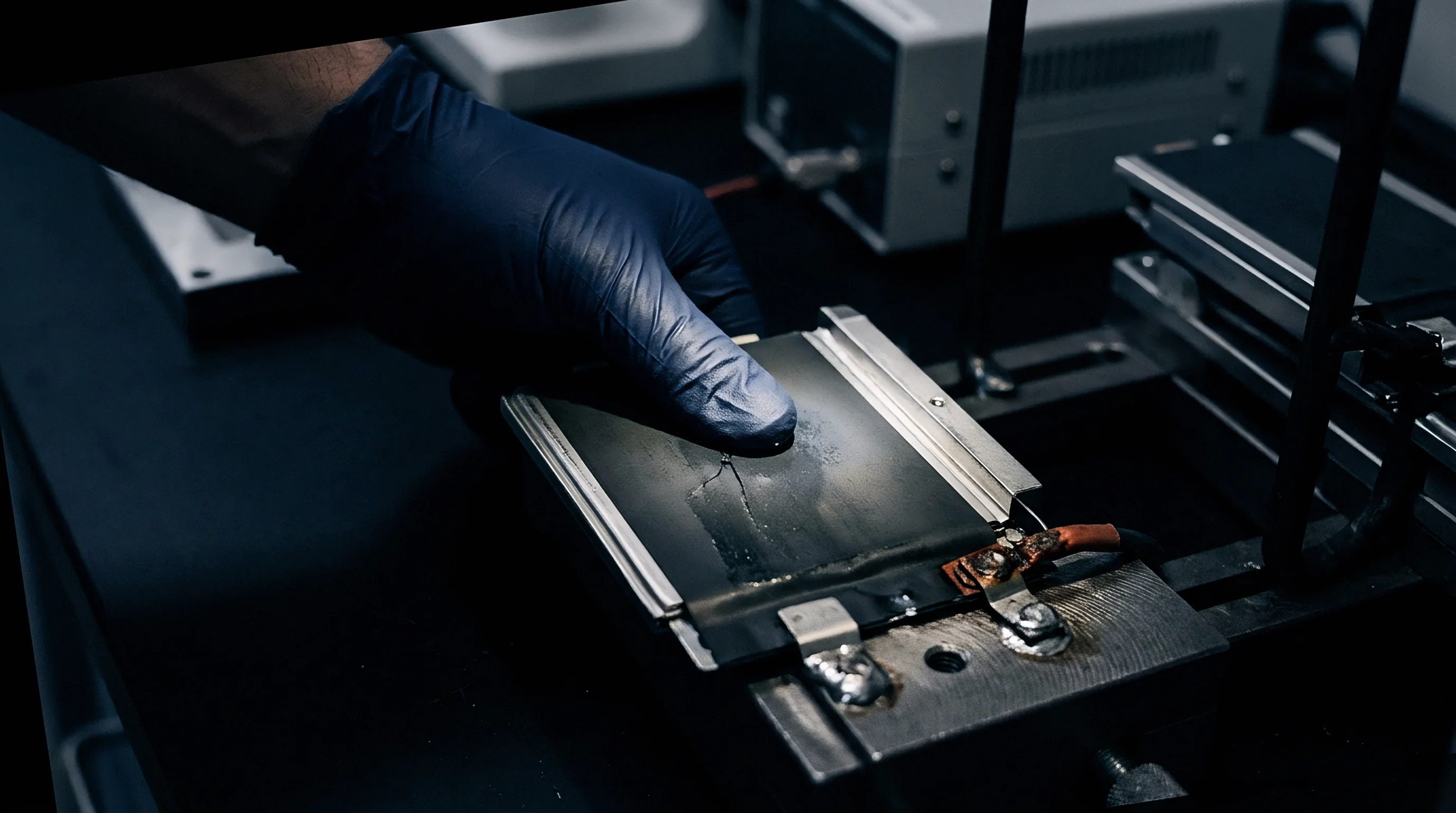
Gas Chromatography-Mass Spectrometry (GC-MS) serves as the primary analytical standard for quantifying volatile and semi-volatile electrolyte additives. Liquid extraction begins with puncturing the pouch seam within an argon atmosphere holding moisture levels below 0.1 ppm. Extracting 50 microliters of free electrolyte into a sealed vial containing deuterated dichloromethane solvent prevents the evaporative loss of low-boiling additive compounds.
Gas chromatography resolves volatile species. A capillary column coated with 5-percent phenyl-methylpolysiloxane separates Vinylene Carbonate, Fluoroethylene Carbonate, and alkyl carbonates over a temperature ramp from 40°C to 280°C. Mass spectrometry electron ionization at 70 eV yields fragment spectra matched against baseline calibration curves. GC-MS achieves detection limits down to 0.005 wt% for residual VC and FEC.
Quantitative nuclear magnetic resonance (qNMR) spectroscopy provides an alternative non-destructive liquid analysis path using fluorine-19 NMR for fluorinated additives like FEC and LiDFP, eliminating calibration drift associated with chromatographic columns.
| Analytical Method | Detection Limit | Sample Preparation Complexity | Destructive Status | Primary Target Additives |
|---|---|---|---|---|
| Gas Chromatography Mass Spectrometry | 0.005 wt% | High (Glovebox extraction) | Destructive | VC, FEC, DMC, EMC |
| Fluorine-19 Nuclear Magnetic Resonance | 0.010 wt% | Moderate (Solvent dilution) | Destructive | FEC, LiDFP, LiPF6 fragments |
| High-Precision Coulometry | 0.001% Efficiency | Low (In-situ cycling) | Non-destructive | Total parasitic additives |
| Differential Capacity dQ/dV Analysis | 0.100 wt% (Inferred) | Low (Standard cycler) | Non-destructive | VC, DTD anode film builders |
Coulometric and Impedance Metrics for Parasitic Tracking
High-Precision Coulometry (HPC) measures coulometric efficiency with precision exceeding 0.001 percent, enabling early detection of additive consumption without cell destruction. Parasitic reactions consume lithium ions during charging, creating an imbalance between charge and discharge capacity. As sacrificial additives deplete, coulometric efficiency drops from 0.9998 to below 0.9990.
This metric directly reflects the rate of ongoing film repair on the anode surface.
Impedance growth tracks additive loss. Electrochemical Impedance Spectroscopy (EIS) tracks the high-frequency charge-transfer resistance (Rct) and solid-electrolyte interphase resistance (Rsei). Initial formation with VC increases Rsei due to the dense poly-VC polymer layer.
As VC depletes and bulk solvent breakdown takes over, Rct escalates rapidly due to transition metal deposition and thick, non-conductive inorganic precipitation. Differential capacity curves derived by differentiating cell capacity with respect to voltage (dQ/dV) exhibit characteristic peak shifts during discharge. The disappearance of anodic redox peaks at 2.8 V to 3.1 V signals the full consumption of active DTD and LiDFP additives.
Suppliers frequently cite initial electrolyte formulation ratios as proof of long-term life, ignoring the rapid consumption of sacrificial species during factory formation and elevated-temperature transit.
Swell
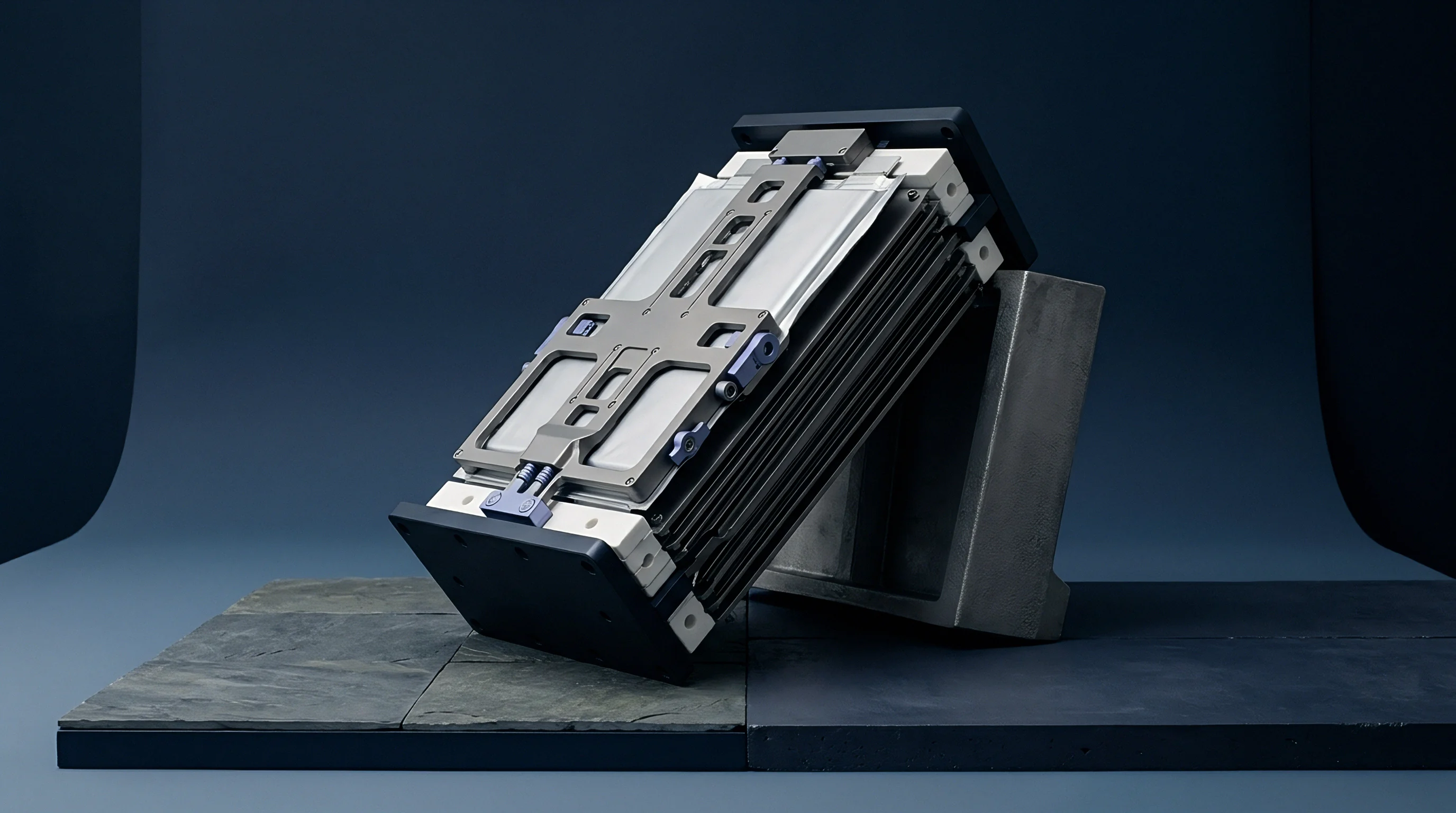
Pouch cells rely on aluminum-laminate foil envelopes sealed with thermocompression polyolefin layers. Unlike rigid cylindrical or prismatic metallic cans, pouch envelopes expand physically when internal chemical reactions produce gaseous byproducts. Complete consumption of sacrificial additives marks the operational transition point where electrolyte solvents break down uncontrollably, generating high gas volumes that induce mechanical stress on internal electrode stacks.
Can In-Situ Thickness Measurements Isolate Additive Consumption?
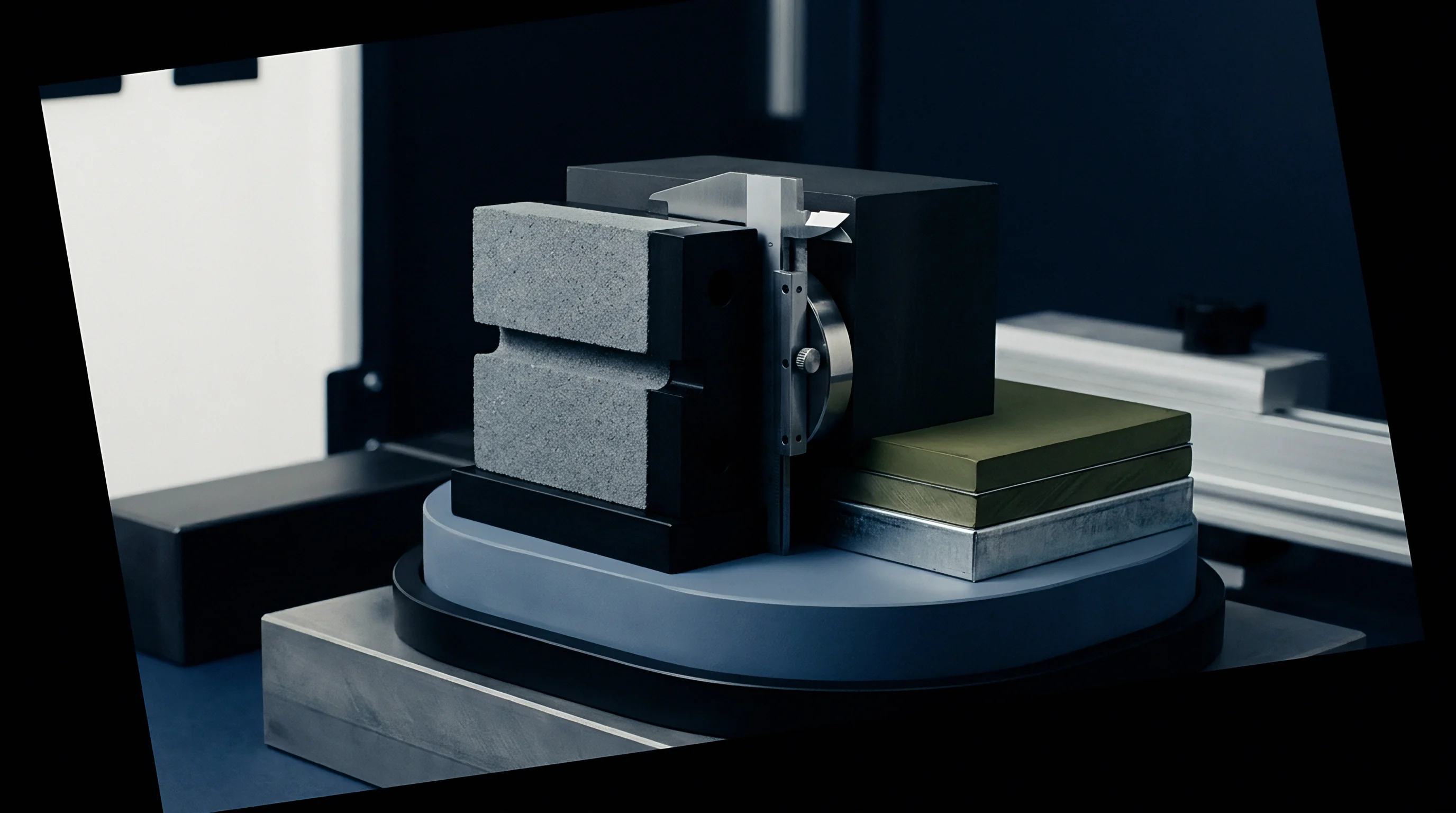
Continuous mechanical monitoring of pouch cell thickness under defined constraint pressures provides a direct real-time signal of additive exhaustion. Optical displacement transducers and micro-load cells fitted to testing fixtures detect two distinct swell phases: initial reversible intercalation swelling and secondary irreversible outgassing swelling. Reversible expansion correlates linearly with state of charge as lithium intercalates into graphite lattices, causing a 4 percent to 7 percent stack thickness increase.
Gas volume expands pouch thickness. Irreversible swelling begins when sacrificial additives drop below their passivating threshold. Solvent reduction releases methane, ethane, carbon dioxide, and hydrogen gas into the pouch void space.
Measuring localized thickness strain with laser micrometers reveals an abrupt deflection point in the thickness-versus-cycle curve. This slope change marks the precise cycle number where active additive protection fails completely.
Pouch cells exceeding 10 percent irreversible thickness expansion under storage exceed UN 38.3 regulatory safety allowances for commercial air transport.

Outgassing Chemistry Post Sacrificial Depletion
Decomposition products vary systematically with the primary electrolyte additive system used in cell manufacturing. Once Vinylene Carbonate degrades, Ethylene Carbonate breaks down to yield carbon monoxide and ethylene gas. Fluoroethylene Carbonate depletion leads to hydrofluoric acid (HF) generation alongside carbon dioxide and fluorinated hydrocarbons.
Hydrofluoric acid attacks the cathode structure, accelerating transition metal dissolution and further destabilizing the anode interphase.
| Cathode Chemistry | Additive System | Primary Outgassing Species | Critical Pouch Thickness Expansion Threshold |
|---|---|---|---|
| NMC811 / Graphite | 2.0 wt% VC + 1.0 wt% LiDFP | CO2, C2H4, CO | 8.5% initial thickness |
| NMC622 / Silicon-Graphite | 10.0 wt% FEC + 1.0 wt% DTD | CO2, CHF3, C2H2 | 12.0% initial thickness |
| LFP / Graphite | 1.5 wt% VC | C2H4, H2, CO2 | 5.0% initial thickness |
High internal gas pressure distorts internal layer alignment within the pouch stack. Delamination between the separator and active material coatings creates localized current density spikes. These non-uniform current fields accelerate lithium plating during cold-weather charging.
Unvented pouch expansion invalidates transit approval.
Failure to detect the transition from interphase stabilization to bulk solvent outgassing results in severe cell strain, seal ruptures during high-altitude air transit, and immediate invalidation of pack-level structural warranties.

Transport
International regulations classify lithium-ion pouch cells as Class 9 dangerous goods governed by stringent safety testing requirements before commercial shipment. Additive consumption directly alters cell safety profiles by lowering the onset temperature of thermal runaway and increasing internal cell pressure during transport stress tests. Swollen or degraded pouch cells present elevated fire and explosion hazards during transit.

Thermal and Mechanical Testing under UN Criteria
The United Nations Manual of Tests and Criteria Section 38.3 outlines eight mandatory safety tests for lithium cell transport approval. Test T.2 (Thermal Test) subjects cells to continuous temperature cycling between -40°C and +72°C for six hours per extreme over ten complete cycles. Depleted pouch cells containing high dissolved gas concentrations experience severe mechanical seal strain during the +72°C storage phase.
Standard tests demand precise reference baselines. Test T.5 (External Short Circuit) applies a low-resistance short (less than 0.1 ohm) at 55°C. Cells with fully depleted additives exhibit reduced thermal stability due to degraded SEI layers. The resulting rapid exothermic reaction can trigger thermal runaway or cell rupture.
Mass loss during T.2 or T.5 testing exceeding 0.1 percent invalidates the UN 38.3 test summary, legally blocking the batch from air, ocean, or road transportation.
Under UN 38.3 Revision 7, any mass loss exceeding 0.1 percent during thermal cycling invalidates the cell shipping summary file.
Commercial freight regulations for swollen pouch lots demand strict documentation compliance to satisfy carrier acceptance criteria under IATA PI 965 and IMDG Code Code SP 384.
- UN 38.3 TEST SUMMARY VERIFICATION Confirming valid test documentation covering the exact cell revision and additive chemistry baseline.
- DIMENSIONAL TOLERANCE INSPECTION Measuring incoming batch thickness against certified mechanical drawings to detect outgassing swelling prior to cargo loading.
- STATE OF CHARGE ADJUSTMENT Discharging pouch cell shipments to a state of charge between 20 percent and 30 percent to lower internal pressure risks during air transportation under IATA PI 965 Section IA.
- OVERPACK PRESSURE STAGING Securing pouch cells inside rigid, non-combustible UN-certified packaging fitted with thermal insulation and absorbent liner materials.
- DANGEROUS GOODS DECLARATION Executing signed transport documents listing correct UN numbers, proper shipping names, and emergency contact details for customs clearing.
| UN 38.3 Test Identification | Test Parameter | Fresh Cell Baseline Result | Depleted Additive Cell Result |
|---|---|---|---|
| Test T.1 (Altitude Simulation) | 11.6 kPa vacuum for 6 hours | No mass loss, zero swell | Pouch seal creasing, mass loss > 0.1% |
| Test T.2 (Thermal Test) | -40°C to +72°C cycling | Stable voltage, zero leak | Severe swelling, seal rupture |
| Test T.5 (External Short Circuit) | 0.1 ohm short circuit at 55°C | Tmax < 120°C, no rupture | Thermal runaway, envelope flame |

Commercial Freight Regulations for Swollen Pouch Lots
Air carriers routinely reject pouch cell lots exhibiting visible seam wrinkles, envelope pillowing, or mechanical thickness variances exceeding 5 percent of nominal specifications. Hazardous material safety regulations explicitly prohibit the carriage of defective or damaged lithium batteries under standard packing instructions. Transport delays consume chemical stability margin.
Section 7.3.2 of IEC 62133-2 mandates that internal cell pressure and thickness expansion must remain within mechanical limits under continuous 45°C storage. Non-compliant cell lots require specialized UN 3090 or UN 3480 defective/damaged battery packaging fitted with flame-arresting pressure vents, escalating landed logistics costs by up to 300 percent per shipped kilowatt-hour.
Standard transport contract liability clauses assign total financial responsibility for carrier rejection, port detention fees, and hazardous material repackaging to the buyer if cell degradation occurs during transit due to insufficient baseline additive loading.

Remediation
Mitigating the risks of additive consumption requires rigorous quality control protocols across procurement contracts, incoming inspection procedures, and baseline formulation specifications. Cell buyers must define precise chemical retention metrics in supply contracts to ensure delivered pouch cells retain sufficient additive margins for intended field operational lives. Contractual verification standards establish legal recourse when delivered lots fail residual additive thresholds.

Contractual Verification Standards for Retained Residues
Procurement contracts must mandate minimum residual additive concentrations at the point of custody transfer. A typical buyer specification defines that post-formation, aged cells ready for shipment must retain at least 40 percent of their initial Vinylene Carbonate payload, or a minimum absolute concentration of 0.8 wt% VC in the bulk electrolyte phase. Specifying single-component additive systems simplifies incoming quality audits relative to complex ternary additive blends.
Baseline retention guarantees warranty compliance. Contracts should define testing protocols based on randomized sample extraction from incoming container shipments. Acceptance sampling plans following ISO 2859-1 normal inspection level II establish statistical lot compliance before releasing payments from escrow accounts.
Electrolyte formulation audits performed during cell manufacturing prevent batch-level warranty disputes over post-transit swelling.

Incoming Lot Quality Audits and Procurement Terms
Establishing an analytical audit workflow ensures that cell shipments meet safety and longevity requirements before entering pack integration facilities.
- CHEMICAL BASELINE SCREENING Quantitative GC-MS analysis of harvested electrolyte from three cells per 10,000-unit lot to confirm residual additive percentage against purchase specifications.
- MECHANICAL DIMENSION VERIFICATION Micro-caliper thickness measurements across five defined envelope points under standard 1.0 kPa clamp pressure to detect outgassing.
- DIFFERENTIAL CAPACITY VALIDATION Low-rate C/20 discharge cycling on sample units to confirm the presence of characteristic protective interphase redox signatures.
- ACCELERATED AGING STRESS AUDIT Continuous storage of sample cells at 60°C for 14 days followed by thickness and EIS impedance growth evaluation.
Buyers protect capital by enforcing structured analytical procedures during incoming inspection before merging new cell lots into production queues.
- Isolate incoming pallet lots in a climate-controlled quarantine area held at 20°C.
- Extract five sample cells per lot using randomized selection tables.
- Transfer sample cells into dry argon glovebox for seam puncture and electrolyte extraction.
- Execute GC-MS quantitative analysis targeting sacrificial additive compound peaks.
- Verify residual concentration metrics against contractual minimum thresholds.
- Reject non-compliant lots and initiate formal supplier concession claims.
What analytical baseline threshold separates acceptable storage-induced additive decay from irreversible manufacturing formation defects in high-nickel pouch cells?