Quantifying Electrochemical Self Discharge Variance and Internal Micro Shorting in Inbound Lithium Cells
Dynamic voltage drift screening at elevated temperature separates benign chemical decay from dangerous internal micro-shorts in received lithium cell lots.

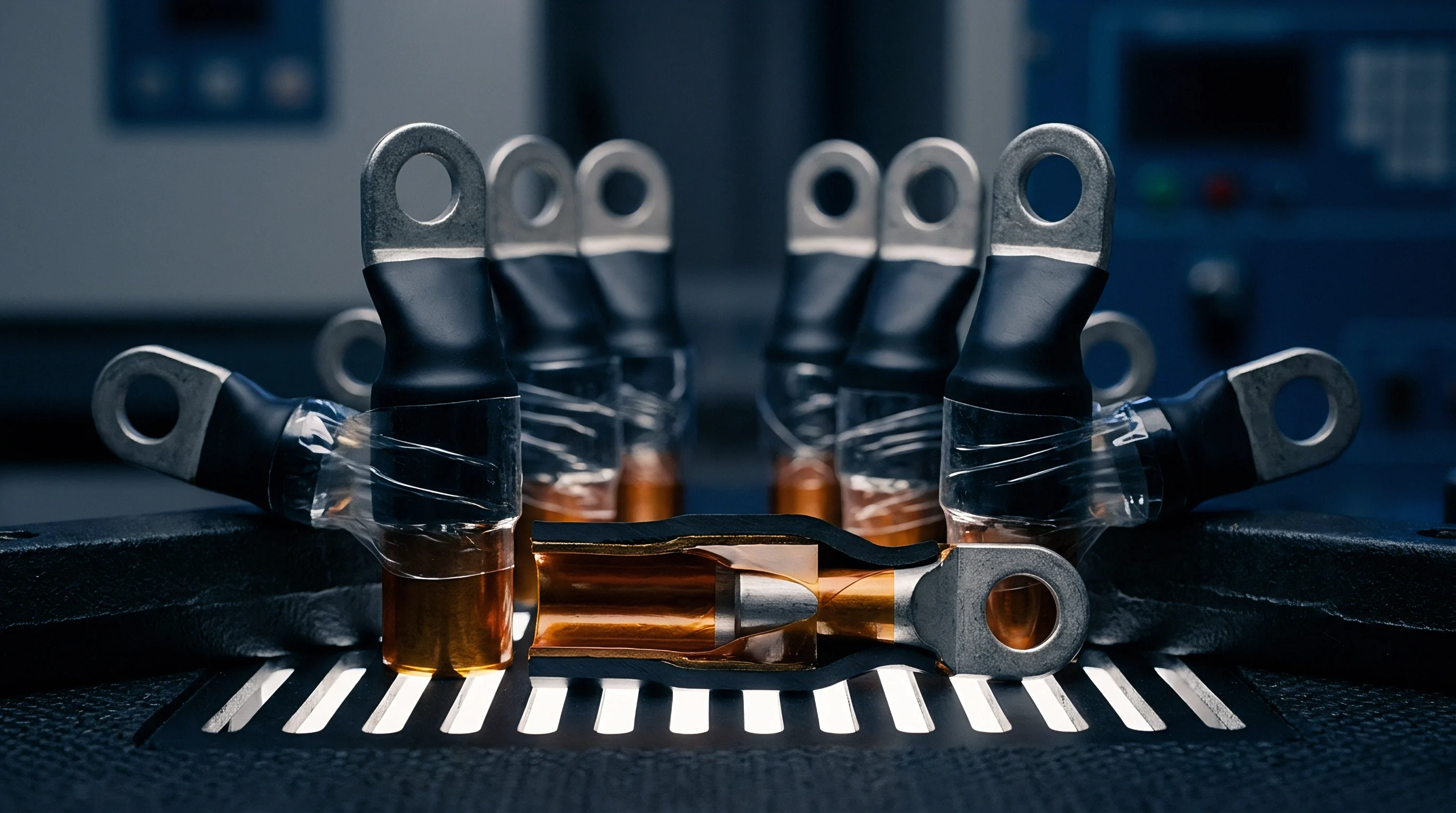
Drift
Incoming pallets of lithium-ion cells arrive at the warehouse dock after three to six weeks in transit at thirty percent state of charge, the upper limit mandated by IATA Packing Instruction 965 for standalone air cargo and the common baseline for maritime container freight. Uncrating twenty sample packs across five pallets yields open-circuit voltage readings clustered between 3.285 and 3.305 volts for lithium iron phosphate, or 3.650 and 3.720 volts for nickel manganese cobalt chemistries. A handful of units present resting potentials fifteen to forty millivolts lower than the lot median.
That initial dispersion creates an immediate commercial dilemma. Differentiating benign electrochemical decay from an internal electronic defect dictates whether the shipment clears inbound quality control or triggers a formal containment action.
Thermodynamic open-circuit decay occurs in every sealed cell through spontaneous chemical reduction. Minor solvent oxidation at the cathode releases electrons that migrate toward the graphite anode, consuming active lithium inventory to regenerate the solid electrolyte interphase. In commercial cells, this baseline drift exhibits predictable temperature and voltage coefficients.
Below 3.70 volts in nickel-rich cathodes, parasitic oxidation rates drop by an order of magnitude compared to fully charged cells at 4.20 volts. For graphite-iron phosphate pairings, the flat open-circuit voltage plateau between twenty and eighty percent state of charge conceals volumetric side reactions under a nearly horizontal potential slope. The true electrochemical drift rate, quantified as the K-value in millivolts per day, remains bounded between 0.05 and 0.25 millivolts per twenty-four-hour period at twenty-five degrees Celsius.
Baseline open-circuit decay at thirty percent state of charge remains below 0.25 millivolts per day across twenty-five degrees Celsius storage.
External variables disturb this baseline during intermodal transit. Marine containers routed through equatorial waters experience ambient temperature swings reaching fifty degrees Celsius on open cargo decks. Elevating storage temperature from twenty to forty degrees Celsius doubles or triples the rate of parasitic chemical reactions, following Arrhenius kinetics with activation energies between fifty and eighty kilojoules per mole.
When an entire shipping lot experiences elevated thermal exposure, the population mean voltage shifts downward uniformly. Voltage relaxation masks true electrochemical drift. A cell inspected forty-eight hours after unloading retains thermal gradients and post-transit mechanical settling that depress terminal potential independently of electrochemical state.
Chemical side reactions follow Arrhenius kinetics. Open-circuit voltage drops reveal nascent shunts. A genuine defect population breaks away from the normal distribution of the container batch, forming an asymmetric lower tail that widens with time.
Cells harboring metallic contamination or separator punctures exhibit continuous, non-passivating charge transfer that exceeds chemical consumption limits. Distinguishing these mechanisms requires rigorous baseline values established under controlled temperature conditions.
| Chemistry Designation | Nominal Plateau Potential (V) | Baseline Decay Rate at 25°C (mV/day) | Elevated Decay Rate at 45°C (mV/day) | Defect Threshold Rate (mV/day) |
|---|---|---|---|---|
| LiFePO4 (LFP) | 3.29 | 0.08 – 0.20 | 0.25 – 0.60 | > 0.95 |
| LiNi0.8Mn0.1Co0.1O2 (NMC 811) | 3.68 | 0.05 – 0.15 | 0.18 – 0.45 | > 0.70 |
| LiCoO2 (LCO) | 3.78 | 0.03 – 0.10 | 0.12 – 0.35 | > 0.55 |
| Li4Ti5O12 (LTO Anode) | 2.25 | 0.02 – 0.08 | 0.08 – 0.22 | > 0.40 |
Accepting a lot based on a single snapshot voltage reading risks catastrophic field failures. Cells with nascent defects discharge continuously down to critical copper dissolution thresholds during extended warehouse storage, converting recoverable inventory into scrap or creating severe thermal events during subsequent formation cycles.

Shunt
Metallic particulate contamination introduced during electrode manufacturing establishes direct electronic paths through porous polymer separators. Slitting blades shedding microscopic metal fragments, burrs along unconditioned foil edges, and airborne dust in cell assembly rooms generate localized breaches across the twelve-to-twenty-micron separator membrane. Once the winding or stacking operation applies mechanical pressure, these foreign inclusions bridge the negative and positive electrode layers.
An internal micro-short differs from chemical degradation by presenting an ohmic or semi-resistive leakage pathway in parallel with the cell capacitance.
Current circulating through an internal conduction path obeys basic resistance laws. The leakage current equals cell potential divided by the defect resistance. A ten-ohm metallic bridge in a 3.6-volt cell draws 360 milliamperes continuously.
That magnitude of parasitic current drains a five-ampere-hour cylindrical cell within fourteen hours, dropping the terminal voltage precipitously and generating localized Joule heating. Defect resistances spanning one thousand to one hundred thousand ohms draw thirty-six microamperes to 3.6 milliamperes. These minute currents remain undetectable on basic open-circuit voltage meters during rapid incoming checks, yet they steadily depress terminal potential over weeks of container storage.
Physical mechanisms causing internal conduction paths fall into distinct manufacturing and electrochemical categories:
- Current collector burrs along slit edges puncture ceramic coatings and separator films during winding tension, creating intermittent mechanical contacts that open or close with ambient temperature changes.
- Foreign metallic debris such as copper, iron, or zinc particles shed by calendering rollers dissolve partially in carbonate electrolyte solvents, reprecipitating as dendritic conduction paths under localized electric fields.
- Separator thermal contraction occurs around manufacturing hot spots, expanding microscopic pinholes into continuous direct contact areas between opposing active coatings.
- Localized lithium plating occurs during uneven factory formation charging, forming metallic filaments that penetrate microporous polypropylene films under mechanical compression.
Copper dissolution initiates below 1.5 volts. When an internal leakage path discharges a cell past its deep-discharge threshold during transit, the copper anode current collector oxidizes into copper ions. Subsequent charging drives these ions across the separator, depositing metallic copper dendrites directly into separator pores.
Active material shedding degrades the separator. These metallic bridges possess non-linear, self-healing properties. Localized current surges melt the micro-bridge via Joule heating, temporarily restoring normal open-circuit potential before mechanical vibration or thermal contraction reseats the connection.
Suppliers routinely dismiss observed potential drops as normal relaxation after factory testing, asserting that minor self-discharge variations equalize across the first field charging cycles.


Window
Static storage at twenty-five degrees Celsius requires twenty to thirty days of continuous isolation to reveal microvolt-level potential differences between sound cells and defective units. Holding container shipments in staging areas for a month consumes valuable warehouse floor space and incurs substantial working capital financing charges. Implementing accelerated screening techniques isolates anomalous discharge trajectories without compromising production schedules.

What Distinguishes Ohmic Leakage from Passivation?
Ohmic shunts show linear leakage current. Measuring the response of the potential drop to temperature changes separates chemical parasitic reactions from metallic bridging paths. Chemical degradation kinetics accelerate with elevated temperature according to the Arrhenius relationship, doubling the decay rate for every ten-degree Celsius rise.
Ohmic conduction through a metallic particle exhibits a slightly positive temperature coefficient of resistance, meaning the metal resistivity increases with temperature, causing the leakage current through the short to stay flat or drop slightly. Storing test samples at forty-five degrees Celsius for seven days amplifies chemical self-discharge while holding the metallic leakage constant, creating a distinct divergence in potential trajectories across the lot distribution.
Elevating chamber temperatures separates temperature-dependent chemical degradation from temperature-independent ohmic leakage paths.
Evaluating an incoming shipment of 50,000 NMC 811 cylindrical 21700 cells provides a clear mathematical demonstration of this separation method. Assume a baseline capacity of 5.0 ampere-hours and an open-circuit potential of 3.680 volts at thirty percent state of charge. The lot enters receiving inspection with an average open-circuit voltage drop rate of 0.10 millivolts per day at twenty-five degrees Celsius, representing a chemical self-discharge current of twenty-two microamperes.
A subgroup of cells harboring an internal metallic defect of twenty thousand ohms draws an additional ohmic leakage current of 184 microamperes. At twenty-five degrees Celsius, the total discharge current of the defective units reaches 206 microamperes, producing a potential drop of 0.94 millivolts per day. The separation between the healthy population and the defective subgroup is 0.84 millivolts per day, requiring ten days of resting time to exceed an eight-millivolt screening threshold on standard digital multimeters.
Transferring the lot to an environmental chamber at forty-five degrees Celsius alters the calculation. The healthy population chemical decay rate accelerates to 0.35 millivolts per day, reflecting an Arrhenius acceleration factor of 3.5. The ohmic short current remains fixed at 184 microamperes due to the minor metallic resistance coefficient, contributing 0.84 millivolts per day of potential decline.
The total voltage decline for the defective cells reaches 1.19 millivolts per day. Over a shortened four-day screening window at forty-five degrees Celsius, the defective cells lose 4.76 millivolts while the healthy lot loses only 1.40 millivolts. The 3.36-millivolt spread provides immediate statistical separation using high-precision digital voltmeters with microvolt resolution.
| Inspection Methodology | Test Duration Window | Equipment Capital Cost | Detection Sensitivity (Ohmic Resistance) | Lot Throughput Capacity |
|---|---|---|---|---|
| Ambient Open-Circuit Storage (25°C) | 21 – 30 days | Low (Digital Multimeter) | Down to 50 kΩ | Entire warehouse batch |
| High-Temperature Aging (45°C) | 4 – 7 days | Moderate (Thermal Chambers) | Down to 150 kΩ | Palletized batch lots |
| Potentiostatic Floating Current | 12 – 24 hours | High (Multi-Channel Sources) | Down to 500 kΩ | Statistical sample sets |
| Isothermal Microcalorimetry | 2 – 6 hours | Very High (Nanowatt Calorimeter) | Down to 2 MΩ | Laboratory audit samples |
| Detection limits correspond to a 3.65V resting potential in 5.0Ah cylindrical form factors. | ||||
Incoming inspection procedures balance screening precision against processing speed through a structured sequence:
- Receiving teams record initial open-circuit voltages immediately upon pallet deconsolidation, logging ambient cell temperatures to apply baseline normalization curves.
- Inspectors isolate a representative sample according to ISO 2859-1 general inspection level II, transferring selected units to a controlled forty-five-degree Celsius thermal enclosure.
- Technicians rest cells for four days under uniform temperature regulation within plus or minus 0.5 degrees Celsius, eliminating thermal gradient noise.
- Automated test fixtures collect secondary potential values, computing individual K-values adjusted for chamber thermal stabilization offsets.
- Engineers compare calculated drift metrics against historical batch distributions to identify outliers exceeding predetermined statistical limits.
A steady temperature chamber isolates true electrochemical changes from environmental fluctuations.

Outlier
Evaluating potential drops across tens of thousands of incoming cells yields a distribution governed by central limit principles, centered on the mean chemical self-discharge rate. Normal manufacturing variations in separator thickness, electrolyte wetting, and cathode active area produce a Gaussian spread around this mean. Cells containing microscopic metallic shunts do not belong to this continuous distribution.
They form a discontinuous, fat-tailed population shifted toward higher decay values. In industrial quality control, applying rigid fixed-value voltage gates fails because ambient transit histories shift the entire distribution mean from one shipment to another.
Statistical process control separates the two populations using robust dispersion metrics. Calculating the median and median absolute deviation avoids distortion caused by severe outliers that skew standard variance calculations. The modified Z-score flags units whose decay rates diverge from the central lot tendency.
A modified Z-score exceeding 3.5 denotes an unmistakable anomaly requiring physical quarantine. In semiconductor manufacturing, wafer sort operations discard entire die clusters adjacent to localized processing flaws. Inbound battery inspection applies equivalent logic: identifying two micro-short defects in a single pallet box suggests localized slitting contamination that invalidates the entire box population.
A lot rejection gate tied to four times the median absolute deviation catches intermittent electronic shunts without discarding normal chemical variance.
Defective cells fail the three-sigma gate. Establishing dynamic screening limits prevents both false positive rejections and the containment leakage of latent defects. Setting an upper acceptance bound at the batch median plus four times the median absolute deviation accommodates seasonal temperature drift during ocean carriage while isolating localized defects.
| Parameter Metric | Healthy Lot Population | Latent Defect Tail | Screening Gate Action |
|---|---|---|---|
| Mean Potential Drop (mV/day at 25°C) | 0.12 | 0.85 | Accept if batch mean < 0.20 |
| Standard Deviation (mV/day) | 0.02 | 0.35 | Trigger lot audit if > 0.05 |
| Median Absolute Deviation (MAD) | 0.015 | 0.28 | Basis for dynamic threshold |
| Upper 3-Sigma Cut-Off (mV/day) | 0.18 | N/A | Quarantine cells > 0.18 |
| Extreme Outlier Floor (mV/day) | N/A | > 1.50 | Immediate cell teardown |
Disposition actions follow structured criteria based on the nature and prevalence of statistical anomalies:
- Isolated single outliers displaying potential decay rates between three and six times the batch median trigger automated cell scrapping while releasing the parent carton.
- Clustered edge anomalies concentrated in specific module trays indicate physical crushing during transit, requiring complete dimensional checks and isolation of the entire shipping crate.
- Bimodal population splits where more than one percent of sample cells display elevated leakage rates indicate upstream calendering contamination, halting production consumption of the entire container.
- General baseline shifts where the entire lot mean exceeds normal thresholds without a tail point to prolonged thermal exposure during container drayage rather than manufacturing contamination.
The forwarder halts the shipping container. Internal resistance checks miss soft shorts. An AC internal resistance measurement at one kilohertz evaluates bulk electrolyte conductivity and contact interfaces, revealing nothing about parallel electronic leakage paths across the separator.
A cell with an active twenty-ohm metallic short presents the identical AC internal resistance as a pristine cell from the same production line.
How low must the electronic resistance across an internal metallic short drop before localized heat generation during subsequent high-rate formation cycling triggers irreversible separator melting?

Recourse
Discovering widespread potential decay anomalies across inbound pallets alters the legal and regulatory standing of the entire inventory. Under international dangerous goods transport frameworks, lithium cells displaying accelerated self-discharge qualify as damaged or defective items under Special Provision 376 of the UN Model Regulations and IMDG Code. This classification strips the shipment of standard packaging authorizations under Packing Instruction 965 or 903.
Defective cells cannot re-enter commercial transport lanes without specialized containment packaging capable of withstanding internal explosion and thermal runaway propagation.
The importer assumes strict civil liability. Standard UN 38.3 test summaries provided by cell manufacturers certify design types tested under pristine factory conditions, but they do not guarantee that shipped production lots match the certified build standard. When internal metallic contamination breaches the separator, the cells violate the mechanical integrity standards presupposed by UN 38.3 Test T.6 for impact and crush.
If an inbound lot containing micro-short defects catches fire in an intermediate distribution facility, marine insurance underwriters invoke standard packaging non-compliance clauses to deny coverage. Demonstrating due diligence requires documented incoming screening files recording open-circuit voltage drift and quarantine enforcement.
Procurement contracts protect commercial capital by linking lot acceptance to quantifiable electrochemical criteria rather than gross factory capacity tests. Effective supply agreements define acceptable K-value limits tied directly to incoming thermal histories, establishing liquidated damages for lots exceeding designated defect parts-per-million levels. The receiving facility isolates defective lots, issues formal non-conformance notices, and backcharges the supplier for environmental chamber testing and dangerous goods disposal fees.
Standard incoming acceptance agreements include an explicit warranty clause specifying that any inbound batch exhibiting a median voltage decay exceeding 0.30 millivolts per day at twenty-five degrees Celsius, or harboring more than fifty parts per million of cells exceeding three standard deviations from the batch median, constitutes an automatic commercial rejection, transferring all storage, disposal, and freight return liabilities back to the vendor of record.