Verifying Lithium Ion Cell Type Approval Test Reports
Verify lithium ion cell type approval by matching laboratory ISO 17025 accreditation, raw thermocouple abuse logs, and physical cell mass to shipping manifests.
Dossier
Air cargo carriers routinely reject incomplete paperwork. Under current dangerous goods rules for lithium ion cells, an unverified type approval report will halt freight at the terminal gate. Any commercial consignment shipped under UN 3480 classification depends on proven compliance with the United Nations Manual of Tests and Criteria, Part III, subsection 38.3.
International civil aviation technical instructions mandate that ground handlers audit these test records before containers are loaded.
A thorough compliance binder pulls together several separate evaluations. While IEC 62133-2 covers electrical and mechanical safety for portable industrial and consumer cells, regional schemes impose their own benchmarks ~ such as North America’s UL 1642, which screens for internal short circuits, abnormal charging, and projectile risks during forced thermal decomposition. Accepting a single summary sheet without the underlying laboratory test data leaves sourcing teams exposed to unhedged transit risks.
Under Section 38.3.5 of the UN Manual of Tests and Criteria, every cell manufacturer and subsequent distributor makes the test summary available throughout the commercial shipping sequence.
Border clearance depends on whether five documents agree: the commercial invoice, packing list, bill of lading, safety data sheet, and formal type approval report. If model codes, cathode chemistry labels, or cell weights conflict, port authorities enforcing the International Maritime Dangerous Goods Code have clear grounds to impound the freight. A type certificate proves only that five to twenty-five pre-production cells met specific thresholds on a given date; it offers no guarantee that production lots rolling off the line two years later still use the same separator film or active material mass.
- UN 38.3 Test Summary confirms transport classification across eight abuse tests: altitude simulation, thermal cycling, vibration, shock, external short circuit, impact or crush, overcharge, and forced discharge.
- Accredited Laboratory Test Report contains the raw instrument traces, thermocouple logs, voltage drop curves, and bench photos for each sampled cell.
- Safety Data Sheet details composition percentages, solvent flash points, firefighting procedures, and expected toxic off-gassing under Section 9 and Section 10.
- Manufacturer Declaration of Conformity assigns formal liability confirming that serial production matches the qualified prototypes under ISO 9001 quality management systems.
Purchase contracts that omit explicit verification rules leave room for suppliers to pass off outdated test files from older cell revisions. Tying Section 14 dangerous goods terms directly to commercial purchase agreements holds the seller liable for demurrage, re-inspection fees, and customs fines caused by invalid or incomplete type approvals.
Seal
A test document is only as credible as the lab that issued it. Forwarders and customs agents routinely match test reports against international accreditation registries before signing off on dangerous goods declarations. When acceptance desks review high-density pallet cargo, an in-house report from an unaccredited facility has no real standing.
These accreditation stamps carry legal weight. Under the International Laboratory Accreditation Cooperation Mutual Recognition Arrangement, test data transfers across national borders based on reciprocity. Bodies such as the China National Accreditation Service for Conformity Assessment, the Deutsche Akkreditierungsstelle, and the American Association for Laboratory Accreditation audit test facilities against ISO/IEC 17025 requirements.
A legitimate report displays the accreditation mark alongside the facility registration number assigned to the testing bench.
A valid laboratory seal ties the test record to audited instrument calibration curves and traceable temperature data loggers.
Forged lab stamps void insurance coverage immediately. Routine visual checks frequently reveal clumsy edits: pasted logos, mismatched page fonts, scrubbed revision histories, or altered cell weights. Document examiners verify questionable submissions by querying the issuing lab’s database using the certificate reference code, cell part number, and applicant trade name.
| Accreditation Body | Audited Standard | Verification Mechanism | Observed Discrepancy Rate |
|---|---|---|---|
| CNAS (China) | ISO/IEC 17025 / UN 38.3 | Online Certificate Query Portal | 4.2% |
| DAkkS (Germany) | IEC 62133-2 / EN 62133-2 | National Accreditation Directory | 0.8% |
| A2LA (United States) | UL 1642 / UN 38.3 | Accredited Scope Search System | 1.5% |
| NVLAP (United States) | UN 38.3 / IEC 61960-3 | NIST Laboratory Database | 0.5% |
Unaccredited shops often release documents disguised as certificates of conformity. While these look like formal lab reports, they leave out calibration records for thermal chambers, accelerometers, and high-amperage contactors. Accredited labs maintain traceable calibration chains to national metrology institutes for every sensor, meter, and pressure transducer used during stress testing.
Commercial test houses work strictly within the scope requested by their clients. If testing runs under customer-specified deviations, a lab can issue a clean report while skipping mandatory stress stages. When reviewing an approval file, checking the scope exclusions matters more than reading the peak temperatures.
Vent
Abuse testing pushes cells to physical failure. In cylindrical formats, safety depends on a current interrupt device paired with a scored exhaust vent. As electrolyte solvents vaporize under thermal stress or overcharge, internal pressure climbs until the scored disk tears open, venting gas before the steel casing ruptures.

Which Discrepancies Invalidate Type Approval?
Raw laboratory logs show whether a cell actually survived the required test thresholds. Across the UN 38.3 T1 through T5 protocols, pass/fail decisions turn on temperature logs, mass loss, and post-test open-circuit voltage. During the T2 thermal test, cells cycle ten times between 72 degrees Celsius and negative 40 degrees Celsius, followed by a twenty-four-hour rest at ambient room temperature.
An open-circuit voltage dropping below 90 percent of baseline constitutes an immediate failure.
During the T4 shock test and T3 vibration test, mechanical distortion often signals internal damage as cells face harmonic acceleration up to 8g across three orthogonal axes. For the T6 impact assessment, technicians drop a 9.1-kilogram steel weight from 61 centimeters onto a 15.8-millimeter bar across the cell body, or apply a 13 kilonewtons hydraulic crush force. If a report claims zero mass loss while recording container denting greater than 15 percent of the outer cell diameter, the data warrants scrutiny.
A cell venting during the UN 38.3 T7 overcharge test fails the standard if visible flame or casing rupture occurs within seven days of the electrical abuse.
Conflicting chemistry claims will hold up border clearances. High-nickel layered cathodes release oxygen at lower thermal runaway thresholds than olivine lithium iron phosphate cells. A report claiming that a 5.0 ampere-hour 21700 nickel-manganese-cobalt cell survived an external short circuit at 55 degrees Celsius with a case temperature rise under 15 degrees Celsius defies electrochemistry.
Verification engineers evaluate recorded temperature curves against established runaway data for the stated cathode composition.
- Mass Loss Greater Than Nominal Limits occurs when leaking seals vent carbonate solvent vapors, exceeding the UN 38.3 threshold of 0.1 percent for cells over 5 grams.
- Voltage Recovery Failure happens after thermal shock when collapsed separator pores generate internal micro-shorts that drag cell voltage below 90 percent of baseline.
- Thermal Runaway Under Overcharge develops in T7 testing when high current causes heavy lithium plating on the anode, melting the separator and triggering uncontrolled decomposition.
- Casing Rupture During Impact occurs when thin nickel-plated steel cans split open during hydraulic crush, spilling jelly-roll material across the test fixture.
Many commercial laboratories simply omit the continuous thermocouple logs for the seven-day post-test observation window required by UN 38.3.4.7.3.
Disparity
Qualification prototypes rarely match mass production. Cell makers often build prototype batches under pilot-line conditions to secure certification, then alter internal components during full-scale manufacturing to rein in production costs. These running changes undermine the validity of the original test reports without downstream buyers ever being notified.
How Do Testing Laboratories Verify Structural Integrity?
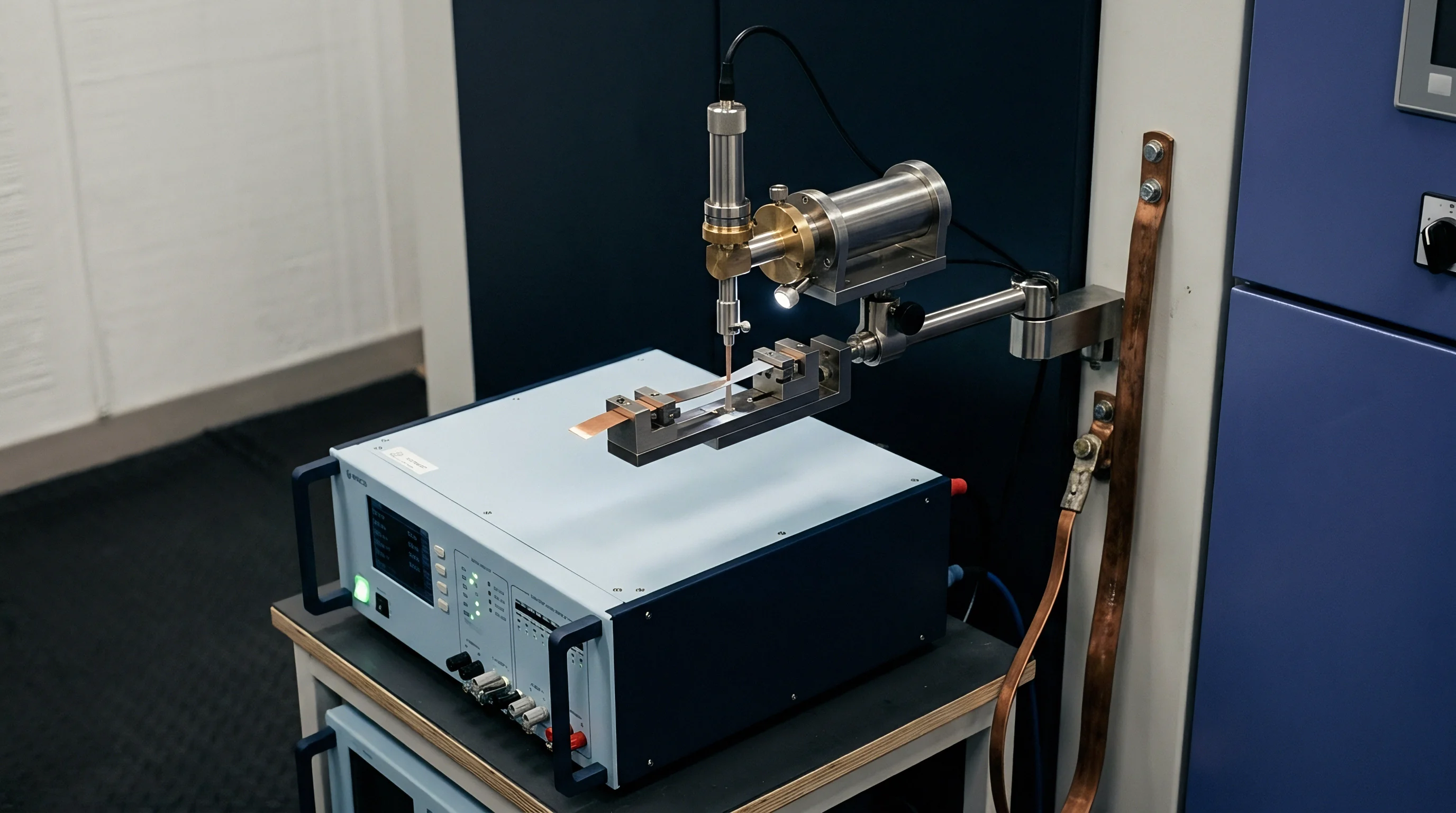
Before abuse testing starts, laboratories record dimensions, total mass, AC internal resistance, and open-circuit voltage, weighing cells to within 0.01 grams on calibrated balances. A qualified 18650 cell certified at 45.20 grams reflects a defined steel can thickness, foil gauge, and active mass density. When incoming production cells weigh in at an average of 42.10 grams, the plant has shaved thickness off the can or skimped on cathode coating.
Weight variances indicate unapproved design changes. Reducing can wall thickness lowers the pressure threshold of the safety vent. Similarly, cutting back on cathode slurry while claiming unchanged nominal capacity requires raising charging cut-off voltages, which accelerates oxidation in the carbonate electrolyte.
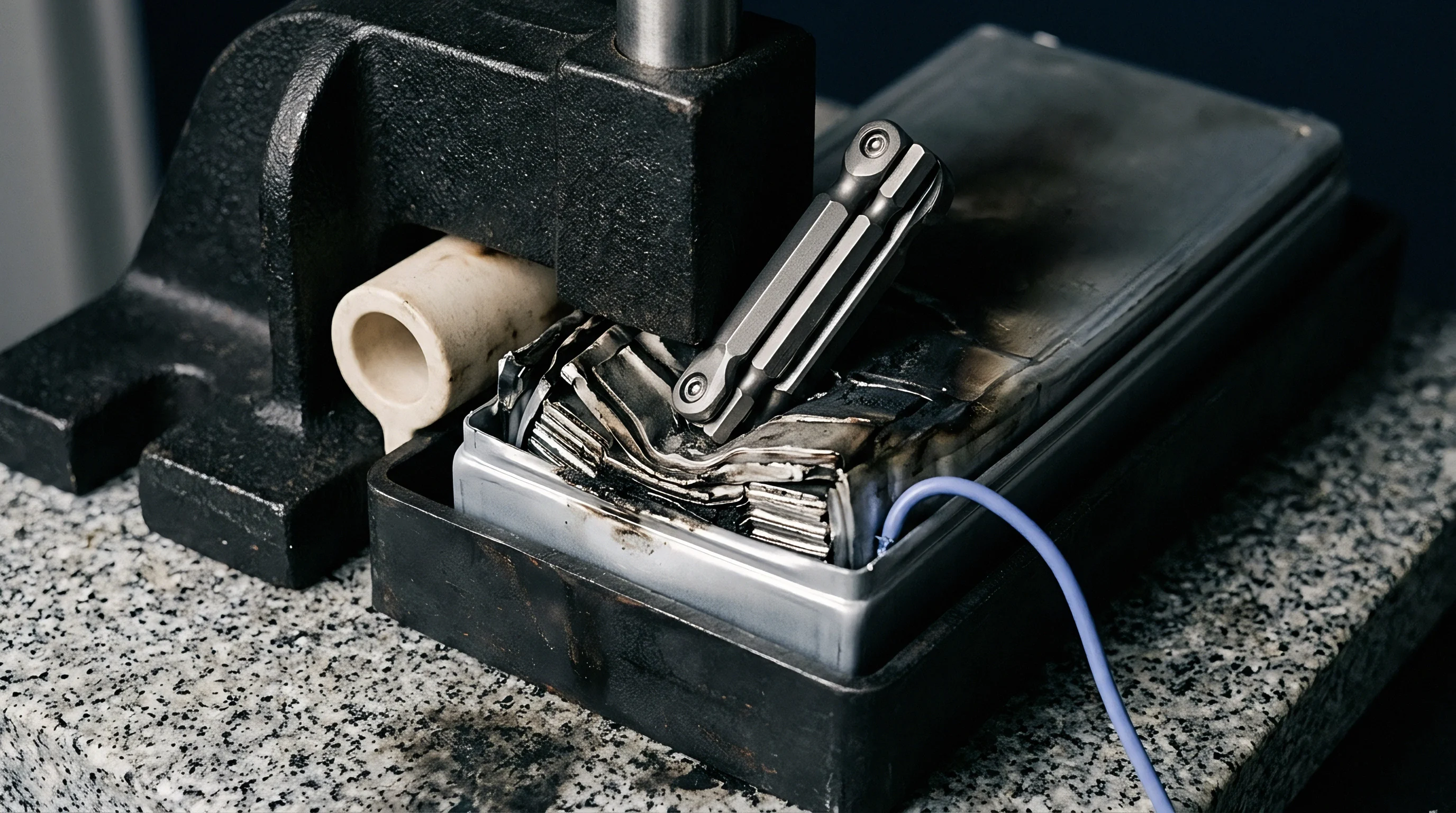
Incoming physical cell teardowns expose these design disparities, showing where electrode breakdown and dimensional swelling deviate from the certified prototype.
| Physical Metric | Type Approval Record | Incoming Batch Sample | Engineering Consequence |
|---|---|---|---|
| Average Cell Mass | 46.85 g | 43.10 g | Thinned steel wall reduces casing burst strength |
| Cell Outer Diameter | 18.25 mm | 18.48 mm | Elevated jelly-roll winding tension increases pinch stress |
| AC Impedance (1 kHz) | 18.5 mOhm | 26.2 mOhm | Substituted foil current collectors increase thermal dissipation |
| Separator Thickness | 16.0 um | 12.0 um | Reduced dielectric puncture barrier under mechanical shock |
Take a shipment of 200,000 cylindrical 21700 cells bought at 1.85 dollars each. The type approval report registered with the ocean carrier specifies a ceramic-coated polyethylene separator measuring 16.0-micrometer. If the plant quietly swaps in an uncoated 12.0-micrometer base film, the supplier cuts costs by 0.04 dollars per cell ~ pocketing an extra 8,000 dollars across the run.
That thinner film reduces puncture resistance during the UN 38.3 T6 impact test by 38 percent.
If an uncertified separator punctures at sea and sets off thermal runaway in a container hold, maritime transport rules hold the named shipper liable for cleanup costs and vessel deviation expenses. These liabilities easily run ten times higher than the value of the original purchase order, quickly leading to subrogation claims by insurers and insolvency proceedings.
Ledger
Liability allocation depends on the sales contract. If customs blocks entry because of an invalid type report, the importer of record faces strict statutory penalties under European Union Battery Regulation 2023/1542 and United States Department of Transportation Title 49 Code of Federal Regulations. Customs authorities impound undocumented cells while freight forwarders bill demurrage directly to the consignee during mandatory technical reviews.
Sourcing contracts that treat test certificates as marketing collateral expose importers to direct product liability damages, civil penalties, and criminal negligence inquiries following catastrophic transit fires. Invoices must match certified part numbers exactly. Sourcing teams protect their organizations by writing contractual warranties covering test report validity, ongoing laboratory accreditation, and absolute bill-of-materials stability across the cell’s entire production life.
Minor adjustments to separator porosity or current collector foil sources are frequently treated as routine factory process developments, even though dangerous goods regulations require complete recertification when core internal materials change.