Meaning
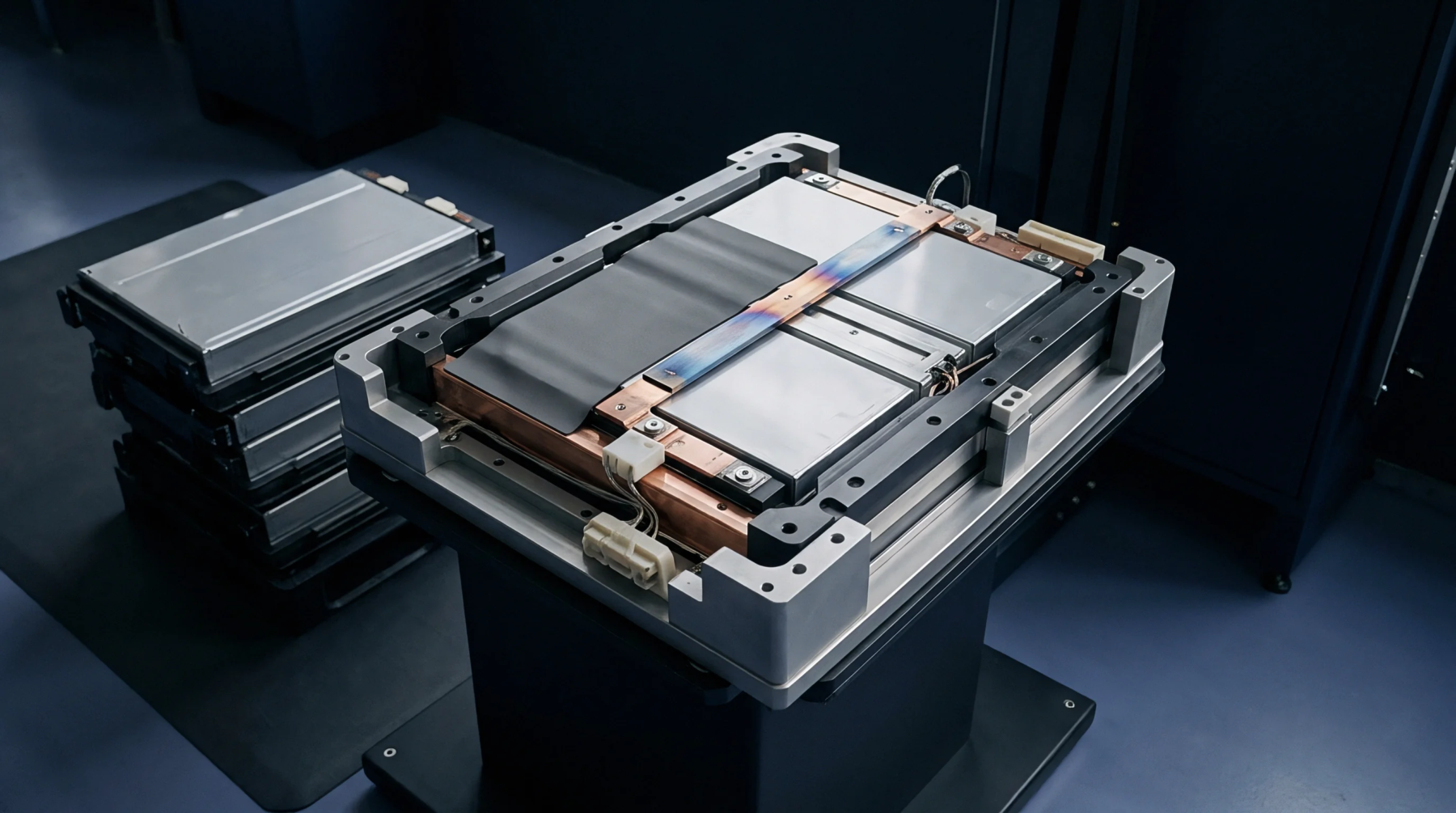
Mechanical degradation occurs in electrical interconnects when repeated vibration and thermal expansion apply opposing forces to the weld joints. This busbar shear fatigue eventually causes the metal to crack or the bond to fail entirely. It represents a significant reliability risk in heavy vehicles and stationary storage subjected to high seismic loads.
Cyclic Loading
Temperature fluctuations cause the copper or aluminum bars to expand and contract at different rates than the module housing. This busbar shear fatigue results from the accumulation of microscopic defects at the edge of the laser weld. Over thousands of cycles, these defects grow into visible cracks that increase the electrical resistance of the joint.
Joint Integrity
Strong bonds require precise control of laser power and penetration depth during the assembly process. If busbar shear fatigue is not considered during the design phase, the interconnects may snap during standard road vibration tests. Engineering teams use flexible links or expansion loops to absorb the mechanical movement and protect the rigid joints.
Failure Prediction
Monitoring the voltage drop across an interconnect can reveal the early stages of structural weakening. Once busbar shear fatigue reaches a critical point, the resulting high resistance creates a localized hot spot. This heat can melt nearby insulation and lead to a short circuit or a thermal runaway event.